Table of Contents >> Show >> Hide
- Introduction: When a Sunken Ship Gets a Second Life
- The Story of the American Heritage Shipwreck
- How a Shipwreck Becomes a Reef
- Why the American Heritage Reef Is So Beautiful
- Shipwreck Reefs and Artificial Reefs: What Is the Difference?
- The Science Behind Shipwreck Habitats
- Why People Are Fascinated by Shipwreck Reefs
- Lessons From This Old Shipwreck Reef
- Experience Section: What It Feels Like to Encounter a Shipwreck Reef
- Conclusion: A Gorgeous Reef With a Powerful Message
Note: This article is written for educational, SEO, and web-publishing purposes. It is based on real marine science, shipwreck research, and artificial reef information from reputable U.S. sources, rewritten in original language without source links in the body content.
Introduction: When a Sunken Ship Gets a Second Life
Most ships are built for motion. They cut through waves, haul equipment, carry crews, and spend their working lives fighting rust, weather, schedules, and the occasional very judgmental seagull. But sometimes, a ship’s most fascinating chapter begins after it stops moving forever. That is exactly what happened with the American Heritage, an old workboat that sank off the coast of Southern California in 1995 and, decades later, was rediscovered as a thriving underwater habitat.
At first, the loss of the vessel was remembered mainly as a maritime accident. The Coast Guard rescued everyone on board, and the ship disappeared into deep water in Santa Monica Bay. For years, it was out of sight and mostly out of mind. Then researchers with the Monterey Bay Aquarium Research Institute, known as MBARI, encountered the wreck during seafloor mapping and later explored it with a remotely operated vehicle. What they found was not simply a forgotten boat. It was a deep-sea reef, draped with sponges and surrounded by marine life.
The transformation of this old shipwreck into a gorgeous reef is more than a pretty ocean story. It reveals how the sea reclaims human-made objects, how artificial structures can become habitat, and why shipwrecks are valuable to scientists, conservationists, historians, and curious readers who enjoy a good “nature said, I’ll take it from here” moment.
The Story of the American Heritage Shipwreck
A Working Boat Lost to the Deep
The American Heritage was an oil-field utility vessel that once supported offshore work along the California coast. It moved crews, equipment, and supplies, and it also supported diving and remotely operated vehicle operations. In May 1995, the vessel sank in Santa Monica Bay after taking on water. The incident could have ended in tragedy, but everyone on board was rescued.
The ship settled roughly 2,300 feet below the surface, far beyond the reach of casual divers and beach-day snorkelers. At that depth, sunlight is absent, temperatures are cold, pressure is intense, and the seafloor can seem empty at first glance. Yet the deep sea is not lifeless. It is slow, strange, patient, and full of organisms that have mastered survival in conditions that would make a houseplant file a formal complaint.
Rediscovered by Modern Ocean Technology
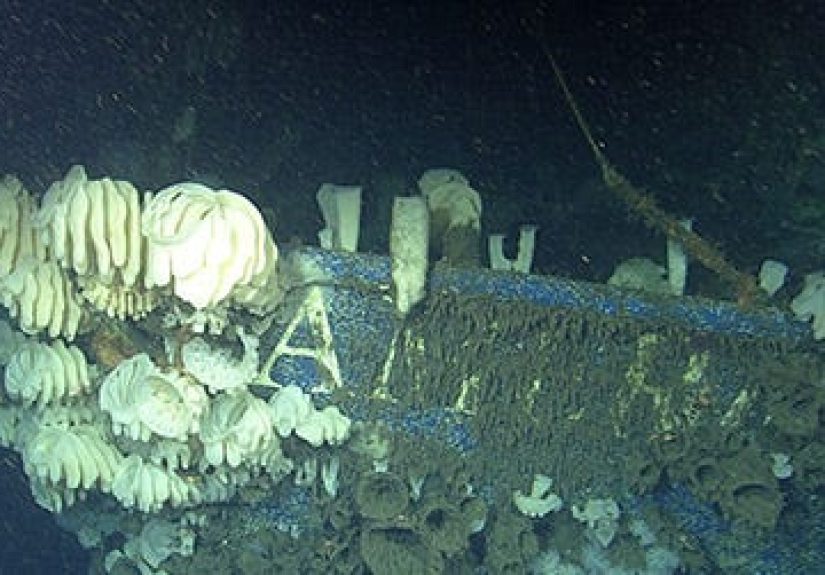
Years after the sinking, MBARI researchers detected an unusual shape during seafloor mapping. Later, a team returned with more advanced tools, including the remotely operated vehicle Doc Ricketts. Pilots guided the ROV around the wreck, capturing images and video of the vessel’s structure. Eventually, the ship’s identity became clear when letters from the name American Heritage could still be seen on the bow.
One of the most remarkable parts of the story is personal. An ROV pilot involved in the rediscovery had once worked with the ship before it sank. That detail gives the whole event a cinematic twist: a crew member from the vessel’s former life helped recognize it in its new life, not as a machine of industry, but as an accidental deep-sea neighborhood.
How a Shipwreck Becomes a Reef
Step One: Hard Surface Meets Open Seafloor
A shipwreck changes the seafloor immediately because it adds hard structure where there may have been mostly mud, sand, or soft sediment. Marine animals need surfaces. Larvae, sponges, corals, anemones, barnacles, and other organisms often attach to stable objects. A steel hull, rail, pipe, deck, or doorway can become prime real estate.
On the American Heritage, deep-sea sponges were among the most visible residents. Sponges may not have the instant charisma of dolphins or sea turtles, but they are essential reef builders in many underwater ecosystems. They filter water, create texture, and provide shelter for smaller creatures. In reef terms, they are less “decorative pillow” and more “apartment complex with plumbing.”
Step Two: Tiny Colonizers Move In
The first colonizers on a wreck are often small organisms: bacteria, algae where light allows, invertebrate larvae, and microscopic life that forms thin biological films. These early settlers prepare the surface for larger organisms. Over time, the wreck becomes layered with life. In shallow water, that may include algae, barnacles, oysters, soft corals, hard corals, and reef fish. In deeper water, where sunlight cannot power coral-algae partnerships, sponges, deep-sea corals, crabs, rockfish, and other adapted species may dominate.
The exact community depends on depth, temperature, currents, oxygen, available larvae, fishing pressure, and the wreck’s shape. A tall ship structure creates vertical relief, giving animals different zones to occupy. Some species prefer exposed edges where currents bring food. Others tuck into holes, rooms, rails, or sheltered corners. In a way, a wreck is a city planned by accident: towers, tunnels, balconies, alleys, and shaded rooms, all open to tenants with fins, shells, claws, and filter-feeding equipment.
Step Three: Fish and Predators Arrive
Once smaller life forms establish themselves, fish often follow. Some come for shelter. Others come for food. Predators may patrol the edges, while smaller fish use the wreck’s complexity to hide. Scientists studying artificial reefs and shipwrecks have found that these structures can support diverse fish communities, but the results are not one-size-fits-all. A reef’s success depends heavily on where it is placed, how it is built, and how it interacts with nearby natural habitats.
This is why researchers are careful when talking about shipwreck reefs. A wreck can attract marine life, but attraction alone is not the same as creating new biological productivity. The big question is whether artificial reefs simply pull fish from nearby natural reefs or actually increase survival, feeding opportunities, and reproduction. The answer can vary by site. Good reef science avoids magical thinking and asks practical questions: What species are using the structure? Are they feeding there? Are juveniles surviving? Is the wreck helping the surrounding ecosystem or merely concentrating animals in one convenient spot?
Why the American Heritage Reef Is So Beautiful
Beauty in the Deep Sea Looks Different
When people hear “gorgeous reef,” they often imagine tropical coral gardens glowing in shallow turquoise water. The American Heritage is different. It rests in deep, dark water. Its beauty is quieter, stranger, and more mysterious. Instead of sunlit coral heads and bright parrotfish, the wreck is covered in pale sponges and deep-sea organisms. It looks like the ocean has slowly embroidered the ship with living texture.
This kind of beauty is not postcard beauty. It is discovery beauty. It is the beauty of seeing a human object become part of a nonhuman system. Doorways no longer lead to engine rooms; they frame darkness. Decks no longer carry workers; they hold colonies of animals. Railings no longer keep people steady; they give marine life a place to cling. The ship still has its shape, but its purpose has been rewritten.
A 3D Model Brought the Wreck to the Public
Because the wreck lies so deep, most people will never visit it directly. MBARI’s imaging work helped change that. By collecting thousands of still images from ROV video, researchers created a three-dimensional model of the wreck. This digital reconstruction allowed people to examine the ship from afar, turning a remote deep-sea site into a public learning experience.
That matters because the ocean is often invisible in daily life. We benefit from it constantly, but most of its drama happens beyond our view. A digital model of a shipwreck reef gives readers, students, and ocean enthusiasts a way to understand the scale, structure, and ecological surprise of a deep-sea wreck without needing a submarine, a research budget, or the ability to remain calm while staring into absolute underwater darkness.
Shipwreck Reefs and Artificial Reefs: What Is the Difference?
Accidental Wrecks vs. Planned Reefs
Not every shipwreck is an artificial reef in the planned sense. Some wrecks, like the American Heritage, sink by accident. Others are intentionally cleaned, prepared, permitted, and sunk to create marine habitat, fishing opportunities, or dive destinations. These planned projects are often called artificial reefs.
In the United States, intentionally reefed vessels must go through environmental review and preparation. Agencies and project managers consider materials such as fuel, oil, wiring, plastics, paints, and other potential contaminants. The goal is to ensure that the vessel does not become an underwater junk drawer with legal paperwork. A successful vessel-to-reef project must balance habitat creation, public access, navigational safety, cultural value, and environmental protection.
Famous U.S. Shipwreck Reefs
The American Heritage is a compelling accidental reef, but it is part of a much larger story. In Florida, the USS Spiegel Grove was intentionally sunk near Key Largo and became one of the best-known artificial reef dive sites in the Florida Keys. The USS Oriskany, a former aircraft carrier, became a major artificial reef off the Florida Panhandle. The Florida Keys National Marine Sanctuary also protects historic shipwrecks that tell stories about navigation, storms, trade, and maritime life.
These wrecks are not just underwater attractions. They are classrooms. Scientists can study colonization, fish behavior, habitat complexity, corrosion, and the way marine communities change over time. Divers can experience maritime history in a direct and memorable way. Local communities may benefit from tourism, charter operations, education programs, and conservation awareness.
The Science Behind Shipwreck Habitats
Structure Creates Opportunity
In marine ecology, structure matters. A flat seafloor offers fewer hiding places than a ship with decks, beams, openings, and vertical surfaces. Complexity creates niches. Niches support diversity. That is why natural reefs, rocky ledges, oyster beds, kelp forests, and mangrove roots are so valuable. They turn simple space into layered habitat.
Shipwrecks can mimic some of that complexity. A wreck may provide shade, current breaks, feeding stations, and shelter. Small organisms attach to it. Larger organisms browse, hunt, rest, or reproduce around it. Over years and decades, the wreck becomes less like an object and more like an ecosystem.
Not Every Wreck Is Automatically Good
A balanced article about shipwreck reefs should say the quiet part clearly: sinking things in the ocean is not automatically conservation. Poorly prepared vessels can introduce pollutants. Badly placed structures can damage sensitive seafloor habitats. In some cases, artificial reefs may change predator-prey relationships or concentrate fish where they are easier to catch. That is why science-based planning matters.
The best reef projects are not random acts of “splash and hope.” They involve environmental review, cleaning, permitting, monitoring, and long-term management. The ocean is generous, but it is not a landfill with waves. A gorgeous reef is created when structure, location, biology, and responsibility work together.
Why People Are Fascinated by Shipwreck Reefs
They Combine Mystery, History, and Nature
Shipwreck reefs fascinate people because they sit at the intersection of three powerful stories. First, there is the human story: Who built the ship? What did it do? Why did it sink? Second, there is the mystery story: What does it look like now? What remains inside? How has time changed it? Third, there is the nature story: What moved in after humans left?
That combination is irresistible. A shipwreck is never only metal. It is memory. Add marine life, and it becomes a living archive. The American Heritage is especially interesting because it was not rediscovered as a clean museum object. It was found transformedrecognizable, but no longer merely human-made. The sea had not erased it. The sea had edited it.
They Remind Us That Nature Wastes Very Little
The ocean is exceptionally good at reuse. A fallen whale can feed deep-sea communities. A rocky outcrop can become a fish nursery. A shipwreck can become a reef. Human beings often think in terms of endings: the ship sank, the story is over. Nature tends to think in terms of materials: here is a surface, here is shelter, here is a chance.
That does not mean every wreck is harmless or every artificial reef is wise. It means that under the right conditions, the ocean can transform loss into habitat. The result is not a fairy tale. It is ecology, and frankly, ecology has better plot twists than most streaming shows.
Lessons From This Old Shipwreck Reef
1. The Deep Sea Is Full of Surprises
The rediscovery of the American Heritage shows how much remains hidden beneath the ocean surface. Even relatively modern shipwrecks can be lost, forgotten, and rediscovered through mapping technology. As sonar, ROVs, autonomous underwater vehicles, and 3D imaging improve, researchers will continue finding new details about the seafloor and the life it supports.
2. Artificial Structure Can Become Habitat
Shipwrecks show that hard surfaces can support marine communities, especially where natural hard bottom is limited. This is one reason artificial reefs are used in many coastal states. They may enhance recreational fishing, diving, habitat complexity, and local economies when responsibly planned and monitored.
3. Conservation Requires More Than Good Intentions
The story also teaches caution. A beautiful reef is not an excuse to dump unprepared structures into the sea. Environmental standards, scientific monitoring, and site selection are essential. The goal should be to support ocean life, not simply hide human leftovers beneath a romantic headline.
4. Technology Can Make the Invisible Ocean Visible
The 3D reconstruction of the American Heritage gave the public a rare look at a deep-sea wreck. That kind of technology helps people care about places they may never physically visit. When people can see the ocean’s hidden worlds, they are more likely to understand why those worlds deserve protection.
Experience Section: What It Feels Like to Encounter a Shipwreck Reef
Experiencing a shipwreck reef, whether through diving, research footage, museum displays, or a 3D model, is different from simply reading the words “sunken ship.” The phrase sounds static, like a thing that ended. But the moment you see a wreck covered in marine life, the story changes. It is no longer just a vessel that went down. It is a place where life moved in, unpacked, and apparently decided the neighborhood had excellent bones.
For divers visiting shallower wreck reefs, the first impression is often scale. A ship that looked ordinary at the dock can feel enormous underwater. The bow appears through blue haze. Fish move along the railings as if following traffic lanes. Openings that once served crew members now frame schools of fish. The entire structure feels both familiar and alien. You recognize ladders, doors, decks, and machinery, but nothing behaves like it does on land. Bubbles rise. Light bends. Sound softens. The ship becomes architecture for another world.
Deep wrecks like the American Heritage offer a different kind of experience because most people encounter them through ROV video or digital reconstruction. Instead of swimming beside the wreck, you watch the camera glide slowly through darkness. The view feels almost like space exploration. The ROV lights reveal one section at a time: a sponge-covered rail, a shadowed doorway, a curved hull, a patch of life where bare metal used to be. The slow pace builds suspense. You are not just looking at scenery; you are witnessing evidence of time.
One of the most memorable emotional reactions is humility. A ship represents human planning, engineering, deadlines, budgets, and purpose. A reef represents patience, adaptation, and relationships among living things. When a ship becomes a reef, those two worlds overlap. The result can make people think differently about permanence. Human objects may feel solid, but the ocean has a longer attention span. Given enough years, it softens edges, invites colonizers, hides names under growth, and turns utility into habitat.
There is also a sense of responsibility. Beautiful shipwreck reefs can inspire awe, but they should also inspire care. Divers are taught to avoid touching fragile marine life, disturbing sediment, or entering unsafe spaces without proper training. Viewers watching from home can support ocean education, responsible tourism, and science-based conservation. The best experience is not only “Wow, that looks amazing.” It is “Wow, this place matters.”
Perhaps the strongest experience connected to a shipwreck reef is wonder. The ocean takes a story humans might file under “loss” and adds chapters about sponges, fish, invertebrates, currents, and discovery. The American Heritage sank as a workboat, but it was found again as a living structure. That transformation is why shipwreck reefs continue to capture attention. They are eerie, beautiful, scientific, historical, and oddly hopeful. Not many old boats get a retirement plan that includes becoming a deep-sea apartment building, but this one didand the residents seem to be making excellent use of the space.
Conclusion: A Gorgeous Reef With a Powerful Message
The old shipwreck of the American Heritage proves that the ocean is not just a place where stories disappear. Sometimes, it is where stories are rewritten. What began as a sunken workboat became a deep-sea habitat covered with sponges and surrounded by life. Through MBARI’s research, ROV exploration, and 3D modeling, a forgotten wreck became visible againnot as a relic of failure, but as a symbol of transformation.
Shipwreck reefs remind us that nature is creative, but they also remind us to be responsible. Artificial reefs and accidental wrecks can support marine life, scientific discovery, and public fascination, but only careful planning and respect for the ocean can make these stories truly beneficial. The most beautiful part of this shipwreck is not simply that it looks like a reef. It is that it teaches us to see endings differently. Beneath the waves, even an old ship can become a beginning.