Table of Contents >> Show >> Hide
- 1. Float Furniture Instead of Pushing Everything Against the Walls
- 2. Choose Fewer, Better-Scaled Pieces
- 3. Go Bigger With the Rug
- 4. Use Mirrors and Reflective Surfaces Like Design Magic
- 5. Draw the Eye Up With Curtains, Shelves, and Vertical Decor
- 6. Layer Lighting Instead of Relying on One Overhead Fixture
- 7. Pick Multi-Functional Furniture That Does Not Look Like a Compromise
- Bonus Style Moves That Make a Small Living Room Feel Bigger
- Real-Life Experience: What Actually Works in a Small Living Room
- Conclusion
A small living room can feel like a design puzzle where the sofa is too bossy, the coffee table has personal-space issues, and one innocent floor lamp somehow makes the room look like a storage closet with throw pillows. The good news? Designers do not magically add square footage. They simply know how to make the square footage behave.
The best small living room tricks are not about buying tiny furniture, painting everything hospital white, or removing every object until your home looks like a waiting room for very quiet people. Instead, great small-space design is about proportion, flow, light, visual rhythm, and smart storage. With the right moves, a compact living room can feel stylish, spacious, cozy, and fully functional without needing a renovation crew, a second mortgage, or a dramatic reality-TV reveal.
Below are seven designer-approved small living room ideas that can help you create more style and space. These tricks work for apartments, condos, townhomes, narrow rooms, studio layouts, and those “why is this wall here?” floor plans that builders apparently created during lunch break.
1. Float Furniture Instead of Pushing Everything Against the Walls
One of the most common small living room mistakes is pushing every piece of furniture against the wall. It seems logical at first. More open floor in the middle should mean more space, right? Not always. In many small rooms, wall-hugging furniture creates an awkward empty center while the edges feel heavy and crowded.
Designers often recommend floating at least one major piece, such as the sofa, accent chair, or coffee table arrangement. This creates a more intentional conversation zone and gives the room a sense of depth. Even pulling a sofa forward by three to six inches can make the layout feel less stiff. That tiny gap behind the sofa? It is not wasted space. It creates a shadow line, adds breathing room, and makes the furniture look placed rather than trapped.
How to Try It
Start by choosing a focal point. This could be a fireplace, a window, a TV wall, a large artwork, or a beautiful bookcase. Arrange your seating to face or frame that focal point. Then check your walkways. Ideally, people should be able to move through the room without performing a sideways shuffle worthy of a spy movie laser scene.
If your room is extremely small, you do not need to float every piece. Try a sofa slightly off the wall, a chair angled toward the sofa, or a narrow console table behind seating. The goal is to make the layout feel planned, not pressed flat against the perimeter.
2. Choose Fewer, Better-Scaled Pieces
A small living room does not automatically need tiny furniture. In fact, too many small pieces can make a room feel cluttered, like a furniture store for dolls with excellent credit. Designers often prefer fewer pieces with stronger scale. A well-proportioned sofa, one comfortable accent chair, and a smart coffee table can look calmer than a loveseat, two mini chairs, three side tables, and a mystery ottoman that everyone trips over.
The trick is balance. Oversized furniture can overwhelm a compact room, but undersized furniture can feel flimsy and scattered. Measure before buying. Check the width, depth, arm height, back height, and leg style. Furniture with exposed legs often feels lighter because you can see more floor underneath. Armless chairs, slim-profile sofas, nesting tables, and open-base consoles can also help reduce visual bulk.
Designer-Style Example
Instead of placing two chunky recliners across from a sofa, try one swivel chair with a rounded shape. It gives flexibility, softens the room, and can turn toward the TV, the sofa, or the window. Instead of a giant rectangular coffee table, try a round table or two nesting tables. Rounded edges improve traffic flow and reduce the number of bruised shins in the household, which is always a design win.
3. Go Bigger With the Rug
A rug that is too small can make a living room look chopped into pieces. It visually shrinks the seating area and can make furniture seem like it is floating randomly at sea. Designers often recommend choosing the largest rug that properly fits the room and anchors the main furniture pieces.
In a small living room, the front legs of the sofa and chairs should usually sit on the rug. This connects the seating group and makes the entire area feel unified. A rug that stops short of the furniture can look like a postage stamp trying very hard to be important.
Best Rug Tricks for Small Living Rooms
Choose a low-pile rug if you want an easier-to-clean, open feeling. Lighter shades can brighten the room, while subtle patterns can hide everyday life, including crumbs, pet hair, and the tiny debris that appears even when you swear you vacuumed yesterday. Stripes or linear patterns can also help visually lengthen a narrow space.
Do not be afraid of pattern, but keep the scale in mind. A bold rug can work beautifully if the rest of the room has calmer elements. If your walls, curtains, pillows, and artwork are all shouting at once, the rug does not need to bring a megaphone.
4. Use Mirrors and Reflective Surfaces Like Design Magic
Mirrors are one of the oldest small-space tricks because they actually do something useful: they bounce light, add visual depth, and create the illusion of more room. A mirror placed opposite or near a window can reflect natural light and make a small living room feel brighter and more open.
The key is placement. A mirror should reflect something worth seeing. A window, artwork, greenery, a beautiful lamp, or an architectural detail is great. A mirror reflecting a pile of shoes, an overflowing laundry basket, or the back of a television is less “designer trick” and more “evidence.”
Smart Mirror Ideas
Try one large mirror instead of several tiny ones if you want a cleaner look. A tall leaning mirror can visually stretch the wall. A round mirror can soften a boxy room. A mirror above a console table can create a stylish entry-like moment even if your “entryway” is technically two feet of wall near the front door.
Reflective surfaces do not have to mean full glam. A glass coffee table, acrylic side table, polished metal lamp, or glossy ceramic vase can add lightness without taking up much visual space. Clear furniture is especially useful in rooms that already have plenty of texture, pattern, or color.
5. Draw the Eye Up With Curtains, Shelves, and Vertical Decor
When floor space is limited, designers look up. Vertical design makes a small living room feel taller and more spacious because it encourages the eye to travel. High-mounted curtains, tall bookcases, vertical artwork, slim floor lamps, and wall-mounted storage can all make a room feel less squat.
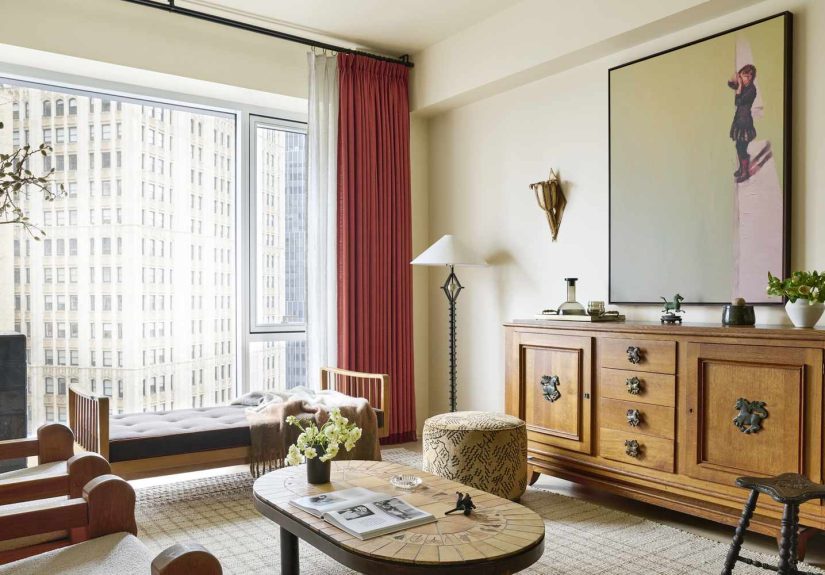
Curtains are especially powerful. Hanging curtain rods close to the ceiling or crown molding makes windows appear taller. Letting curtains skim or lightly break at the floor creates a polished look. Curtains that stop awkwardly above the baseboard can make the room feel shorter, as if the windows had a growth spurt and the drapes missed the memo.
Vertical Space That Works Hard
Use floating shelves for books, plants, framed art, or small storage baskets. Mount sconces instead of using bulky floor lamps when possible. Choose tall, narrow storage rather than short, wide pieces if you need more function without eating up floor area. A slim ladder shelf, wall-mounted cabinet, or built-in-looking bookcase can add storage while keeping the room open.
One warning: vertical storage should still be edited. Filling every inch of every shelf can make the room feel busy. Leave negative space around objects. A shelf needs a little breathing room, just like people at a crowded party pretending they are fine standing next to the dip table.
6. Layer Lighting Instead of Relying on One Overhead Fixture
One harsh ceiling light can make a small living room feel flat, shadowy, and slightly interrogation-room-adjacent. Designers prefer layered lighting because it creates warmth, dimension, and flexibility. A good lighting plan usually includes ambient lighting, task lighting, and accent lighting.
Ambient light provides overall brightness. Task light helps with reading, working, or hobbies. Accent light highlights artwork, plants, shelves, or architectural features. Together, these layers make the room feel deeper and more inviting.
Small Living Room Lighting Ideas
Use slim floor lamps in corners to brighten dark zones. Add table lamps on narrow side tables or shelves. Consider plug-in wall sconces if you rent and cannot hardwire fixtures. Use warm bulbs for a cozy glow, but avoid making the room so dim that guests need a flashlight to find the remote.
Lighting also helps define zones. In a studio apartment or open-plan space, a pendant over a dining nook, a lamp beside the sofa, and a small sconce near a reading chair can make one room feel like several purposeful areas. This is especially helpful when your living room is also your office, guest room, workout zone, and snack headquarters.
7. Pick Multi-Functional Furniture That Does Not Look Like a Compromise
Small living rooms need furniture that earns its keep. The best multi-functional pieces save space while still looking intentional. Think storage ottomans, lift-top coffee tables, nesting tables, sleeper sofas, benches with hidden compartments, wall-mounted desks, and media consoles with closed storage.
The important part is choosing pieces that match your actual lifestyle. If you never eat in the living room, you may not need a lift-top coffee table. If you have kids, pets, gaming gear, blankets, or hobby supplies, closed storage might be your best friend. If guests stay over often, a sleeper sofa or daybed can turn a small living room into a flexible guest area without requiring a dedicated spare room.
What to Avoid
Do not buy multi-functional furniture just because it has seventeen secret compartments and a product video with dramatic music. A bulky storage piece can still make the room feel cramped. Look for clean lines, raised legs, rounded corners, and finishes that blend with your color palette.
A storage ottoman can replace a coffee table. A bench can provide seating and hold blankets. A slim console can work as a desk, bar, display surface, or landing spot for keys. The best small living room furniture quietly solves problems without announcing, “Hello, I am a space-saving solution.”
Bonus Style Moves That Make a Small Living Room Feel Bigger
Once the main layout is working, the finishing details can make the room feel more polished. Keep the color palette cohesive, even if you love color. A small living room can absolutely handle bold shades, but the colors should speak to each other. Repeating a color in the rug, pillows, artwork, and accessories creates rhythm.
Texture is also essential. A small room can feel flat if everything is smooth and plain. Mix linen, wood, woven baskets, ceramic, metal, soft throws, and leafy plants. Texture adds depth without needing more square footage. It is the design equivalent of seasoning food properly: not always obvious, but deeply missed when absent.
Finally, edit surfaces. A small coffee table does not need nine candles, four books, a tray, a plant, a remote bowl, and a decorative object shaped like a pear unless the pear has legal ownership of the table. Choose a few meaningful pieces and leave space around them. Intentional styling makes the room feel calm, not crowded.
Real-Life Experience: What Actually Works in a Small Living Room
After helping redesign small living rooms and studying what consistently works in compact homes, one lesson becomes very clear: small rooms are honest. They reveal every design decision quickly. In a large living room, a too-small rug may look slightly off. In a small living room, it looks like the furniture got stranded on separate islands. In a spacious home, one weak lamp might be forgiven. In a small apartment, poor lighting can make the whole room feel like a cave with Wi-Fi.
The most successful small living rooms usually start with editing, not shopping. Before buying anything new, remove the pieces that do not serve the room. That extra side table you keep because it was “on sale”? The chair nobody sits in because it blocks the balcony door? The basket of random cables quietly becoming a museum exhibit? These items steal space before you even begin decorating.
One of the best small living room transformations often comes from simply changing the rug and curtain height. A larger rug can instantly connect the furniture, while higher curtains can make the ceiling feel taller. These two changes are not glamorous in a dramatic before-and-after way, but they work. They are like good tailoring: people may not know exactly what changed, but suddenly everything looks better.
Another practical experience is that storage must be close to where clutter happens. If blankets pile up on the sofa, storage should be near the sofa. If remotes, chargers, and game controllers scatter across the coffee table, choose a table with a drawer or add a small lidded box. If shoes and bags invade the living room, the issue may not be the living room at all; it may be that the entry needs a hook, basket, or slim cabinet.
Lighting is another real-world game changer. Many small living rooms rely on one ceiling fixture because it came with the apartment and technically produces light. But adding two or three smaller sources can completely change the mood. A floor lamp in a dark corner, a table lamp near the sofa, and a small accent light on a shelf can make the room feel layered and expensive, even when the budget is very much not expensive.
The biggest surprise? Personality does not make a small room feel smaller. Clutter does. A bold artwork, patterned pillow, colorful rug, or quirky lamp can make a compact living room feel designed and loved. The trick is giving each statement piece room to breathe. A small living room should not be afraid of style. It should simply avoid turning every surface into a talent show.
In the end, the best small living room design is not about pretending the room is huge. It is about making the room feel comfortable, useful, and visually balanced. When the layout supports conversation, the furniture fits the scale, the lighting feels warm, and the storage handles real life, even a tiny living room can feel like the best seat in the house.
Conclusion
Small living rooms do not need to feel cramped, chaotic, or boring. With smart designer tricks such as floating furniture, choosing better-scaled pieces, using a larger rug, placing mirrors strategically, drawing the eye upward, layering lighting, and selecting multi-functional furniture, you can create a room that feels more stylish and spacious without knocking down a single wall.
The secret is intention. Every piece should have a reason to be there. Every walkway should feel easy. Every light source should add warmth. Every surface should have a little breathing room. When those details come together, a small living room stops feeling like a limitation and starts feeling like a design opportunity with excellent manners.