Table of Contents >> Show >> Hide
- Quick Anatomy: What “Under the Tongue” Really Means
- Symptoms of Under-Tongue Cancer
- Causes and Risk Factors
- Types of Under-Tongue Cancer
- How Under-Tongue Cancer Is Diagnosed
- Treatment Options
- Side Effects and Recovery: What to Expect (and What Helps)
- Prevention and Early Detection
- When to See a Doctor (or Dentist) ASAP
- Experiences: What This Can Feel Like in Real Life (500+ Words)
Your tongue is basically a full-time employee: it talks, tastes, swallows, and occasionally burns itself on pizza that was clearly labeled “molten.”
So when something weird shows up under the tonguelike a sore that won’t quitit’s easy to shrug it off as “probably nothing.”
Most of the time, it is something harmless. But sometimes, it’s not. And the good news is: catching problems early can make treatment simpler
and outcomes better.
“Under-tongue cancer” isn’t a formal medical label. People usually mean cancer in one of these nearby areas:
the underside of the tongue (ventral tongue), the floor of the mouth (the soft tissue under your tongue),
or less commonly the sublingual salivary gland (a small saliva-making gland under the tongue). Many cancers in this neighborhood are considered
oral cavity cancers, and the most common type is squamous cell carcinoma (SCC)a cancer that starts in the thin, flat cells lining
the mouth.
Quick Anatomy: What “Under the Tongue” Really Means
If you lift your tongue, you’ll see delicate tissue, visible blood vessels, and that little “string” (the frenulum) that helps anchor the tongue.
This region is busy, moist, and exposed to whatever you eat, drink, smoke, chew, or accidentally jab with a tortilla chip.
Doctors often talk about nearby “subsites” in the oral cavitylike the tongue, floor of mouth, gums, inner cheeks, hard palate, and lipsbecause each area can
behave a bit differently when cancer develops. The floor of the mouth, in particular, can be a sneaky spot because changes may be subtle at first.
Symptoms of Under-Tongue Cancer
The tricky part: early oral cancers can look like everyday mouth problems. The helpful part: they often leave clues that persist or worsen over time.
If you notice any of the symptoms below lasting more than 2 weeks, it’s smart to get checked by a dentist, primary care clinician,
or an ENT (ear, nose, and throat) specialist.
Common early warning signs
- A sore or ulcer under the tongue that doesn’t heal
- A lump, thickened area, or rough spot in the floor of mouth or underside of tongue
- Red or white patches (often called erythroplakia or leukoplakia)
- Bleeding from the area without an obvious cause
- Pain, tenderness, or a burning sensation that doesn’t match what you see
- Numbness in part of the tongue or mouth
Symptoms that can show up as it grows or spreads
- Pain or difficulty swallowing, chewing, or moving the tongue/jaw
- Feeling like something is stuck in your throat
- Loose teeth or dentures that suddenly don’t fit right
- Voice changes (hoarseness or muffled speech)
- Ear pain on one side (referred pain can happen in head-and-neck conditions)
- A lump in the neck (possible lymph node involvement)
- Unexplained weight loss or fatigue (more general signs)
Important reality check: canker sores, infections, irritation from dental appliances, and inflammation can cause similar symptoms.
The difference is the patternoral cancers tend to persist, enlarge, bleed,
or fail to heal.
Causes and Risk Factors
Cancer starts when cells develop DNA changes that make them grow out of control. For oral cavity cancers, risk is strongly influenced by exposures and behaviors.
Having a risk factor doesn’t mean you’ll get cancerand some people develop oral cancer without obvious risk factorsbut these are the big ones clinicians watch.
1) Tobacco (smoked or smokeless)
Cigarettes, cigars, pipes, and smokeless tobacco (chew/snuff) are major risk factors for oral cavity cancer. These products expose the mouth’s lining to
carcinogenic chemicals, and the longer the exposure, the higher the risk.
2) Alcohol
Heavy or frequent alcohol use increases risk, and alcohol plus tobacco is an especially rough combinationthink “team-up villain arc,” but for your mouth’s cells.
3) HPV (human papillomavirus)
HPV is most strongly tied to oropharyngeal cancers (back of the throat/tonsil region), but it can still be part of the broader head-and-neck
cancer discussion. HPV vaccination helps prevent infections from high-risk HPV types linked to cancer.
4) Betel quid/areca nut (with or without tobacco)
Chewing betel quid or areca nut is a known risk factor for cancers in the oral cavity.
5) Other factors that may contribute
- Older age (risk rises with time and cumulative exposure)
- Poor nutrition (low intake of fruits/vegetables is sometimes associated with higher risk)
- Immune suppression (certain conditions/medications)
- Prior head-and-neck cancers (risk of recurrence or second primary cancers)
- Chronic irritation/inflammation (not a proven sole cause, but persistent inflammation can be a red flag that needs evaluation)
Types of Under-Tongue Cancer
“Under-tongue cancer” can involve different tissues, and the type matters because it influences treatment planning and prognosis.
Oral squamous cell carcinoma (OSCC)
This is the most common oral cavity cancer. It begins in the lining cells (squamous cells) that cover much of the mouth, including the underside of the tongue
and the floor of mouth. OSCC may start as a persistent ulcer, a thickened patch, or a red/white area that doesn’t resolve.
Salivary gland cancers (including sublingual gland tumors)
Under the tongue sit salivary structures that help keep your mouth lubricated (and your sandwich journey less dramatic). Tumors here are less common than OSCC
but can be malignant. Examples include mucoepidermoid carcinoma and adenoid cystic carcinoma.
These may present as a slowly enlarging lump, sometimes with pain or nerve-related symptoms depending on involvement.
Other rare cancers
Less commonly, cancers in this region may include lymphoma, melanoma, or sarcomas. These are unusual but remind us why biopsy matters: you can’t reliably “eyeball”
a diagnosis.
How Under-Tongue Cancer Is Diagnosed
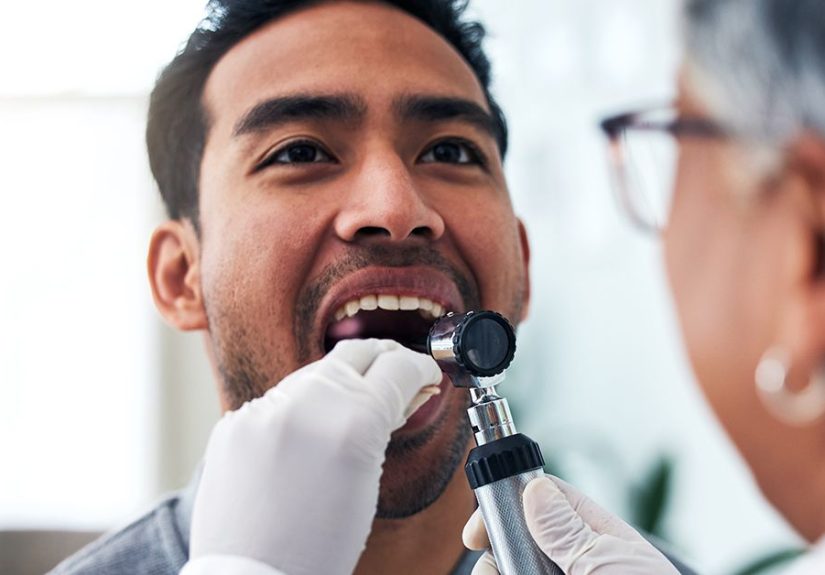
Diagnosis usually starts with a careful history and exam. Dentists often spot suspicious lesions during routine checkupsone more reason those cleanings deserve
more respect than they usually get.
Key steps in diagnosis
- Clinical exam: visual inspection plus palpation (feeling for firmness or hidden masses)
- Biopsy: the definitive stepremoving a small tissue sample for pathology
- Imaging: CT and MRI help map the tumor; PET/CT may be used to evaluate spread in certain situations
- Evaluation of lymph nodes: the neck may be examined and imaged because oral cancers can spread to cervical lymph nodes
Staging: why doctors talk about TNM
Staging helps guide treatment. The common approach is the TNM system:
T (tumor size/extent), N (lymph node involvement), M (metastasis).
Early stages are typically smaller and localized; later stages may involve nodes or nearby structures.
Treatment Options
Treatment depends on the cancer’s type, stage, exact location, and your overall health. Most oral cavity cancers are treated with a plan designed by a
multidisciplinary teamoften including head-and-neck surgeons, radiation oncologists, medical oncologists, dentists, and speech-language
pathologists.
Surgery
Surgery is a common first-line treatment for many oral cavity cancers, especially when the tumor is localized and can be removed safely.
Depending on location and size, surgery may involve removing the tumor with a margin of healthy tissue, and sometimes removing lymph nodes in the neck
(neck dissection) if the risk of microscopic spread is significant.
If a larger area is removed, reconstruction may be needed to restore shape and function. Modern reconstruction can involve tissue transfer (“flaps”) and careful
planning to protect speech and swallowing as much as possible.
Radiation therapy
Radiation may be used after surgery (adjuvant therapy) to reduce the risk of recurrence, particularly if pathology shows higher-risk features.
In some cases, radiation is used as the main treatment when surgery isn’t ideal.
Chemotherapy
Chemotherapy may be combined with radiation in more advanced situations or when specific high-risk features are present.
Drugs such as cisplatin are commonly used in head-and-neck cancer regimens.
Targeted therapy
Some tumors may be treated with targeted therapies that focus on specific pathways involved in cancer growth.
One example used in head-and-neck cancers is cetuximab, which targets EGFR in certain settings.
Immunotherapy
Immunotherapy helps your immune system recognize and attack cancer cells more effectively. In head-and-neck squamous cell carcinoma, immunotherapy medicines such
as pembrolizumab or nivolumab may be used for certain recurrent or metastatic cancers, and in some treatment plans alongside other
therapies.
Clinical trials
Clinical trials can offer access to new therapies or new combinations of existing therapies. If you’re diagnosed, asking “Do I qualify for a clinical trial?”
is a practical questionnot an awkward one.
Side Effects and Recovery: What to Expect (and What Helps)
Oral cavity treatment isn’t just about removing cancerit’s about keeping you able to eat, speak, and live your life. Side effects vary by treatment type, but
the most common concerns involve the mouth and throat’s everyday jobs.
Possible treatment effects
- Pain and swelling after surgery
- Dry mouth (xerostomia) after radiation
- Changes in taste and appetite
- Mouth sores during radiation/chemoradiation
- Difficulty swallowing (temporary or longer-term)
- Stiffness or limited jaw opening (trismus)
- Dental complications (radiation can affect oral health, so dental planning matters)
Supportive care that can make a real difference
- Speech-language pathology: swallowing and speech therapy before, during, and after treatment
- Nutrition support: strategies to maintain calories and protein when chewing/swallowing is hard
- Dental care: prevention and monitoring (especially with radiation exposure)
- Pain management: tailored plans so you can hydrate and eat as safely as possible
- Mental health support: anxiety and mood changes are common and treatable
Prevention and Early Detection
Not every case is preventable, but many risk factors are modifiable. Prevention doesn’t have to be dramatic; it can be a series of small, consistent choices.
- Avoid tobacco (or get help quittingsupport and medications can improve success)
- Limit alcohol
- Consider HPV vaccination (prevents infections linked to several cancers)
- Get routine dental exams (screening and early spotting)
- Do a quick mouth check if you notice ongoing irritationlook for persistent sores, lumps, or red/white patches
- Prioritize oral health (good hygiene and dental care keep problems visible and manageable)
When to See a Doctor (or Dentist) ASAP
If you notice any of the following and they last longer than about 2 weeks, schedule an evaluation:
- A sore under the tongue that won’t heal
- A growing lump or thickened area
- Red or white patches that persist
- Unexplained bleeding or numbness
- Swallowing trouble, persistent ear pain, or a neck lump
This doesn’t mean it’s cancer. It means it deserves a professional lookbecause guessing games are for word puzzles, not mouth lesions.
Experiences: What This Can Feel Like in Real Life (500+ Words)
People rarely wake up thinking, “Today feels like a great day to schedule a biopsy.” More often, the story begins with something boring.
A tiny sore. A spot that looks like you bit your tongue. A patch you only notice because you’re flossing and accidentally become the Sherlock Holmes of your own
mouth.
“I thought it was just a canker sore”
One of the most common experiences is assuming it’s a standard mouth ulcerespecially because the underside of the tongue can get irritated easily.
Many people try saltwater rinses, switch toothpaste, avoid spicy foods, and wait it out. The turning point is usually time: it’s still there after two weeks,
or it seems bigger, firmer, or more painful than expected. That “this is taking forever” moment is often what finally triggers an appointment.
The surprise dental-chair moment
Another frequent experience: someone goes in for a routine cleaning, expecting a lecture about flossing (fair), and instead hears,
“There’s an area I want to look at more closely.” This can be scaryeven if the dentist is calmbecause it’s unexpected.
For many patients, that dental visit becomes the first step toward diagnosis, referral, and treatment planning. It’s also why people later say,
“I’m never skipping cleanings again,” with the conviction of someone who has learned the hard way.
Biopsy anxiety is real
Waiting for pathology results can feel like your brain has opened 47 tabs and none of them are playing the same movie.
People often describe swinging between “It’s probably nothing” and “What if everything changes?” multiple times a day.
Helpful coping strategies tend to be simple: ask the clinic when results usually return, write down questions for the next appointment,
and bring a friend or family member to help absorb information. Not because you can’t handle itbecause stress can make memory act like a sieve.
Treatment can be a marathon with very practical milestones
If surgery is needed, patients often focus on concrete goals: pain control, swelling going down, speaking clearly again, and eating more normally.
If a neck dissection is part of the plan, people may describe temporary stiffness or numbness, and they often learn that physical therapy-style exercises can
help recovery. When reconstruction is involved, it can be emotionally intense to adjust to a changed sensation or appearance, even when results are medically
successful. Support from the care teamand from people who “get it”matters a lot.
For those who receive radiation (with or without chemotherapy), the experience is often described as “cumulative.”
Early sessions may feel manageable, but symptoms like dry mouth, mouth soreness, taste changes, and fatigue can build over weeks.
People frequently share that planning soft, calorie-dense foods, staying hydrated, and using the mouth-care routines recommended by clinicians can make the
process more tolerable. Small winslike finding a smoothie that doesn’t stingbecome surprisingly meaningful.
Rehab is where many people feel themselves coming back
Speech and swallowing therapy is a big part of recovery for many patients. A common experience is realizing how many muscles and movements you use to swallow
safelyuntil they don’t cooperate. Therapy can feel slow, but progress is often measurable: clearer speech, fewer coughing episodes with liquids, greater
confidence eating in public again. People also describe the emotional lift of returning to everyday rituals: coffee with friends, ordering at a restaurant,
laughing without worrying about pain.
The “new normal” includes follow-upsand more self-awareness
After treatment, many patients say they become more tuned in to their health without becoming consumed by it. Follow-up appointments can trigger anxiety, but they
also provide reassurance and a plan. Over time, a lot of survivors describe a shift from fear to practicality: keep appointments, protect oral health, avoid
tobacco, limit alcohol, and speak up early if something seems off.
If you’re reading this because you’re worried about a symptom: you don’t need to diagnose yourself. You just need to get it checked.
In the world of mouth problems, “early” is a superpowerand you don’t have to earn it. You just have to use it.