Table of Contents >> Show >> Hide
- Quick Answer: Which One Is Better?
- What Whole Watermelon Brings to the Table
- What Happens When Watermelon Becomes Juice?
- Watermelon Juice vs. Watermelon: Side-by-Side Comparison
- Who Should Choose Whole Watermelon?
- Who Might Choose Watermelon Juice?
- When to Be a Bit Careful
- Best Ways to Enjoy Watermelon Without Losing the Nutrition Plot
- The Final Verdict
- Real-Life Experiences: What People Often Notice With Watermelon Juice vs. Whole Watermelon
Watermelon has a reputation that is both glorious and slightly unfair. On one hand, it is the celebrity of summer picnics, pool parties and backyard cookouts. On the other, it often gets reduced to “just water and sugar,” which is like calling a convertible sports car “just some wheels and wind.” The truth is more interesting. Watermelon is naturally hydrating, low in calories and packed with nutrients like vitamin C, vitamin A precursors and lycopene. But what happens when that crunchy red fruit gets turned into juice?
That is where the nutrition debate gets juicy, literally. Watermelon juice vs. watermelon in terms of nutrition is not a simple fight between “healthy” and “unhealthy.” Both can fit into a balanced diet. Both can refresh you on a hot day when your soul is halfway melted. But they are not nutritional twins. Whole watermelon and watermelon juice behave differently in the body, especially when it comes to fiber, fullness, sugar delivery and portion control.
If you want the quick headline, here it is: whole watermelon usually wins. It gives you hydration, antioxidants and natural sweetness, while also keeping the fiber that helps you feel full and slows digestion. Watermelon juice still has value, especially when it is 100% juice with no added sugar, but it loses part of what makes fruit so powerful in the first place. Let us break it down in a way that is practical, honest and not written like a robot fell into a nutrition textbook.
Quick Answer: Which One Is Better?
In most everyday situations, whole watermelon is the better nutritional choice. It offers the same general family of nutrients as juice, but with more fiber, more chewing, more fullness and less risk of drinking a large amount too quickly. That last point matters more than people think. Eating watermelon takes time. Drinking watermelon juice takes ambition and about 14 seconds.
That does not mean watermelon juice is useless. Far from it. A good unsweetened watermelon juice can still supply hydration, vitamins and antioxidants such as lycopene. It may even be a convenient option after exercise, during hot weather or for someone who has trouble eating solid fruit. But if your goal is the better all-around nutritional package, whole fruit has the stronger résumé.
What Whole Watermelon Brings to the Table
Hydration Without the Fuss
Watermelon is famous for its water content, and for good reason. It is mostly water, which makes it refreshing, light and helpful when temperatures climb. If you struggle to drink enough fluids, eating water-rich fruit can support hydration in a pleasantly low-effort way. Whole watermelon does not just hydrate, either. It hydrates while bringing along nutrients and natural sweetness, which is more than can be said for that mystery sports drink glowing in the back of your fridge.
Low Calories, Solid Volume
One reason watermelon works so well as a snack is volume. You can eat a generous bowl for relatively few calories, which can help satisfy hunger without feeling heavy. This is one of the classic advantages of whole fruit. It takes up space in the stomach, contains water and requires chewing, all of which can help with appetite control.
That is especially useful for people trying to eat more nutrient-dense foods without feeling like every snack has to be the emotional equivalent of chewing on raw ambition. Watermelon tastes like a treat, but nutritionally it behaves more like a smart snack than a dessert disaster.
Fiber: The Quiet Overachiever
The biggest difference between whole watermelon and watermelon juice is fiber. Whole watermelon contains fiber naturally found in the fruit. It is not a massive fiber powerhouse compared with berries or pears, but it still contributes something meaningful that juice often loses.
Fiber matters because it supports digestion, helps you feel fuller and slows how quickly sugar is absorbed. It is one of the main reasons eating fruit and drinking fruit juice do not affect the body in the same way. When you eat watermelon slices or cubes, your body gets the sugars in a slower, more balanced package. When you drink strained juice, the fiber often drops sharply, and the sugars arrive with less resistance.
Vitamin C, Vitamin A and Lycopene
Whole watermelon also brings important micronutrients. It contains vitamin C, contributes vitamin A activity through carotenoids and provides potassium. Then there is lycopene, the antioxidant pigment that gives red watermelon its rosy color. Lycopene has been widely studied for its potential role in supporting heart health and protecting cells from oxidative stress.
Watermelon is one of the standout fruit sources of lycopene, which is part of why it deserves more respect than “cute summer snack.” It is not just pretty produce. It has nutritional credentials.
Natural Sugar, But Not a Villain
Yes, watermelon contains natural sugar. No, that does not automatically make it a bad choice. Whole watermelon has a low glycemic load per typical serving, partly because so much of the fruit is water. That means the overall blood sugar impact of a normal serving is often less dramatic than people assume. The fear around fruit sugar usually gets louder than the science.
Still, portion size matters. Eating half a giant melon in one dramatic sitting is not the same thing as having a cup or two with lunch. Fruit is healthy, but “healthy” does not mean immune to common sense.
What Happens When Watermelon Becomes Juice?
Fiber Usually Drops Fast
Once watermelon is juiced, especially in a machine that removes pulp, the fiber content usually takes a hit. That changes the nutrition experience in a big way. The vitamins and plant compounds may still be there, but the natural structure of the fruit is altered. You are no longer eating a hydrating fruit. You are drinking a sweet liquid derived from one.
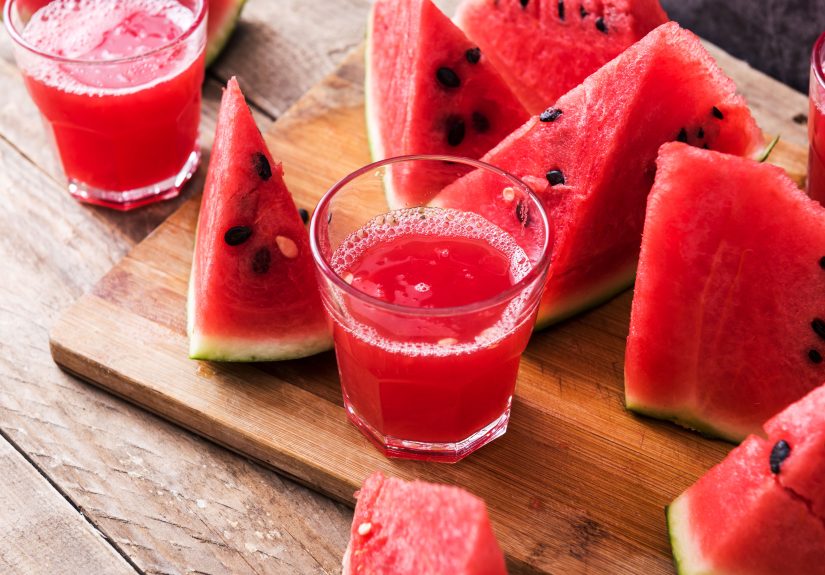
This is why watermelon juice vs. whole watermelon is not a tie. Juice may look like fruit in a glass, but nutritionally it is often more concentrated, less filling and easier to consume in larger portions.
It Is Easier to Overdo It
Think about how many chunks of watermelon you would comfortably eat in one sitting. Now think about how easy it is to drink the juice from that same amount. That is the hidden trap. Juice goes down fast. Your brain and stomach do not get the same satiety signals that come with chewing whole fruit, so it is easy to take in more sugar and calories before your body really registers what happened.
This does not make watermelon juice “bad.” It just means it is easier to overdrink. A small glass can fit well into a healthy diet. A giant tumbler that acts like fruit punch in disguise is another story.
Some Nutrients Stay, Some Change
Watermelon juice still offers benefits. It can provide hydration, natural sugars for quick energy and antioxidants such as lycopene. In fact, some research suggests that pasteurized 100% watermelon juice may increase circulating lycopene, possibly because processing can make that compound easier for the body to absorb.
That sounds impressive, and it is interesting. But it does not magically turn juice into a superior food overall. Better lycopene absorption does not cancel out the loss of fiber or the lower fullness factor. Nutritional quality is not won by one impressive antioxidant doing a solo performance.
Homemade, Bottled and Blended Are Not the Same
Not all watermelon drinks deserve the same nutrition label in your mind.
Fresh Extracted Juice
This is often the lowest-fiber version if the pulp is strained out. It can be refreshing, but it behaves more like juice than fruit.
Blended Watermelon Drink
If you blend watermelon instead of extracting and straining it, you keep more pulp and therefore more fiber. This is nutritionally closer to whole fruit, especially if you avoid adding sweeteners.
Bottled 100% Watermelon Juice
This can still provide antioxidants and hydration, but nutrient retention depends on processing, storage and ingredients. “100% juice” is a better choice than sugary fruit drinks, but it is still not identical to eating watermelon by the slice.
Watermelon Juice vs. Watermelon: Side-by-Side Comparison
| Nutrition Factor | Whole Watermelon | 100% Watermelon Juice |
|---|---|---|
| Hydration | Excellent | Excellent |
| Fiber | Present naturally | Usually much lower, especially if strained |
| Fullness | Better because of chewing, fiber and volume | Lower; easier to drink quickly |
| Sugar Delivery | Slower and more balanced | Faster absorption |
| Portion Control | Easier to monitor | Easier to overconsume |
| Lycopene | High | High; may be more bioavailable in some processed forms |
| Best Use | Daily fruit snack or side | Occasional beverage or convenient hydration option |
Who Should Choose Whole Watermelon?
Whole watermelon makes the most sense if you want:
Better satiety. If you are trying not to raid the pantry 20 minutes later, whole fruit gives you a stronger chance.
More fiber. It is not the highest-fiber fruit on earth, but it still beats most juiced versions.
Smarter snacking. A bowl of watermelon can replace candy, chips or baked sweets with something refreshing and nutrient-rich.
More stable blood sugar response. Whole fruit generally creates a slower rise than juice because the intact structure and fiber do more of the nutritional heavy lifting.
Who Might Choose Watermelon Juice?
Watermelon juice can be a reasonable option if you want:
Easy hydration. On very hot days, a small glass of unsweetened watermelon juice can be refreshing and convenient.
Quick energy after activity. Because it is easy to digest, some people enjoy it after walks, workouts or outdoor work.
A fruit option when chewing is difficult. Older adults, people with low appetite or those recovering from illness may find juice easier to consume than whole fruit.
A practical compromise. If the choice is between 100% watermelon juice and a sugar-loaded soda, juice is clearly the better backup singer.
When to Be a Bit Careful
If you are sensitive to fructose or have digestive issues such as IBS, both watermelon and fruit juice can cause problems in larger amounts. Juice may be especially tricky because you can consume more of it quickly. This does not mean you have to avoid it forever, but it does mean your body may appreciate moderation more than bravado.
Also, be careful with labels. Watermelon drinks are not always the same as 100% watermelon juice. Some products add sugar, flavorings or other fruit concentrates. If your goal is better nutrition, read the ingredient list like it owes you money.
Best Ways to Enjoy Watermelon Without Losing the Nutrition Plot
1. Eat It Whole Most of the Time
Watermelon cubes, wedges or balls are still the best default. They are simple, refreshing and nutritionally well-rounded.
2. Pair It With Protein or Healthy Fat
Try watermelon with Greek yogurt, cottage cheese, nuts or feta. This can make the snack more satisfying and balanced.
3. Blend Instead of Strain
If you want a drink, blending is often smarter than juicing because more pulp stays in the glass.
4. Keep Juice Portions Reasonable
A small serving makes more sense than a giant cup that turns into a stealth sugar delivery system.
5. Skip Added Sugar
This fruit is already sweet. If your watermelon juice needs extra sugar, the melon may be innocent but the recipe is suspicious.
The Final Verdict
So, watermelon juice vs. watermelon in terms of nutrition, which one comes out ahead? For most people, whole watermelon is the winner. It keeps the fiber, helps with fullness, supports hydration and delivers antioxidants in a form that is harder to overconsume. It is the more complete package.
Watermelon juice is not nutritionally empty. It can still be hydrating, tasty and useful, especially when it is 100% juice without added sugar. It may even offer a lycopene advantage in certain processed forms. But overall, it is better viewed as a convenient alternative, not a nutritional upgrade.
If you want the best of both worlds, eat watermelon more often and save watermelon juice for times when convenience matters. In other words, let the fruit be the star and the juice be the summer cameo.
Real-Life Experiences: What People Often Notice With Watermelon Juice vs. Whole Watermelon
In real life, the difference between whole watermelon and watermelon juice is often less about lab numbers and more about how each one feels in your day. People who eat a bowl of cold watermelon in the afternoon often say it feels surprisingly satisfying for such a light food. There is crunch, volume and that slow, refreshing pace that comes from actually eating something. It is not just fuel. It is an experience. It cools you down, gives you something sweet and usually leaves you feeling refreshed instead of weighed down.
Watermelon juice creates a different experience. It can feel amazing right after exercise or during hot weather when chewing sounds like a part-time job. A chilled glass is quick, easy and refreshing. But many people notice that it does not keep them full for very long. They enjoy the drink, get the sweet hit and then find themselves looking for another snack soon after. That does not mean the juice failed. It simply did what juice does: hydrate and energize, but not necessarily satisfy in the same way whole fruit can.
Another common experience shows up at breakfast. A plate with eggs, toast and watermelon often feels balanced and steady. Swap the fruit for a glass of watermelon juice, and the meal can feel lighter but also less substantial. Some people love that on busy mornings. Others notice they are hungry again before lunch and start negotiating with the office vending machine like it is a peace treaty.
There is also a social side to this comparison. At cookouts and family gatherings, sliced watermelon tends to slow people down. You grab a wedge, chat, laugh, spit out a seed if you are feeling vintage and enjoy it over a few minutes. Juice is faster. It can be polished off while you are still deciding whether the burgers are done. The speed matters because eating slowly often makes portion control easier without requiring heroic self-discipline.
For people trying to make healthier choices, whole watermelon often feels more dependable. It works as a snack, dessert substitute or side dish. Juice feels more situational. It is great when convenience matters, when appetite is low or when someone wants hydration with flavor. But for day-to-day satiety and a stronger nutrition profile, people often report better results with the fruit itself.
Then there is digestion. Some people handle whole watermelon beautifully but find large amounts of juice feel too fast or too sweet. Others with low appetite may have the opposite reaction and find juice easier to tolerate. That is the real-world truth: nutrition is science, but eating is personal. Your body, appetite and routine all get a vote.
The most consistent experience of all is simple: whole watermelon feels more like food, and watermelon juice feels more like a beverage. Once you understand that difference, choosing between them gets much easier.