Table of Contents >> Show >> Hide
- First, What Is a Tungsten Incandescent Bulb?
- What Does 30,000 Watts Really Mean?
- The Filament Heats Up Almost Instantly
- Resistance Changes as the Tungsten Gets Hotter
- Tungsten Can Evaporate, Thin Out, and Fail
- The Filament May Melt or Vaporize
- Arcing Can Make the Failure More Violent
- The Glass Envelope May Crack, Pop, or Shatter
- Would It Get as Bright as the Sun?
- Heat Becomes the Main Event
- Why the Bulb’s Rating Matters
- What If the Bulb Were a Huge Specialty Lamp?
- Why Halogen Lamps Survive Hotter Conditions
- What the Failure Might Look Like
- Can a Light Bulb Explode From Too Much Power?
- Why LEDs Do Not Behave the Same Way
- Safety: This Is Not a Home Experiment
- Real-World Takeaway
- Additional Experience-Based Notes: What This Topic Teaches About Power, Heat, and Respect
- Conclusion
Give a tungsten incandescent light bulb its normal serving of electricity, and it behaves like the cozy little sun humans invited into their homes more than a century ago. Push the power far beyond what it was designed to handle, however, and that polite glow turns into a very short, very dramatic physics lesson. At 30,000 watts30 kilowattsthe bulb is no longer “lighting a room.” It is being asked to survive the electrical appetite of a small commercial heater, a serious workshop circuit, or hundreds of ordinary household bulbs all at once.
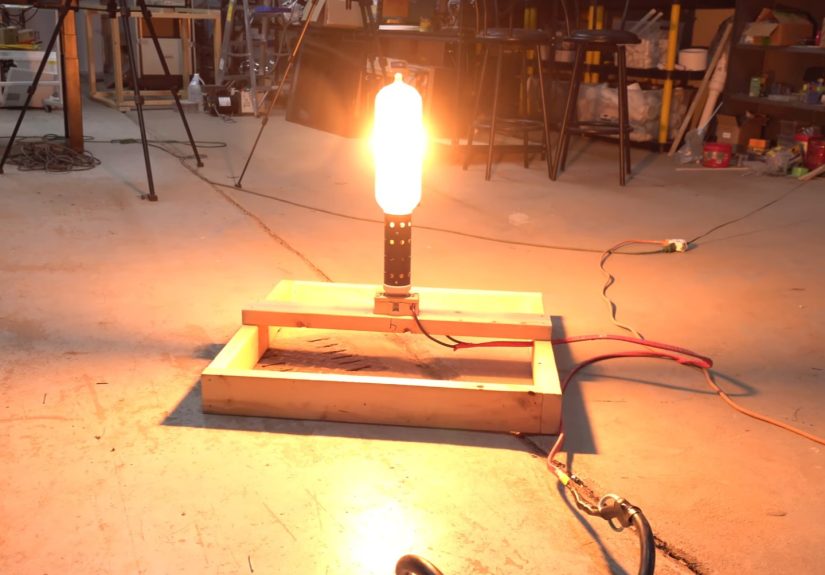
So what happens when you pump 30,000 watts into a tungsten incandescent light bulb? In simple terms: the filament overheats almost instantly, the tungsten may glow white-hot, evaporate, melt, arc, or rupture, and the glass envelope may fail violently depending on the bulb design, voltage, current, and surrounding conditions. It is not a cute DIY experiment. It is a high-energy electrical hazard with risks of electric shock, arc flash, fire, hot glass, ultraviolet-rich glare, and flying debris. In other words, the bulb does not become a superhero. It becomes a tiny, angry physics grenade.
First, What Is a Tungsten Incandescent Bulb?
A tungsten incandescent bulb makes light by forcing electric current through a very thin tungsten filament. Tungsten is used because it has an extremely high melting point compared with most metals. When current flows through the filament, electrical resistance converts electrical energy into heat. Once the filament gets hot enough, it emits visible light through incandescence.
That process is beautifully simple and hilariously inefficient. A traditional incandescent bulb sends most of its energy out as heat rather than visible light. That is why an old 100-watt bulb could light a room and also make a lampshade feel like a toaster wearing a hat. The warm glow is pleasant, but thermodynamically speaking, the bulb is mostly a heater with a light-emitting side hustle.
What Does 30,000 Watts Really Mean?
Thirty thousand watts equals 30 kilowatts. To put that into perspective, it is the same power as 300 standard 100-watt incandescent bulbs running at once. If that energy were delivered for one full hour, it would consume 30 kilowatt-hours of electricity. In lighting terms, that is not “a little extra brightness.” That is “your breaker panel has entered the chat.”
A normal household incandescent bulb might be rated for 40, 60, 75, 100, or sometimes 150 watts. Specialty bulbs can be much higher, especially stage, studio, projector, or industrial lamps. But a typical screw-base household tungsten bulb is not engineered to absorb 30 kilowatts. Its filament, support wires, base, glass, and gas fill are all designed around a particular voltage, current, temperature, and heat-loss balance. Once that balance is smashed, failure comes quickly.
The Filament Heats Up Almost Instantly
The first thing that happens is rapid heating. A tungsten filament is thin by design, which makes it heat quickly. At rated power, it reaches a controlled operating temperature where it glows and loses heat through radiation, conduction through support wires, and convection inside the bulb’s gas. When power rises far beyond the rating, the filament temperature climbs faster than the bulb can shed heat.
At first, the bulb may flare brighter. The color shifts from warm orange-yellow toward a harsher white. This is because hotter objects emit more visible light and shift toward shorter wavelengths. That bright flash may look impressive for a fraction of a second, but it is not stable. The filament is being pushed toward physical failure.
Resistance Changes as the Tungsten Gets Hotter
Tungsten does not behave like a perfectly fixed resistor. As its temperature rises, its electrical resistance rises too. This is why incandescent bulbs have a high inrush current when first switched on: the cold filament has lower resistance, so it initially allows a larger current surge. As it heats, resistance increases and current settles.
With extreme power input, this self-limiting behavior helps only briefly. It does not magically protect the bulb from destruction. The electrical and thermal stress can still exceed the filament’s limits. Think of it like giving a paper umbrella to someone standing under Niagara Falls. Technically, there is protection. Practically, good luck.
Tungsten Can Evaporate, Thin Out, and Fail
Even during normal operation, tiny amounts of tungsten evaporate from the filament over time. That evaporated tungsten can deposit on the inside of the glass, causing old bulbs to darken. This is one reason incandescent bulbs eventually burn out. At very high filament temperatures, evaporation accelerates dramatically.
When too much tungsten leaves the filament, weak spots form. A thinner section has higher resistance, so it gets even hotter than the rest of the filament. That hot spot then thins faster, heats harder, and fails sooner. It is a feedback loop with a bad attitude. Under a huge overload, this process can happen almost instantly.
The Filament May Melt or Vaporize
Tungsten has one of the highest melting points of all metals, but “very high melting point” does not mean “invincible.” With enough energy forced into a tiny filament, the metal can overheat, sag, melt at a weak spot, or vaporize in a flash. If the circuit can supply enormous current, the filament may act almost like a fuse, opening the circuit as it breaks.
That break may be quiet, or it may produce a bright flash and internal arc. The exact result depends on the available voltage, the current limit, the bulb’s internal gas, the filament geometry, and how fast the energy is delivered. In a controlled lab, engineers can measure these events. In a random garage setup, the result is usually less “science fair” and more “why does the room smell like regret?”
Arcing Can Make the Failure More Violent
When a filament breaks under high electrical stress, the current does not always stop politely. If the voltage is high enough, electricity may jump across a gap as an arc. An electric arc is a plasma path: hot, bright, noisy, and dangerous. Inside a bulb, arcing can heat metal supports, vaporize material, raise internal pressure, and attack the glass envelope.
This is one of the reasons overdriving a bulb at extreme power is not just a “burnout” event. It can become an arc-flash hazard. Arc flashes can produce intense heat, blinding light, pressure waves, molten metal particles, and ignition risks. Even if the bulb is small, the power supply behind it may not be small at all.
The Glass Envelope May Crack, Pop, or Shatter
The glass bulb exists to protect the filament from oxygen and to maintain the proper internal atmosphere. Many incandescent bulbs contain inert gas such as argon or nitrogen to slow tungsten evaporation. If the glass breaks while the filament is hot, oxygen rushes in and the filament is rapidly destroyed.
With extreme power, glass can fail from thermal shock, internal arcing, pressure changes, or mechanical stress. A small household bulb is not a pressure-rated laboratory chamber. If it cracks, pops, or shatters, hot glass fragments may fly outward. The bulb may also drop molten or extremely hot metal particles. This is why high-power lamp systems use shields, enclosures, ratings, and safety proceduresnot vibes.
Would It Get as Bright as the Sun?
No, not in any useful or sustained way. A severely overpowered incandescent bulb may produce a spectacular flash, but it will not become a stable miniature sun. The filament cannot maintain that temperature without failing. Also, incandescent lighting is limited by material temperature. To produce more light efficiently, modern systems use different technologies: LEDs, discharge lamps, lasers, arc lamps, and specialized high-intensity sources.
At 30,000 watts, the result is less like a super-bright lamp and more like an electrical failure event that happens to emit light. You may get a burst of brilliance, but the bulb’s useful life could shrink from hundreds of hours to milliseconds. That is not a lighting upgrade. That is a retirement party with sparks.
Heat Becomes the Main Event
Because incandescent bulbs convert so much energy into heat, 30,000 watts creates a massive thermal problem. Even if only a fraction of that power reaches the filament before failure, the local temperature rise can be extreme. If the bulb somehow survived long enough to dissipate the energy, it would behave more like a powerful heater than a lamp.
Thirty kilowatts of heat is not casual warmth. It is enough to create fire risks near paper, fabric, plastics, wood, dust, and other combustibles. It can damage fixtures, wiring insulation, sockets, connectors, and surrounding surfaces. The base of a normal bulb is not designed to carry that kind of current or thermal load.
Why the Bulb’s Rating Matters
A bulb’s wattage rating is not a suggestion written by overly cautious engineers with clipboards and a fondness for ruining fun. It reflects the limits of the filament, glass envelope, gas fill, socket, base, and expected operating temperature. When a bulb is rated for 60 watts, that means it is designed to operate safely and predictably around that power level under approved conditions.
Overpowering a bulb may increase brightness briefly, but it shortens life sharply. Small increases in voltage can noticeably reduce incandescent lamp life because filament temperature rises. At extreme increases, the lamp simply fails. The relationship is not gentle or forgiving. It is more like stepping on a banana peel at the top of a staircase.
What If the Bulb Were a Huge Specialty Lamp?
There are high-wattage tungsten and tungsten-halogen lamps used in film production, stage lighting, photography, industrial heating, and scientific equipment. Some are rated in the thousands of watts. These lamps use special quartz envelopes, controlled halogen chemistry, robust bases, heat-resistant fixtures, cooling, and protective shielding.
But even a large professional lamp must be operated within its rating. A 30,000-watt tungsten lamp, if purpose-built, would not look like a regular household bulb. It would be part of a specialized system designed for extreme heat, current, optical output, and safety. The power supply, conductors, switches, enclosure, ventilation, and protective gear would all matter. The lamp is only one piece of the system.
Why Halogen Lamps Survive Hotter Conditions
Halogen lamps are a refined version of incandescent technology. They still use a tungsten filament, but the bulb contains halogen gas that helps redeposit evaporated tungsten back onto the filament under the right conditions. This allows the filament to operate hotter and produce whiter light while slowing blackening of the envelope.
However, halogen does not make tungsten immortal. Overpower a halogen lamp far enough and it can fail dramatically too. In fact, because many halogen lamps operate at high internal temperature and pressure, they often require protective covers or enclosed fixtures. They are brighter and more compact, but they deserve respect.
What the Failure Might Look Like
If a normal tungsten incandescent bulb were subjected to an extreme overload, the sequence might look like this: a sudden brilliant flare, a color shift toward white, a filament hot spot, internal flash, filament rupture, possible arc, glass blackening or silvering from metal vapor, and then darkness. If conditions are harsher, the glass could crack or shatter.
The entire event could be over faster than your brain can finish saying, “That was probably a bad idea.” High-speed cameras often reveal that lamp failures are not uniform. One section of the filament becomes the weak link, overheats, and breaks first. The rest of the bulb then becomes a stage for the final electrical drama.
Can a Light Bulb Explode From Too Much Power?
Yes, a bulb can fail violently when abused electrically or thermally. “Explode” is a broad word, but glass can break outward, internal parts can arc, and hot fragments can escape. The danger increases with higher energy supplies, poor containment, damaged bulbs, incorrect fixtures, and high-voltage circuits.
This does not mean every overpowered bulb becomes a Hollywood fireball. Many simply flash and go open-circuit. But with 30,000 watts available, the setup has enough energy to make the failure dangerous. The responsible answer is not to try it casually. The responsible answer is to understand the physics without becoming the physics.
Why LEDs Do Not Behave the Same Way
LEDs produce light through semiconductor physics rather than heating a metal filament until it glows. They are far more efficient and run much cooler for the same light output, although they still need heat management. Overpowering an LED can also destroy it, but the failure mode is different: semiconductor junction damage, driver failure, thermal runaway, smoke, or component rupture.
The tungsten bulb is special because its normal job is already extreme heat. It lives near the edge of material endurance. Add too much power, and you push it off that edge.
Safety: This Is Not a Home Experiment
A 30,000-watt electrical setup can be life-threatening. It can involve dangerous current, dangerous voltage, arc flash, fire, burns, eye injury, and flying glass. Professional demonstrations involving extreme electrical power use engineered enclosures, remote switching, current limiting, shields, rated components, protective equipment, fire controls, and trained personnel.
For readers who are curious, the safe path is simulation, classroom-scale demonstrations with approved equipment, or videos from qualified labs that use proper controls. Do not connect household bulbs to improvised high-power sources. Electricity does not care how many science videos you watched last night.
Real-World Takeaway
When you pump 30,000 watts into a tungsten incandescent light bulb, you are not making a better light bulb. You are creating a fast thermal and electrical overload. The tungsten filament becomes intensely hot, evaporates or melts, develops weak spots, and fails. Arcing may occur. The glass may darken, crack, or shatter. Most of the energy becomes heat, and the event can become dangerous almost immediately.
The deeper lesson is that incandescent bulbs are simple but finely balanced devices. Their warm glow depends on a fragile agreement between voltage, current, resistance, temperature, gas fill, and material limits. Break that agreement with 30 kilowatts, and the bulb answers in the only language it knows: flash, heat, failure, and possibly a small shower of “please do not do that again.”
Additional Experience-Based Notes: What This Topic Teaches About Power, Heat, and Respect
People are often surprised by how dramatic incandescent bulb failures can be because ordinary bulbs seem so harmless. They sit in desk lamps, ovens, closets, and old porch fixtures looking innocent. But every incandescent bulb is already running a tiny high-temperature experiment. The filament is hot enough to glow visibly, the glass is managing heat, and the socket is carrying current continuously. Under normal conditions, everything feels boring because the engineering is working.
The moment you think about 30,000 watts, the scale changes completely. A useful way to imagine it is to picture a single bulb being asked to perform the job of a large bank of lights. In a theater or film set, 30 kilowatts of tungsten lighting would be spread across multiple professional fixtures, heavy cables, controlled dimmers, ventilation, and trained crew members. Nobody would expect a household bulb to swallow all that power. That would be like asking a paper coffee cup to hold a swimming pool.
One of the most valuable lessons from this topic is that wattage is not just “brightness.” In casual conversation, people often say a bulb is “brighter because it has more watts.” Technically, watts measure power consumption, not light output. With incandescent bulbs, more watts often meant more light because the technology was familiar and predictable. But the missing word is heat. More watts also means more thermal load. At extreme levels, heat becomes the story, the villain, and the closing credits.
Another practical lesson is that failure usually begins at the weakest point. A filament may look uniform, but microscopic variations matter. A slightly thinner area runs hotter. A hotter area evaporates faster. A damaged support can concentrate stress. A vibration can finish what heat started. This is why old incandescent bulbs often burn out at switch-on. The cold filament draws a surge of current, and if one weak section cannot handle the stress, the bulb flashes and dies. At 30,000 watts, that same principle is accelerated into a blink-and-you-missed-it catastrophe.
The topic also explains why protective design matters. In everyday life, we benefit from fuses, breakers, rated sockets, fixture labels, insulation, glass envelopes, and product standards. These safeguards are easy to ignore until energy escapes its intended path. When people see a bright flash from an overloaded bulb, they may focus on the spectacle. Engineers focus on the available fault current, the arc path, the heat release, the glass trajectory, and whether anything nearby can ignite.
Finally, there is a wonderful humility lesson here. Tungsten is a remarkable metal. It tolerates temperatures that would ruin many other materials. It helped make practical incandescent lighting possible and shaped modern life for more than a century. But even tungsten has limits. Push enough power through a tiny wire, and nature sends the invoice immediately. The result is not magic. It is energy conservation, resistance heating, thermal stress, evaporation, and material failureall happening at a speed that makes the bulb look theatrical.
So the best experience to take from this question is not “How can I try this?” It is “How much physics is hiding inside ordinary objects?” A simple light bulb contains lessons about electricity, materials science, thermal radiation, efficiency, safety, and engineering trade-offs. At normal power, it gives you warm light. At 30,000 watts, it gives you a loud reminder that design ratings exist for a reason.
Conclusion
Pumping 30,000 watts into a tungsten incandescent light bulb would overwhelm the delicate balance that lets the bulb work. The filament would heat violently, likely flare, thin, melt, vaporize, or rupture. Internal arcing could occur, and the glass envelope might crack or shatter. While the moment could be visually dramatic, it would also be dangerous. The science is fascinating, but the experiment belongs only in controlled professional environments with proper equipment and safety systems.
The humble tungsten bulb is a masterpiece of old-school engineering, but it is not a bottomless bucket for electrical power. Treat wattage ratings seriously, respect heat, and remember: when a light bulb starts acting like a lightning storm in a jar, the correct response is not applauseit is distance.