Table of Contents >> Show >> Hide
- What Was the Circus Family’s Abandoned Mansion?
- Why the Mansion Went Viral
- Inside the Mansion: A Room-by-Room Look
- The Circus Connection: Why It Matters
- Why Abandoned Mansions Fascinate Us
- Beauty, Decay, and the Ethics of Urban Exploration
- Design Lessons from the Circus Mansion
- What Happened to the Mansion?
- The Emotional Story Behind the Peeling Paint
- Experience: What It Feels Like to Encounter a Place Like the Circus Mansion
- Conclusion
Some abandoned houses whisper. Others groan dramatically, shed paint like confetti, and look as if a retired circus troupe held one final party, packed up the elephants, and forgot the entire second floor. The story behind the Circus Family’s Crazy Abandoned Mansion belongs to that second category: a strange, colorful, decaying property in New York’s Catskills that became famous online after photographer Bryan Sansivero captured its peeling carnival colors, circus-tent ceilings, bright bedrooms, odd murals, and eerie “somebody really lived here” atmosphere.
Often nicknamed the Catskill Circus House or abandoned clown house, the mansion is not just another spooky building with broken windows and a raccoon acting like the unpaid security guard. It is a visual time capsulepart family home, part art project, part mystery, and part reminder that even the loudest rooms eventually go quiet. Reports describe the property as a former home connected to a circus family, and while many details about its owners remain private or uncertain, the house itself tells a story through design: red-and-white stripes, harlequin patterns, carnival-inspired ceilings, painted murals, and rooms so colorful they make beige feel personally attacked.
What Was the Circus Family’s Abandoned Mansion?
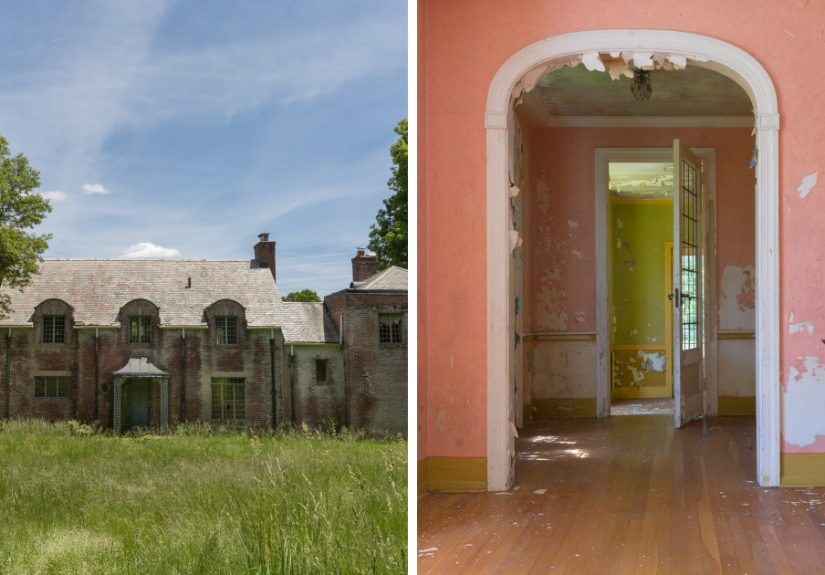
The mansion was a large, secluded home in the Catskills region of New York, photographed after years of abandonment. From the outside, it appeared surprisingly ordinary: a quiet house surrounded by overgrowth, weather, and the usual “please don’t step on that floorboard unless you enjoy surprise basements” energy. Inside, however, the place exploded with personality.
Visitors who saw Sansivero’s photographs were immediately drawn to the contrast. The structure was deteriorating, but the colors were still loud. Paint peeled from walls and ceilings, yet the circus theme remained unmistakable. One bedroom featured a ceiling painted like a big-top tent. Another room displayed bold diamond patterns. A bathroom carried red-and-white carnival stripes. A library offered a darker, moodier personality with wood tones and a wall mural, as if the house wanted to prove it had range.
The result was more than “creepy abandoned mansion.” It felt theatrical. It felt personal. It felt like someone once cared deeply about making a home playful, strange, memorable, and maybe just a little unhingedin the best possible way.
Why the Mansion Went Viral
Abandoned homes go viral for a few predictable reasons: mystery, decay, nostalgia, danger, and the internet’s eternal love of asking, “Who leaves a perfectly good chandelier behind?” The Circus Family’s Crazy Abandoned Mansion had all of those ingredients, plus one extra: spectacle.
Most abandoned properties are visually quiet. They show faded wallpaper, dust-covered furniture, collapsed plaster, old appliances, and maybe a piano that has been waiting 40 years for someone dramatic to play one sad note. This mansion, however, was loud. The circus details made every room feel like a different scene. It was not simply forgotten; it looked as if a performance had ended and the stage crew never came back.
That theatrical quality made the home irresistible to readers, photographers, design lovers, urban-exploration fans, and anyone who enjoys a good real-estate mystery with a side of goosebumps. The mansion also arrived online at the perfect cultural moment. People love “before it disappeared” stories, especially when a place is private, fragile, and unlikely to remain unchanged. In fact, later reports noted that the property was eventually sold and renovated, which made the photographs even more valuable as documentation of a vanished version of the house.
Inside the Mansion: A Room-by-Room Look
The Big-Top Ceiling
The most unforgettable feature was the circus-tent ceiling. Painted to resemble the inside of a big top, it turned an ordinary bedroom into a miniature carnival world. Even as age caused the paint to peel, the design stayed powerful. The decay did not erase the theme; it made it stranger. The room looked cheerful and haunted at the same time, like a birthday party hosted by a ghost with excellent taste in color blocking.
The Diamond-Patterned Bedroom
Another room featured bold harlequin-style wall patterns, a design commonly associated with clowns, performers, and circus costumes. Because the room was smaller and playful, some observers believed it may have been a child’s bedroom. That possibility gives the space emotional weight. What looks spooky online may once have been a child’s wonderlanda private circus where imagination had permission to swing from the chandeliers.
The Striped Bathroom
Even the bathroom followed the carnival theme. Red-and-white stripes covered the walls, echoing the look of circus tents and midway booths. It is one thing to decorate a bedroom with a theme. It is another thing entirely to extend the concept into the bathroom. That is commitment. That is “we bought the red paint in bulk and nobody can stop us” energy.
The Library and Mural
The library stood apart from the brighter rooms. With darker tones, wood details, and a painted wall scene, it provided a more serious counterpoint to the circus spaces. This room suggested that the mansion was not a gimmick from front door to attic. It had layers: playful rooms, adult rooms, quiet rooms, and theatrical rooms. That mixture made the abandoned mansion feel like a real family home rather than a movie set.
The Entryway and Living Spaces
The entrance reportedly greeted visitors with bright yellow paint, a dramatic opening note before the stranger rooms upstairs. Downstairs areas showed the classic signs of long-term abandonment: worn floors, failing ceilings, scattered objects, and light pouring over surfaces that had not been maintained in years. These rooms helped balance the mansion’s fantasy. Beneath the carnival colors was the reality of an aging, empty house.
The Circus Connection: Why It Matters
America has a long history of circus families, traveling performers, showmen, and entertainment dynasties. Circuses were once among the country’s biggest spectacles, moving from town to town by wagon, rail, and later truck. They brought acrobats, clowns, animal acts, music, costumes, posters, and a sense of wonder to communities that had few other mass entertainments.
That history makes the Catskill Circus House especially fascinating. A circus-themed mansion is not merely quirky interior design; it connects to a broader American tradition of showmanship. The circus has always been about transformation. A field becomes a big top. A performer becomes a character. A night out becomes a memory. In this house, that same spirit seems to have entered domestic life. The home was not just lived init was staged.
New York also has genuine circus-related architectural history. The famous James A. Bailey House in Harlem, built for the Barnum & Bailey circus impresario, shows how circus wealth and imagination could shape remarkable homes. The Catskill mansion was differentmore private, more eccentric, and far less formally documentedbut it belongs to the same larger fascination: what happens when show-business imagination moves indoors?
Why Abandoned Mansions Fascinate Us
Abandoned mansions are popular because they reverse the usual meaning of luxury. A mansion is supposed to represent success, stability, family legacy, and a roof that does not appear to be negotiating with gravity. When a grand house is left empty, it creates tension. How did something expensive become unwanted? Why did the furniture stay? Why did nobody rescue the stained glass, the fireplace mantel, the framed photos, or the oddly specific collection of old wine bottles?
The Circus Family’s Crazy Abandoned Mansion adds another layer: personality. Many abandoned homes are mysterious because they are blank. This one was mysterious because it was expressive. The circus rooms made people feel close to the former residents without actually knowing them. Their choices were still visible. Their humor, taste, and imagination seemed to linger in paint.
That is the emotional power of abandoned places. They turn ordinary objects into clues. A croquet set becomes evidence of summer afternoons. A mural becomes evidence of personal taste. A childlike ceiling becomes evidence of love, whimsy, or possibly one very persuasive kid with a circus obsession. The home becomes a puzzle, and the internet becomes a detective agency with questionable boundaries and strong opinions.
Beauty, Decay, and the Ethics of Urban Exploration
The photographs of the mansion are beautiful, but abandoned buildings are not playgrounds. They can be structurally unsafe, privately owned, contaminated by mold or asbestos, and legally off-limits. Responsible urban exploration focuses on documentation, respect, and preservationnot vandalism, theft, or “I took this antique doorknob because it looked lonely.”
Photographers like Sansivero have helped preserve visual records of places that later changed, collapsed, burned, were demolished, or were renovated. That kind of documentation can be valuable, especially when it captures interiors that the public would otherwise never see. Still, the best rule for abandoned spaces is simple: take only photographs, leave only footprints, and do not post exact locations that invite damage.
The Catskill Circus House is a strong example of why this matters. Once a place becomes famous online, it can attract vandals, thrill-seekers, and souvenir hunters. The more unusual the property, the more vulnerable it becomes. The mansion’s later sale and renovation may have ended the abandoned chapter, but the photographs continue to show why preservationwhether physical or photographicmatters.
Design Lessons from the Circus Mansion
Believe it or not, this abandoned house offers practical design inspiration. No, you do not need to paint your bathroom like a popcorn booth unless your heart says yes and your landlord says “absolutely not.” But the mansion proves that memorable interiors come from courage.
1. A Theme Works Best When It Has Emotion
The circus rooms were not random decoration. They felt connected to identity, family, childhood, or performance. Strong interiors often work because they reflect a story, not because every object matches the throw pillows.
2. Color Creates Memory
People remember the mansion because of its colors: yellow entryways, red stripes, purple diamonds, orange walls, and painted ceilings. Neutral rooms can be elegant, but bold rooms become legends.
3. Imperfection Adds Character
In polished real-estate photos, everything looks expensive but emotionally refrigerated. In the abandoned circus mansion, peeling paint and uneven surfaces gave the rooms texture. Of course, decay is not a design strategy you should apply to your own ceiling. Please pay attention to leaks. But visually, age can create atmosphere that new materials often imitate.
4. Every Room Can Have Its Own Mood
The mansion did not repeat one look everywhere. It shifted from playful to dark, bright to quiet, theatrical to domestic. That variety made the house feel alive. A home can have a personality without every room wearing the same outfit.
What Happened to the Mansion?
Public reports indicate that the Catskill Circus House was eventually sold and renovated. For fans of abandoned photography, that news is bittersweet. Renovation means the decayed version is gone, but it also means the structure may have been saved from deeper damage. In the world of abandoned homes, survival often requires transformation.
This is the uncomfortable truth of preservation: we cannot freeze every building at its most photogenic stage of decay. Rot may look romantic in photos, but it is still rot. A leaking roof does not care about Instagram engagement. When a house is restored, some mystery disappears, but a new chapter begins. The mansion’s circus rooms may no longer exist in the same form, yet the photographs keep that strange, colorful moment alive.
The Emotional Story Behind the Peeling Paint
The most haunting thing about the Circus Family’s Crazy Abandoned Mansion is not that it looked scary. It is that it looked loved. The circus theme required effort. Someone planned those rooms. Someone chose those colors. Someone looked at a ceiling and said, “You know what this needs? A tent.” That is not neglect; that is imagination.
Years later, nature and time had taken over. Paint peeled. Floors weakened. Dust settled. The mansion became a visual contradiction: joyful design inside a decaying shell. That contrast is why people still talk about it. The house feels like a reminder that homes are not just architecture. They are containers for moods, jokes, routines, arguments, holidays, childhoods, and very bold decorating decisions.
Experience: What It Feels Like to Encounter a Place Like the Circus Mansion
Imagine approaching the property on a gray afternoon, when the sky looks like it has not had coffee and the weeds are doing their best impression of a security fence. From the outside, the mansion might not announce itself. It may look like another abandoned rural home: quiet, weathered, a little tired, and surrounded by the kind of silence that makes every snapping twig sound legally significant.
Then you step insidecarefully, respectfully, and only with permission in the real worldand the mood changes. The first sensation is not fear. It is surprise. Bright color flashes from the walls. A staircase rises ahead. Dust hangs in the light. Your brain needs a second to understand that the house is both cheerful and broken. It is like finding a party hat in an old attic: funny at first, then unexpectedly sad.
Moving through the rooms, the mansion would feel less like a haunted attraction and more like a half-finished conversation. In the circus bedroom, the big-top ceiling pulls your eyes upward. You can imagine a child lying in bed, staring at the painted tent, turning bedtime into a performance. In the striped bathroom, the red-and-white walls feel playful, but the peeling paint reminds you that playfulness needs care to survive. In the library, the darker wood and mural slow everything down. Suddenly the house is not shouting; it is remembering.
The experience would also be full of practical tension. Abandoned houses are not gentle museums. A beautiful patch of floor may be weak. A romantic shaft of light may be entering through roof damage. Every step requires attention. You become aware of your own body in the space: where you place your feet, how loudly you breathe, whether that noise was the house settling or your imagination applying for overtime.
What stays with you afterward is not just the circus theme. It is the feeling of entering a place after the story has ended but before the evidence has disappeared. The mansion invites questions it cannot fully answer. Who painted these rooms? Was the theme professional, personal, or playful? Did children grow up here? Did the family laugh about the wild bathroom? Did guests walk in and say, “Wow,” or did they quietly wonder if they had entered the world’s most committed carnival Airbnb?
That is why abandoned places like the Catskill Circus House matter to so many people. They are not valuable only because they are spooky. They are valuable because they make time visible. In a normal home, life moves too quickly to notice the meaning of wallpaper, toys, games, and murals. In an abandoned home, everything stops long enough for those details to speak. The Circus Family’s Crazy Abandoned Mansion spoke in stripes, diamonds, murals, and silenceand somehow, that made the story louder.
Conclusion
The Circus Family’s Crazy Abandoned Mansion remains one of the most memorable abandoned homes connected to American urban-exploration photography. Its fame came from contrast: a decaying Catskills mansion filled with circus-inspired color, playful rooms, peeling paint, and unanswered questions. Whether viewed as a spooky abandoned mansion, a lost family home, a design oddity, or a preservation lesson, the property reminds us that houses can perform long after their owners leave.
The circus rooms may have changed through renovation, but their online legacy continues because the images captured something rare: joy and decay sharing the same room. And honestly, if a house can make people think about history, family, architecture, preservation, and red-striped bathrooms all at once, it deserves a standing ovationpreferably from a safe distance, with sturdy shoes.
Note: This article is based on publicly reported information about the Catskill Circus House, Bryan Sansivero’s abandoned-home photography, American circus-history context, and general historic-preservation principles. Exact private ownership details are intentionally avoided.