Table of Contents >> Show >> Hide
- Islamic Architecture, Defined (Without Putting You to Sleep)
- Where It Started: Early Influences and Fast Growth
- The “Core Kit”: Signature Elements You’ll See Again and Again
- 1) Orientation and the Qibla Wall
- 2) The Mihrab: The Most Decorated Niche in the Room
- 3) The Minbar: Where the Friday Sermon Happens
- 4) Minarets: Towers With a Practical Job (and Star Power)
- 5) Courtyards (Sahn) and Water
- 6) Domes: Engineering, Symbolism, and a Little Flex
- 7) Iwans and the Four-Iwan Plan
- 8) Muqarnas: The “Stalactite” Transition That Looks Like Sculpture
- Decoration That Isn’t “Just Decoration”
- Regional Styles: One Tradition, Many Dialects
- Famous Examples Worth Knowing (Even If You Never Take Art History)
- How to “Read” Islamic Architecture Like a Pro (Without Pretending You’re One)
- Islamic Architecture Today: Not Frozen in the Past
- Conclusion: The Big Idea (And Why It Matters)
- of Experiences Related to Islamic Architecture
If you’ve ever looked at a mosque, palace, or courtyard and thought, “Wow, my eyeballs are doing cardio,” you’ve probably met Islamic architecture. It’s the architectural tradition shaped by Muslim societies from the 7th century to todayspanning North Africa, the Middle East, parts of Europe, Central Asia, South Asia, and beyond. And no, it’s not one “look.” It’s a family reunion: many regional accents, one shared set of design ideas.
In this guide, we’ll break down what Islamic architecture is, why it looks the way it does, and how to spot its signature moves from minarets and domes to muqarnas (aka “architectural honeycomb magic”) and those mesmerizing Islamic geometric patterns that seem to go on forever (because sometimes they’re meant to).
Islamic Architecture, Defined (Without Putting You to Sleep)
Islamic architecture refers to buildings (and design features) created for Muslim communities and rulers, including religious, civic, educational, and residential structures. Mosques are the headline act, but the full cast includes: madrasas (schools), caravanserais (roadside inns for travelers and trade), palaces, fortresses, markets, and mausoleums.
What ties this architecture together isn’t a single blueprintit’s a set of recurring priorities: orienting worship spaces toward Mecca, creating community gathering areas, shaping light and shade, and decorating surfaces in ways that feel both intellectually precise and spiritually charged.
Where It Started: Early Influences and Fast Growth
Early Islamic religious buildings didn’t appear in a vacuum. As Muslim communities expanded, builders adapted techniques and visual languages from places they encounteredByzantine, Roman, Persian/Sasanian, and othersthen reshaped them into something new. That’s why you’ll see familiar elements (like domes and arches) reinterpreted with different proportions, materials, and decoration.
Over time, major dynasties and regions developed their own recognizable stylesUmayyad, Abbasid, Fatimid, Seljuk, Mamluk, Ottoman, Safavid, and Mughal, among others. Think of Islamic architecture less like a single genre and more like a playlist that keeps remixing its best tracks.
The “Core Kit”: Signature Elements You’ll See Again and Again
1) Orientation and the Qibla Wall
In mosque design, direction matters. The wall oriented toward Mecca is the qibla wall. It’s the architectural equivalent of “this way, everyone.” Once you know where the qibla wall is, you can usually predict where the most visually emphasized features will gather.
2) The Mihrab: The Most Decorated Niche in the Room
The mihrab is a niche set into the qibla wall. It marks the direction of prayer and often becomes the mosque’s visual focal point. Because it’s “the point,” artists and patrons frequently treat it like the building’s crown jewellayering it with calligraphy, tile, carved stone, or carved wood.
3) The Minbar: Where the Friday Sermon Happens
Usually near the mihrab sits the minbar, a pulpit with steps used for sermons (especially on Friday). In historic buildings, minbars can be astonishing pieces of craftsmanshipwoodwork so intricate it makes modern furniture feel like it skipped a few levels.
4) Minarets: Towers With a Practical Job (and Star Power)
A minaret is the tower associated with a mosque, historically connected to the call to prayer. Across regions, minarets vary wildly: chunky and square, pencil-thin and soaring, spiral-ramped, or stacked in geometric tiers. Functionally, they help make the mosque’s presence known. Visually, they’re the skyline’s way of saying, “This city has a story.”
5) Courtyards (Sahn) and Water
Many mosques include a courtyard (often called a sahn), frequently paired with a fountain for ablutions (ritual washing). Courtyards also solve a very real problem: climate. They provide air, light, shade, and a gathering space that can expand the building’s capacity. Add water, and suddenly the architecture is doing both engineering and poetry.
6) Domes: Engineering, Symbolism, and a Little Flex
Domes show up across Islamic architecture, especially in later imperial styles. Structurally, a dome can create a huge, unified interior space. Symbolically, it’s often interpreted as a “heavens” gesturean upward pull that turns the ceiling into a statement. In Ottoman architecture, the central dome becomes a signature move, creating wide prayer halls with dramatic vertical emphasis.
7) Iwans and the Four-Iwan Plan
An iwan is a vaulted hall that opens on one side, often to a courtyard. In parts of Iran and Central Asia, mosques and schools developed the four-iwan plan: four monumental iwans arranged around a central courtyard. It’s symmetrical, processional, and perfect for making an entrance feel like an event.
8) Muqarnas: The “Stalactite” Transition That Looks Like Sculpture
Muqarnas are three-dimensional, niche-like forms that cascade in tiersoften used under domes, in portals, and at transitional corners. They can look like stalactites, honeycombs, or a frozen fireworks burst. Sometimes muqarnas help manage architectural transitions (like shifting from a square room to a round dome); sometimes they’re pure visual fireworks; often they’re both.
Decoration That Isn’t “Just Decoration”
Geometric Patterns: Math That Learned How to Dance
Islamic geometric patterns are one of the most recognizable features of Islamic art and architecture. Built from repeat unitscircles, squares, star polygons, and interlacing linesthese designs can scale up to cover walls, domes, screens, floors, and objects. The result is a surface that feels orderly, infinite, and alive.
What’s fun is that these patterns can be both strict and playful. They follow rules, then bend them slightly so the eye never gets bored. It’s like jazz, but for polygons.
Arabesque and Vegetal Motifs: Gardens on Walls
Alongside geometry, you’ll often see arabesque (flowing vegetal designs) and floral motifs. They can suggest abundance, growth, and paradise turning stone and tile into a kind of permanent garden.
Calligraphy: Architecture That Speaks
In many Islamic buildings, the written word is a major decorative force. Calligraphyoften Qur’anic verses, pious phrases, patron names, or datesappears on walls, arches, domes, portals, and even textiles used in sacred contexts. This isn’t “labeling.” It’s a design system where meaning and beauty occupy the same space.
Why So Much Non-Figural Design?
In many religious settings, figurative imagery is minimized, and decoration leans toward geometry, vegetal patterns, and calligraphy. That doesn’t mean Islamic cultures “never” used imagesfigurative art flourished in many secular contexts. But in sacred architecture, non-figural ornament often dominates, producing interiors where pattern and text take center stage.
Regional Styles: One Tradition, Many Dialects
Umayyad and Early Islamic
Early monuments set major precedents: ambitious domes, monumental decoration, and the idea that architecture can be both devotional space and political statement. Early mosques also developed practical layouts for large congregationscourtyards, arcades, and directional prayer areas.
Persian and Central Asian Traditions
Persian-influenced architecture is famous for brick mastery, grand portals, and the four-iwan courtyard plan. Tilework becomes an art form in itselfglazed surfaces that catch light like jewelry. Think of buildings where the exterior is practically a color theory lesson.
Mamluk Cairo: Monumental Urban Presence
In Mamluk architecture, buildings often interact aggressively (in a good way) with the street: tall façades, powerful portals, and complex programs that blend mosque, school, and mausoleum into one statement. These are structures designed to be seen, remembered, and usedpublic architecture with a résumé.
Ottoman Istanbul: The Central Dome Era
Ottoman architects perfected large, centrally planned domed spaces. The skyline becomes a conversation between domes and minarets, while interiors use light, tile, and proportion to create calm scalehuge, but not heavy.
Mughal South Asia: Gardens, Symmetry, and Marble Drama
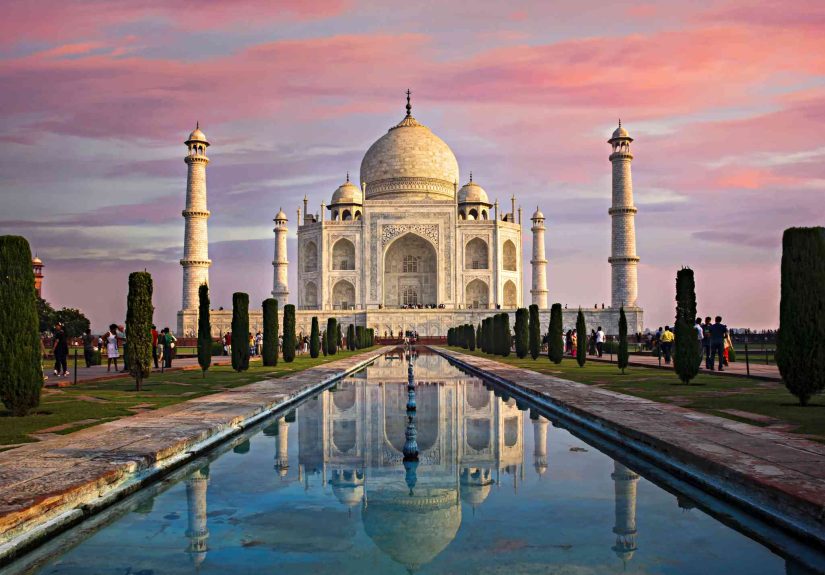
Mughal architecture blends Persian planning with South Asian materials and traditions. Monumental tombs and garden complexeslike the Taj Mahalpush symmetry and craftsmanship to the point where “extra” becomes a compliment.
Andalusian and Maghrebi: Moorish Splendor
In Islamic Spain and North Africa, you’ll see horseshoe arches, layered arcades, intricate stucco, and tiled surfaces that turn courtyards into quiet theaters of light and shadow. Palaces like the Alhambra show how Islamic architecture can be intensely intimate and wildly sophisticated at the same time.
Famous Examples Worth Knowing (Even If You Never Take Art History)
- Dome of the Rock (Jerusalem): early monumental domed shrine with powerful visual symbolism.
- Great Mosque of Damascus (Syria): early model of congregational space and monumental presence.
- Great Mosque of Córdoba (Spain): iconic arcades, layered space, and a famously ornate mihrab zone.
- Great Mosque of Isfahan (Iran): influential development of the four-iwan courtyard mosque.
- Sultan Hasan Complex (Cairo): madrasa-mosque-mausoleum complex with monumental portal drama.
- Süleymaniye & Sultan Ahmed (Blue Mosque) (Istanbul): Ottoman domes, minarets, and dazzling tilework.
- Taj Mahal (Agra): Mughal symmetry and craftsmanship at world-icon level.
- Alhambra (Granada): palace architecture where stucco, water, and proportion do poetry.
How to “Read” Islamic Architecture Like a Pro (Without Pretending You’re One)
Follow the Flow
Ask: how do you enter, where do you gather, and what’s the visual “pull”? Many Islamic buildings choreograph movementfrom public thresholds to calmer interior zones, from bright courtyards to shadowed halls.
Look for the Trio: Geometry, Vegetal, Calligraphy
Once you notice the repeating relationship between geometric pattern, arabesque, and calligraphy, you start seeing a design grammar that works across centuries and continents.
Notice Climate Intelligence
Screens, courtyards, arcades, thick walls, fountains, and shaded passages are not just pretty. They’re technologypassive cooling, privacy management, and light control, long before “smart home” meant an app.
Islamic Architecture Today: Not Frozen in the Past
Contemporary architects still draw on Islamic architecture’s toolkitgeometry, courtyards, screened light, and calligraphic abstractionwhile using modern materials and structural systems. Sometimes it’s a direct reference; sometimes it’s more like a design “accent” that signals continuity without copying.
Conclusion: The Big Idea (And Why It Matters)
Islamic architecture is what happens when faith, community needs, climate, craft, and serious mathematical imagination share a studio apartment for over a thousand years. It’s not one styleit’s a living tradition with regional variety and recurring principles: orientation, communal space, controlled light, and decoration that turns surfaces into meaning.
And the next time someone says, “It’s just patterns,” you can politely disagreebecause in Islamic architecture, patterns are structure, rhythm, theology, and visual delight all at once. Also, your eyes deserve a raise for keeping up.
of Experiences Related to Islamic Architecture
Imagine you’re stepping through a tall portal into a courtyard. The city noise fades like someone turned down a dial. The air feels cooler, even if the sun is doing its absolute most overhead. You notice how the building doesn’t just sit in the heatit negotiates with it. Arcades offer shade. Stone or tile stays calm to the touch. A fountain (or even the memory of one) suggests that water isn’t decoration; it’s comfort, ritual, and symbolism rolled into one.
Now picture walking into the prayer hall. There’s a quiet clarity to the space: carpets align rows, the room feels oriented, and your attention is gently pulled toward the qibla wall. Even if you don’t know the vocabulary yet, you can feel the “front” of the building. Then you see itthe mihrab. It’s not shouting, but it doesn’t have to. The niche gathers detail the way a magnet gathers paperclips: calligraphy bands, floral scrolls, luminous tiles, carved geometry. You’re looking at a functional marker that has been treated like the building’s heartbeat.
If you’ve ever stood under a dome, you know the sensation: your voice changes, your posture changes, your sense of scale changes. In many Islamic buildings, domes don’t just cap a space; they choreograph awe. Light slides across curves. Patterns tighten and loosen as you move. Even a small shift in your position can make a geometric design feel like it’s rotating. It’s architecture that rewards wanderingslowly, respectfully, like you’re reading with your feet.
Then there’s muqarnas, which is basically the moment you realize a ceiling can have choreography too. From afar, it’s a shimmering texture. Up close, it becomes a stack of tiny niches and facetslike the building is turning stone into pixels. People often experience muqarnas the same way they experience a great magic trick: you know it’s real, you know it’s made of normal materials, and you still can’t quite believe it’s allowed to look that good.
Some of the most memorable experiences happen outside “famous” monuments. You might notice a carved screen filtering sunlight into a patterned glow on the floor, turning ordinary daylight into a moving tapestry. Or you might see calligraphy wrapped around an arch and realize the building is speakingnaming, blessing, dedicating, teaching. Even in museum settings, where a mihrab panel or carved door is isolated from its original home, you can still sense the goal: to make craft feel like meaning, and meaning feel like beauty. Once you start noticing these choicesorientation, light, repetition, water, textyou stop just looking at Islamic architecture. You start listening to it.