Table of Contents >> Show >> Hide
- The 2025 SaaS Reality Check
- Metrics That Actually Matter in SaaS in 2025
- AI, Product-Led Growth, and Go-To-Market in 2025
- Pricing, Unit Economics, and the New Discipline
- Customer Success, Retention, and Expansion
- Founders, Teams, and the New Normal
- A Practical Checklist: What Really Matters in SaaS in 2025
- Real-World Experiences: Lessons from the 2025 SaaS Trenches
- Conclusion: The New SaaS Playbook Is Old-School Discipline + New-School Tools
If you’ve been in SaaS long enough, you’ve lived through at least three different religions:
“Growth at all costs,” “Please don’t talk to me about profits,” and now, in 2025,
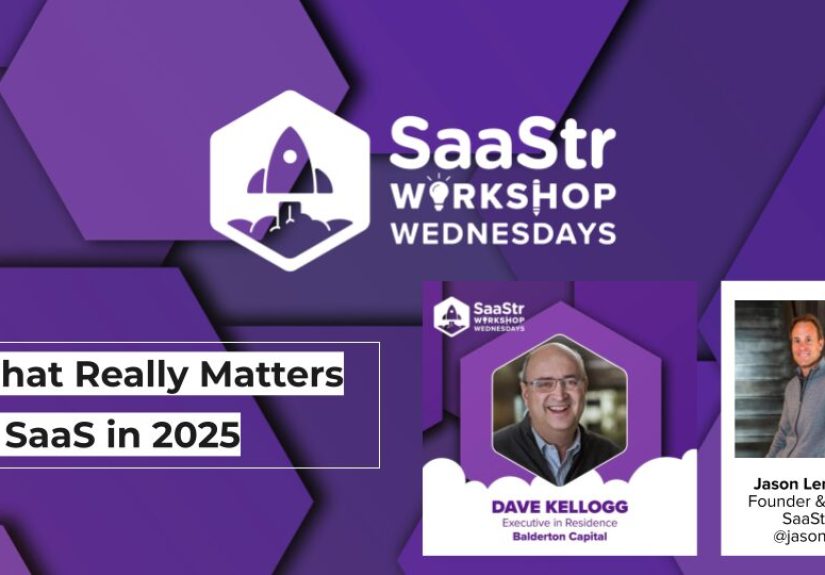
“Efficient growth or you’re not getting funded.” Jason Lemkin and Dave Kellogg have been
through every chapter, and their SaaStr conversation about what really matters in SaaS in 2025
is basically a vibe check for the entire industry.
The short version? The game hasn’t changed, but the scoring has. AI is everywhere, money is
more expensive, private equity is shopping, and customers are a lot more sober than they were
in 2021. The companies that win now are the ones that know exactly which levers to pull, and
which vanity metrics to ignore.
The 2025 SaaS Reality Check
From “grow at all costs” to “efficient growth or go home”
In 2021, you could raise a giant round with 120%+ growth, ugly burn, and a pitch deck full of
TAM slides. In 2025, that playbook is a museum piece. Investors and acquirers care about
efficient growth, durable revenue, and real unit economics.
Lemkin has pointed out that “the new normal” for scaled public SaaS looks like roughly
$200M in ARR with about 700 employees – around $300K in ARR per employee.
A few years ago, the same ARR might have come with 2,000 people, bloated teams, and fluffy
projects that no one really needed. The modern bar is simple: leaner teams, clearer focus,
better output per head.
Kellogg, who has written extensively about the “year of efficient growth,” frames it in terms
of the Rule of 40. It’s not just about hitting 40 anymore – it’s how you get
there. A company doing 30% growth with 15% free cash flow is more attractive than one doing
45% growth with –20% margins. Growth is still critical, but the days of ignoring profits are over.
AI is everywhere, but it’s not a magic budget printer
AI is embedded across the SaaS lifecycle: product, onboarding, support, sales, and even
pricing. Tools now predict churn, recommend features, generate content, and automate parts of
the sales process. But the key debate Lemkin and Kellogg highlight is this:
Is AI creating new budget, or just reallocating existing budget?
Many B2B buyers are shifting spend, not expanding it. AI features are often funded by cuts
elsewhere in the stack. So “we added AI” is not a strategy; it’s a feature. What matters is
whether your AI-backed product:
- Eliminates other tools (consolidation and vendor rationalization).
- Clearly saves time or money for a specific team.
- Improves a hero metric the buyer actually cares about (pipeline, response time, NRR, etc.).
In other words, AI is no longer a differentiator by itself. How well you tie it to value,
pricing, and customer outcomes is what counts.
Metrics That Actually Matter in SaaS in 2025
SaaS dashboards are crowded: gross margins, CAC, LTV, payback period, pipeline coverage, NRR,
GRR, logo churn, magic number, burn multiple, and 40 more acronyms trying to get your
attention. Lemkin and Kellogg’s message is refreshingly grounding: most companies need to
obsess over a short list of metrics that truly predict long-term value.
1. Net new customer growth
For years, net revenue retention (NRR) was the king of SaaS metrics. Upsell your existing
customers, watch NRR hit 130%, and look like a genius. But in 2025, NRR is under pressure across
the board as customers rationalize spend and downsize contracts. If your
net new logo growth is weak, you’re building on a shrinking foundation.
Lemkin has argued that the best SaaS companies maintain strong new customer growth even at
scale. Think of a company at $1B ARR still growing net new logos in the double digits. That’s
the kind of engine that supports durable growth, even when expansion slows.
Ask yourself:
- Is your new logo growth at least half as strong as your NRR-driven growth?
- Would your business still be healthy if expansion went flat for a year?
2. Net revenue retention (NRR) and gross retention (GRR)
NRR still matters, but not as a vanity badge. What matters is the story behind it:
- GRR (Gross Revenue Retention): Are customers sticking around at all?
- NRR: Once they stay, do they grow with you?
A company with 98% GRR and 120% NRR is fundamentally different from one with 85% GRR and
140% NRR. The latter might look great on an investor slide, but it hides a leaky bucket that
expansion is temporarily masking.
3. CAC payback period and burn multiple
In a high-rate environment, CAC payback period is a sanity check on your
go-to-market strategy. If it takes you 40 months to recoup what you spent to acquire a
customer, you’re asking investors to fund a long, risky journey.
Many top-tier SaaS operators now target CAC payback in the 12–24 month range, depending on
ACV and segment. Lower is better, but it must be realistic for your price point and market.
Burn multiple – how much you burn to add each dollar of net new ARR – is another anchor.
A burn multiple under 1x is stellar, 1–2x is healthy, and anything much above that needs a
very good justification. In the AI era, Lemkin has pushed back on treating burn multiple as
gospel, noting that building real AI infrastructure and models can be capex-heavy. The key is
whether your spending converts into durable ARR, not just short-lived hype.
4. The Rule of 40 (with nuance)
The Rule of 40 (growth rate + profit margin ≥ 40) remains a simple way to compare SaaS
performance, but in 2025 the nuance is crucial:
- For earlier-stage companies, higher growth with modest losses can be fine.
- For later-stage or IPO-ready companies, investors want positive margins plus solid growth.
A 25% grower with 20% margins may be more valuable than a 40% grower with –10% margins,
especially in a market that punishes unprofitable growth.
AI, Product-Led Growth, and Go-To-Market in 2025
PLG in 2025 is no longer just “freemium + in-app upgrade nudges.” It’s PLG fused with AI,
sales, and customer success. The product is still the growth engine, but now it’s
instrumented, intelligent, and personalized.
AI-augmented PLG
Modern PLG motion uses AI to:
- Score intent and identify high-value users inside the product.
- Trigger personalized onboarding flows based on behavior.
- Suggest the next best action for both the user and the sales team.
- Power in-product assistants that reduce support load.
Instead of handing a giant spreadsheet of “active users” to sales, AI surfaces the top 50
accounts that are actually ready to buy or expand. That’s what really matters in 2025: not
more leads, but better-qualified, product-proven demand.
Marketing that earns its keep
SaaS marketing in 2025 is under the same microscope as everything else. Founders are asking:
- Which channels still work when tracking is harder and CAC is higher?
- What mix of content, community, and paid actually drives revenue, not just MQLs?
The trend we see is a shift toward:
- Deep content (playbooks, benchmarks, live sessions like SaaStr Workshop Wednesday).
- Community and ecosystems (partner marketplaces, integrations, co-marketing).
- Owned data and benchmarks that help customers make decisions and justify budget.
Shallow listicles and fluffy webinars don’t cut it anymore. If your content doesn’t help your
ICP do their job better this quarter, it won’t convert.
Pricing, Unit Economics, and the New Discipline
Pricing is no longer something you “set once and forget.” In 2025, pricing is an active
strategic weapon – and it’s deeply tied to unit economics.
The most resilient SaaS companies are:
- Moving toward value-based or usage-based pricing where it fits.
- Aligning price with clear value metrics (seats, usage, revenue processed, data volume, etc.).
- Regularly running experiments: packaging changes, trials, discounts, and floors.
A healthy pricing strategy shows up in:
- Strong gross margins.
- Reasonable CAC payback.
- Room for expansion without customers feeling nickel-and-dimed.
In other words, pricing isn’t just about squeezing more out of customers; it’s about aligning
your revenue engine with the value you actually deliver.
Customer Success, Retention, and Expansion
Customer Success is in the middle of a redefinition. The “high-touch for everyone” model is
too expensive, but fully automating CS for complex B2B products backfires. The winning pattern
in 2025 is a hybrid model:
- Digital, AI-assisted success for smaller customers.
- Strategic, higher-touch success for large and high-potential accounts.
What really matters:
- You can prove ROI to the buyer in the language they care about.
- You have a clear playbook for onboarding, adoption, and expansion.
- Customer health scores are tied to real behaviors, not just logins.
Expansion is earned, not assumed. In a world where CFOs are asking “Which tools can we cut?”
every renewal is a mini re-sell.
Founders, Teams, and the New Normal
The founder job description in 2025 is brutally simple and brutally hard:
- Build a product that solves a specific, painful problem.
- Find a repeatable go-to-market motion that doesn’t set cash on fire.
- Recruit a small, high-output team that can execute.
The “small teams, big revenue” pattern is increasingly common: sub-50 headcount businesses
doing $10M+ ARR with strong margins. That doesn’t work if half the company is doing side
projects that don’t tie to core metrics. Focus and prioritization are now core founder skills,
not nice-to-haves.
One underappreciated point from voices like Lemkin and Kellogg: cadence
matters. Weekly pipeline reviews, monthly board-quality metric reviews, quarterly strategy
resets – these rhythms keep teams aligned with what actually matters, not distracted by the
noise of the latest AI hype cycle.
A Practical Checklist: What Really Matters in SaaS in 2025
If you had to compress the SaaStr conversation and the broader 2025 SaaS reality into a
founder checklist, it would look something like this:
- Product: Are you a must-have, not a nice-to-have, for a specific buyer?
- Market: Do you serve a clear ICP with a real budget and urgent problem?
- Go-to-market: Is there one primary motion (PLG, sales-led, hybrid) that’s actually working?
- Metrics: Do you track NRR, GRR, net new logos, CAC payback, and burn multiple with discipline?
- Pricing: Is your pricing aligned with value and tested regularly?
- Team: Are you lean, focused, and hiring slowly but intentionally?
- Capital: Do you have a realistic plan for reaching breakeven or comfortable runway?
Everything else – fancy AI branding, flashy marketing stunts, and side-quests – is secondary.
Real-World Experiences: Lessons from the 2025 SaaS Trenches
To make this less abstract, let’s walk through a few composite experiences that mirror what
founders, operators, and investors are actually seeing in 2025. Names and details are blended,
but the patterns are very real.
1. The AI add-on that didn’t move the needle
A mid-market workflow SaaS company spent nine months building an AI assistant: it could
summarize tickets, propose responses, and surface related docs. The demo was impressive,
the launch got LinkedIn buzz, and early adopters were enthusiastic. But three quarters later,
the CFO had questions:
- Net new ARR hadn’t meaningfully changed.
- Conversion rates in the funnel looked almost identical.
- Churn was flat.
The problem wasn’t the AI itself; it was the positioning. Sales reps pitched
it as “cool automation” instead of “reduce handle time by 20% for your support team.” Once the
team re-framed the feature around a concrete operational outcome and tied pricing to usage,
win rates and expansion improved. The lesson: AI is not the story; the business outcome is.
2. The PLG company that had to grow up
Another company started as a classic PLG tool: freemium, self-serve, credit card on file, and
a strong base of individual users. For years, growth came easily. But by 2024–2025, the curve
flattened. Bigger deals required:
- Security reviews.
- Procurement processes.
- Executive champions.
The founders resisted hiring sales, worried it would “break PLG.” Eventually, they brought in
a small, senior sales team and aligned them around product signals: when five or more users
in a company reached an internal usage threshold, sales engaged. The result was a hybrid model
that respected PLG but acknowledged that six-figure deals don’t close themselves.
Their key takeaway: PLG is a starting point, not a religion. In 2025, the
most successful PLG companies pair strong in-product demand with intentional sales and success
motions.
3. The overstaffed scale-up that had to reset
A once-hot vertical SaaS startup raised a big round in 2021, grew headcount aggressively, and
entered 2023 with a burn multiple north of 3x. As the funding environment tightened, the
founders faced a painful choice: keep the “grow at all costs” culture and hope for a miracle,
or reset.
They chose the reset. The company:
- Reduced headcount to get closer to $250K ARR per employee.
- Cut side projects and focused on the two highest-conviction product bets.
- Rebuilt their forecasting around realistic win rates and CAC payback.
The next year, growth slowed slightly but became far more predictable. The company achieved a
healthier Rule of 40 profile and became interesting again to both PE and late-stage investors.
The founders later admitted they wished they had listened to voices like Lemkin and Kellogg
earlier: you don’t get extra points for operating inefficiently, even in a bull market.
4. The founder who simplified the dashboard
A seed-stage founder came into 2025 with a 30-slide board deck full of metrics: dozens of charts,
ratios, and comparisons. The reaction from an experienced investor was blunt: “If you had to run
this business on five metrics, which would you keep?”
They eventually narrowed it down to:
- Monthly net new ARR.
- Net new logos.
- NRR.
- CAC payback (for closed-won deals).
- Cash runway.
Every initiative had to connect to at least one of those five. Marketing campaigns that
couldn’t be tied to net new ARR or CAC payback got cut. Product ideas that didn’t help
retention or expansion went to the parking lot. It wasn’t glamorous, but it worked.
That’s the core of what Lemkin and Kellogg keep emphasizing: in 2025, the winners are
boringly excellent at the fundamentals. They know what matters, and they act
like it every single week.
Conclusion: The New SaaS Playbook Is Old-School Discipline + New-School Tools
So, what really matters in SaaS in 2025? It’s not just AI, not just growth, not just
profitability. It’s the combination of:
- A must-have product for a clearly defined customer.
- Efficient, data-backed go-to-market motions.
- Disciplined metrics that guide real decisions.
- Lean teams that move fast because they are focused.
- And yes, smart use of AI as a force multiplier – not as a pitch buzzword.
The SaaStr conversation between Jason Lemkin and Dave Kellogg is a reminder that despite all the
noise, SaaS is still a beautifully simple business at its core: deliver recurring value, keep
customers happy, grow efficiently, and respect the cost of capital.
In 2025, the founders who internalize that – and run their companies with the calm intensity
of people who know the rules of the game – are the ones we’ll still be talking about at SaaStr
five years from now.