Table of Contents >> Show >> Hide
- Quick Definition: What Is Salah (Salat)?
- So… Why Five Times Specifically?
- What Are the Five Daily Prayers?
- Where Did the Practice Come From?
- What Happens During Salah (In Plain English)?
- Why It’s Not Just “Repetition”
- The Personal “Why”: What Five Daily Prayers Do for Everyday Life
- But Is It Practical in Modern American Life?
- Common Misunderstandings (Clearing the Air Gently)
- Real-World Experiences: What Praying Five Times a Day Often Feels Like (500+ Words)
- Conclusion: The Big “Why” in One Sentence
If you’ve ever heard the word salah (also spelled salat) and wondered why it shows up on a Muslim’s daily schedule
like a set of super-important calendar alertswelcome. The five daily prayers aren’t random, and they’re not a “religious fitness challenge”
meant to make people suffer before sunrise (though Fajr can feel like that on a cold morning).
In Islam, praying five times a day is a core act of worshipstructured, intentional, and tied to specific times of day. For many Muslims,
it’s how faith becomes something you do, not just something you say. It’s also how you keep a spiritual “signal”
strong in a world that’s basically one long notification parade.
Quick Definition: What Is Salah (Salat)?
Salah is the formal, ritual prayer performed at set times. It includes a sequence of standing, bowing, and prostrating,
along with recitations (in Arabic) and personal supplication. Muslims face the direction of Mecca (the qibla) and begin with
an intention (niyyah)because in Islam, actions aren’t just about motion; they’re about meaning.
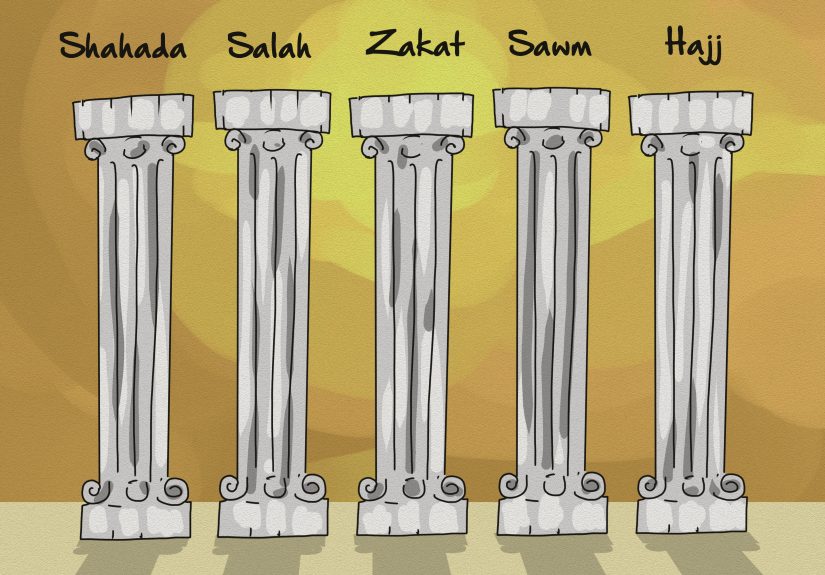
Salah is also the second of the Five Pillars of Islam, which are the foundational practices Muslims build their religious life around.
So, if you’re looking for a “why,” start here: it’s not a side quest. It’s part of the main storyline.
So… Why Five Times Specifically?
1) Because it’s a clear, daily way to remember Godon purpose
One of the simplest answers is also the deepest: Muslims pray five times a day to remember God regularly.
Life gets loud. Responsibilities pile up. Emotions swing. The five daily prayers create built-in moments to pause and re-center
not because God “needs” reminders, but because humans do.
Think of it like this: if your phone can remind you to drink water, stretch, or stand up every hour, it makes sense that a faith
tradition would include intentional check-ins for the heart and mind.
2) Because the day itself becomes a spiritual map
The five prayers are linked to the movement of the sun, anchoring worship to the natural rhythm of daily life:
before sunrise, midday, afternoon, just after sunset, and night.
That means prayer isn’t something reserved for “when you feel like it.” It’s woven into time itself.
This timing matters because it turns faith into a lived practicesomething that shows up on a regular Tuesday, not only on major holidays
or during life’s emergencies.
3) Because it builds discipline without needing a personality makeover
A lot of people want “more discipline” and then immediately try to become a new person overnight. Salah doesn’t demand a dramatic reinvention.
It asks for consistency in small, repeatable actionsperformed with sincerity.
Over time, that consistency can shape habits: being mindful of time, planning ahead, and making space for what matters.
It’s less “be perfect” and more “return again.” Five times a day, you get another chance to reset.
4) Because it’s a shared practice that unites people across cultures
Islam is global and diverselanguages, foods, clothing, local customswildly varied. But salah is one of the practices that feels instantly familiar
to Muslims almost anywhere. A student in Texas, a nurse in Chicago, and a shop owner in California may have completely different lives,
but they share the same basic prayer structure and times.
What Are the Five Daily Prayers?
Here are the five obligatory prayers and their general time windows (exact times vary by location and season):
- Fajr – before sunrise (dawn)
- Dhuhr – after the sun passes its highest point (midday)
- Asr – late afternoon
- Maghrib – just after sunset
- Isha – night (after dark)
Many Muslims use local prayer timetables or apps because the exact minutes change daily. The point isn’t to make life complicatedit’s to align worship
with the day’s natural shifts.
Where Did the Practice Come From?
Muslims base religious practice on the Qur’an and the teachings and example of the Prophet Muhammad (found in hadith and scholarly tradition).
Within Islamic tradition, the obligation of the five daily prayers is strongly connected to the Prophet’s Night Journey and Ascension
(Isra and Mi’raj), a foundational narrative in which prayer is established as a gift and responsibility for the community.
At the same time, the Qur’an repeatedly emphasizes establishing prayer and staying consistent in worship. So the “why” isn’t just historical.
It’s theological and practical: prayer is a direct, recurring relationship between a person and God.
What Happens During Salah (In Plain English)?
Step 1: A clean start
Before praying, Muslims typically perform wudu (ablution)a ritual washing. It’s spiritual preparation, yes, but it’s also very human:
you’re telling your body, “We’re switching modes now.”
Step 2: Direction and focus
Muslims face the qibla, the direction of the Kaaba in Mecca. This is less about geography and more about unity:
people across the world orient themselves toward a shared sacred focal point.
Step 3: Words + movement
Salah includes recitation (including the Qur’an’s opening chapter in every unit of prayer) plus a sequence of standing, bowing, and prostrating.
The movements are not “random choreography.” They symbolize humility, devotion, and submission to God.
Why It’s Not Just “Repetition”
From the outside, five prayers can look repetitive. From the inside, Muslims often describe it as returningagain and againto the same center.
The structure stays stable while life changes around it.
The goal isn’t to “say the right thing” like a magic spell. Islamic teachings emphasize intention, humility, and presence.
Some days prayer feels effortless; other days it feels like dragging your brain away from a thousand tabs. Either way, you show up.
The Personal “Why”: What Five Daily Prayers Do for Everyday Life
1) Gratitude that doesn’t wait for perfect circumstances
It’s easy to be thankful when life is going great. Prayer trains gratitude when life is… not.
Five daily prayers create moments to recognize blessingsbig or smallwithout needing a dramatic reason.
2) A built-in reset for stress and overstimulation
Many Muslims describe salah as a mental break: stepping away from deadlines, drama, and doomscrolling.
The routine itself can feel grounding, similar to how mindfulness practices use breath, posture, and repetition to calm the mind.
(Not a replacement for mental health carejust one of many tools people use.)
3) Moral alignment: “Who do I want to be today?”
Prayer is also a reminder of accountability and character. When you pause several times a day to reconnect with faith,
it can influence choiceshow you treat others, how you handle anger, how you use your time.
4) Community and belonging
While Muslims can pray anywhere clean, praying in congregationespecially at the mosquehas strong meaning.
Friday’s midday congregational prayer is a weekly anchor for many communities. Even outside the mosque,
knowing millions of people are praying the same prayers creates a sense of shared identity.
But Is It Practical in Modern American Life?
It can bethough it often takes planning. Many prayers are brief, and Muslims frequently pray at home, at work, at school,
or in quiet spaces while traveling. You might see someone step into an empty office, face a corner, and pray for a few minutes.
It’s not a performance. It’s a pause.
In the U.S., institutions increasingly recognize Muslim prayer as a normal part of religious accommodationlike scheduling awareness,
a private space, or flexibility during Ramadan. Some cities have even had public conversations about the call to prayer (adhan)
and how Muslim communities practice faith in public life.
Common Misunderstandings (Clearing the Air Gently)
“Is it five times because Muslims think God will be mad if they forget?”
The five daily prayers are an obligation in Islam, but many Muslims describe the deeper purpose as mercy and connectionnot a “gotcha.”
The heart of the practice is devotion and remembrance, not paranoia.
“Do Muslims only pray when they’re in a mosque?”
No. Muslims can pray nearly anywhere that’s clean. Mosques are important community centers,
but salah is designed to travel with youhome, workplace, airport, roadside rest stop (yes, really).
“Is it the same for every Muslim?”
The obligation is broadly shared, but people’s practice varies. Some Muslims pray all five consistently.
Others struggle, improve over time, or pray less regularly. Like any faith practice, it’s real life, not a robot demo.
Real-World Experiences: What Praying Five Times a Day Often Feels Like (500+ Words)
If you ask Muslims what salah feels like in daily life, you’ll hear a surprising mix of the spiritual and the extremely practical.
It’s not always poetic. Sometimes it’s beautiful. Sometimes it’s chaotic. Often it’s both in the same day.
The pre-dawn moment: “I cannot believe I am awake.”
Fajr is the prayer that tests your relationship with the snooze button. Many Muslims describe it as the hardest prayer to protect,
especially in winter when it’s dark and your bed feels like it has a magnetic force field. But it also tends to be one of the most loved.
There’s a quietness at that hour that makes the world feel softer. People talk about the peace of praying before the day starts asking for things.
Even when someone is exhausted, they may feel a strange kind of strength afterwardlike they chose purpose before comfort, at least once.
The midday reset: praying between meetings, classes, and real life
Dhuhr and Asr often land right in the middle of “adulting.”
Muslims who pray at work or school get good at finding small pockets of time: an empty conference room, a quiet corner, a prayer room if available,
or even a clean area with a small mat. It’s not uncommon for someone to plan their day around prayer times the same way others plan around lunch.
Many describe it as a reset buttonespecially on stressful daysbecause it forces a pause. Not a scroll-and-stress pause. A full stop.
Sunset prayer: the emotional checkpoint
Maghrib arrives as the sky changes and the day winds down. For many, it feels like a natural transition:
you’re stepping out of the workday brain and into evening life. During Ramadan, this prayer becomes even more memorable because it’s tied to the
moment of breaking the fast at sunset. People often associate Maghrib with family, community meals, and gratitudebecause you’re literally watching
the day turn a page.
Night prayer: ending the day with intention
Isha can be calm and reflectiveespecially when the house is quiet. Some people pray it and feel like they “closed the tabs” in their mind.
Others pray it late and feel proud they didn’t let the day steal it completely. A common experience Muslims mention is the feeling of accountability:
even if the day was messy, prayer is a way to return, ask for forgiveness, and start again tomorrow without carrying everything like a backpack full of bricks.
When you miss a prayer (because yes, that happens)
Another real experience: sometimes people miss prayers. Oversleeping, traffic, long shifts, exams, sick kidslife happens.
Many Muslims describe guilt, but also motivation: the structure of five prayers means you don’t have to wait a week or a holiday to reconnect.
There’s another prayer coming. Another chance to show up. That cycle can be deeply reassuring, especially for people who feel like they’re not “perfect enough”
to be religious. Salah, practiced over time, often teaches people that returning matters more than pretending you never struggle.
Conclusion: The Big “Why” in One Sentence
Muslims pray five times a day because salah is a foundational act of worship that keeps a person connected to God throughout the daythrough structure,
remembrance, discipline, and a steady return to what matters.