Table of Contents >> Show >> Hide
- What a Wind Turbine Actually Does
- Why Most Wind Turbines Have Three Blades
- Land-Based, Offshore, and Distributed Wind
- Why Wind Turbines Keep Getting Bigger
- The Biggest Benefits of Wind Turbines
- The Honest Challenges Nobody Should Pretend Away
- Common Questions People Ask About Wind Turbines
- Wind Turbines in the United States Right Now
- What the Future of Wind Turbines Looks Like
- Conclusion
- Personal Experiences and Impressions Related to Wind Turbines
Wind turbines are the overachievers of the energy world. They stand around all day looking dramatic, getting photographed at sunset, and quietly turning moving air into electricity without setting anything on fire. Not bad for a machine that basically works because the atmosphere refuses to sit still.
If you have ever driven past a wind farm and thought, “Those things look simple,” congratulations: you have been tricked by engineering. Modern wind turbines are part aerodynamic sculpture, part power plant, part software system, and part weather nerd. They may look like giant white pinwheels, but under that sleek exterior is a serious piece of technology built to survive harsh conditions, capture energy efficiently, and feed electricity into the grid.
In the United States, wind turbines have grown from a niche curiosity into one of the most important tools in the clean energy mix. They now help power homes, businesses, factories, and rural communities, while also raising fair questions about land use, wildlife, noise, views, and what happens when those giant blades retire. So yes, wind turbines are impressive. They are also complicated. And that is exactly what makes them worth understanding.
What a Wind Turbine Actually Does
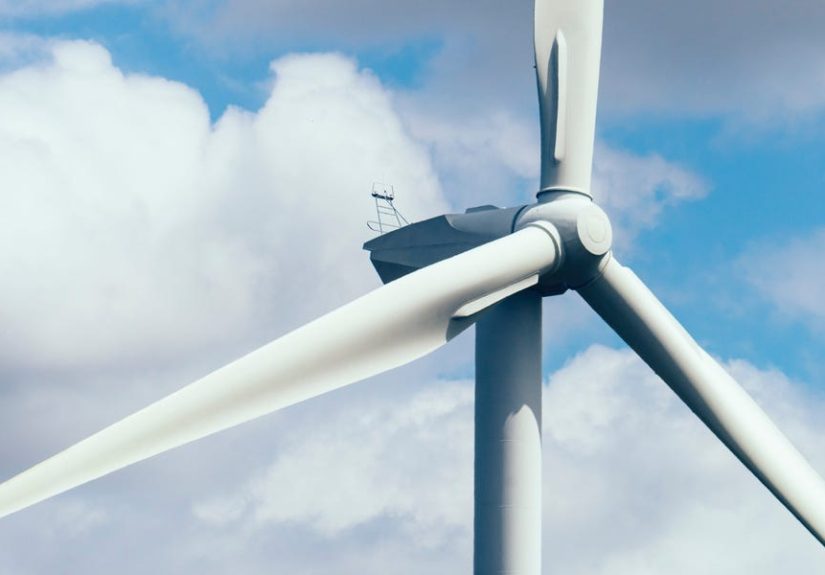
At its core, a wind turbine converts the kinetic energy of moving air into electrical energy. Wind flows over the blades, creating lift much like an airplane wing. That lift causes the rotor to spin. The spinning rotor turns a shaft, which drives a generator, which then produces electricity. In plain English: the wind shoves, the blades spin, the generator gets to work, and your toaster lives to toast another day.
The main parts of a wind turbine
A modern utility-scale wind turbine is made up of several major components:
- Blades: These capture wind energy and are shaped to maximize lift and efficiency.
- Rotor: The hub and blades together form the rotor, which turns when the wind blows.
- Nacelle: The box sitting on top of the tower that houses the generator and other key equipment.
- Gearbox or direct-drive system: Some turbines use a gearbox to increase rotational speed before it reaches the generator.
- Tower: A taller tower can reach stronger, steadier winds.
- Yaw system: This rotates the nacelle so the turbine faces the wind.
- Pitch system: This adjusts blade angles to control speed and power output.
The result is a machine that is constantly making tiny decisions. It does not just spin wildly like a kid hyped up on birthday cake. It measures wind speed, direction, and operating conditions, then adjusts blade pitch and nacelle position to produce electricity as safely and efficiently as possible.
Why Most Wind Turbines Have Three Blades
Three-bladed, horizontal-axis turbines dominate the market for a reason: they strike a sweet spot between efficiency, stability, noise control, and cost. Designers have experimented with different blade counts and configurations over the years, but the three-blade design keeps winning because it performs well without turning the machine into a maintenance headache.
That familiar shape is also not an aesthetic accident. Modern turbine design reflects decades of research into loads, materials, rotor behavior, generator configurations, and control systems. In short, the turbine you see on the horizon is the product of many engineers arguing politely with physics until physics agreed to cooperate.
Land-Based, Offshore, and Distributed Wind
Not all wind turbines live the same life. Some spend their careers in open plains. Others work offshore where the winds are stronger and the installation process is far more dramatic. Some are even small enough to help power a farm, business, or remote site.
Land-based wind turbines
These are the most familiar turbines in the U.S. They are installed on land, often in rural areas with strong wind resources and enough space for roads, foundations, transmission access, and setbacks. Land-based wind has become a major source of utility-scale renewable electricity because it can be cost-competitive and relatively fast to deploy compared with many large power projects.
Offshore wind turbines
Offshore turbines are the giants of the family. Because their components can be transported by ship rather than by road, they are generally larger than land-based turbines. They can capture powerful ocean winds and generate enormous amounts of electricity near major coastal population centers. The tradeoff is that offshore construction, maintenance, permitting, and environmental review are far more complex. Saltwater is not known for being gentle, and neither is the ocean.
Distributed wind turbines
Distributed wind includes smaller or local systems used on-site or near the point of consumption. Think homes, ranches, schools, industrial sites, tribal lands, or remote communities. These systems are not trying to become the star of the national grid. They are trying to lower bills, support resilience, and provide local energy where it is needed most.
Why Wind Turbines Keep Getting Bigger
There is a simple reason turbine designers keep going bigger: bigger turbines can usually capture more energy. Longer blades sweep a larger area, which means more wind passes through the rotor. Taller towers reach higher altitudes where winds are often faster and steadier. Better controls and improved materials help the machine handle those greater loads without turning into an expensive lawn ornament.
In practical terms, bigger turbines can make more electricity from the same site. That can improve economics, reduce the number of turbines needed for a project, and make lower-wind sites more viable. It is one of the major reasons wind energy has become more competitive over time.
Of course, “bigger” also means bigger transportation challenges, bigger cranes, bigger foundations, and bigger community conversations. When turbines grow, the benefits grow too, but so do questions about visual impact, permitting, and infrastructure.
The Biggest Benefits of Wind Turbines
1. They generate electricity without combustion
Wind turbines do not burn fuel to make electricity. That means they can produce power without the direct air pollution and greenhouse gas emissions associated with fossil-fueled generation. In a world where electricity demand is rising, that matters a lot.
2. They use very little water during operation
Unlike some thermal power plants, wind turbines do not require cooling water to generate electricity. In drought-prone regions or places concerned about water stress, that is a meaningful advantage.
3. They can be cost-competitive
Utility-scale wind has become one of the lower-cost electricity options in many parts of the United States. Better turbine design, taller towers, larger rotors, and more sophisticated modeling have all helped improve performance and economics.
4. They can support rural economies
Wind projects often bring land-lease payments, tax revenue, construction work, and long-term operations jobs to host communities. For some landowners, turbines provide a second income stream alongside farming or ranching. The cows, famously, do not submit formal complaints.
5. They diversify the grid
Wind energy adds another domestic source of electricity to the power mix. That kind of diversity can help support energy security, reduce overreliance on a single fuel source, and create more resilience across regions.
The Honest Challenges Nobody Should Pretend Away
A useful article about wind turbines should not read like a fan club newsletter. Wind energy has real advantages, but it also comes with tradeoffs that deserve straight answers.
Intermittency and grid integration
Wind does not blow on command. Turbines generate electricity when the resource is available, not necessarily when demand peaks. That means wind works best as part of a broader power system that includes transmission, forecasting, flexible generation, storage, and other grid-balancing tools. Wind is not broken because it is variable. The grid just has to be built intelligently around that reality.
Siting and local acceptance
Wind projects are deeply local. Even if a project looks great on a national energy chart, nearby communities may have concerns about views, sound, shadow flicker, property impacts, radar or signal interference, and changes to local character. Proper siting, setbacks, community engagement, and transparent planning make a huge difference here.
Wildlife impacts
Wind turbines can affect birds and bats, and offshore development can raise concerns about marine ecosystems. This is one of the most important areas for continued research, mitigation, and careful project design. Smarter siting, better monitoring, curtailment strategies, and improved ecological science all play a role. The grown-up version of the conversation is not “wind has no impact” or “wind is uniquely terrible.” It is “how do we reduce impacts while still building cleaner energy systems?”
Materials, waste, and end-of-life management
Steel, concrete, copper, and other turbine materials can often be recovered or processed using existing infrastructure. Blades are the trickiest piece because composite materials are harder to recycle at scale. That does not mean the story ends at the landfill, but it does mean recycling and reuse solutions still need improvement. Repowering, decommissioning, and blade recycling are becoming more important as the earliest generations of projects age out.
Common Questions People Ask About Wind Turbines
Are wind turbines noisy?
They do produce sound, but the real-world experience depends heavily on turbine design, distance, topography, weather conditions, and local background noise. Modern projects are usually evaluated carefully during siting, and setbacks are designed to reduce impacts on nearby residents.
What is shadow flicker?
Shadow flicker happens when rotating blades pass between the sun and a home or building, creating a moving-shadow effect. It sounds dramatic, but it is a well-known issue that can often be minimized through setbacks, turbine placement, and design choices.
Do wind turbines work all the time?
No. They operate within a wind-speed range. Too little wind and they do not produce much. Too much wind and they may shut down to protect equipment. Wind energy is not “always on,” but neither is every other power source in practice. Reliable electricity comes from how the whole system works together.
How long do wind turbines last?
Wind turbines are built for long service lives, often on the order of decades. At the end of that service period, owners may choose to repower the site with newer equipment, extend operations if conditions allow, or decommission the project.
Wind Turbines in the United States Right Now
Wind is no longer the scrappy new kid trying to get a seat at the energy table. It is already a major part of the U.S. electricity system. Recent U.S. data show that wind generation remained substantial in 2025, and the broader renewable buildout is continuing into 2026 as electricity demand rises. That gives wind turbines an increasingly important role, especially in regions with strong onshore resources and in coastal areas exploring offshore development.
At the same time, the industry is dealing with a more mature set of questions: transmission bottlenecks, supply chain constraints, permitting, community trust, manufacturing scale, wildlife protection, and end-of-service planning. In other words, the future of wind is no longer just about proving the concept. It is about doing the hard work of deployment well.
What the Future of Wind Turbines Looks Like
The next era of wind turbines will likely be defined by smarter controls, larger machines, better materials, improved forecasting, and more sophisticated integration with storage and transmission. Offshore projects may continue to unlock strong wind resources near dense coastal demand centers. Distributed wind may become more attractive for resilience and local energy independence in the right settings. Advanced manufacturing and recyclable blade designs could also help make the full life cycle of turbines more sustainable.
Perhaps the biggest shift is mental rather than mechanical. People increasingly view wind turbines not as weird futuristic objects, but as normal infrastructure. That is a sign of success. When a technology becomes ordinary, it means society has started to figure out how to use it at scale.
Conclusion
Wind turbines are not magic, and they are not perfect. They are something more useful: a mature, improving technology that turns a free natural resource into electricity with no combustion, low operating emissions, and serious potential for long-term value. They also demand thoughtful siting, careful environmental planning, honest public conversation, and smarter solutions for recycling and end-of-life management.
That balance is what makes wind turbines so fascinating. They are elegant from a distance, complicated up close, and incredibly important in the real-world effort to build a cleaner, more flexible electric grid. The next time you see a row of turbines on a ridge or offshore horizon, remember that you are not looking at giant fans. You are looking at one of the most visible signs that the energy system is changing, one rotation at a time.
Personal Experiences and Impressions Related to Wind Turbines
There is something unforgettable about seeing wind turbines in person for the first time. Photos never quite capture the scale. On a screen, they can look calm, almost decorative, like someone placed a few minimalist sculptures across the landscape. In real life, they feel enormous. The towers rise with a kind of quiet confidence, and the blades move with a pace that seems slower than it should be, until your brain catches up and realizes just how much distance each rotation covers.
One of the strangest and most interesting experiences people describe is how peaceful a wind farm can feel. Many expect it to sound like an industrial zone, but from a reasonable distance, the dominant impression is often openness: sky, weather, space, and motion. The turbines are working constantly, yet the landscape can still feel calm. It is a weirdly poetic combination of engineering and atmosphere, like technology decided to dress in nature’s colors for once.
Visiting a windy region with turbines also changes how you think about electricity. Most of us flip a switch and never picture where power comes from. Standing near wind infrastructure makes electricity feel less abstract. You begin to see energy as something physical and local, shaped by geography, wind patterns, transmission lines, and engineering choices. It stops being an invisible convenience and starts becoming part of the landscape story.
For travelers, wind farms can leave very different impressions depending on where they are built. In agricultural regions, turbines often seem to fit beside roads, fields, and big skies. Offshore, the feeling is different. The machines appear even more dramatic because of the contrast with the open ocean. They look both futuristic and practical, as though someone took a page from science fiction and ran it through a permitting office.
There is also a human side to the experience that often gets overlooked. For some landowners, a turbine is not just a symbol of clean energy; it is part of their financial reality. For some nearby neighbors, it may represent a major change to the familiar view outside the kitchen window. For engineers, technicians, and maintenance crews, it is a workplace that demands precision and respect. That mix of perspectives is part of what makes conversations about wind turbines so lively. Everyone is technically talking about the same machine, but not always from the same lived experience.
Even the emotional reaction can be surprisingly mixed in a good way. Wind turbines can inspire admiration, skepticism, curiosity, or all three before lunch. Some people love the look of them. Others do not. Some see progress. Others see disruption. But very few people see one up close and feel nothing at all. They are too large, too kinetic, and too tied to the future of energy to be visually neutral.
Personally, one of the most compelling things about wind turbines is that they make the invisible visible. You cannot normally see the electric grid doing its job. You cannot watch a natural gas pipeline think about your air conditioner. But with wind turbines, you can actually witness the resource at work. The weather arrives, the blades respond, and electricity starts being made. That directness is satisfying in a way many other energy systems are not.
In the end, experiences with wind turbines tend to be memorable because they sit at the intersection of technology, landscape, and daily life. They are not just machines in isolation. They are machines that change how a place looks, how a community talks, and how people imagine the future. Whether you see them as beautiful, controversial, inspiring, or simply fascinating, they are hard to ignore. And maybe that is the point. The energy transition is not supposed to be invisible. Sometimes it is meant to stand tall on the horizon and remind us that change is already turning.