Table of Contents >> Show >> Hide
- Why These Early Cinema Pioneers Still Matter
- 1. William K. L. Dickson
- 2. Alice Guy-Blaché
- 3. Edwin S. Porter
- 4. J. Stuart Blackton
- 5. Ferdinand Zecca
- 6. Wallace McCutcheon
- 7. Winsor McCay
- 8. Lois Weber
- 9. Mabel Normand
- 10. Oscar Micheaux
- What These Forgotten Filmmakers Actually Invented
- Conclusion
- A Longer Reflection: The Experience of Rediscovering Cinema’s Lost Architects
Let’s get one thing straight before the popcorn starts flying: no single person “invented” cinema. Movies were built by inventors, directors, camera operators, editors, animators, hustlers, tinkerers, and at least a few people who probably had nitrate dust on their sleeves and no idea they were changing culture forever. That is exactly why film history gets messy. The same handful of names get repeated until they sound like they personally created every camera, every close-up, and every dramatic stare into the middle distance.
But the real story of early film is far more interesting. Long before Hollywood became a glamorous machine for manufacturing stars, a group of now-overlooked pioneers figured out how moving images could become stories, emotions, illusions, comedy, social criticism, and art. Some built the technology. Some cracked the grammar of editing. Some made audiences laugh, panic, dream, or think. Some were erased because they were women. Some were sidelined because they were Black. Some were simply buried by history because louder names hogged the spotlight like a bad awards-show speech.
So here they are: ten incredible forgotten filmmakers who, in one way or another, helped invent cinema as we know it. Not every one of them is fully lost to serious film fans, but outside film-history circles, they deserve way more attention. If movies are a giant mansion, these are the people who poured the foundation, wired the lights, and somehow still got left off the welcome plaque.
Why These Early Cinema Pioneers Still Matter
Modern film language did not appear overnight. The things audiences now take for grantednarrative structure, screen comedy, visual effects, editing rhythms, animation, character psychology, and socially conscious storytellingwere all being tested in the chaotic early decades of motion pictures. These filmmakers mattered because they did not just make movies; they helped define what a movie could even be. They worked before the rules were settled, which meant they had to invent the rules while everyone else was still figuring out where to point the camera.
1. William K. L. Dickson
If cinema had a machine room, William K. L. Dickson was one of the people down there making the gears turn. While Thomas Edison usually gets the big-name credit, Dickson played a central role in developing the Kinetograph camera and Kinetoscope viewing system. In plain English, he helped turn the dream of moving pictures into something you could actually record and watch. That is not a small contribution. That is the entire starter pack.
Dickson also mattered because early cinema was not just about invention on paper. It was about practical experimentation. Film stock, camera design, viewing systems, and production methods all had to be worked out through trial, error, and probably a heroic amount of frustration. Dickson’s work helped transform motion pictures from a lab curiosity into a viable medium. Without people like him, later directors would not have had a storytelling tool to play with. They would have just had ambition and a blank wall.
2. Alice Guy-Blaché
Alice Guy-Blaché should be far more famous than she is. She was one of the first people to understand that film did not have to be just a recorded moment; it could be a staged narrative. That sounds obvious now because every streaming platform on Earth is screaming for our attention. Back then, it was revolutionary. She helped push cinema from “Look, movement!” to “Look, a story.” Huge difference.
She worked as a director, producer, writer, and studio leader, and she made hundreds of films across France and the United States. Her career proves that women were not late arrivals to film history; they were there at the beginning, shaping the medium itself. Guy-Blaché experimented with genre, performance, and narrative form when cinema was still figuring out its own identity. If film history were graded fairly, she would not be a side note. She would be near the top of the syllabus in bold print.
3. Edwin S. Porter
Edwin S. Porter helped early cinema learn how to think in sequences. He is often associated with films like Life of an American Fireman and The Great Train Robbery, and for good reason. His work helped expand what editing and visual storytelling could do. He showed that films could build momentum across multiple shots, create narrative flow, and guide the audience through time and action in a more sophisticated way.
Today, cutting between actions feels so natural that viewers barely notice it. Porter worked in the era before that grammar was fully settled. His movies helped audiences learn how to read cinematic space and action. He also helped move American film away from short novelty attractions toward more organized storytelling. In other words, Porter was part of the group that taught cinema how to stop being a trick and start being a language.
4. J. Stuart Blackton
J. Stuart Blackton was one of the great experimental troublemakers of early film, which is exactly the kind of person a new art form needs. He worked in trick films and is closely tied to the origins of animation in American cinema. His films used stop-camera effects, drawn imagery, and single-frame techniques to create the illusion that pictures were magically coming to life. Early viewers must have felt like the screen had developed a mischievous personality.
Blackton matters because he helped prove that cinema did not need to copy reality in a dull, literal way. It could manipulate reality, distort it, joke with it, and animate it. That playful attitude runs through film history all the way to modern visual effects and animated features. Every time a filmmaker makes an impossible image feel delightful instead of confusing, there is a little bit of Blackton in the machinery.
5. Ferdinand Zecca
Ferdinand Zecca is not a name that gets thrown around at parties unless the party is extremely specific, but he was a major force in early cinema. A rival to Georges Méliès, Zecca worked in fantasy, trick films, and commercial storytelling, and he later became a key figure at Pathé. That matters because early cinema was not only inventing artistic possibilities; it was also inventing a film industry.
Zecca helped show that movies could be popular entertainment on a large scale, not just a novelty for a curious crowd. He worked across genres and participated in the growth of studio-style production. He was part of the shift from individual experiment to organized filmmaking as a repeatable business. Cinema needed dreamers, yes, but it also needed people who understood distribution, audience appetite, and production rhythm. Zecca helped build that bridge.
6. Wallace McCutcheon
Wallace McCutcheon is one of those names that tends to disappear between more famous chapters of film history, which is unfair because he stands right in the middle of a crucial transition. He worked as a cameraman and director during the years when early film production was evolving from simple recording into something more intentionally staged and narratively shaped. He also collaborated in an era when job titles were blurrier than a badly focused silent short.
That makes McCutcheon important. Early cinema was full of multitaskers who were simultaneously camera operators, technicians, directors, and problem-solvers. McCutcheon’s work reflects that transitional moment when the medium was learning how to combine movement, performance, framing, and story. He may not have the household recognition of later auteurs, but he helped define the labor and versatility that early filmmaking demanded. In a more just world, he would be remembered as one of cinema’s foundational builders, not an answer in a very mean trivia round.
7. Winsor McCay
Winsor McCay is best known for animation, and rightly so. With works like Gertie the Dinosaur, he helped push animated film beyond novelty and into the realm of personality, movement, and charm. His genius was not just technical. It was emotional. McCay made drawings feel alive. Not “alive” in the sense that they moved around a bit, but alive in the sense that audiences could connect with them as characters.
That was a major leap. Animation stopped being only a clever gimmick and became a storytelling form with emotional potential. McCay also advanced techniques of movement and repetition that would influence later animators. If live-action pioneers taught film how to record bodies in motion, McCay taught film how to invent motion from scratch. That is basically wizardry with drafting skills.
8. Lois Weber
Lois Weber was one of the most important directors of the silent era, full stop. She was a leading filmmaker in early Hollywood, a powerful storyteller, and one of the few directors of her time who consistently tackled controversial social issues. Her films explored poverty, morality, gender, reproductive politics, and social hypocrisy with a seriousness that still feels striking today.
What makes Weber extraordinary is that she combined reform-minded urgency with strong visual technique. She did not make “message movies” in the flat, preachy sense. She made cinema that used form to intensify meaning. Her work showed that film could be commercially viable, artistically ambitious, and socially engaged all at once. She also stands as a reminder that the history of women in directing is not a modern correction. Women were central to cinema early on; history just got selective and rude about remembering it.
9. Mabel Normand
Mabel Normand is too often remembered as a scandal-era celebrity when she should also be remembered as a crucial architect of screen comedy. She was a major star, one of the first women directors in Hollywood, and a key figure in Mack Sennett’s Keystone world. Her work helped define the anarchic tempo and physical inventiveness of silent comedy.
Normand was not just funny on camera. She helped shape the comedy being made. That distinction matters. Slapstick did not invent itself by slipping on a banana peel and landing in a storyboard. Normand helped establish the energy, performance style, and comic possibilities that later stars benefited from. Even Charlie Chaplin’s early screen identity overlaps with her orbit. She deserves to be remembered not as a footnote to male comedians, but as one of the people who helped create the grammar of film comedy in the first place.
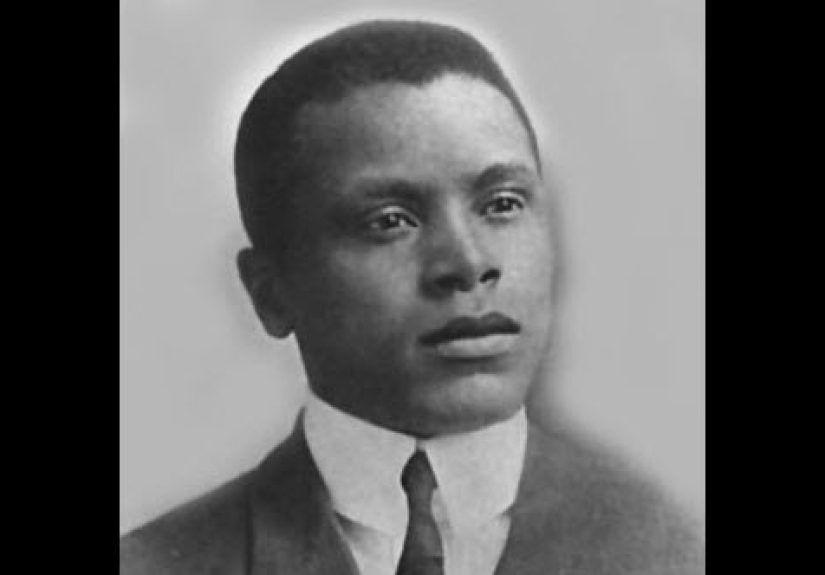
10. Oscar Micheaux
Oscar Micheaux is one of the towering figures of independent American film, and still too many people barely know his name. He wrote, directed, produced, and distributed films for Black audiences at a time when mainstream American cinema either excluded Black life or distorted it grotesquely. Micheaux built his own lane because the existing system was not built for him at all.
That independence is part of what makes him so foundational. Micheaux proved cinema could be a vehicle for self-representation, critique, and community-based storytelling outside the dominant studio power structure. Films like Within Our Gates confronted race, violence, class, and respectability head-on. He was not merely “important for representation,” though that would already be enough. He was also a serious innovator in independent production and one of the earliest filmmakers to insist that American life on screen had been falsely narrowed. His work expanded cinema morally as well as artistically.
What These Forgotten Filmmakers Actually Invented
They turned motion into meaning
Early film started as spectacle. A train arrived. A dancer twirled. A sneeze happened and somehow became history. These filmmakers helped turn motion into narrative meaning. Dickson made recording possible. Guy-Blaché saw story potential. Porter shaped editing flow. McCutcheon helped bridge technical and directorial labor. Zecca industrialized entertainment. Together, they helped cinema stop being a fairground curiosity and start becoming a medium.
They expanded what movies could feel like
Blackton and McCay opened doors to animation and visual illusion. Normand proved comedy could be kinetic, character-driven, and cinematic. Weber showed that film could wrestle with social problems. Micheaux insisted that cinema could challenge racist exclusion and present Black life with far greater complexity. These pioneers did not just invent techniques. They invented possibilities.
Conclusion
The history of cinema is not a straight line from one genius to another. It is a crowded workshop full of inventors, artists, opportunists, radicals, and overlooked masters. That is what makes these forgotten filmmakers so fascinating. They remind us that movies were never born fully formed. Cinema had to be engineered, tested, narrated, stylized, politicized, and humanized by many hands.
So the next time someone talks about the birth of film as if it were a neat little story starring only a few famous men, feel free to raise an eyebrow worthy of silent-era melodrama. Then bring up Alice Guy-Blaché, Lois Weber, Oscar Micheaux, Mabel Normand, J. Stuart Blackton, Winsor McCay, Edwin S. Porter, William K. L. Dickson, Ferdinand Zecca, and Wallace McCutcheon. Because cinema was not invented by one hero. It was built by a brilliant crowd, and some of its greatest builders have been waiting far too long for their close-up.
A Longer Reflection: The Experience of Rediscovering Cinema’s Lost Architects
One of the strangest and most rewarding experiences in film history is realizing how modern early cinema can feel once you stop approaching it like homework. At first, silent-era pioneers can seem distant, dusty, and trapped behind the glass case of “important cultural artifacts.” Then you actually spend time with their work and their stories, and the distance collapses. Suddenly these filmmakers do not feel like museum labels. They feel like restless, inventive people trying to solve creative problems that still exist today.
That is the first real surprise: their struggles are familiar. How do you hold an audience’s attention? How do you make a scene clearer, funnier, more emotional, more urgent? How do you tell stories when the available technology is clunky, limited, or expensive? Early filmmakers were asking those same questions, just with fewer resources and much worse safety standards. Watching that process unfold is oddly energizing. It reminds you that cinema was built through experimentation, not perfection.
There is also something moving about the act of historical recovery itself. When you rediscover Alice Guy-Blaché or Lois Weber, you do not just learn a new name. You start to notice how incomplete the familiar version of film history has been. When you encounter Oscar Micheaux, you understand more clearly how independent cinema became a tool of cultural resistance. When you look at Mabel Normand’s role in comedy, the usual story about silent-era humor starts to wobble in a useful way. The canon begins to look less like a fixed monument and more like an edit that needs revision.
And maybe that is the emotional core of this whole topic: rediscovering forgotten filmmakers changes the experience of watching movies now. You stop seeing cinema as a finished tradition handed down by untouchable legends. You start seeing it as a living, patched-together invention made by many people, including people who were underestimated, under-credited, or actively pushed aside. That makes the art form feel larger, messier, and more democratic.
It also makes film history more fun. Not in a shallow way, but in the deeply satisfying way that comes from finding missing pieces of a puzzle you did not realize had holes. Every rediscovered pioneer expands the map. Every restored print feels like a conversation reopened after a century of silence. Every overlooked filmmaker brought back into view makes the medium richer, stranger, and more honest. In that sense, learning about these figures is not just an academic exercise. It is a way of watching cinema wake up all over again.