Table of Contents >> Show >> Hide
- Why the “my phone is listening” theory feels so believable
- No, ads usually do not need your microphone
- How ads actually know so much
- Why the ads feel creepier than they areand still too creepy
- Real-world examples that make this problem feel less abstract
- What a tech worker would probably tell friends over coffee
- How to make ads know less
- Composite experiences that explain why this topic hits a nerve
- Conclusion
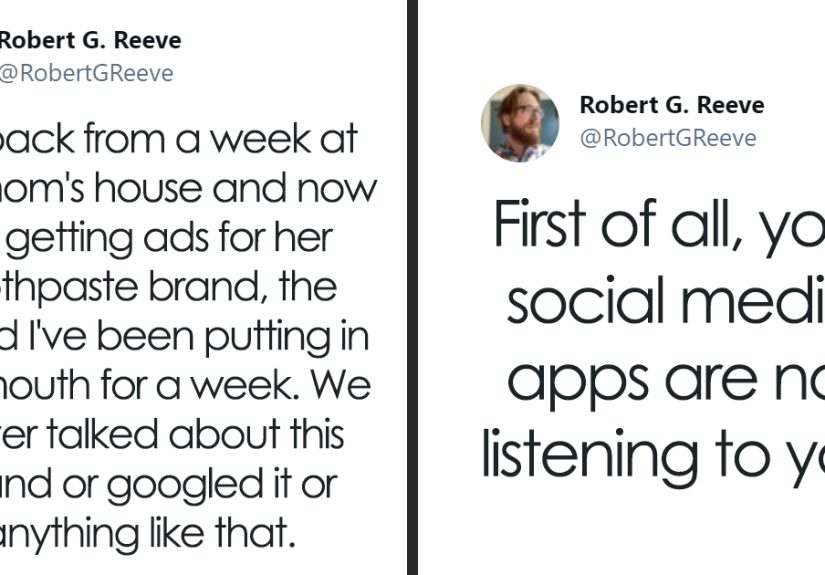
Everyone has had that moment. You mention hiking boots out loud, open an app ten minutes later, and baman ad appears like it just crawled out of your living room vents. At that point, your brain has two options: either modern advertising is powered by dark sorcery, or your phone has been eavesdropping like a gossip columnist with a charging cable.
The truth is less cinematic and, somehow, more unsettling. In most cases, ads do not need to secretly listen to every word you say. They already have something advertisers like even more than overheard chatter: a steady stream of behavioral clues. Your searches, your taps, your location history, your app permissions, your shopping habits, your device identifiers, your browsing patterns, and even the websites that quietly report back when you visit them can be enough to make ad targeting feel weirdly personal.
That is the real trick behind the curtain. The ad industry does not need to be psychic when it can be statistically nosy. A good prediction engine with too much data can look an awful lot like mind reading, especially when it starts connecting dots you did not realize were even on the page.
So when a tech worker says, “No, the ads probably are not hearing every private conversation, but yes, the system still knows too much,” that is not a contradiction. That is the business model. And it helps explain why so many people feel like the internet knows them a little too well and respects their boundaries a little too little.
Why the “my phone is listening” theory feels so believable
Let’s be fair to the conspiracy theory for a second: it has excellent branding. “My phone is listening” is simple, dramatic, and emotionally satisfying. It gives a clear villain, a clear method, and a clear reason that the ad for patio furniture arrived right after you complained your backyard looked like a folding-chair crime scene.
But most of the time, the answer is less about secret audio surveillance and more about accumulated signals. Maybe you browsed outdoor rugs last week. Maybe your spouse searched for string lights on the same Wi-Fi. Maybe you stopped near a home improvement store. Maybe an app on your phone shared location or behavioral data with a third party. Maybe a retailer uploaded customer data into an ad platform. Maybe the platform decided that people like you, in your neighborhood, during this season, tend to click on backyard makeover ads. Suddenly the ad looks supernatural, when really it is just invasive math wearing a fake mustache.
That is why the experience feels personal even when the mechanism is industrial. The system is not lovingly handcrafted to spy on you, specifically. It is built to profile millions of people at once and make useful guesses. Congratulations: you are not being uniquely haunted. You are being efficiently categorized.
No, ads usually do not need your microphone
The boring reason: microphones are messy, expensive, and risky
If an ad company wanted to use live microphone data at massive scale, it would create enormous technical and legal headaches. Constant audio collection would be costly to process, hard to hide, rough on battery life, and spectacularly bad PR if exposed. It is the kind of move that turns congressional hearings into a full-time hobby.
That does not mean microphones never matter. Voice assistants, smart speakers, cars, TVs, and some apps absolutely can collect voice-related data in certain contexts, especially when a wake word or feature is involved. But that is different from the common fear that every targeted ad appears because a marketer secretly transcribed your lunch conversation about running shoes and sourdough starters.
The smarter reason: advertisers already have easier tools
From an ad-tech perspective, there are simpler and more reliable ways to infer what you want. If you visit pregnancy-related pages, use a period tracker, spend time near baby stores, browse stroller reviews, and belong to a certain age group, the system does not need to hear you say the word “crib.” It can already smell the commercial opportunity from space.
That is the piece many people miss. Advertisers often care less about your exact words than your probability of converting. They do not need the poetry of your life story. They need enough evidence to guess whether you might click, buy, subscribe, or panic-order an ergonomic desk chair at 1:12 a.m.
How ads actually know so much
Pixels, cookies, and trackers hiding in plain sight
One of the biggest sources of “How did they know that?” is the invisible plumbing of the web. Websites can use cookies and pixels to track activity, remember visits, and pass information to advertising and analytics platforms. That means the page you visit is not always just a page. It can also be a tiny reporting station.
If a retailer, clinic, app, or media site embeds third-party tracking tools, your visit may help build a profile somewhere else. Even routine actionssearching, clicking, adding something to a cart, filling out a form, browsing a category pagecan become data points. The creep factor rises when that sharing happens offstage and the user thinks, “I just visited a website,” while the website thinks, “Excellent, let’s also notify six companies and a spreadsheet with commitment issues.”
SDKs inside apps
Apps add another layer. Many include software development kits, or SDKs, from advertising, analytics, or location partners. These tools can help with monetization and measurement, but they can also create more opportunities for data sharing. In plain English, the app you downloaded for weather, coupons, fitness, or nightlife may not be keeping your information to itself.
That is why a seemingly harmless permission prompt can matter so much. A user may think, “Sure, this app can use my location while I check nearby deals.” Behind the scenes, that data can become part of a much larger commercial pipeline involving ad targeting, audience building, or location analytics.
Location data is a gold mine in sweatpants
Location data is especially powerful because it fills in the parts of your identity that cookies alone cannot. Where you sleep. Where you work. Which stores you visit. Which events you attend. Which neighborhoods you pass through. Over time, that pattern can reveal intimate details even if no one ever reads your text messages.
This is why regulators have taken location-data cases seriously. Precise location tied to a mobile advertising ID can reveal visits to places that people reasonably consider sensitive, including health-related sites, places of worship, domestic violence shelters, and other private locations. Once that kind of information is linked to a persistent identifier, “anonymous” starts looking like one of those words that should be wearing quotation marks and apologizing.
Cross-device matching and “you, but on another screen”
Ever search for something on your phone and later see ads for it on your laptop, tablet, or TV? That can happen through cross-device tracking. Sometimes the connection is deterministic, such as being logged into the same ecosystem across devices. Sometimes it is probabilistic, built from shared IP addresses, usage patterns, time signals, and behavioral overlap.
The result is that your devices can start behaving like a little office where they exchange gossip about you after hours. One knows you looked at standing desks. Another knows you watched productivity videos. A third knows you compared prices. Suddenly the whole household is serving “transform your workspace” ads like an intervention.
Fingerprinting: when the browser becomes its own name tag
Even without traditional cookies, ad systems can try to identify users through fingerprinting. That means combining details about a device or browserconfiguration, fonts, screen size, settings, and other characteristicsto make a user more recognizable. It is less flashy than a spy movie and more like being identified by the exact scuff pattern on your sneakers.
This matters because privacy changes in browsers and mobile operating systems have pushed some companies to look for workarounds. When one door closes, surveillance marketing has a habit of checking the windows, the crawl space, and the suspicious ladder around back.
Why the ads feel creepier than they areand still too creepy
There are two truths that can exist at the same time. First, people sometimes over-attribute magical powers to targeted ads. Human brains are excellent at remembering eerie coincidences and terrible at tracking the hundreds of misses. Second, the ad ecosystem really is intrusive enough to deserve serious criticism.
That combination creates confusion. The microphone myth is often wrong, but the underlying feeling of being watched is not irrational. It is just aimed at the wrong mechanism. The ad industry does not need to literally hear everything when it can infer so much from your digital exhaust.
Think of it this way: if you leave muddy footprints across the whole internet, companies do not need a hidden camera in your kitchen. They can just follow the trail. Not romantic, not mystical, not flatteringjust effective.
Real-world examples that make this problem feel less abstract
Privacy reporting over the last few years has shown how tracking can extend far beyond obvious shopping ads. Investigations have found ad and analytics tools connected to sensitive contexts, including healthcare-related browsing, test registration, tax filing, grocery purchases, and doctor appointment systems. Consumer research has also shown that data can reach major platforms from thousands of outside companies, sometimes through server-to-server sharing that users cannot easily see or control.
That last point matters. Many people think privacy settings solve everything because they imagine tracking happens only in the browser, where they can at least swat at it like a digital mosquito. But some data sharing happens behind the curtain, server to server, after you interact with a business. You may never see it happen. You may never know which company sent what. You may only notice the ad afterward and wonder why the internet suddenly looks like it knows your errands.
And the tracking does not stop at phones and laptops. Connected TVs, streaming devices, retail systems, and even digital billboards have all expanded the ad-tech imagination. Once the industry gets a signal it can measure, it starts dreaming up ways to monetize it. That is why “I only clicked one thing” can turn into “Why does my television now think I am in the market for outdoor saunas?”
What a tech worker would probably tell friends over coffee
If you asked someone who has worked around ad tech, data systems, or product analytics how this all works, they would probably say something unglamorous and accurate: the scariest part is not a single sinister trick. It is the accumulation. Tiny permissions. Routine integrations. Default settings. Shared identifiers. Data purchased from other companies. Retention periods no normal person reads. Business incentives that reward knowing a little more, keeping it a little longer, and sharing it a little wider.
In other words, the problem is rarely one evil button marked SPY. It is a thousand “reasonable” choices stacked together until the result feels unreasonable. That is how modern ad tracking became so powerful. Not with one dramatic betrayal, but with a decade of product decisions that all sounded minor in isolation.
And yes, that should make you grumpy. Respectfully grumpy, productively grumpy, maybe even grumpy enough to open your privacy settings for the first time since the Obama administration.
How to make ads know less
Start with the low-drama fixes
Reset or limit your mobile advertising ID. Review app permissions, especially location, contacts, microphone, and photos. Turn off tracking requests where available. Clear cookies and browsing history. Use browser privacy protections. Install a reputable tracker blocker. Review smart TV and streaming-device settings. Audit which apps truly need background location. Delete the ones that are acting like they are being paid by the breadcrumb.
Reduce the number of companies in the loop
Use fewer apps that depend heavily on advertising. Prefer services with clearer privacy controls. Avoid signing into everything through one giant account if you can help it. Say no to permissions that do not match the app’s actual purpose. A flashlight app does not need your precise location. A wallpaper app does not need your contacts. A horoscope app does not need to know where you worship, where you shop, and where you ate mediocre tacos on Tuesday.
Accept the annoying but useful truth
No single setting will make you invisible. That is the bad news. The good news is that privacy often improves through layers. Each small change reduces the amount of data available for profiling. You may still see ads, but they become less personalized, less persistent, and slightly less likely to arrive with the energy of an uninvited psychic.
Composite experiences that explain why this topic hits a nerve
The following experiences are composite scenarios based on common patterns described by consumers, privacy reporters, and researchers. They are useful because they capture what the problem feels like in everyday life, which is often where ad tracking gets under people’s skin.
Imagine a woman talking with a friend about lower back pain while they clean up after dinner. She never searches the topic that night. The next morning, she sees ads for posture correctors, standing desks, and orthopedic pillows. Her immediate reaction is obvious: “My phone heard me.” But look closer and the picture changes. She recently watched several home office videos, visited a furniture site, spent more time than usual reading work-from-home content, and lives in a household where another person compared office chairs on a shared network. The ad system did not need her exact sentence. It needed a cluster of clues and a decent chance of being right.
Now picture a man who stops for coffee near a medical building every Wednesday. He also uses a few apps that requested location access for “nearby deals” and “local recommendations.” Weeks later, he starts seeing ads that seem oddly tuned to a private health concern. He feels betrayed, because from his point of view he never announced anything personal online. But location patterns can be deeply revealing. A repeated visit to the same area, combined with ordinary app data and audience modeling, can say more than people realize. That is where the real chill sets in: not because someone listened, but because the system inferred.
Or consider a college applicant who visits a test-prep site, watches campus videos, reads scholarship pages, and checks tuition calculators. Then ads follow them across social platforms, video apps, and news sites for weeks. It feels relentless. It also feels intimate, because education is not just a purchase decision; it is a life decision. Yet to the ad ecosystem, it is another category, another segment, another prediction that a user with a certain pattern is likely to engage. The human story is complicated. The targeting logic is brutally simple.
There is also the family version of the same phenomenon, which is almost funny until it is not. One person in the home shops for cribs. Another person starts getting diaper ads. Someone researches hybrid SUVs, and suddenly the living room TV becomes emotionally invested in fuel economy. A teenager watches skincare videos, and every shared device begins screaming about serums like it was recruited by a mall kiosk. This is one reason people swear the devices are “listening.” The signals bounce around a home so efficiently that cause and effect become hard to untangle.
That is why this issue keeps resurfacing. People are not crazy for feeling creeped out. They are responding to a real loss of control. The misunderstanding is in the method, not the emotion. The ads usually do not know things because they secretly heard a dramatic confession through your phone. They know things because modern systems are built to collect little scraps of context everywhere, stitch them together, and treat probability like certainty. Which is not exactly comfortingbut at least it is honest.
Conclusion
If there is one big lesson here, it is this: ads do not have to literally listen in order to know too much. The real engine is data accumulation plus inference. Cookies, pixels, SDKs, device IDs, fingerprinting, location trails, cross-device matching, and off-platform sharing can create profiles that feel uncomfortably intimate, even when no one is secretly recording your dinner conversation.
So yes, the creepy ad you saw after a casual conversation probably does not prove your phone is acting like a wiretap in a hoodie. But it does prove something else: the modern ad machine has become very good at assembling fragments of ordinary behavior into a portrait that feels way too personal. And if that makes you want to tighten your privacy settings, congratulationsyou have understood the assignment better than most of the industry hoped you would.