Table of Contents >> Show >> Hide
- Before You Buy Bins: 5 Rules That Make Any Recycling System Work
- 18 Recycling Storage Ideas That Make Going Green Easier Than Ever
- 1) The Two-Bin Minimum (Trash + Recycling) Right Where You Prep Food
- 2) A Pull-Out Under-Sink Dual-Bin Setup (Hide the mess, keep the habit)
- 3) A Deep Drawer Recycling Sort (Like a utensil drawer, but for cans)
- 4) One Sleek Dual-Compartment Can for “Visible” Kitchens
- 5) A Countertop “Rinse & Stage” Mini Bin
- 6) A Cardboard-Only Corral (Because boxes multiply overnight)
- 7) A Rolling Recycling Cart for Pickup Day (The “wheel it out” win)
- 8) Wall-Mounted Garage Bins (Free up floor space instantly)
- 9) A Pegboard Recycling Wall (Labels + hooks = instant clarity)
- 10) A Slim “Apartment Tower” Sorting Station
- 11) A Hidden System Inside a Pantry or Utility Closet
- 12) A “Mail Drop Zone” Paper Recycling Bin
- 13) A Glass “Clink Bin” with a Liner or Divider
- 14) A “Deposit/Returnables” Tote (Stop mixing money with trash)
- 15) Stackable Bins for Sorting (One footprint, multiple streams)
- 16) A Dedicated “Plastic Film & Bags” Holder (For drop-off programs)
- 17) A “Special Recycling” Box for Batteries, Bulbs, and E-Waste
- 18) An Outdoor “Curb-Ready” Recycling Corral
- Keep It From Becoming a Chaos Corner: Quick Maintenance That Works
- Real-Life Experiences: What I Learned After Trying (and Fixing) My Own Recycling Setup
- Conclusion: Build a System That’s Easy, Clear, and Kind of Unavoidable
Recycling sounds simple until you’re holding a peanut-butter jar with a half-inch of regret still inside it, staring at your “recycling corner” (a.k.a. the pile that grows like it pays rent). The good news: you don’t need a magazine-worthy pantry or a PhD in “Where Did That Lid Go?” to get a system that works. You just need storage that makes the right choice the easy choice.
Below you’ll find 18 recycling storage ideas that keep the mess contained, the rules clear, and your green intentions from getting buried under a tower of cardboard boxes. These ideas work in apartments, family homes, and “my garage is basically a museum of half-finished projects” situations.
Before You Buy Bins: 5 Rules That Make Any Recycling System Work
1) Design around your local rules (because recycling isn’t one-size-fits-all)
Cities and haulers vary on what they acceptespecially plastics and “maybe” items like takeout containers. Build your system around your local guidelines, not your best guesses. (Your sorting station should not be a place where optimism goes to die.)
2) “Empty, clean, and dry” is the not-so-secret password
Most programs want containers emptied and rinsed. Paper and cardboard generally need to stay clean and dry. Translation: sticky salsa jars and soggy pizza boxes can ruin everyone’s good time. A great storage setup makes rinsing and drying easy, not heroic.
3) Skip the bags (yes, even the “helpful” bag inside your bin)
Many recycling systems sort items on conveyor belts, and bagged recyclables can slow sorting or get tossed as trash. If you like lining your indoor bin for tidiness, use a removable tote or keep a bag only for carrying items to the outdoor cartthen dump items loose.
4) Put the station where the waste is created
Most household recycling happens near the sink, pantry, or wherever online shopping boxes land. If your recycling lives three rooms away, your household will “temporarily” stack things on the counter forever. Convenience isn’t laziness; it’s system design.
5) Label like you’re running a tiny airport
Clear labels reduce “recycling roulette.” Use big words and simple categories: “CANS & BOTTLES,” “PAPER,” “CARDBOARD,” “TRASH,” “COMPOST,” and “DROP-OFF (Batteries/Film).” Bonus points for a cheat sheet taped inside a cabinet door.
18 Recycling Storage Ideas That Make Going Green Easier Than Ever
1) The Two-Bin Minimum (Trash + Recycling) Right Where You Prep Food
If you do nothing else, do this: place two clearly different bins near the sink or main prep zone. When trash and recycling are equally convenient, people actually sort instead of “I’ll do it later” (famous last words).
- Best for: Anyone starting from scratch
- Make it easier: Choose bins with different shapes or lid styles so you can tell them apart without thinking
2) A Pull-Out Under-Sink Dual-Bin Setup (Hide the mess, keep the habit)
A pull-out cabinet system is the cleanest look with the lowest daily effort: open door, toss item, close door. It also keeps pets and tiny humans from “helping” by redecorating your recycling.
- Pro tip: Measure cabinet width, height, and plumbing clearance first. Under-sink pipes love ruining great plans.
- Smart add-on: A shallow drip tray under the recycling bin to catch rinsed-container drips.
3) A Deep Drawer Recycling Sort (Like a utensil drawer, but for cans)
If you have a wide lower drawer, turn it into a sorting hub with modular bins. Drawer systems are especially great for households that recycle multiple streams (paper, containers, compost).
- Best for: Modern kitchens with big drawers
- Why it works: Everything stays contained and easy to carry out on pickup day
4) One Sleek Dual-Compartment Can for “Visible” Kitchens
If your bin has to live in the open, go for a dual-compartment step can. You get separation without doubling your footprint, and it looks intentionalnot like you’re hosting a landfill-themed art exhibit.
- Best for: Small kitchens, apartments, open-concept layouts
- Keep it clean: Choose removable inner buckets for easy rinsing
5) A Countertop “Rinse & Stage” Mini Bin
This one sounds extrauntil you try it. Keep a small open-top bin or caddy near the sink for items that need a quick rinse (yogurt cups, cans, jars). Rinse, shake dry, and move them to the main recycling bin. It prevents mystery smells and sticky drips.
- Best for: Anyone who hates cleaning the big bin
- Fun upgrade: Add a small dish brush dedicated to “recycling rinse duty.”
6) A Cardboard-Only Corral (Because boxes multiply overnight)
Flattening boxes saves space and prevents the “cardboard avalanche.” Use a tall laundry basket, a slim rolling hamper, or a vertical file-style sorter for flattened cardboard. Keep a box cutter nearby (safely stored).
- Best for: Frequent online shoppers
- Rule of thumb: Flatten before it hits the pilefuture you will be thrilled.
7) A Rolling Recycling Cart for Pickup Day (The “wheel it out” win)
A mobile cart turns recycling night into a one-trip job. Sort inside, roll outside. It’s also easier to sweep and mop around something that movesbecause “cleaning behind the bins” shouldn’t require emotional support.
- Best for: Garages, mudrooms, laundry rooms
- Bonus: Use the lower shelf for extra paper bags, labels, and gloves
8) Wall-Mounted Garage Bins (Free up floor space instantly)
If your garage floor is precious (or constantly under attack by scooters), hang bins on the wall. Wall-mounted or hooked systems keep carts from getting kicked around and make sorting feel like a tidy “station,” not a corner of doom.
- Best for: Homeowners with garages or utility rooms
- Safety note: Mount into studs and choose durable brackets.
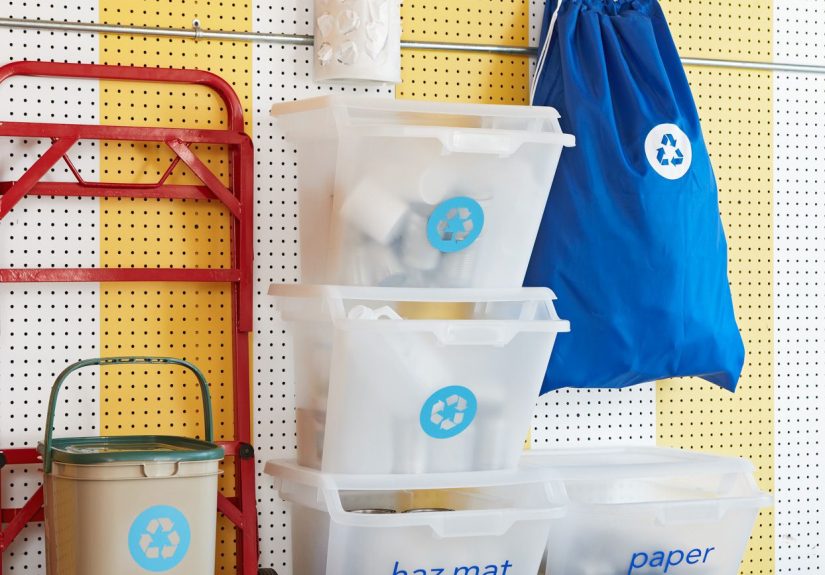
9) A Pegboard Recycling Wall (Labels + hooks = instant clarity)
Pegboard isn’t just for tools. Create a recycling wall with hanging bins, hooks for reusable bags, and a clip for your local recycling cheat sheet. It keeps everything visible without becoming clutter.
- Best for: Families (kids love “matching” items to labeled spots)
- Make it nicer: Use matching containers and a limited color palette
10) A Slim “Apartment Tower” Sorting Station
Tight on space? Go vertical. A narrow multi-bin tower can separate trash, mixed recycling, and compost in a footprint smaller than a barstool.
- Best for: Apartments, condos, tiny kitchens
- Odor hack: Prioritize a tight lid for compost or food-soiled scraps
11) A Hidden System Inside a Pantry or Utility Closet
If you have a closet near the kitchen, convert the bottom section into a recycling zone. Add stackable bins, labels on the door, and a small mat or tray for easy cleanup.
- Best for: People who want “none of this visible” vibes
- Pro tip: Ventilation matters if you’re storing anything that might be damp
12) A “Mail Drop Zone” Paper Recycling Bin
Most paper clutter isn’t sentimentalit’s coupons, flyers, and catalogs auditioning for your counter. Put a small paper recycling bin where mail enters the house. Sort immediately: keep, shred, recycle. Congrats, you just prevented a future paper mountain.
- Best for: Busy households, work-from-home folks
- Extra credit: Add a small shredder if you deal with sensitive documents
13) A Glass “Clink Bin” with a Liner or Divider
Glass is loud, heavy, and oddly dramatic. Give it a dedicated bin with a sturdy liner, divider, or even cardboard inserts so bottles don’t smash together like they’re in a rock band.
- Best for: Households that use lots of jars and bottles
- Keep it safe: Don’t overfillheavy bins are back-injury bait
14) A “Deposit/Returnables” Tote (Stop mixing money with trash)
If your state has bottle deposits, keep a separate tote for returnables. It prevents confusion and makes returns a quick routine instead of a sticky, shame-filled trunk situation.
- Best for: States with bottle deposits
- Make it painless: Keep it near the door or in the garage so it’s easy to grab
15) Stackable Bins for Sorting (One footprint, multiple streams)
Stackable bins work well when you need multiple categories but don’t have width. Put heavier items lower and lighter items (paper) higher. Labels on the front are non-negotiable unless you enjoy guessing games.
- Best for: Small utility rooms and closets
- Pro tip: Choose bins with handles so you can carry one stream out at a time
16) A Dedicated “Plastic Film & Bags” Holder (For drop-off programs)
Many curbside programs don’t want plastic bags or film in the bin. But you can still collect them neatly for store drop-offs where available. Use a wall hook with a reusable bag, a slim dispenser-style container, or a lidded bin labeled “FILM DROP-OFF.”
- Best for: Households that accumulate grocery bags, shipping film, and wrap
- Make it cleaner: Only store clean, dry filmno food residue
17) A “Special Recycling” Box for Batteries, Bulbs, and E-Waste
Batteries, light bulbs, and electronics often require special handling. Give these items a separate, clearly labeled container on a high shelf (out of reach of kids/pets). When the box is full, schedule a drop-off run.
- Best for: Everyone (because mystery drawers are where batteries go to retire)
- Safety note: Tape battery terminals if you’re storing multiples to reduce risk of shorting
18) An Outdoor “Curb-Ready” Recycling Corral
Keep outdoor carts organized with a simple corral: a designated spot along the side of the house, behind a screen, or inside a small fenced area. Add hooks for gloves and a spot for extra paper bags. The goal is to make pickup day a routine, not a scavenger hunt.
- Best for: Homes with outdoor carts
- Weather win: Lids keep paper dry and pests out
Keep It From Becoming a Chaos Corner: Quick Maintenance That Works
Do a 2-minute “bin reset” once a week
Empty the staging bin, wipe sticky spots, and replace any torn labels. This tiny habit prevents odor buildup and keeps everyone on track.
Use a simple “drying lane” for rinsed containers
A small drying rack or a towel near the sink lets containers drip dry before they go into the main bin. Less moisture means less smell and less paper contamination.
Make the right action the easiest action
If your compost bin is hard to open, people will “temporarily” toss scraps in trash. If cardboard storage is far away, boxes will stack up. Adjust the setup until it feels effortlessthen you’ve basically hacked human nature.
Real-Life Experiences: What I Learned After Trying (and Fixing) My Own Recycling Setup
The first recycling “system” I ever set up was pure ambition and zero engineering: one bin labeled RECYCLE in marker, a second bin for trash, and a belief that grown adults would always read the label before tossing something. Reader, they did not.
The failure was predictable. Someone would drop a greasy takeout container in recycling, which would leak onto paper, which would make the whole bin smell like a sad food court. Then everyone would avoid the recycling bin like it had started an argument at Thanksgiving. The lesson: recycling isn’t just sorting. It’s managing moisture, food residue, and the fact that nobody wants to scrub a bin at 10 p.m. on a Tuesday.
The first fix was adding a small “rinse & stage” caddy by the sink. Suddenly, sticky containers didn’t go straight into the main bin. They got a quick rinse and a shake, then hung out in the caddy until they were dry enough to graduate. That one change cut the smell issue dramatically. The second fix was a cardboard corral. Once we committed to flattening boxes immediately, the kitchen stopped looking like we were building a fort for raccoons.
The biggest surprise was how much labels mattered. Not cute labels. Not tiny labels. Big, obvious, “you can read this from space” labels. I added “CANS & BOTTLES” and “PAPER” and a separate “DROP-OFF” bin for batteries and plastic film. Overnight, the number of “Wait, where does this go?” questions dropped. People didn’t become recycling experts; they just stopped needing to think so hard.
I also learned that location beats perfection. I tried hiding everything in a closet once, and it looked amazinguntil it was inconvenient. Then items migrated back to the counter like homing pigeons. The sweet spot was a mostly-hidden pull-out for daily use and one visible, easy-to-grab tote in the garage for drop-off items. Pretty plus practical.
Finally, I stopped aiming for “flawless recycling” and started aiming for “recycling that actually happens.” That mindset shift matters. A system that’s 85% correct but used every day beats a perfect system that only works when you’re in the mood to reorganize your life. The goal isn’t to win an award for Bin Aesthetics. The goal is to make going green so easy your household does it on autopilotwhile you save your brainpower for more important problems, like deciding what’s for dinner.
Conclusion: Build a System That’s Easy, Clear, and Kind of Unavoidable
The best recycling storage ideas all share one trait: they reduce friction. Put bins where waste happens, label them clearly, keep items clean and dry, and create a home for the “weird stuff” that needs drop-off. Start small, tweak as you go, and remember: the most sustainable system is the one your household will actually use.