Table of Contents >> Show >> Hide
- Before You Pick Tile: 5 Quick Range-Backsplash Rules
- 20 Tile Backsplash Ideas Behind the Stove
- Classic White Subway Tile (But Make It Crisp)
- Herringbone Subway for “I Have My Life Together” Energy
- Vertical Stack to Visually Lift the Ceiling
- Oversized Subway Tile for Fewer Grout Lines
- Full-Height Tile Behind the Range (Counter to Ceiling)
- “Picture Frame” Panel: Tile Only Behind the Stove
- Handmade-Look Zellige for Soft Shine and Character
- Checkerboard Squares for Playful, Retro Confidence
- Patterned Encaustic-Look Tile as a “Backsplash Rug”
- Arabesque or Moroccan-Inspired Shapes for Curvy Drama
- Hex Tile for Modern Geometry
- Penny Round Tile for a Vintage, Textured Look
- Fish Scale (Mermaid) Tile for a Subtle Statement
- Picket Tile for a Sleek, Elongated Pattern
- Fluted (Reeded) Tile for 2025 Texture Without Chaos
- 3D Sculptural Tile for a “Gallery Wall” Moment
- Glass Tile for Reflective Light and Easy Wipe-Downs
- Metallic Mosaic Tile for a Modern, Chef-Like Edge
- Marble Mosaic (Basketweave, Hex, or Herringbone) for Timeless Luxury
- Porcelain “Slab-Look” Tile for Big Veining Without Big Stress
- Grout, Finish, and Maintenance: The Unsexy Stuff That Saves the Day
- Real-World Experiences: What People Learn After Living With a Stove Backsplash
- Conclusion
The wall behind your stove has one job: take the hit. Oil pops, tomato sauce burps, and that one
skillet that “definitely won’t splatter” absolutely does. The good news? A tile backsplash behind
the stove can be both a hardworking shield and the kitchen’s main character.
Below are 20 design ideas you can steal (politely) for the area behind the rangeplus practical
tips on height, grout, and materials that won’t panic when things heat up. Expect style options
from timeless to “my backsplash has a personality and it’s confident.”
Before You Pick Tile: 5 Quick Range-Backsplash Rules
- Cover the full width of the range. At minimum, protect the wall directly behind the stove so splatter doesn’t find the “bare drywall loophole.”
- Decide your stopping point early. Common choices: counter-to-hood, counter-to-cabinets, or full-height to the ceiling for drama.
- Prioritize cleanability. Matte can look dreamy, but ultra-textured tiles can trap grease like it’s their side hustle.
- Choose grout like you choose friends. Supportive, low-drama, and not easily stained.
- Test in your lighting. The same “warm white” tile can look like vanilla ice cream in one kitchen and printer paper in another.
20 Tile Backsplash Ideas Behind the Stove
-
Classic White Subway Tile (But Make It Crisp)
Subway tile is the jeans-and-a-blazer of kitchens: it always works, and it doesn’t try too hard.
For a behind-the-stove zone, use a glossy finish for wipe-down ease and keep the look fresh with
a slightly elongated size (like 3×12 or 4×12). Pair it with white or soft-gray grout for a calm,
clean effect that won’t compete with your range hood. -
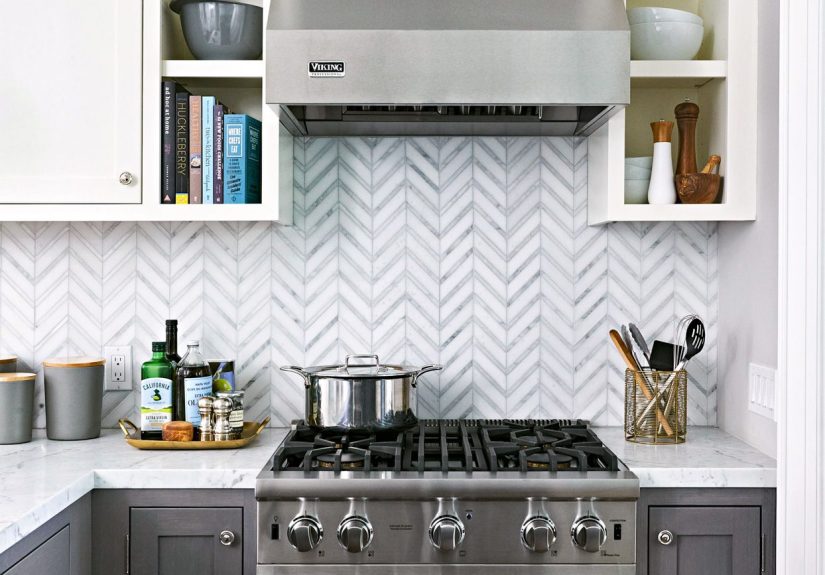
Herringbone Subway for “I Have My Life Together” Energy
Herringbone turns basic rectangular tile into a tailored statementperfect as a feature just
behind the stove even if the rest of the backsplash is simpler. It adds movement without
needing loud colors. If your kitchen already has strong patterns (busy stone counters, bold
floors), keep the tile neutral and let the layout do the talking. -
Vertical Stack to Visually Lift the Ceiling
Stacking subway tiles vertically draws the eye upwardgreat behind a range where you want the
focal point to climb toward the hood. This is especially effective if you extend tile to the
hood or ceiling. Choose a slim tile and a tight grout joint for a modern, architectural vibe
that looks intentional (not like the tile installer sneezed). -
Oversized Subway Tile for Fewer Grout Lines
If cleaning is your love language, larger tiles are your soulmate. Big-format subway (think
4×16, 4×24, or larger) reduces grout lines where grease can settle. Behind the stove, that
translates to easier wipe-downs and a calmer visual field. Bonus: it can make smaller kitchens
feel less “busy” because the pattern reads as bigger and quieter. -
Full-Height Tile Behind the Range (Counter to Ceiling)
Going full height behind the stove creates a built-in feature wallespecially stunning with a
statement hood. It also protects more wall area, which is handy if you’re an enthusiastic cook
with a flair for “high-energy sautéing.” Keep the side walls simpler, or repeat a quieter
version of the tile elsewhere so the range wall feels like a deliberate centerpiece. -
“Picture Frame” Panel: Tile Only Behind the Stove
Want impact without tiling the entire kitchen? Create a framed tile panel behind the range.
Use a contrasting border (a pencil trim, a thin mosaic band, or a different tile color) to
outline the stove area like artwork. This approach works beautifully when your stove sits
between cabinets, because the frame gives the backsplash a “finished” looklike it belongs
there, not like it wandered in. -
Handmade-Look Zellige for Soft Shine and Character
Zellige-style tiles (those slightly irregular, glossy squares) bring depth and a gentle shimmer
that changes throughout the day. Behind the stove, they feel warm, artisanal, and a little
romanticlike your kitchen writes poetry when nobody’s watching. Pair them with simple counters
so the surface variation reads as intentional texture, not visual noise. -
Checkerboard Squares for Playful, Retro Confidence
A black-and-white (or tone-on-tone) checkerboard backsplash behind the range adds instant
personality. Keep the scale moderatesmall squares feel vintage, larger ones read more modern.
This is a strong focal point, so let nearby finishes be calmer: solid counters, simpler cabinet
hardware, and a hood that doesn’t compete for attention. -
Patterned Encaustic-Look Tile as a “Backsplash Rug”
Think of patterned tile behind the stove as the kitchen equivalent of a statement area rug.
It anchors the cooking zone and adds color without requiring new cabinets or countertops.
If your kitchen is mostly neutral, a patterned “tile rug” behind the range can be the one bold
move that makes the whole space feel designed. Keep grout close to the tile color to avoid
turning the pattern into visual static. -
Arabesque or Moroccan-Inspired Shapes for Curvy Drama
Curved tile shapes (arabesque, lantern, scallop) soften all the straight lines of cabinets and
appliances. Behind the stove, they read as decorative and intentionalespecially with a simple
hood and minimal open shelving. Choose one strong element: either a bold shape in a neutral
color, or a simple shape in a bold color. Both at once can feel like the backsplash is yelling. -
Hex Tile for Modern Geometry
Hexagons can look crisp and contemporary or charming and classic depending on color and finish.
For behind the stove, consider mid-size hex tiles that won’t overwhelm the wall but still show
shape. A monochrome hex backsplash is a clean way to add interest; a two-tone hex layout can
create a subtle pattern that feels custom without screaming “custom.” -
Penny Round Tile for a Vintage, Textured Look
Penny rounds are small, playful, and full of charmespecially in white, soft green, or a deep
moody color. Behind the stove, they can feel like a boutique café moment. The tradeoff is grout:
smaller tiles mean more grout lines. If you love the look, consider stain-resistant grout and a
grout color that won’t show every microscopic life choice you’ve ever made while cooking. -
Fish Scale (Mermaid) Tile for a Subtle Statement
Fish scale tile is whimsical without being childishespecially in glossy neutrals, sea-glass
greens, or soft blues. Behind the stove, it adds movement that looks extra-good with under-cab
lighting. Keep the rest of the backsplash minimal (or stop it at the range wall) so the shape
feels like a feature, not a theme park ride. -
Picket Tile for a Sleek, Elongated Pattern
Picket tiles have that stretched-hex look that feels modern and a bit artsy. They’re great for
a stove backsplash when you want a geometric pattern that’s more unique than standard hex.
Try vertical orientation to emphasize height behind the range, or horizontal for a calmer, wider
feelhelpful if your range wall is narrow. -
Fluted (Reeded) Tile for 2025 Texture Without Chaos
Fluted tile adds grooves that catch light and create shadowlike built-in depth. Behind the
stove, it looks elevated and design-forward, especially in a single color where texture becomes
the star. Practical note: choose a finish you can wipe easily and consider a gentler groove depth
if you cook messy. Gorgeous is great; washable gorgeous is better. -
3D Sculptural Tile for a “Gallery Wall” Moment
Wave, ridge, or geometric relief tiles create a sculptural backsplash that reads like art.
Behind the stove, keep the color restrained (white, warm gray, soft taupe) so the dimensional
surface doesn’t overwhelm the room. This is also a perfect candidate for the “tile panel” idea:
let the feature live behind the range, and use flatter tile elsewhere for easier upkeep. -
Glass Tile for Reflective Light and Easy Wipe-Downs
Glass tile is naturally non-porous and brightens the range wall by bouncing light around. It
looks especially sharp in small kitchens or in spaces that need a little sparkle without adding
clutter. Go with a simple layout and let the sheen do the work. If you want extra drama, use a
deeper color behind the stove and keep surrounding areas lighter. -
Metallic Mosaic Tile for a Modern, Chef-Like Edge
Stainless or metallic mosaic tiles (often mixed with glass or stone) give serious “restaurant
kitchen” vibes while still looking polished at home. Behind the stove, metallic finishes are
practical: they’re easy to wipe and naturally fit the cooking zone. Keep the palette tight
pair with neutral counters and simple cabinet hardware so the shine feels sleek, not flashy. -
Marble Mosaic (Basketweave, Hex, or Herringbone) for Timeless Luxury
Marble mosaics bring classic elegance, especially behind the stove where the pattern can act as
a focal point. Basketweave reads traditional; marble hex feels updated; marble herringbone adds
movement. Marble is a little higher-maintenance than porcelain, so plan for sealing if needed
and wipe splatters promptlymarble has a memory, and it keeps receipts. -
Porcelain “Slab-Look” Tile for Big Veining Without Big Stress
Want the drama of a marble slab behind the range but prefer lower upkeep? Porcelain tiles that
mimic stone (including large-format and panel-style options) can deliver bold veining with more
stain resistance. Use fewer seams for a cleaner look, and pair with minimal grout lines. This
choice is especially strong in modern kitchens with streamlined cabinets and a statement hood.
Grout, Finish, and Maintenance: The Unsexy Stuff That Saves the Day
Pick grout for real life, not showroom life
Behind the stove, grout sees grease, heat, steam, and the occasional “oops” that becomes a
full-on culinary incident. High-performance cement grouts offer better stain resistance than
basic mixes, while epoxy grout is prized for being highly stain resistant and not needing sealing.
If you hate grout maintenance, fewer grout lines (larger tiles) plus a stain-resistant grout is
your low-effort power combo.
Glossy vs. matte vs. textured
Glossy tiles usually wipe clean fastest. Matte tiles can hide smudges but may hold onto grease
if the surface is chalky or heavily textured. Deeply textured tiles look amazinguntil they become
tiny grease canyons. If you’re in love with texture, consider using it only behind the stove as a
framed feature and choose a wipe-friendly texture depth.
A simple grout refresh trick
If grout starts looking tired, a gentle scrub can help. Many homeowners use a paste of baking soda
and standard 3% hydrogen peroxide on grout lines, letting it sit briefly before scrubbing with a
soft brush. Always spot-test first, ventilate the area, and avoid harsh abrasives that can scratch
tile finishes.
Real-World Experiences: What People Learn After Living With a Stove Backsplash
Let’s talk about the part nobody posts on inspiration boards: living with the backsplash once the
novelty wears off and the spaghetti sauce gets involved. Over and over, the same lessons show up in
renovation stories and DIY recapsespecially for the tile backsplash behind the stove.
First, people underestimate how much visual alignment matters in the cooking zone. If the tile
pattern doesn’t line up with the hood, cabinets, or the centerline of the range, your eye notices.
Not in a dramatic “this is ruined” waymore like a low-grade itch you can’t scratch. A simple
pre-install trick many wish they’d done sooner: tape off the design on the wall (or dry-lay a row
on the countertop) and mark the true center of the stove and hood. It’s the difference between
“custom kitchen” and “I swear it looked straight yesterday.”
Second, grout color is an emotional decision disguised as a technical one. White grout looks crisp
in photos, but it also highlights every line. Dark grout is striking, but it can make small tiles
feel busier than expected. The most common “happy medium” lesson? Choose grout that’s close to the
tile color when you want calm, and choose contrast only when you intend for the grid to be
part of the design. If you’re unsure, the safest route behind the stove is usually tone-on-tone:
it reads cleaner and forgives more mess.
Third, texture is a tradeoff. People fall hard for handmade-look tiles, fluted tile, and 3D patterns
and they should, because they’re gorgeous. The lived-in reality is that the backsplash behind the
stove takes the most splatter, so deep texture can require more frequent, more detailed cleaning.
The practical compromise many homeowners end up loving: use the statement tile behind the range as
a framed panel (so you get the wow factor), then choose a simpler, flatter tile for the rest of the
backsplash where maintenance is easier.
Fourth, ordering extra tile is not optionalit’s your future self’s love letter. Dye lots change,
tiles break, and five years from now you may need one replacement piece after an appliance swap or
a rogue pan handle incident. Many DIYers recommend buying extra (often 10–15% more than your
measured square footage), then storing it flat in a dry place with the product info. It’s boring,
but so is trying to match “Warm White #3” in 2031.
Finally, the stove wall is where people notice workmanship the most. This is the backsplash zone
everyone stares at while you cook, talk, and pretend you didn’t just set a timer for “vibes.” Clean
edges, tidy transitions, and a finished trim (instead of raw tile edges) are the details that make
the whole installation look professional. If you’re DIYing, the biggest “wish I’d known” theme is
patience: level lines, proper spacing, and cleaning grout haze early are what separate “weekend
project” from “wow, who installed this?”
Conclusion
The best tile backsplash behind the stove is the one that fits your cooking habits and your
style. If you want low-maintenance, lean into larger-format tiles and stain-resistant grout. If you
want drama, make the range wall a feature with full-height tile, a framed panel, or a bold pattern.
Either way, pick something that makes you happy when you’re reheating leftovers on a Tuesdaybecause
that’s the real test of good design.