Table of Contents >> Show >> Hide
- The big mindset shift: Make space work in 3D (not just 2D)
- 36 space-saving design ideas for small homes
- 1) Build storage up to the ceiling
- 2) Add floating shelves in awkward gaps
- 3) Install a pegboard for flexible vertical storage
- 4) Swap bulky nightstands for floating bedside ledges
- 5) Use wall hooks like you mean it
- 6) Try an over-the-door organizer (the stealth MVP)
- 7) Add a storage bench in the entry
- 8) Create a “drop zone” shelf for daily clutter
- 9) Choose furniture with visible legs
- 10) Use nesting tables instead of a chunky coffee table
- 11) Pick an ottoman that stores (and works as a table)
- 12) Try a lift-top coffee table
- 13) Use a slim console as a desk alternative
- 14) Install a wall-mounted folding desk (aka a “Murphy desk”)
- 15) Convert a closet into a “cloffice”
- 16) Use a drop-leaf dining table
- 17) Add banquette seating with storage underneath
- 18) Choose stackable or folding chairs for guests
- 19) Use a room divider that also stores
- 20) Mount the TV and float the media storage
- 21) Go for a sofa bed or sleeper chair for hosting
- 22) Install a Murphy bed for true multi-use rooms
- 23) Consider a loft bed to reclaim floor area
- 24) Use a daybed with drawers or a trundle
- 25) Upgrade to a platform bed with built-in drawers
- 26) Add under-bed bins if drawers aren’t an option
- 27) Build a closet system (even a simple one)
- 28) Switch to slim, non-slip hangers
- 29) Use toe-kick drawers in kitchens and bathrooms
- 30) Add a pull-out pantry or slim rolling cart
- 31) Hang pots and pans (freeing cabinet space)
- 32) Use a magnetic knife strip instead of a knife block
- 33) Turn the space under stairs into built-in storage
- 34) Use corner shelving to capture dead zones
- 35) Swap swing doors for pocket or sliding doors
- 36) Add mirrors and layered lighting to “expand” the room visually
- How to choose the right ideas (without turning your home into a transformer movie)
- Common small-home mistakes to avoid
- Real-world experiences: What it’s actually like living with these upgrades (about )
- Conclusion
Small homes are like carry-on luggage: everything you love has to fit, and somehow there’s always one stubborn item
(hello, vacuum) that acts like it paid rent. The good news? You don’t need a bigger houseyou need a smarter one.
The best space-saving design ideas for small homes don’t just “hide stuff.” They make every inch pull double duty,
so your home feels calmer, easier to live in, andbonusway more stylish.
Below are 36 practical, real-world strategies designers and organizers swear by, from built-in storage and vertical
shelving to multifunctional furniture and layout tricks that make small spaces feel surprisingly generous. Pick a
few that match your lifestyle, budget, and whether your landlord thinks “permanent changes” are a personal attack.
The big mindset shift: Make space work in 3D (not just 2D)
Most small homes struggle because we treat rooms like flat rectangles. But your home has height, depth, and plenty
of “weird” zonesunder stairs, behind doors, over toilets, above cabinets, inside toe-kicks. The goal is to:
- Go vertical (walls are your second floor).
- Choose double-duty pieces (furniture that stores, folds, expands, or converts).
- Reduce visual clutter (a tidy room feels bigger, even when the square footage refuses to grow).
36 space-saving design ideas for small homes
1) Build storage up to the ceiling
Tall shelving and cabinets use “air space” you already own. Put everyday items at eye level and stash rarely used
pieces up top in matching bins so it looks intentionalnot like a museum exhibit titled Miscellaneous Regrets.
2) Add floating shelves in awkward gaps
That sliver beside the fridge or above a doorway can become prime storage. Floating shelves keep the floor clear
and make small rooms feel less boxed in, especially when you style them with a mix of baskets and a few “I’m a real adult” objects.
3) Install a pegboard for flexible vertical storage
Pegboards aren’t just for garages. In kitchens, entryways, and home offices, they let you rearrange hooks and
shelves as your needs changelike modular storage with commitment issues (in a good way).
4) Swap bulky nightstands for floating bedside ledges
A wall-mounted nightstand or slim shelf frees floor space and makes a bedroom feel lighter. Look for styles with
a small drawer so chargers and hand cream don’t become permanent décor.
5) Use wall hooks like you mean it
Hooks turn vertical space into a drop zone for coats, bags, hats, and towels. Group them in a clean grid so it
looks designed, not like your wall is being attacked by outerwear.
6) Try an over-the-door organizer (the stealth MVP)
Doors can store shoes, cleaning supplies, pantry items, or bathroom essentials. Choose slim versions that don’t
force the door to fight for its life every time it closes.
7) Add a storage bench in the entry
A bench gives you seating for shoes and hidden storage for scarves, pet gear, or shopping bags. It also creates a
psychological “landing strip,” which reduces the classic small-home pile-up at the front door.
8) Create a “drop zone” shelf for daily clutter
A narrow wall-mounted shelf with a tray or small baskets collects keys, mail, and sunglasses in one spot.
Small homes don’t need more spacethey need fewer wandering objects.
9) Choose furniture with visible legs
Pieces that sit off the floor feel visually lighter and allow sightlines to continue underneath, making rooms
appear larger. It’s the design equivalent of wearing shoes that make your outfit look instantly better.
10) Use nesting tables instead of a chunky coffee table
Nesting tables expand when you’re hosting and tuck away when you’re not. They’re perfect for small living rooms
where every square foot needs to stay flexible.
11) Pick an ottoman that stores (and works as a table)
A storage ottoman can hold blankets, board games, or the entire emotional support collection of throw pillows.
Add a tray on top and it becomes a coffee table without the bruised shins.
12) Try a lift-top coffee table
Lift-tops create a work or dining surface that rises to you and often include hidden storage inside. Great for
apartments where the dining table is also your desk, craft station, and occasional “why is life like this” zone.
13) Use a slim console as a desk alternative
A narrow console table can double as a workstation, especially paired with a stool that tucks underneath.
It’s a space-saving home office solution that doesn’t scream “corporate.”
14) Install a wall-mounted folding desk (aka a “Murphy desk”)
Folding desks create an instant work zone and disappear when you’re done. This is ideal for small homes where you
don’t want your laptop to stare at you during dinner like a disappointed manager.
15) Convert a closet into a “cloffice”
A small closet can become a compact office with shelves, lighting, and a fitted desktop. Close the doors at the
end of the day andpoofwork-life balance, at least visually.
16) Use a drop-leaf dining table
Drop-leaf tables expand for meals and fold down to save space. They’re a classic small-space design win,
especially when you need a dining surface that won’t hog the room all week.
17) Add banquette seating with storage underneath
A built-in or freestanding banquette can replace multiple chairs, tuck into corners, and hide storage below.
Breakfast nooks become storage nooksno extra square footage required.
18) Choose stackable or folding chairs for guests
Keep a couple of folding chairs that hang on a wall hook or store flat. You’ll be ready for visitors without
dedicating permanent floor space to “chairs for theoretical parties.”
19) Use a room divider that also stores
Open bookcases can divide spaces (like a studio) while providing storage. Anchor them safely and keep the styling
balanced so the divider feels architectural, not like a leaning tower of paperbacks.
20) Mount the TV and float the media storage
Wall-mounted TVs and slim floating consoles free up floor space and reduce bulky furniture footprints. It also
makes cleaning easierbecause dust bunnies should not own property in your home.
21) Go for a sofa bed or sleeper chair for hosting
Modern sleeper sofas and convertible chairs can look polished while offering real sleeping space. If you host
often, this is a high-impact way to avoid dedicating an entire room to “guest-only” status.
22) Install a Murphy bed for true multi-use rooms
Murphy beds let a living room, office, or guest room transform quickly. Pair one with built-in shelving and you’ll
get storage plus a bed without sacrificing the room’s daytime purpose.
23) Consider a loft bed to reclaim floor area
Loft beds create space underneath for a desk, seating, or storage. They’re especially useful in small bedrooms and
studios, turning vertical volume into usable “square footage.”
24) Use a daybed with drawers or a trundle
Daybeds can act as a sofa by day and bed by night. Built-in drawers or a trundle add storage or extra sleeping
spaceperfect for kids’ rooms, guest rooms, or multipurpose dens.
25) Upgrade to a platform bed with built-in drawers
Under-bed drawers are a small-home classic because they store a lot without adding furniture. Keep items grouped
(linens, off-season clothes) so you’re not doing a scavenger hunt at midnight.
26) Add under-bed bins if drawers aren’t an option
Use low-profile rolling bins with labels. The key is consistency: matching containers reduce visual clutter, which
makes small bedrooms feel calmer and more spacious.
27) Build a closet system (even a simple one)
Closet systems with shelves, drawers, and double hanging rods maximize vertical space. The right layout can
massively increase storage without expanding the closet footprint.
28) Switch to slim, non-slip hangers
Slim hangers create noticeably more hanging room and keep clothes from slipping into a heap. It’s a tiny upgrade
that makes a closet feel instantly more “put together.”
29) Use toe-kick drawers in kitchens and bathrooms
That recessed space under cabinets can hide shallow drawers for flat items like baking sheets, pet bowls, or
cleaning cloths. It’s secret storage you’ll wonder how you lived without.
30) Add a pull-out pantry or slim rolling cart
A narrow rolling cart can turn a small gap into pantry storage for spices and canned goods. In compact kitchens,
these slim solutions make cabinets less crowded and cooking less chaotic.
31) Hang pots and pans (freeing cabinet space)
Wall racks, ceiling racks, or rail systems keep cookware accessible and open up cabinet storage. Bonus: it can
look like a chef’s kitchenminus the dramatic yelling.
32) Use a magnetic knife strip instead of a knife block
Counter space is precious in small homes. A wall-mounted magnetic strip keeps knives safe and accessible while
freeing up work surface space for, you know, actual cooking.
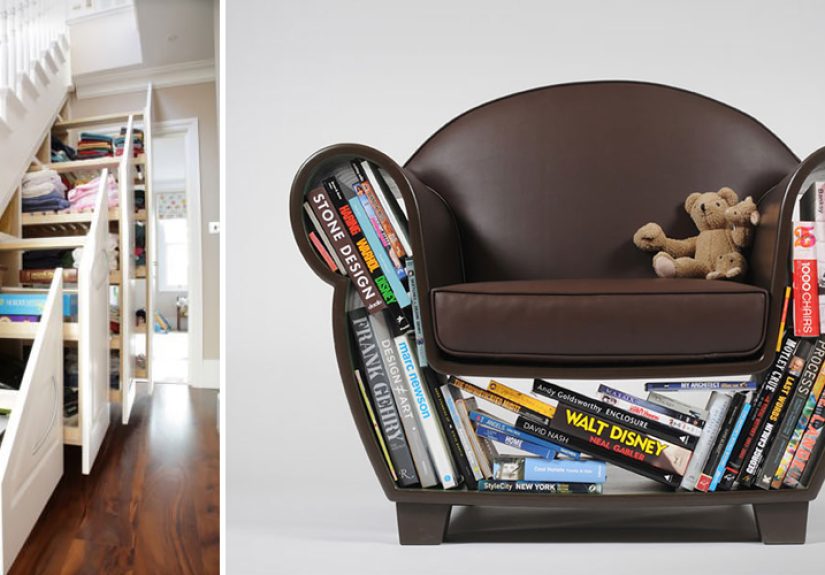
33) Turn the space under stairs into built-in storage
Under-stair zones can become drawers, cabinets, bookshelves, a reading nook, or even a mini bar. It’s one of the
most powerful “found space” opportunities in small houses and townhomes.
34) Use corner shelving to capture dead zones
Corners are often underused, but corner shelves can store books, plants, or bathroom essentials without blocking
walkways. Choose rounded edges in tight areas to avoid hip bruises.
35) Swap swing doors for pocket or sliding doors
Traditional doors need clearance space. Pocket doors or sliders free up room for furniture placement and improve
flowespecially in tight bathrooms, closets, and laundry areas.
36) Add mirrors and layered lighting to “expand” the room visually
Mirrors bounce light and create depth, while layered lighting (ceiling + sconces + lamps) reduces shadows that
make small rooms feel tight. This combo is a design cheat code for making spaces feel larger without construction.
How to choose the right ideas (without turning your home into a transformer movie)
Not every space-saving solution fits every household. Before you commit, run each idea through three filters:
- Frequency: Will you use it daily, weekly, or twice a year?
- Effort: Do you want quick wins (hooks, shelves) or major upgrades (built-ins, pocket doors)?
- Reality: Kids, pets, roommates, and routines matter more than a “perfect” Pinterest photo.
A small home thrives on systems you’ll actually maintain. If a solution requires you to unfold, lift, rotate, and
perform a ritual dance before you can sit down, it might look coolbut it won’t last.
Common small-home mistakes to avoid
- Too much tiny furniture: A room full of small pieces can feel cluttered. Mix in a few well-scaled anchor items.
- Overloading open shelves: Open storage looks great when curated and stressful when it becomes a junk exhibit.
- Ignoring traffic flow: If you have to shimmy sideways to pass, the layout needs a rethink.
- Buying storage without decluttering: Storage should solve a problem, not create a new one with more bins.
Real-world experiences: What it’s actually like living with these upgrades (about )
Here’s the part most design lists skip: space-saving ideas don’t just change your homethey change your habits.
In many small-home makeovers and organizing overhauls, the biggest “before and after” isn’t a photo. It’s the
daily rhythm. When storage is easy to access and logically placed, you stop playing household Tetris every time
you need something. When it isn’t, you’ll quietly abandon the system, and clutter will creep back in like it has
a key.
Take vertical storage. People love it because it instantly frees floor space, but the learning curve is real:
anything stored high needs a plan (a step stool, consistent bins, and labels). The sweet spot is treating upper
shelves like a “seasonal archive”holiday décor, extra linens, backup supplieswhile keeping daily-use items within
arm’s reach. If you mix those levels, you’ll be hauling cereal from the top shelf like it’s a CrossFit workout.
Multifunctional furniture is another game-changer, but there’s a balance. One or two transforming pieceslike a
sleeper sofa or a wall-mounted folding deskcan make a small home feel incredibly adaptable. The issue comes when
everything transforms. If your coffee table lifts, your desk folds, your dining table expands, and your bed flips
into the wall, your home can start to feel like it requires “setup time” to live in. The most successful small
spaces usually have a stable core (a comfortable sofa, a reliable bed, clear walking paths) with a few flexible
boosters layered in.
Built-ins tend to be the “wow” moment, especially under stairs or around windows. In practice, they shine because
they use awkward square footage that furniture can’t. People report that once those zones become drawers or
cabinets, entire rooms feel less crowded because the bulky freestanding storage pieces become unnecessary. The
pro tip: build closed storage into at least part of the design. Open shelves are great for books and décor, but
closed cabinets are what hide the everyday messcords, tools, paper stacks, random chargers, and the mysterious
objects that appear when you clean.
The most underrated experience shift comes from “drop zones.” A small shelf, a tray, a row of hooks, and a bench
with storage can dramatically reduce daily friction. It sounds simple, but it prevents the front-door explosion:
shoes everywhere, bags on chairs, mail on counters. When your home is small, these micro-piles feel huge. A
designed landing spot makes the whole house feel more controlled in about three days.
Finally, the emotional truth: small homes can feel bigger when you can see the floor. Even a little breathing room
changes how you relax in a space. If you try just one thing from this list, pick a solution that clears a surface
(counters, floors, or a chair that’s become a clothing archive). That single change often delivers the “waitmy
home feels bigger” effect faster than any paint color ever could.
Conclusion
The best space-saving design ideas for small homes are equal parts clever storage and honest self-knowledge.
Choose solutions that match how you actually live, not how you wish you lived in a catalog. Start with vertical
storage and double-duty furniture, then level up with built-ins and layout changes as needed. The goal isn’t to
cram more into your homeit’s to make your home feel easier to exist in. And that’s the real luxury.