Table of Contents >> Show >> Hide
- First, What Does “Directly Proportional” Actually Mean?
- Way #1: Check for a Constant Ratio (The Table Test)
- Way #2: Graph the Data (The “Line Through the Origin” Test)
- Way #3: Verify It Fits the Form y = kx (The Equation Test)
- Way #4: Check the Unit Rate (or Slope) Across Intervals (The “Real-World Data” Test)
- Common Traps That Make Proportionality Tests Go Sideways
- A Quick “Proportional or Not?” Checklist
- Conclusion
- Experiences With Proportionality: What It Looks Like in Real Life (and Real Learning)
Direct proportion is one of those math ideas that sounds fancy until you realize it’s basically this:
when one thing doubles, the other thing doubles too. If one triples, the other triples. They move together like
synchronized swimmersminus the glitter (unless you’re graphing with gel pens, in which case: respect).
In real life, direct proportionality shows up everywhere: hourly pay, unit pricing at the grocery store, recipe scaling,
distance traveled at a steady speed, and even currency conversions. The trick is knowing when you’re truly looking at a
proportional relationship… and when something is just pretending.
This guide breaks down four reliable ways to test whether two variables are directly proportional, with
clear examples, quick checks, and a few “don’t fall for it” traps to keep your brain from stepping on a mathematical LEGO.
First, What Does “Directly Proportional” Actually Mean?
Two variables are directly proportional when they can be written in the form:
y = kx, where k is a constant (the constant of proportionality).
That constant never changes as long as the relationship stays proportional.
Another way to say it: the ratio y/x stays the same for every matching pair of values (as long as
x ≠ 0). If the ratio stays constant, you’ve got direct proportion. If it changes, the relationship is
not directly proportionalno matter how convincing it looks in a table.
Graphically, a directly proportional relationship forms a straight line that passes through the origin (0,0).
Not “near” the origin. Not “kind of close.” Through. The. Origin.
Way #1: Check for a Constant Ratio (The Table Test)
This is the fastest test when you have a list or table of paired values. If y/x is the same for every row,
the variables are directly proportional.
Step-by-step
- Pick each pair (x, y) in your data.
- Compute the ratio y ÷ x (skip any row where x = 0).
- If all ratios match, the relationship is directly proportional.
Example: Hours worked vs. earnings
Suppose you earn money at a constant hourly rate (no bonus, no base fee, no “we pay in exposure” nonsense).
| Hours (x) | Earnings (y) | y/x |
|---|---|---|
| 2 | 36 | 18 |
| 5 | 90 | 18 |
| 8 | 144 | 18 |
The ratio y/x = 18 every time, so the relationship is directly proportional with
k = 18. The equation is y = 18x.
Quick warning: x = 0 can’t be used in the ratio
Division by zero is not a “fun challenge.” It’s a “math will not allow this” situation. If your table includes x = 0,
use a different row to find k, and use the graph/origin test (Way #2) to verify the relationship behaves correctly at zero.
Way #2: Graph the Data (The “Line Through the Origin” Test)
If you graph the pairs (x, y) and they form a straight line passing through (0,0), that’s a hallmark of direct proportion.
This is especially helpful when the table is messyor when you want a visual “yep/nope” answer.
What you’re looking for
- Straight line (not a curve, not a wiggle, not modern art)
- Passes through the origin (0,0)
Example: Cost vs. number of items
If a notebook costs $3 each, then cost is directly proportional to quantity:
1 notebook costs $3, 2 cost $6, 5 cost $15, and so on. On a graph, those points lie on a straight line through (0,0).
Common “gotcha”: A line that DOESN’T go through (0,0)
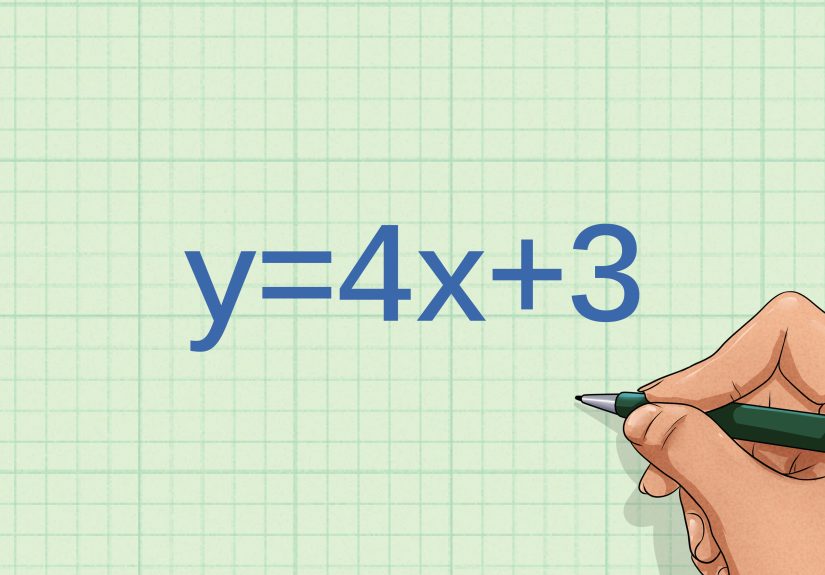
A relationship can be linear without being proportional. If it’s of the form y = mx + b with a nonzero
intercept b, then it’s not directly proportional.
Example: A taxi fare might be $4 base fee + $2 per mile. That’s linear, but not proportional, because at
0 miles you still pay $4. The graph is a line, but it misses the origin.
Way #3: Verify It Fits the Form y = kx (The Equation Test)
If you can write (or rewrite) the relationship so it looks like y = kx, then y is directly proportional
to x. Here, k is the constant of proportionalityoften interpreted as a unit rate.
How to do it
- If you’re given a formula, simplify it.
- If it becomes y = kx, it’s directly proportional.
- If it becomes y = mx + b with b ≠ 0, it’s not directly proportional.
Example A: Directly proportional
If y = 7x, the constant is k = 7. Direct proportion? Yes.
Example B: Not directly proportional
If y = 7x + 10, it’s linear but not proportional. The “+10” is the giveaway.
Example C: Start from a data point
Sometimes you’re told “y is directly proportional to x” and given a single pair, like (x, y) = (6, 30).
Then:
- Assume y = kx
- 30 = k(6)
- k = 30/6 = 5
- Equation: y = 5x
This method is a favorite in word problems because once you find k, the rest is basically plug-and-play (the good kind,
not the “why won’t this USB go in” kind).
Way #4: Check the Unit Rate (or Slope) Across Intervals (The “Real-World Data” Test)
In the wild, data isn’t always clean. You might have measurements, estimates, or rounding. In those cases, it helps to
check whether the rate of change stays constant and whether the relationship behaves like it should at zero.
Option 1: Unit rate (best when x is “per 1” friendly)
If y is directly proportional to x, then y per 1 unit of x should be consistent.
For example, if cost is proportional to pounds of apples, the price per pound should stay the same.
Option 2: Slope between pairs (best for graph-minded people)
For a proportional relationship, the slope (rate of change) is constant and equals k. You can compare slopes between
different points:
Slope from (x1, y1) to (x2, y2) = (y2 − y1) / (x2 − x1)
If that slope stays the same for multiple pairs, you likely have a proportional relationshipespecially if the line goes
through (0,0).
Mini example: Distance vs. time at steady speed
If a car travels at a constant 60 miles per hour, then distance is proportional to time:
- 1 hour → 60 miles (unit rate 60)
- 2 hours → 120 miles (still 60 per hour)
- 3.5 hours → 210 miles (still 60 per hour)
The constant of proportionality is k = 60 (miles per hour). The equation is y = 60x (if y is miles and x is hours).
Reality check: When “almost proportional” is still not proportional
If the unit rate changes meaningfully (even if it’s subtle), the relationship isn’t directly proportional. For example,
bulk discounts can make price-per-item drop as quantity increases. That’s a real-world pattern, but it’s not direct proportion.
Common Traps That Make Proportionality Tests Go Sideways
Trap 1: Confusing constant difference with constant ratio
Direct proportion is about a constant ratio, not a constant difference.
If y increases by 5 whenever x increases by 1, that’s linear. But it’s only proportional if it also passes through (0,0).
Trap 2: Forgetting the origin rule
A proportional relationship must include the idea that when x = 0, y = 0. If that’s not true, you’re not looking at direct proportion.
Trap 3: Mixing units
If x is “minutes” and y is “miles,” your unit rate is miles per minute. If you silently switch minutes to hours mid-problem,
you’ll get a new k and wonder why math is “being weird.” Math is not being weird. Your units are.
Trap 4: Confusing direct and inverse proportion
Inverse proportion looks like xy = k or y = k/x. If x doubles and y halves, that’s inverse,
not direct. Different dance, different music.
A Quick “Proportional or Not?” Checklist
- Does y/x stay constant? (Table test)
- Does the graph form a straight line through (0,0)? (Graph test)
- Can you express it as y = kx? (Equation test)
- Is the unit rate consistent across intervals? (Real-world data test)
If you can answer “yes” to all (or at least the first two), you’re almost certainly dealing with a directly proportional relationship.
Conclusion
Determining whether two variables are directly proportional is less about memorizing rules and more about spotting the
“constant relationship” hiding in plain sight. If the ratio y/x stays the same, the graph is a straight line through the
origin, the equation fits y = kx, and the unit rate doesn’t wobble, you’ve got a proportional relationship.
Once you can recognize direct proportion, a lot of math (and a surprising amount of everyday decision-making) becomes simpler:
comparing deals, scaling recipes, predicting costs, estimating time, and checking whether a claim makes sense.
In other words: proportional reasoning is basically a life skill with better handwriting.
Experiences With Proportionality: What It Looks Like in Real Life (and Real Learning)
One of the most common experiences people have with direct proportion is discovering it in places that don’t feel like “math class.”
For example, the first time someone tries to scale a recipe without thinking proportionally, chaos often follows.
If a pancake recipe uses 2 cups of flour for 4 servings, you can’t just randomly add “a bit more” flour and hope the universe
forgives you. Doubling the servings means doubling every ingredientflour, milk, eggs, baking powderbecause the
relationship between servings and ingredient amounts is meant to be proportional. This is the table test in disguise:
ingredient amount ÷ servings stays constant if you’re doing it right.
Another experience shows up at the grocery store when you compare unit prices. Many shoppers learn (sometimes
after paying too much for tiny cereal boxes) that price isn’t always proportional to size. If a 12-ounce bag costs $4 and a
24-ounce bag costs $7, doubling the ounces did not double the price. The ratio (price/ounces) changed, which means the
relationship isn’t directly proportional. This is also where people learn that “bigger” doesn’t automatically mean “better deal,”
and math becomes a budget superhero.
In learning settings, a classic experience is the moment students realize that a straight line isn’t always proportional.
Many people graph points, see a neat line, and declare victoryuntil someone asks, “Does it go through (0,0)?” That’s when the
taxi-fare example hits like a plot twist. A base fee creates a y-intercept, and suddenly the relationship is linear but not
proportional. That small difference matters because proportional relationships imply a true “starts at zero” situation:
zero hours worked means zero pay; zero items bought means zero cost; zero miles traveled means zero distance. When a relationship
doesn’t start at zero, it tells a different story.
People also run into proportional thinking in fitness and training. If you walk at a steady pace, distance is
proportional to time. But if you sprint, stop, scroll your phone, and then jog (no judgmenthydration breaks are sacred),
your pace changes. The unit rate (distance per minute) isn’t constant, so the relationship stops being proportional. This is a
helpful mental model: proportional relationships require a consistent “per 1” rate. When the per-unit rate changes, the math
should change too.
In spreadsheets and work contexts, a frequent experience is using proportional reasoning to do quick estimates:
“If we can process 120 orders per hour, how many can we do in 6.5 hours?” That’s direct proportion: y = 120x.
But real operations often add constraintssetup time, minimum fees, capacity limitsturning a proportional relationship into a
piecewise or offset model. Many people learn proportionality best by first using it as a clean approximation, then noticing
where reality introduces a “+b” term (setup cost) or changing rates (volume discounts, overtime rules, shipping tiers).
The lesson sticks because it’s practical: proportionality is an excellent starting model, and your tests help you know when it’s valid.
If you take anything from these experiences, let it be this: direct proportion is not just a school topic. It’s a
“does this scale cleanly?” lens you can use everywhererecipes, pricing, travel time, productivity, and data sanity checks.
And yes, it can also save you from buying the “family size” snack bag that’s secretly a terrible deal.