Table of Contents >> Show >> Hide
- Before We Begin: Oatmeal Isn’t Just Oatmeal
- 1) Mistake: Treating All Oats the Same
- 2) Mistake: Using the Wrong Liquid Ratio (Then Blaming Oats for Being “Sad”)
- 3) Mistake: Cooking Too Hot (Hello, Glue) or Too Fast (Hello, Crunch)
- 4) Mistake: Skipping Salt (Then Acting Shocked It Tastes Flat)
- 5) Mistake: Turning Oatmeal Into a Sugar Delivery Vehicle
- 6) Mistake: Building a “Carbs Only” Bowl That Leaves You Hungry at 10:30
- 7) Mistake: Messing Up Make-Ahead Oatmeal (Texture + Food Safety)
- Bonus: A “Perfect Bowl” Checklist
- Conclusion: Oatmeal Should Be Easy, Not Emotional
- Experiences and Real-Life Oatmeal Lessons (500+ Words)
Oatmeal has an unfair reputation for being either (A) a saintly breakfast that tastes like wet cardboard, or
(B) a sweet dessert disguised as “heart healthy.” The truth is way better: oats can be creamy, cozy, and
legitimately satisfyingif you dodge a few common oatmeal mistakes.
This guide breaks down the biggest slip-ups people make with oatmeal (from gluey texture disasters to sugar
ambushes), plus exactly what to do instead. You’ll end up with a bowl that tastes like you triedwithout
actually trying that hard. Which is the whole point of breakfast.
Before We Begin: Oatmeal Isn’t Just Oatmeal
“Oatmeal” can mean different forms of oats, and the type you choose affects texture, cook time, and how your
body responds to it. In general:
- Steel-cut oats = chewy, nutty, slower-cooking, more “porridge vibes.”
- Rolled/old-fashioned oats = classic creamy bowl, fast stovetop cook time.
- Quick oats = softer texture, faster cooking, easier to overcook.
- Instant packets = ultra-convenient, often sweetened and more processed.
None of these are “bad.” But using the wrong oats for the job is how you end up eating a bowl of regret at 7:42 a.m.
1) Mistake: Treating All Oats the Same
Why it happens
Oats look similar in the container, so it’s easy to assume they behave the same in the pot. They don’t.
Steel-cut oats need time and enough liquid to soften. Instant oats are basically ready to surrender the
moment they meet heat. If you cook them like they’re interchangeable, texture chaos follows.
Do this instead
-
Match the oats to your schedule: If you want a fast weekday bowl, use rolled or quick oats.
If you want a weekend “slow comfort” bowl, use steel-cut. -
Pick the right format for the vibe: Overnight oats (rolled) for grab-and-go, baked oats
for a casserole-like slice, stovetop for the creamiest control. -
Know this about instant: Instant oats can raise blood sugar faster than less-processed oats
for some peopleespecially if they’re sweetenedso plain oats + your own toppings is often the smarter move.
Quick example: If you try to “microwave steel-cut oats real quick,” you’ll either get a crunchy,
undercooked bowl or a science project that crawls out of the bowl and onto your microwave turntable.
2) Mistake: Using the Wrong Liquid Ratio (Then Blaming Oats for Being “Sad”)
Why it happens
Oats aren’t dramaticpeople are. The #1 cause of oatmeal disappointment is the liquid ratio.
Too little liquid = dry, stiff, undercooked. Too much liquid = oat soup. And different oats prefer different ratios.
Do this instead
Start with a trusted baseline, then adjust to your texture preference:
-
Rolled oats (classic bowl): Many brands use about 1/2 cup oats to 1 cup water or milk
for one serving. Want thicker? Use slightly less liquid. Want creamier? Add a splash at the end. -
Steel-cut oats: Ratios vary widely because grind size and texture preference vary. A common range is
2–4 parts liquid to 1 part oats. Start at 3:1 for creamy-chewy, then tweak next time. - Microwave oatmeal: Use a bigger bowl than you think you need (yes, bigger). Oats expand and foam.
Texture control tips
- Add liquid gradually: If oats are too thick, stir in hot water or milk a little at a time.
- Let it rest: Oatmeal thickens after cooking. Give it 2–3 minutes before deciding it’s “too runny.”
- Don’t fear the combo: A half water/half milk approach can give you both creaminess and clean oat flavor.
Quick example: If your oatmeal is always watery, your fix might be hilariously simple: stop stirring in extra milk
at the beginning “for creaminess.” Add it at the end like a finishing move.
3) Mistake: Cooking Too Hot (Hello, Glue) or Too Fast (Hello, Crunch)
Why it happens
Breakfast brain says, “High heat = faster.” Oatmeal brain says, “High heat = scorched bottom, gluey texture, and a pan
you’ll ‘soak later’ (spoiler: you won’t).” Oats want a gentle simmer, not a rolling boil that looks like a hot tub.
Do this instead
- Bring liquid to a boil first (so you’re not waiting forever).
- Stir in oats, then immediately reduce to a low simmer.
- Stir occasionallymore for rolled oats, more often for steel-cut.
- Watch the last 2 minutes: that’s when oatmeal goes from “almost” to “perfect” (or “library paste”).
Upgrade move: toast the oats (sometimes)
If you like a nuttier flavor, you can toast rolled oats briefly in the pot with a little butter before adding liquid.
It adds depth and makes your oatmeal taste like it has a secret. Because it does.
Quick example: Steel-cut oats cooked on high heat might look done on the outside, but the inside stays stubbornly firm.
Low and steady is how you get tender chew instead of “am I eating gravel?”
4) Mistake: Skipping Salt (Then Acting Shocked It Tastes Flat)
Why it happens
People think salt is only for savory foods. But in oatmeal, a small pinch is like turning on the lights in a room:
suddenly you can taste everything. Without it, oats can taste bland even if you add cinnamon, fruit, and hope.
Do this instead
- Add a pinch of salt to the cooking liquid, not just on top. It distributes better.
- Balance matters: Salt can make fruit taste fruitier and nuts taste nuttier. It’s basically a flavor amplifier.
- Low sodium? If you’re limiting sodium, use warm spices (cinnamon, cardamom), vanilla, citrus zest,
or a spoon of nut butter to build flavor without leaning on salt.
Quick example: A bowl with banana + peanut butter + cinnamon tastes “fine.” Add a tiny pinch of salt and it tastes like
a real breakfast you’d pay $9 for in a café with concrete floors.
5) Mistake: Turning Oatmeal Into a Sugar Delivery Vehicle
Why it happens
Oatmeal is marketed as healthy, and that halo effect makes it easy to underestimate how quickly “a little sweetness”
turns into dessert. Flavored instant packets, heavy brown sugar, sweetened dried fruit, and syrup stacks can push added sugar
way upwithout making you fuller for longer.
Do this instead
- Start with plain oats and control sweetness yourself.
- Use fruit first: mashed banana, berries, grated apple, or chopped dates can sweeten the bowl while adding fiber.
- Lean on “dessert spices” (cinnamon, pumpkin pie spice, cocoa powder, vanilla) to make it taste sweet without extra sugar.
-
Read the label like a detective: Use the Added Sugars line on the Nutrition Facts label to spot sneaky sugar.
If you’re comparing products, % Daily Value can help: 5% DV is low, 20% DV is high.
A realistic sugar strategy (no moral panic)
You don’t have to make oatmeal taste like punishment. You just want the sweetness to be intentional. If you love maple syrup,
use 1–2 teaspoons and let cinnamon, vanilla, and berries do the heavy lifting. Your taste buds adapt fast, and soon
the “old” amount will taste like someone spilled a soda in your breakfast.
6) Mistake: Building a “Carbs Only” Bowl That Leaves You Hungry at 10:30
Why it happens
Oats contain fiber (including beta-glucan) and some protein, which is great. But if your bowl is mostly oats + water + a whisper
of cinnamon, it may not hold you. The fix isn’t bigger portionsit’s smarter balance.
Do this instead (the “stick-to-your-ribs” formula)
Aim for fiber + protein + healthy fat. It’s the trio that tends to support steadier energy and better fullness.
- Protein options: Greek yogurt, cottage cheese, milk/soy milk, protein powder, or an egg on the side.
- Healthy fats: nut butter, chopped nuts, chia seeds, ground flax, or a drizzle of tahini.
- Fiber boosters: berries, pear, apple, pumpkin purée, or a spoon of bran.
Three bowls that actually work
- The classic: rolled oats cooked in milk + blueberries + walnuts + cinnamon.
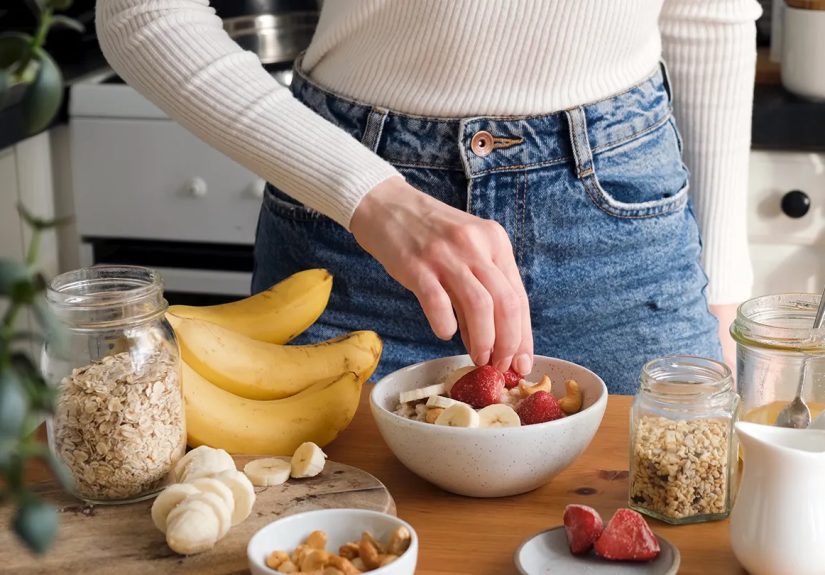
- The “I lift things” bowl: oats + milk + Greek yogurt stirred in after cooking + banana + peanut butter.
- The steady-energy bowl: oats + chia + berries + a scoop of unsweetened yogurt + pinch of salt.
Quick example: If you’re hungry an hour after oatmeal, the answer isn’t “oatmeal failed you.”
It’s “you need a sidekick ingredient.” Oats are the base, not the whole superhero team.
7) Mistake: Messing Up Make-Ahead Oatmeal (Texture + Food Safety)
Why it happens
Make-ahead oatmeal sounds like the dream: future-you wakes up to breakfast already done. But two things can ruin it:
(1) soggy texture and (2) leaving perishable ingredients out too long.
Do this instead
-
Overnight oats texture fix: Use rolled oats (not instant), and don’t drown them.
Try a thicker base (like yogurt) or a slightly lower liquid amount so they don’t turn to mush. - Add crunch later: nuts, granola, and seeds go on right before eating to avoid sadness-by-sogginess.
- Reheat smart: If reheating, add a splash of liquid and stir well so it doesn’t clump or scorch.
-
Food safety rule of thumb: Refrigerate perishable oatmeal mixes within 2 hours (or 1 hour in hot conditions),
especially if you used milk or yogurt. Don’t leave it on the counter “while you get ready” and forget it until lunchtime.
Quick example: If your overnight oats taste like wet cement, your fix might be:
use rolled oats, cut the liquid slightly, and stir in yogurt for thickness. If they taste fine but you left them in a warm car…
that’s a different kind of adventure. Don’t do that.
Bonus: A “Perfect Bowl” Checklist
- Choose the right oats (rolled for quick creaminess, steel-cut for chew).
- Use a reliable ratio, then adjust slowly over time.
- Simmer, don’t blastespecially on the stovetop.
- Add a pinch of salt for better flavor.
- Sweeten with strategy (fruit + spices first, added sugar second).
- Balance the bowl with protein and healthy fat.
- Make-ahead safely and protect texture with smart timing.