Table of Contents >> Show >> Hide
- What People Mean by “The U.S. Government’s Retirement Plan”
- The “Three-Legged Stool” of FERS
- Eligibility: When Can You Actually Retire?
- The “Diet COLA” and Other Federal Retirement Quirks
- Health and Life Insurance in Retirement: The Rules That Sneak Up on People
- Traditional vs Roth TSP: Taxes Now, Taxes Later, and Taxes Forever (Just Kidding… Mostly)
- TSP Investment Options: Five Core Funds and the “Set-It-and-Forget-It” L Funds
- How You Get Paid: Pension Checks, TSP Withdrawals, and Real Life
- A Quick Case Study: Putting the Pieces Together
- Common Mistakes Federal Employees Make (So You Don’t Have To)
- Conclusion: A Retirement Plan That Rewards Planning
- Real-World Experiences Related to the U.S. Government’s Retirement Plan (Composite Stories)
- SEO Tags
The U.S. government has a retirement system for its employees that’s surprisingly modern, weirdly old-fashioned, andlike most things involving formsmuch easier to appreciate before you’re standing at the “Submit” button at 11:58 p.m.
If you’ve ever heard phrases like “FERS,” “TSP,” or “high-3” and thought, “Is that a retirement plan or a Wi-Fi password?” you’re in the right place. Let’s walk through how federal retirement works, what makes it different from a private-sector 401(k), and how to avoid the classic mistakes that can cost real money.
What People Mean by “The U.S. Government’s Retirement Plan”
Most of the time, when someone says “the U.S. government’s retirement plan,” they’re talking about the system that covers most civilian federal employees: FERS (the Federal Employees Retirement System). FERS is often described as a three-part setup:
- A pension (a monthly lifetime benefit, calculated with a formula)
- Social Security (yes, federal employees typically pay in and receive benefits)
- The TSP (Thrift Savings Plan), a workplace investing plan similar to a 401(k)
There’s also CSRS (the Civil Service Retirement System), a legacy pension plan for many employees hired long ago. Most newer hires are in FERS. And for uniformed service members, there’s a different ecosystem (including the Blended Retirement System), which overlaps with TSP rules but has its own retirement pay structure.
The “Three-Legged Stool” of FERS
FERS is designed so you’re not betting your entire retirement on one lever. Instead, it spreads your retirement income across predictable pension payments, Social Security eligibility, and an investment account you can grow over your career. Translation: fewer “all-or-nothing” momentsassuming you actually use the tools.
1) The FERS Basic Benefit: The Federal Pension
The pension is the part that makes many private-sector workers blink slowly and whisper, “You get what?” It’s a defined-benefit plan, meaning it uses a formula instead of depending on market performance.
How the pension is calculated
The basic FERS pension generally uses this formula:
Pension = Multiplier × Years of Service × High-3 Average Salary
- High-3 average salary is the highest average basic pay you earned over any three consecutive years.
- The multiplier is usually 1%, but it becomes 1.1% if you retire at age 62+ with at least 20 years of service.
A simple example
Suppose Taylor retires with a $100,000 high-3 and 25 years of service. If Taylor retires before 62 (or doesn’t meet the 62+ / 20+ rule), the pension is:
1% × 25 × $100,000 = $25,000/year (about $2,083/month, before taxes and deductions)
If Taylor retires at 62+ with 20+ years, the multiplier becomes 1.1%:
1.1% × 25 × $100,000 = $27,500/year
Special categories can have different multipliers
Some groups (like certain law enforcement, firefighters, air traffic controllers, and other special provisions) can have enhanced formulas for part of their service. This is one reason “federal retirement” conversations can sound like a role-playing game: your “class” matters.
What you contribute (and why it varies)
Federal employees typically contribute a percentage of pay toward FERS, and that percentage depends on when you were hired. Many employees contribute 0.8%, 3.1%, or 4.4% of basic pay. The government contributes as well. Bottom line: two people doing the same job can have different payroll deductions simply because they started in different years. (Welcome to government.)
Unused sick leave: the underrated “bonus level”
When you retire on an immediate annuity, unused sick leave can be credited toward your retirement computation (it can boost your service time for the pension calculation). It generally doesn’t help you meet the eligibility minimums, but it can increase the benefit amount once you’re already eligible.
2) Social Security: Yes, It’s Part of the Plan
Under FERS, most employees pay Social Security payroll taxes and earn Social Security credits like private-sector workers. In retirement, Social Security can become a major “leg” of the stool, especially if you have a long work history.
There’s also a FERS feature people love to debate at workshops: the Special Retirement Supplement (often called the “FERS supplement”). It’s designed to approximate the Social Security benefit you earned through federal service, paid to certain retirees who retire before age 62 under specific conditions. It doesn’t last foreverand it can be reduced based on earnings.
3) The Thrift Savings Plan (TSP): The Government’s 401(k)-Style Engine
The TSP is the defined-contribution side of federal retirement. You contribute through payroll deductions, invest in available funds, and build a balance that’s yours.
The match (and the “free money” rule)
For many FERS employees, the government contributes:
- 1% automatic contribution (even if you contribute nothing)
- Matching contributions that can bring total agency contributions up to 5% if you contribute at least 5%
The practical takeaway: contributing at least 5% of pay is the classic “don’t leave money on the table” move. If you contribute less, you may miss part of the match. If you contribute nothing, you’re basically turning down a raise.
Vesting: what you keep if you leave
Your own contributions are yours. Agency matching contributions are generally yours, too. The 1% automatic contribution can be subject to vesting rules (commonly three years, or two for some positions). This matters if you’re planning a short federal stint and want to know what stays with you.
Eligibility: When Can You Actually Retire?
Federal retirement timing isn’t just about “I’m tired.” It’s about meeting age-and-service combinations. Under FERS, a key concept is the Minimum Retirement Age (MRA), which ranges from 55 to 57 depending on your year of birth.
| Common FERS Immediate Retirement Combinations | Age | Service |
|---|---|---|
| MRA + 30 | Your MRA | 30 years |
| Age 60 + 20 | 60 | 20 years |
| Age 62 + 5 | 62 | 5 years |
| MRA + 10 (reduced) | Your MRA | 10 years |
The MRA+10 option can provide an immediate benefit, but it typically comes with a permanent reduction unless you postpone the start date. It’s useful in some situations, but it’s not a “click here to retire early” cheat code.
The “Diet COLA” and Other Federal Retirement Quirks
Many retirees assume their pension automatically gets annual cost-of-living adjustments (COLAs) forever. Under FERS, it’s more complicated.
- FERS COLAs generally aren’t paid until age 62, with exceptions for certain disability, survivor, and special provision retirements.
- When COLAs do apply, FERS can use a “diet COLA” formula: if inflation is between 2% and 3%, the COLA can be capped at 2%; if inflation is above 3%, the COLA can be 1% less than inflation.
Example: if measured inflation is 4.5%, a FERS COLA might be 3.5%. Not terriblebut it’s not a full inflation match either. This is why long-term planning matters even with a pension: inflation is relentless, and it does not accept “but I’m on a fixed income” as a valid excuse.
Health and Life Insurance in Retirement: The Rules That Sneak Up on People
For many federal employees, the ability to continue health insurance into retirement is as valuable as the pension itself. But you generally have to earn it by meeting specific requirements.
FEHB (Federal Employees Health Benefits) and the “5-Year Rule”
To continue FEHB into retirement, you typically must be enrolled for the five years immediately before retirement (or for your full period of eligible service if less than five years). This catches people who planned to “enroll later” and then realize later arrived… with consequences.
FEGLI (Federal Employees’ Group Life Insurance) has a similar concept
Continuing FEGLI into retirement generally requires meeting a five-year / all-opportunity requirement for the coverage you want to keep. You can’t usually “buy back” missing time. Retirement planning is one of the few places where procrastination is taxed at an aggressively emotional interest rate.
Traditional vs Roth TSP: Taxes Now, Taxes Later, and Taxes Forever (Just Kidding… Mostly)
TSP lets many participants choose between traditional (pre-tax) and Roth (after-tax) contributions:
- Traditional TSP: lowers taxable income now; withdrawals in retirement are generally taxed.
- Roth TSP: you pay taxes now; qualified withdrawals in retirement can be tax-free.
Choosing between them is often less about “which is better” and more about: what tax bracket are you in now, what do you expect later, and how much flexibility do you want? Many people split contributions to diversify tax risk.
Contribution limits (because the IRS also loves rules)
The IRS sets annual limits for TSP elective deferrals. For 2026, the elective deferral limit is $24,500. If you’re age 50+, you may be eligible for additional catch-up contributions (and there are special higher “super catch-up” limits for certain ages).
There’s also a major operational detail many savers should know: TSP rules and federal guidance note that some higher earners may be required to make catch-up contributions on a Roth basis starting in 2026, depending on wages in the prior year. If you’re near these thresholds, it’s worth checking your payroll and TSP settings early in the yearbefore your first paycheck starts behaving differently.
TSP Investment Options: Five Core Funds and the “Set-It-and-Forget-It” L Funds
TSP offers five core funds and Lifecycle (L) Funds that blend them automatically. A quick tour:
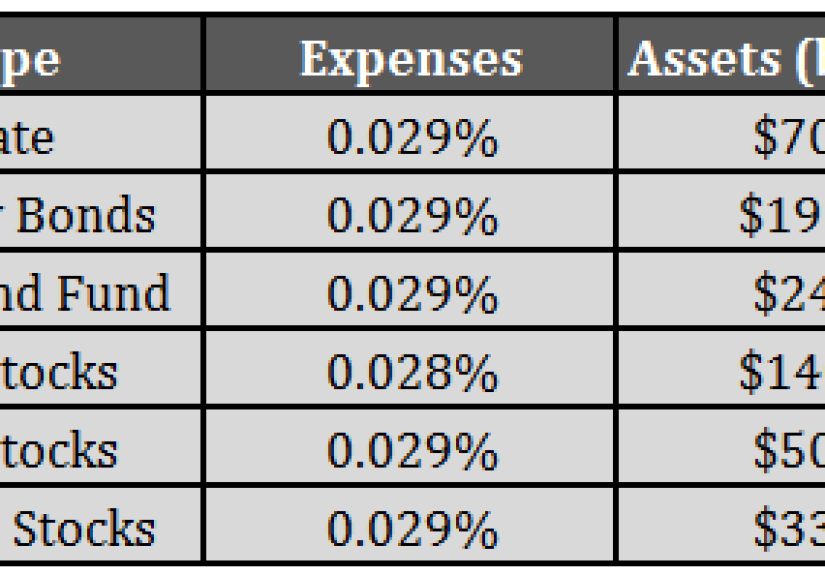
- G Fund: special Treasury securities; principal and interest are backed by the U.S. government (unique feature).
- F Fund: broad U.S. bond exposure.
- C Fund: large U.S. stocks (tracks a major U.S. stock index).
- S Fund: small-to-mid U.S. stocks (complements the C Fund).
- I Fund: international stocks (outside the U.S.).
- L Funds: diversified mixes that shift risk over time based on a target retirement horizon.
The best fund for you depends on risk tolerance, timeline, and whether market drops make you say, “Buying opportunity!” or “I have decided to become a professional hermit.” Many participants use L Funds for simplicity, while others build their own mix.
How You Get Paid: Pension Checks, TSP Withdrawals, and Real Life
Retirement income isn’t just “a number.” It’s a system of cash flows:
- Pension: a monthly annuity. You may choose survivor benefit options that can reduce your payment but provide income to a spouse after your death.
- TSP: withdrawals can be taken in different ways after separationpartial withdrawals, installments, or purchasing an annuity through the TSP’s annuity vendor. You can also roll funds to other retirement accounts if eligible.
- Social Security: timing matters. Claiming early vs later can significantly change lifetime benefits.
The big planning move is coordinating these streams so you don’t accidentally create a “tax cliff” or a cash-flow gap (like retiring at 57 with a smaller pension, delaying Social Security, and discovering your budget now runs on vibes).
A Quick Case Study: Putting the Pieces Together
Let’s build a realistic example.
Jordan is hired in 2015, works 25 years, and retires at age 62. Jordan’s high-3 salary is $110,000. Because Jordan is 62+ with 20+ years, the multiplier is 1.1%.
FERS pension = 1.1% × 25 × $110,000 = $30,250/year (about $2,521/month)
Meanwhile, Jordan contributes at least 5% to TSP for most of the career to get full agency contributions. Over 25 years, with consistent saving and market growth, the TSP balance can become a substantial second engine often the part of retirement income that gives people flexibility for travel, healthcare surprises, or helping family.
Then Jordan chooses a Social Security claiming strategy based on household needs and longevity expectations. The result is a diversified retirement setup: predictable baseline income + a flexible investment pool + Social Security.
Common Mistakes Federal Employees Make (So You Don’t Have To)
- Not contributing at least 5% to TSP and missing part of the match. That’s not frugality; that’s a self-imposed pay cut.
- Misunderstanding MRA+10 and being surprised by permanent reductionsor not realizing postponing can change the math.
- Ignoring FEHB/FEGLI continuation rules until it’s too late to meet the requirements easily.
- Overreacting to market drops and jumping in and out of funds. Retirement investing is a marathon, not a panic sprint.
- Forgetting beneficiaries on TSP and insurance. Your future self (and your family) will thank you for updating these.
Conclusion: A Retirement Plan That Rewards Planning
The U.S. government’s retirement systemespecially FERScan be excellent, but it’s not automatic magic. The pension provides stability, Social Security adds a powerful second layer, and TSP gives you ownership and flexibility. The people who get the most out of it are the ones who learn the rules early, contribute consistently, and make decisions with both taxes and timing in mind.
Think of it like this: the federal retirement plan is a well-built machine. Your job is to actually turn it on, feed it regularly, and avoid sticking your hand into the gears right before retirement.
Real-World Experiences Related to the U.S. Government’s Retirement Plan (Composite Stories)
Below are common experiences shared by federal employees and retirees, presented as composite stories (not identifying any real individual). They reflect patterns people often describe when learning the FERS/TSP system the hard wayusually during a lunch-and-learn, a retirement seminar, or a late-night spiral after discovering the phrase “five-year rule.”
1) “I Didn’t Know the Match Was That Big” (Early-Career Wake-Up Call)
Alex joined federal service in their late 20s, focused on student loans and rent. Retirement felt like a “future Alex problem.” Alex contributed 2% to TSP because it seemed responsible, and 2% sounded like a nice, adult number. Then a coworker casually asked, “Are you getting the full match?” Alex replied, “The full what now?”
After a quick read of TSP contribution rules, Alex realized the government’s contributions can rise meaningfully when the employee contributes at least 5%. Alex bumped contributions to 5% immediately. The emotional journey was: surprise → mild rage → gratitude. The long-term result was even better: Alex’s savings rate increased without needing to “feel rich,” because payroll deductions happen before money ever hits the checking account. Alex later described it as “tricking myself into being responsible,” which is, frankly, one of the most reliable retirement strategies in America.
2) “The G Fund Made Me Feel Safe… Until I Did the Math” (Mid-Career Rebalancing)
Morgan, mid-career, kept most TSP money in the G Fund because it didn’t go down. After a rough market year, that felt comforting. But during a retirement planning session, Morgan compared long-term growth projections and realized something uncomfortable: avoiding volatility also meant potentially avoiding the growth needed to beat inflation over decades.
Morgan didn’t swing to the opposite extreme or start day-trading the C Fund like it was a hobby. Instead, Morgan moved toward a diversified approachpart C/S/I for growth, some G/F for stability, and a plan to adjust risk gradually with age. The biggest change wasn’t the fund choice; it was the mindset shift from “never lose money” to “build a portfolio that can fund 25–30 years of retirement.” Morgan’s takeaway: safety matters, but so does purchasing power. Inflation doesn’t announce itself loudly; it just quietly increases the price of everything you like.
3) “We Almost Lost FEHB in Retirement” (The Five-Year Rule Surprise)
Casey was approaching retirement and assumed health insurance continuation would be simple: “I’ve worked here foreverof course I keep it.” Then someone mentioned the FEHB five-year requirement. Casey had switched between coverages, had a period of waiver, and didn’t have the exact continuous enrollment history needed.
The next few weeks looked like a responsible person’s version of an action movie: reviewing enrollment records, confirming eligibility periods, talking to HR, and making sure the retirement timeline aligned with the rule. The good news is that many employees can resolve issues if they catch them early enough. The lesson is brutal but useful: the federal retirement plan is generous, but it’s also rule-driven. You don’t want the first time you hear about the rule to be after you’ve already picked a retirement date.
4) “My COLA Didn’t Match Inflation” (Retirement Reality Check)
Pat retired under FERS and assumed annual increases would keep up with rising costs. Later, Pat learned about the FERS COLA structure and how it can be reduced relative to inflation in certain ranges. Pat also learned that COLAs for many FERS retirees generally don’t kick in until age 62 (with notable exceptions).
Pat’s response wasn’t panicit was planning. Pat rechecked the household budget, adjusted withdrawal plans from TSP, and got serious about building flexibility into retirement income. Pat’s message to coworkers still working: “The pension is great, but it’s not a complete plan by itself. Your TSP is what gives you options when the world gets more expensive.”
These experiences share one theme: the federal retirement plan works best for people who treat it like a systempension, Social Security, and TSPplus benefits rules that require proactive attention. The good news is that once you understand the moving parts, you can make choices that compound (in money and in peace of mind) for decades.