Table of Contents >> Show >> Hide
- What Is an “A-Joint Mini, Polished” (and why does it feel fancy)?
- Design Intent: When the Joint Is the “Jewelry”
- The Practical Reality: Wood Moves, and Hardware Has Opinions
- How to Plan a Build Around A-Joint Mini, Polished
- Caring for Polished Hardware (without turning into a full-time polisher)
- Where A-Joint Mini, Polished Makes the Most Sense
- Common Mistakes (and how not to make them)
- Real-World Experiences: What Building with a Polished Mini Joint Feels Like (About )
- Conclusion
Some people collect sneakers. Some collect vinyl. Some of us collect “tiny pieces of hardware that somehow hold an entire table together.”
If that last one made you nod a little too enthusiastically, welcome: this article is for you.
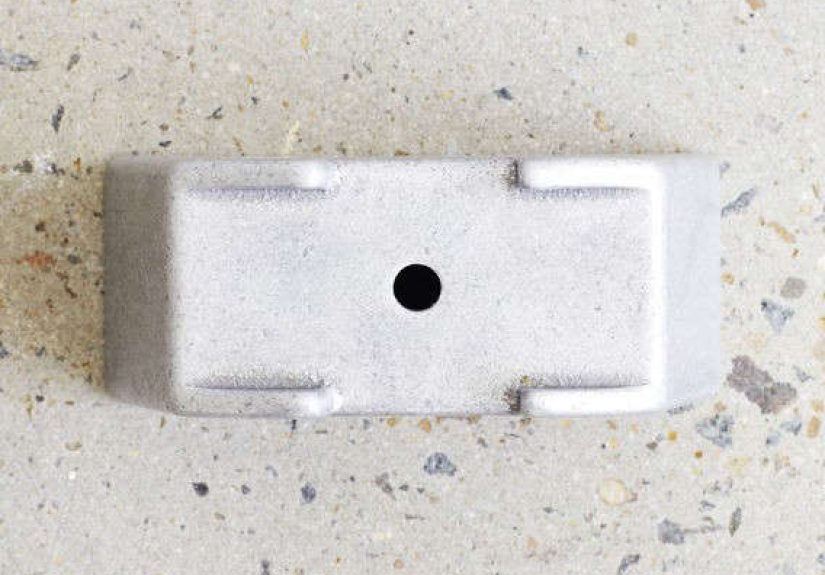
The A-Joint Mini, Polished sits in a very satisfying nichepart design object, part problem-solver. It’s a compact joinery
connector meant to help you build furniture with clean lines and a “yes, it comes apart on purpose” attitude. Think: trestle-style bases,
stools, benches, small tables, shelving framesprojects where you want strength, repeatable geometry, and the option to disassemble without
turning your living room into a permanent glue-up station.
In the sections ahead, we’ll break down what it is, why a polished finish matters, where it shines (pun intended), and how to design around
it like a grown-upmeaning: you’ll still have fun, but your furniture won’t crack in February.
What Is an “A-Joint Mini, Polished” (and why does it feel fancy)?
At its core, an A-joint is a modular joinery systema piece of hardware that lets you connect wood members in a predictable,
repeatable way. The “Mini” version is scaled for smaller stock, making it especially appealing for compact furniture and light-to-medium-duty
frames where you want the structure to look intentional, not improvised.
The “Polished” part is exactly what it sounds like: a finish choice that turns the connector from “helpful bracket” into “tiny sculpture that
happens to hold your chair together.” Polished metal catches light, highlights form, and makes the joint look like a featurebecause it is.
Why a joinery system (instead of traditional joinery)?
Traditional joinerymortise-and-tenon, dovetails, bridle jointscan be gorgeous and incredibly strong. It can also be time-intensive, tool-heavy,
and (on a bad day) emotionally damaging. A joinery system like the A-Joint Mini offers a different value proposition:
- Speed and repeatability: You can build multiple matching frames without reinventing the process.
- Knock-down convenience: Designed to come apart for moving, storage, or adjustments.
- Visual clarity: The connection reads as modern and purposeful, not hidden.
- Modularity: You can tweak dimensions later without scrapping the whole project.
Design Intent: When the Joint Is the “Jewelry”
In furniture, joints are either hidden (traditional) or celebrated (modern/industrial). A polished connector is firmly in the “celebrated”
camp. That means your design choices should support it rather than apologize for it.
Pairings that look right
- Light woods + polished metal: Think oak, ash, maplecrisp, bright, and architectural.
- Warm woods + polished metal: Walnut can look especially premium when the metal reads as a clean accent.
- Minimal silhouettes: Simple legs, clear geometry, fewer flourisheslet the joint do the talking.
Pairings that can look… confused
- Overly ornate shapes: A sleek metal joint and a baroque cabriole leg are not enemies, but they will argue.
- Busy grain + high shine: If the wood is visually loud, polished hardware can become “too much party.”
The Practical Reality: Wood Moves, and Hardware Has Opinions
Here’s the deal: wood is hygroscopic. It absorbs and releases moisture with changes in relative humidity. Translation: your tabletop has seasonal
mood swings. If your design ignores that, the wood will eventually file a complaintusually in the form of cracks, splits, or joints that go
from snug to “why is my table rocking like it’s on a boat?”
Hardware-based joinery can be very forgiving, but it still needs you to design responsibly. The key is to separate two jobs:
- Structural frame connection (where A-Joint Mini connectors shine)
- Top attachment and movement allowance (where you must let the wood breathe)
Example: A trestle-style side table (a classic A-joint use case)
Imagine a small trestle base: two end frames connected by a stretcher. The A-joint connectors handle the geometry and rigidity of the base.
Great. Now you need to attach a solid wood top to that base without locking it in place across the grain.
This is where common tabletop fasteners come insolutions that let the top expand/contract while staying secured. If your build uses a solid
wood top, choose a method that accommodates movement (for example, pivoting connectors or clips designed for seasonal changes).
How to Plan a Build Around A-Joint Mini, Polished
If you treat this as “a metal piece I’ll figure out later,” you’ll end up with either misaligned holes or an accidental modern art installation.
Plan first. Your future self deserves it.
1) Choose stock size and keep it consistent
The Mini format is intended for smaller members. Pick a wood dimension you can source reliably (and machine consistently), then commit. Consistency
makes modular joinery feel crisp; inconsistency makes it feel like the furniture is shrugging.
2) Decide what “polished” means in your space
Polished metal is high-feedback: it reflects light, shows fingerprints, and announces itself. That can be a featureespecially in clean, modern
interiors. If you want the shape but not the spotlight, you might prefer a brushed or less reflective finish in other projects.
3) Design for assembly access
Knock-down hardware is wonderful until you realize you can’t reach the fastener once the stretcher is installed. In your drawings (even rough ones),
ask a simple question: “Can a normal human with a normal tool tighten this after assembly?”
4) Build in “adjustability tolerance”
Real wood is not a CAD model. Even well-milled boards can vary slightly. Plan your joins so tiny variations don’t cascade into crooked frames.
Dry-fit early. Dry-fit often. Dry-fit like it’s a life philosophy.
Caring for Polished Hardware (without turning into a full-time polisher)
Polished metal stays beautiful longer when you treat it like you treat white sneakers: enjoy them, but don’t pretend they’re invincible.
Here are practical care principles that keep the shine without the drama.
Routine cleaning
- Soft cloth first: Avoid abrasive pads that can haze the surface.
- Gentle cleaners: Mild soap and water beats harsh chemicals for day-to-day maintenance.
- Dry immediately: Don’t let moisture sitespecially around fastener interfaces.
Handling fingerprints and micro-scratches
Fingerprints are part of the polished-metal lifestyle. The goal isn’t to erase all signs of life; it’s to prevent buildup and keep the surface
from looking cloudy. If you do polish, use a product appropriate for the metal and apply it sparingly. (Also: if you find yourself polishing
furniture hardware at 2 a.m., it might be time for a hobby that involves sunlight.)
Where A-Joint Mini, Polished Makes the Most Sense
You can use modular joinery almost anywhere, but it’s especially compelling when at least one of these is true:
You want knock-down furniture that still feels “designed”
Flat-pack doesn’t have to mean flimsy. Quality knock-down construction uses robust connectors, good geometry, and thoughtful load paths.
The joint becomes part of the structure, not an afterthought.
You’re building in a small shop (or a small apartment)
If your “assembly area” shares space with your laundry basket, modular joinery is a gift. You can test-fit, disassemble, refine, and reassemble
without committing to a one-way glue decision.
You like modern contrast
Polished metal against natural wood is a classic contrast: warm vs. cool, organic vs. precise. It’s also forgiving stylisticallyworks with
Scandinavian minimalism, soft industrial, and contemporary interiors that need a crisp detail.
Common Mistakes (and how not to make them)
Mistake 1: Treating the joint like it replaces all joinery thinking
Hardware helps, but it doesn’t eliminate design fundamentals. You still need bracing, good proportions, and an honest sense of loads. If the table
is meant to be sat on, design it like a stoolnot like a decorative suggestion of a stool.
Mistake 2: Forgetting seasonal movement on tops and panels
The base can be rock solid and still fail if the top is locked in place. Wood movement isn’t a myth; it’s physics. Use attachment methods that
allow movement across the grain.
Mistake 3: Misaligned drilling (aka “the silent killer”)
Precision matters with modular systems. Measure carefully, use reliable guides, and dry-fit before final assembly. A little attention here saves
a lot of “why won’t this line up” later.
Real-World Experiences: What Building with a Polished Mini Joint Feels Like (About )
Let’s talk about the part no product listing can capture: the lived experience of building something where the joint is both the structure and the
spotlight. Even if you’re a careful planner, the first time you work with a polished connector, you notice how it changes your behavior in the shop.
First, you suddenly become a “clean hands” person. Not foreverjust whenever you touch the hardware. You’ll handle the polished joint like it’s a
museum object, then look down at your sanding-dust-covered shirt and realize you’re lying to yourself. The compromise most makers land on is simple:
keep the connector protected until final assembly, and do the messy work (milling, sanding, shaping) before the shiny parts come out to play.
Second, polished hardware makes you more honest about your wood prep. If your legs are slightly out of square or your stock thickness varies, the
metal connector doesn’t hide itit frames it. That can sound intimidating, but it’s actually a positive feedback loop. Because the joint reads as
“precision,” you naturally start chasing cleaner milling, truer edges, and better repeatability. In a weird way, the hardware trains you to level up.
Third, you’ll feel the satisfaction of a good dry-fit in your bones. With modular joinery, a dry-fit isn’t just “checking.” It’s the moment you
see the geometry click into place. You can assemble the frame, step back, and evaluate proportion, stance, and stability before you commit to finish.
It’s like getting a preview of the final piecewithout the panic of permanent glue-ups. If something looks off, you can adjust a dimension, swap a
stretcher, or refine the alignment and try again. That flexibility is especially valuable for first prototypes.
Fourth, you’ll develop opinions about “movement allowances” faster than you expected. A polished joint and a seasonal wood gap are not enemies, but
they require coordination. Once you’ve seen a tabletop fight against rigid attachment (and win, destructively), you start respecting the grain the
way sailors respect the ocean: you don’t control it; you plan for it. Makers who do this well tend to keep their designs simple, choose stable stock,
and use attachment methods that let the top move naturally. The result is furniture that stays tight and quiet across seasons instead of turning into
a creaky weather report.
Finally, the “polished” part has a psychological effect: you’re more likely to keep the finished piece looking good. A shiny joint invites care.
You’ll wipe it down. You’ll notice when it needs attention. You’ll probably stop putting coffee mugs directly on the hardware like it’s a coaster.
And yes, you may find yourself admiring the way the light hits the connector at certain anglesbecause that’s literally why you chose polished.
Conclusion
The A-Joint Mini, Polished is a small component with big implications: it simplifies structure, supports knock-down construction,
and turns a functional connection into a deliberate design detail. The key to success is treating it like a system, not a shortcutplan your geometry,
respect wood movement, and design for assembly access. Do that, and you get furniture that’s not only sturdy and practical, but also quietly
confidentlike it knows it’s good-looking and doesn’t need to brag about it.