Table of Contents >> Show >> Hide
- Abdominal Muscle Anatomy: The Big Picture
- The Five Main Abdominal Muscles (And What They Do)
- How the Abdominal Muscles Work Together
- Nerves, Blood Supply, and the “Wiring” Behind Your Abs
- Abdominal Muscles Diagram (Simple + Useful)
- Common Issues: When the Abdominal Wall Complains
- Training Your Abs: Benefits, Precautions, and Smarter Strategies
- Conclusion: The “Real” Job of Your Abs
- Real-World Experiences Related to Abdominal Muscles (What People Commonly Notice)
Your abdominal muscles (aka “abs”) are not just a six-pack auditioning for a beach commercial.
They’re a smart, layered system that helps you breathe, move, brace, twist, laugh, cough, carry groceries,
and keep your internal organs where they belong. In other words: your abs are the unsung bouncers of your torso.
This guide breaks down abdominal muscle anatomy, what each layer does, how the muscles work together as a core
stability team, and why the “best ab exercise” depends on what you’re trying to do (hint: not everything is solved
by more crunches). We’ll also include a simple diagram you can actually understand without needing a medical degree
or a decoder ring.
Abdominal Muscle Anatomy: The Big Picture
Anatomically, the “abdominal wall” is the front and sides of your midsection. The main abdominal muscles live in
layers, with connective tissues (fascia and aponeuroses) acting like strong wrappers that help distribute force.
Think of it as a high-performance jacket: flexible enough to move, sturdy enough to support.
Key landmarks you’ll hear about
- Linea alba: the midline “seam” of connective tissue running down the center of your abdomen.
- Rectus sheath: a fibrous envelope formed by the aponeuroses of the side abdominal muscles that surrounds the rectus abdominis.
- Tendinous intersections: the horizontal “dividers” that create the classic segmented six-pack look in some bodies.
- Lineae semilunares: curved lines at the outer edges of the rectus abdominis (often visible in leaner physiques).
You’ll often hear “four abdominal muscles,” but many clinical anatomy references describe five key muscles
in the anterolateral abdominal wall by including a small helper called the pyramidalis. Let’s meet the cast.
The Five Main Abdominal Muscles (And What They Do)
1) Rectus Abdominis (The “Six-Pack” Muscle)
The rectus abdominis runs vertically along the front of your abdomen on both sides of the linea alba.
Its most famous job is trunk flexion (bringing your ribcage toward your pelvis), like when you do a sit-up.
But it also helps stabilize the pelvis, supports posture, and contributes to abdominal compression.
If your torso were a folding chair, the rectus abdominis is one of the main hinges. It’s powerful, but it’s also
not the only hingeso over-relying on it can make your “core program” feel like a one-song playlist.
2) External Oblique (The Outer Side Layer)
The external obliques are the most superficial (outermost) muscles on the sides of your abdomen.
Their fibers generally run diagonallyimagine hands in pockets. They help with:
- Trunk rotation (especially rotating to the opposite side)
- Lateral flexion (side bending)
- Abdominal compression (supporting internal pressure)
When you twist to grab something in the back seat of your car (please do this safely), your obliques are doing a lot
of the behind-the-scenes work. They’re also major players in athletic movements like throwing, swinging, and changing direction.
3) Internal Oblique (The Middle Side Layer)
The internal obliques lie underneath the external obliques. Their fiber direction is more “up and in,”
roughly perpendicular to the external oblique. They assist with:
- Trunk rotation (often rotating to the same side)
- Lateral flexion
- Stabilization during movement and lifting
Internal obliques are like the middle management of the core: not flashy, absolutely essential, and
surprisingly stressed when you do chaotic things (like “weekend warrior” workouts after sitting all week).
4) Transversus Abdominis (The Deep “Corset” Layer)
The transversus abdominis is the deepest of the main abdominal layers. Its fibers run mostly horizontally,
wrapping around the trunk like a supportive belt. Its specialties include:
- Increasing abdominal wall tension
- Supporting spinal stiffness during movement
- Helping regulate intra-abdominal pressure (especially with breathing and bracing)
If the rectus abdominis is a hinge, the transversus abdominis is the Velcro strap that keeps everything snug.
This muscle is heavily discussed in rehabilitation and core stability training because it contributes to the “brace”
that makes your spine feel supported when you lift, push, pull, or carry.
5) Pyramidalis (The Tiny Assistant You Might Not Have)
The pyramidalis is a small, triangular muscle located low in the abdomen, near the pubic bone, in front of the rectus abdominis.
It can be absent in some people and still… everyone gets to live their life. When present, it helps
tense the linea alba.
How the Abdominal Muscles Work Together
Abdominal muscle function makes the most sense when you stop thinking “individual muscles” and start thinking “team sport.”
Most real-life movements use co-contraction: multiple muscles turning on together to stabilize and move.
1) Moving the trunk
- Flexion (forward bending): rectus abdominis + obliques
- Rotation (twisting): external + internal obliques in coordinated patterns
- Lateral flexion (side bending): obliques + other trunk muscles
2) Stabilizing the spine (core stability)
Stability isn’t “never moving.” It’s controlling movement so you can transfer force efficientlylike transmitting power
from your legs through your torso to your arms. Deep abdominal tension (especially from the transversus abdominis and obliques)
helps create trunk stiffness, which can support comfortable, strong motion during lifts and athletic tasks.
3) Managing intra-abdominal pressure (the brace-and-breathe combo)
Your abdomen can behave like a pressure cylinder. When you inhale, the diaphragm descends; the abdominal wall and pelvic floor
coordinate to manage pressure. During exertion (like a heavy carry or a tough rep), the abdominal muscles help create
intra-abdominal pressure that can reduce excessive spinal loading and add a protective “support” effect.
This is one reason breathing strategy matters so much in strength training and rehab.
4) Helping with everyday “human functions”
Abdominal muscles help increase pressure for coughing, sneezing, laughing, vomiting, and bowel movements.
They also assist in maintaining posture while sitting, standing, and walkingyes, even when you’re just existing quietly.
Nerves, Blood Supply, and the “Wiring” Behind Your Abs
The abdominal wall receives nerve supply primarily from the lower thoracic nerves (often described as thoracoabdominal nerves)
and the subcostal nerve, with additional contributions lower down. Blood supply includes vessels such as the superior and inferior
epigastric arteries that run within the abdominal wall and rectus sheath region.
Why does this matter? Because pain patterns, surgical approaches, and certain abdominal wall conditions (like nerve entrapment or
rectus sheath problems) can relate directly to how these structures travel through the wall.
Abdominal Muscles Diagram (Simple + Useful)
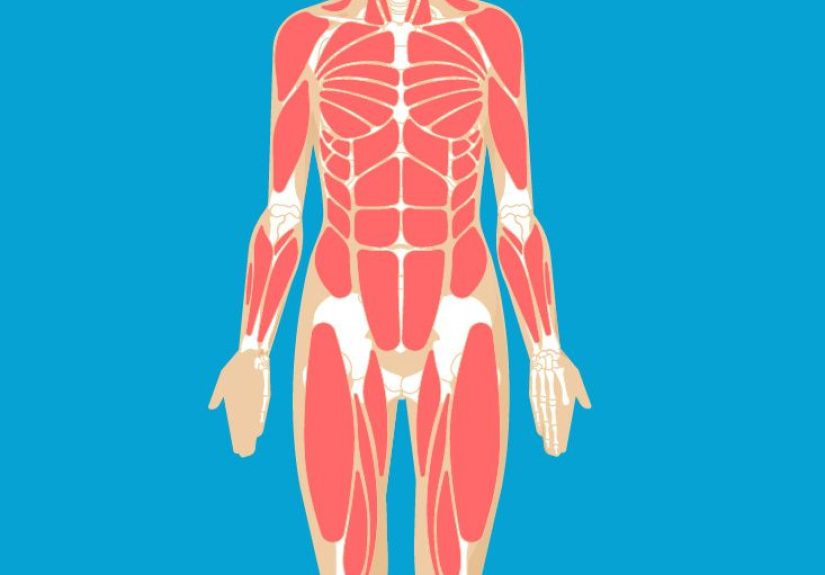
Below is a simplified diagram that shows (1) the front view of the rectus abdominis, and (2) a “slice” through the side abdominal wall layers.
It’s not meant to replace a textbook illustrationjust to make the layering intuitive.
Common Issues: When the Abdominal Wall Complains
Abdominal muscle strain (the “pulled ab”)
Strains usually happen from overload, repetition, sudden twisting, coughing fits, or returning to intense exercise too fast.
Symptoms often include localized pain that worsens with coughing, sneezing, laughing, or movementbasically, your abs get dramatic
about being invited to the party.
Hernias (a weakness in the wall)
A hernia occurs when tissue protrudes through a weak spot in the abdominal wall. You might notice a bulge that can be tender,
especially with exertion. Hernias have different types (for example, ventral, umbilical, incisional), and they should be evaluated
by a healthcare professionalbecause “I’ll just ignore this forever” is not a medical plan.
Diastasis recti (separation along the linea alba)
Diastasis recti involves a widening of the midline connective tissue (linea alba), leading to a separation between the left and right
rectus abdominis. It’s commonly associated with pregnancy but can also occur in men and non-postpartum women, especially with factors
like increased abdominal pressure, weight changes, or certain training habits.
The key point: diastasis recti is not automatically “bad,” nor is it purely cosmetic. Some people have functional symptoms; others don’t.
A targeted rehab plan (often emphasizing breathing, controlled tension, and progressive loading) can help.
Training Your Abs: Benefits, Precautions, and Smarter Strategies
Ab training is most effective when it matches your goal. Want better posture and fewer “my back hates me” moments? Train endurance and control.
Want performance in sports? Train anti-rotation, carries, and integrated patterns. Want visible abs? That’s mostly a body composition and genetics story,
with strength training as a supporting actor (not the main character).
Practical guidelines (no gimmicks required)
- Start with control: dead bugs, bird dogs, side planks, and well-coached planks build coordination.
- Progress gradually: add time, reps, range of motion, or load slowlyyour abdominal wall adapts like any other tissue.
- Train multiple “directions”: flexion is one tool; also include anti-extension (planks), anti-rotation (Pallof presses), and carries.
- Breathe on purpose: coordinate exhale + tension during effort; don’t hold your breath endlessly unless coached for a specific lift and context.
- Watch for warning signs: sharp pain, new bulging, worsening symptoms, or pain with coughing/sneezing that doesn’t improve deserves evaluation.
Examples: matching exercise to function
Example A: Carrying a suitcase – Your obliques and deep abdominal wall resist side-bending and twisting. Suitcase carries and side planks can help.
Example B: Picking up a heavy box – A coordinated brace supports the spine and helps transfer force. Controlled hinges, carries, and anti-extension work are useful.
Example C: Rotational sports (baseball, tennis, golf) – Obliques help generate and control rotation. Cable chops/lifts and anti-rotation drills can build capacity without overuse.
Conclusion: The “Real” Job of Your Abs
Abdominal muscles are a layered system built for more than aesthetics. The rectus abdominis helps flex and stabilize, the obliques drive and control twisting and side bending,
and the transversus abdominis contributes deep tension and support. Together, they compress and protect the abdomen, assist breathing and pressure management, and provide
the stability that makes strong, efficient movement possible.
If you want a healthier core, think beyond endless crunches. Train your abs the way you use them in real life: with control, coordination, and progressive challenge.
Your spine (and your future self) will be impressed.
Real-World Experiences Related to Abdominal Muscles (What People Commonly Notice)
When people start paying attention to their abdominal muscles, the first “experience” is usually surprise: “Wait… my abs do that?”
Many expect ab work to feel like a front-of-the-stomach burn and nothing else. But in real training and rehabilitation settings, people often report that better core function
shows up in places that seem unrelatedlike improved balance, more confident lifting, or fewer random twinges when rolling out of bed.
A common experience is learning the difference between movement and control. For example, someone might be able to do lots of sit-ups,
yet their lower back feels cranky after long drives or standing tasks. Once they practice drills that teach ribcage-to-pelvis alignment (think: dead bug variations, controlled
planks, and breathing-led bracing), they often describe feeling “stacked” or “supported,” as if their midsection finally knows what shift it’s supposed to work.
The sensation isn’t always a dramatic muscle burnit can be a quieter feeling of stability.
Athletes and recreational exercisers frequently notice how much the obliques matter once they stop treating rotation as an afterthought. People who throw, swing, or change
direction quickly (softball, tennis, boxing, even enthusiastic pickleball) often describe a moment when their torso feels like it’s “leaking power.”
They can move fast, but the movement feels sloppy or hard to control. Strengthening rotation controlespecially with anti-rotation workoften feels like upgrading from
a wobbly shopping cart wheel to a smoother ride. The goal isn’t to become stiff like a board; it’s to be stable enough to be explosive without losing control.
Another frequently reported experience is how breathing changes everything. Some people unconsciously hold their breath during effort, then feel
pressure in the neck, jaw, or lower back. When they learn to coordinate a strong exhale with abdominal tension (without panicking), they often report that tasks like
carrying groceries, climbing stairs with bags, or doing loaded exercises feel more efficient. It’s not magicjust better pressure management and timing.
People recovering from pregnancy or major weight changes often describe diastasis recti in emotional terms: frustration, confusion, or worry about what’s “normal.”
A common experience is realizing that the midline is not simply a “gap problem,” but a tension and load management problem. Many find that exercises
focused on controlled tension, posture, and progressive strength feel more helpful than chasing high-rep ab burnout. They also notice day-to-day wins first:
getting up from the floor feels smoother, carrying a baby feels less tiring, and movements stop feeling like they’re “pushing out” at the midline.
Finally, plenty of people report the most relatable experience of all: they tried to “fix their core” with random ab circuits, got irritated hips or back pain,
and concluded they had “weak abs.” Often, the issue wasn’t weaknessit was strategy. Once training shifts toward building coordination, endurance,
and gradual loading across multiple directions (flexion, anti-extension, anti-rotation, carries), many describe feeling stronger without feeling beaten up.
The best feedback is simple: life feels easier. And that’s a pretty great job description for a group of muscles you can’t even see through a hoodie.