Table of Contents >> Show >> Hide
- What AGES Means in Renewable Energy Storage
- Why Renewable Energy Needs Long-Duration Storage
- How AGES Works
- How AGES Compares With Other Energy Storage Technologies
- The Biggest Benefits of AGES
- The Main Challenges AGES Still Has to Solve
- What the U.S. Storage Market Tells Us Right Now
- Could AGES Become a Real Grid-Scale Solution?
- Experiences, Lessons, and Ground-Level Realities From Renewable Energy Storage Projects
- Conclusion
Renewable energy has a wonderful habit of showing up when it wants to. The sun clocks in at noon, the wind pulls night shifts, and the grid politely asks, “Could you maybe do all that during peak demand instead?” That awkward mismatch is exactly why energy storage matters. And while lithium-ion batteries usually get the spotlight, there is another idea quietly earning serious attention: AGES, or Advanced Geothermal Energy Storage.
Think of AGES as a kind of underground thermal savings account. Instead of wasting surplus renewable energy when production is high, the system stores heat in subsurface formations using repurposed oil and gas wells, then pulls that energy back out later when electricity is needed. It is part geothermal, part grid strategy, part “Hey, maybe those old wells can do something useful after all.” In a power system that increasingly runs on variable resources, that is not just clever. It could be incredibly practical.
This matters because renewable energy storage is no longer a side conversation for engineers in hard hats and people who say “dispatchability” at dinner parties. Storage is becoming one of the central questions of the clean energy transition. The United States is adding battery capacity quickly, but experts across DOE and the national labs have made the same basic point: short-duration batteries alone will not do every job. The future grid needs a portfolio. AGES is one of the more intriguing options in that portfolio because it connects long-duration storage, geothermal know-how, and the reuse of existing infrastructure.
What AGES Means in Renewable Energy Storage
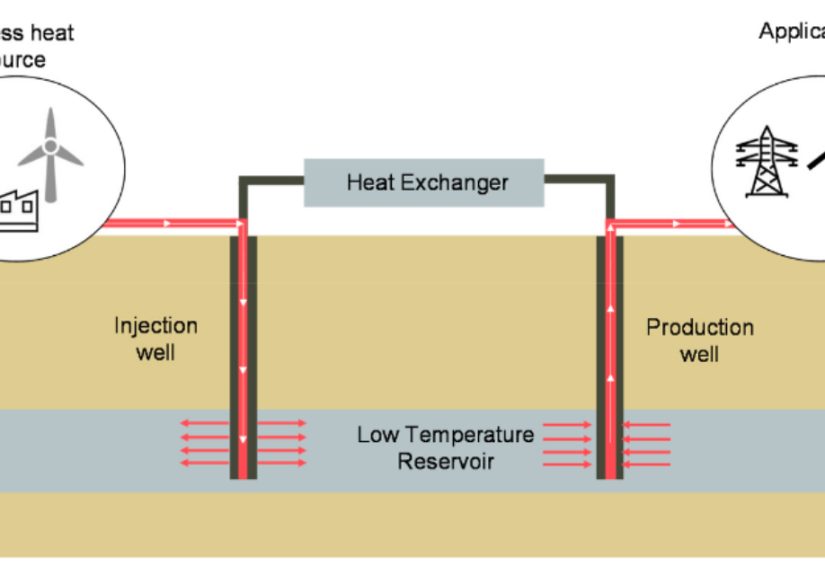
AGES stands for Advanced Geothermal Energy Storage. In simple terms, it is a storage concept that uses underground geological formations to hold heat for later use. The heat can come from excess renewable electricity, industrial waste heat, or other low-carbon sources. That thermal energy is injected into subsurface formations through existing or repurposed wells, where the earth acts like a giant insulated container. Later, the stored heat can be recovered and converted into useful energy, including electricity.
If that sounds like a geothermal battery, that is because it basically is one. Traditional geothermal systems tap naturally occurring underground heat. AGES flips the script a bit by storing heat underground on purpose and recovering it later. It is not magic. It is geology with a serious work ethic.
What makes AGES especially interesting is the possibility of reusing old oil and gas wells. That can reduce some of the cost and siting hurdles that come with building brand-new energy infrastructure. It also gives fossil-era assets a second career in a lower-carbon economy, which is a much better retirement plan than sitting around being expensive and awkward.
Why Renewable Energy Needs Long-Duration Storage
Solar and wind are now major pieces of the U.S. power mix, and more capacity is on the way. That is great news for decarbonization, but it also changes the rhythm of the grid. Electricity has to be balanced in real time. When solar production surges in the afternoon and demand rises after sunset, the system needs something that can shift energy across time. Short-duration batteries are excellent for fast response, frequency regulation, and a few hours of load shifting, but longer gaps can require a different class of storage.
This is where the phrase long-duration energy storage, or LDES, enters the chat. National lab research has increasingly framed the problem in two buckets: storage that handles daily imbalances and storage that handles multi-day or even seasonal mismatches. In other words, some clean-energy problems are “we need power after sunset,” while others are “we need resilience through a prolonged renewable slump, severe weather event, or seasonal pattern.” Those are not the same challenge, and they should not all be forced onto the same technology.
AGES is attractive because it aims at that longer-duration need. It is less about chasing every second of grid volatility and more about storing energy for meaningful stretches of time. That makes it part of the broader discussion around grid reliability, resource adequacy, and how to keep a clean grid from becoming a fragile one.
How AGES Works
1. Excess energy is converted into heat
When renewable generation exceeds immediate demand, that surplus energy does not have to be wasted. In an AGES setup, excess electricity can be used to create heat. Industrial waste heat can also feed the system, which adds another layer of efficiency. This is one reason AGES appeals to people who like the phrase “use what we already have.”
2. Heat is stored underground
The heat is injected into a suitable subsurface formation through a repurposed or purpose-designed well. The underground reservoir acts as thermal storage, holding the energy until it is needed. Geological conditions matter a lot here. The rock formation, fluid behavior, depth, and well integrity all affect how well the system performs.
3. Stored energy is recovered later
When electricity demand rises or renewable output falls, the stored heat can be brought back to the surface and converted into power. That means AGES is not just about collecting energy; it is about timing energy delivery to better match actual grid needs.
4. The system supports flexibility
Because the storage medium is underground, AGES has potential as a grid-scale technology rather than just a niche building system. That is one of its main selling points. It is designed to help the power system absorb surplus clean energy and release it later, improving flexibility without assuming lithium-ion batteries must do every single job from dawn to disaster.
How AGES Compares With Other Energy Storage Technologies
No single energy storage technology is perfect. The smartest grid will likely use several kinds at once, each doing the job it is best suited to do.
Lithium-ion batteries
Lithium-ion systems dominate new battery deployments because they are modular, commercially available, and very good at fast, short-duration applications. They shine for frequency response, ramping support, and daily solar shifting. But once durations get longer, cost and material considerations become tougher. That is why researchers and grid planners keep looking beyond lithium-ion for some future use cases.
Flow batteries
Flow batteries are often discussed for medium- to longer-duration use because their power and energy components can be scaled somewhat independently. They may be a better fit than lithium-ion for certain grid applications where longer discharge matters more than compact footprint.
Pumped storage hydropower
Pumped hydro remains the heavyweight champion of large-scale storage. It has proven value, long lifetimes, and serious capacity. The catch is that it needs the right geography, large capital investment, and plenty of development time. It is effective, but not exactly the “download and install” version of storage.
Compressed air, thermal storage, and hydrogen
These options matter because the future grid will need more than one long-duration tool. Compressed air storage, high-temperature thermal systems, and hydrogen-based storage each bring different tradeoffs in cost, efficiency, siting, and duration. AGES belongs in this conversation because it also works in the thermal and geological storage lane.
What sets AGES apart is the combination of subsurface storage, reuse of existing wells, and potentially lower siting barriers in areas where geological conditions cooperate. It is not a universal answer, but it could become a highly useful regional answer.
The Biggest Benefits of AGES
It reuses existing infrastructure
Repurposing abandoned or inactive oil and gas wells can reduce drilling costs, shorten development timelines in some cases, and give old infrastructure a second life. That is appealing both economically and politically. It is much easier to sell the public on “reuse and decarbonize” than on “let’s leave this liability sitting here forever.”
It supports long-duration storage
AGES is not trying to beat batteries at quick-response power electronics. Its value is in storing energy for longer periods so the grid can handle prolonged mismatches between renewable supply and electricity demand.
It can pair with multiple heat sources
Because AGES stores heat, it can work with more than one charging source. Surplus renewable electricity is the obvious candidate, but industrial waste heat may also be part of the equation. That flexibility could improve project economics in the right location.
It may reduce land-use pressure
Underground storage can ease some of the footprint challenges associated with above-ground energy infrastructure. That does not remove permitting or environmental review, but it can improve the siting conversation.
It fits the clean energy transition narrative
AGES offers a compelling story: take legacy wells from the fossil fuel era and turn them into infrastructure for the renewable grid. That story does not replace technical diligence, but it does help explain why this technology keeps attracting attention.
The Main Challenges AGES Still Has to Solve
Geology is not optional
Not every well is suitable. Not every formation is cooperative. Some sites will lose heat too quickly, some will have integrity issues, and some will simply be too expensive to adapt. AGES is site-specific by nature, which means careful screening is essential.
Commercial deployment is still early
AGES is promising, but it is not yet a mainstream commercial storage category. That means developers still need more field validation, more bankable performance data, and clearer pathways for financing and permitting.
Energy conversion efficiency matters
Thermal systems live and die by how much useful energy they can recover after storage. If too much heat is lost, the economics get grumpy very quickly. Designers have to think carefully about reservoir characteristics, system integration, and the conversion equipment used on discharge.
Policy and market design will matter
Even a technically strong storage asset can struggle if markets only compensate fast, short-duration services. Long-duration resources need market structures that value resilience, capacity, and multi-hour or multi-day flexibility. Otherwise, the grid may say it wants long-duration storage while paying almost exclusively for something else.
Safety and public confidence still count
Any grid-scale storage technology must address safety, emergency response, codes, standards, and community acceptance. AGES may avoid some of the fire-related concerns associated with certain battery chemistries, but subsurface projects bring their own engineering and regulatory questions. Clean energy does not get a free pass on due diligence.
What the U.S. Storage Market Tells Us Right Now
The U.S. market is clearly moving toward more storage, and fast. Utility-scale battery capacity has grown sharply in recent years, and developers continue planning large additions alongside solar. That trend proves something important: the market already understands that renewables need flexible companions. Storage is no longer theoretical. It is being built at scale.
But the next chapter is not just “more batteries.” Federal strategy and national lab research increasingly point toward a broader stack of technologies, especially for long-duration applications. DOE has been explicit that the country will need far more long-duration storage over the coming decades if it wants a cleaner, more reliable, and more resilient grid. That leaves room for technologies such as pumped hydro, compressed air, hydrogen, thermal systems, and geological storage concepts like AGES.
In other words, the market is graduating. The early semester was all about proving storage could help. The next semester is about matching the right kind of storage to the right kind of grid problem.
Could AGES Become a Real Grid-Scale Solution?
Yes, but with an important asterisk the size of Texas: it has to prove itself project by project. AGES has the ingredients of a serious renewable energy storage technology. It addresses long-duration needs, leverages subsurface infrastructure, and aligns with the growing push to repurpose legacy energy assets. It is also conceptually elegant, which engineers appreciate almost as much as functioning equipment.
Still, elegant concepts do not build themselves into infrastructure. AGES needs more demonstrations, stronger cost data, clearer operational benchmarks, and better integration with real market structures. If those pieces come together, the technology could play a meaningful role in areas with suitable geology and existing well assets.
That is the most realistic way to think about it. AGES is not a silver bullet. It is a potentially valuable tool in a much larger toolkit. The clean grid of the future will likely depend on layered storage solutions, not a one-size-fits-all machine with a heroic press release.
Experiences, Lessons, and Ground-Level Realities From Renewable Energy Storage Projects
One of the most useful lessons from renewable energy storage so far is that real-world experience is messier than conference-slide optimism. On paper, every storage technology looks crisp, tidy, and one pilot project away from greatness. In the field, developers run into interconnection delays, community concerns, unclear market signals, equipment lead times, permitting puzzles, and the occasional moment where geology basically shrugs and says, “Not here.” AGES is no exception.
Across the storage sector, project teams have learned that the best results come from starting with the use case, not the technology crush. A battery may be perfect for four hours of solar shifting, but not for multi-day resilience. Pumped hydro may be excellent for bulk storage, but not for rapid deployment. AGES may be highly attractive where there are repurposable wells, useful heat sources, and favorable subsurface conditions, but it will not fit every region. The practical experience is simple: the grid does not reward storage for being fashionable. It rewards storage for solving the specific problem in front of it.
Another recurring lesson is that infrastructure reuse is both a gift and a headache. Reusing wells sounds efficient, and often it is. It can reduce drilling needs and make use of assets that already sit near energy corridors. But existing infrastructure also comes with paperwork, ownership questions, integrity testing, regulatory history, and site-specific surprises hiding like raccoons in an attic. The appealing phrase is “repurposing.” The operational phrase is “let’s inspect everything twice.”
Developers and grid planners have also learned that long-duration storage lives or dies by market design. If a storage project is compensated mainly for quick-response services, then technologies designed for multi-day flexibility can struggle to pencil out, even when they are strategically valuable. That is why the broader experience from clean energy planning matters here: technology progress alone is not enough. Markets, regulation, and procurement rules have to catch up.
Safety has been another major teacher. The industry experience with battery deployments has pushed codes, standards, emergency response planning, and public communication into the foreground. That is a good thing. It reminds every storage developer that the project is not finished when the hardware arrives. It is finished when the system is reliable, insurable, understandable to first responders, and acceptable to the community. AGES may carry a different risk profile than battery projects, but it will still need that same discipline.
Finally, there is a human lesson. The most successful renewable energy storage projects are rarely the ones with the flashiest pitch deck. They are the ones where engineers, utilities, regulators, communities, and financiers all understand what the asset is supposed to do. That clarity matters. If AGES continues to advance, it will do so not because the concept sounds futuristic, but because teams learn how to build it, explain it, value it, and operate it in ways that are boringly dependable. In the energy world, boringly dependable is not an insult. It is practically a love language.
Conclusion
AGES sits at an interesting intersection of renewable energy storage, geothermal engineering, and infrastructure reuse. It offers a compelling way to think about long-duration storage by turning underground formations into functional energy reservoirs and giving old oil and gas wells a possible new purpose. That alone makes it worth watching.
The bigger story, though, is not just AGES itself. It is what AGES represents: a broader shift in how the clean energy transition thinks about storage. The grid does not merely need more megawatts of wind and solar. It needs the ability to move clean energy across hours, days, and seasons. That means building a smarter mix of storage technologies, each matched to a different job. AGES may not be the only answer, but it could become one of the most fascinating ones.
If renewable energy is the engine of the future grid, storage is the transmission. And AGES? AGES might be one of the deeper gears that keeps the whole thing from grinding when the weather stops cooperating.