Table of Contents >> Show >> Hide
- What Archaeologists Actually Found
- Why This “Missing Part” Matters So Much
- Ramesses II: The Pharaoh Who Mastered Monumental Self-Promotion
- Why El Ashmunein Was the Right Place for a Giant Royal Statue
- What the Statue Tells Us About Ancient Egyptian Art
- How a Colossal Statue Goes Missing for Nearly a Century
- Why the Discovery Resonates Beyond Egyptology
- What Happens After a Discovery Like This
- Experiences Related to This Discovery: Why Finds Like This Feel So Human
- Conclusion
- SEO Tags
Some archaeological discoveries whisper. This one clears its throat, adjusts a royal cobra headdress, and sits down like it owns the Nile. After nearly a century of waiting, archaeologists working in Egypt uncovered the long-missing upper half of a colossal statue of Ramesses II, one of the most famous rulers of the ancient world. The lower half had been found back in 1930, which means this stone giant spent almost 100 years as the world’s most dramatic unfinished puzzle.
Now that the missing section has been identified, the discovery does more than complete a statue. It revives a chapter of ancient Egyptian political theater, religious life, artistic ambition, and plain old royal ego. And honestly, if any pharaoh was going to make archaeologists wait 94 years for the big reveal, it was Ramesses the Great.
What Archaeologists Actually Found
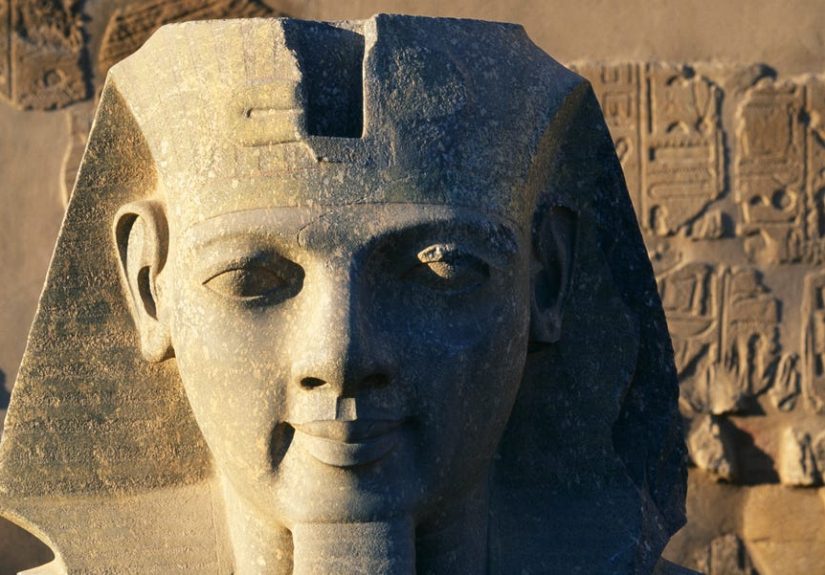
The newly identified section is the upper part of a monumental limestone statue of Ramesses II discovered at El Ashmunein in Egypt’s Minya region. The piece shows the king seated, wearing the double crown associated with rule over Upper and Lower Egypt, along with a headdress topped by a royal cobra. In other words, this was not subtle art. Ancient Egypt did not do “quiet luxury” when it came to pharaohs.
The upper section stands more than 12 feet tall on its own. When joined conceptually with the lower section uncovered in 1930 by German archaeologist Günther Roeder, the complete statue would have reached roughly 23 feet in height. That scale matters. This was not a decorative courtyard piece. It was a statement monument, built to be seen, remembered, and probably admired from a respectful distance.
The find was made by a joint Egyptian-American mission working in the ancient city known in pharaonic times as Khemenu and later in the Greco-Roman world as Hermopolis Magna. The site has deep religious importance and a long urban history, making it exactly the kind of place where a giant royal statue makes sense. If you are a pharaoh who wants to leave your face all over the map, major sacred and civic centers are a very good place to start.
Why This “Missing Part” Matters So Much
At first glance, the story sounds simple: archaeologists found the top half of a broken statue. Nice work, everyone. Dust off the sandals. But the real significance goes deeper.
For one thing, this discovery ties directly to an earlier excavation history. The lower portion had already been known for decades, but without the upper section, scholars were working with an incomplete monument and an incomplete story. Once the newly found block was studied, researchers confirmed it belonged to the same colossal sculpture. That connection transformed a fragmentary relic into a legible monument.
Second, the statue offers evidence for the scale and political importance of Ramesses II’s building activity in Middle Egypt. Many of the pharaoh’s most famous monuments are associated with places such as Abu Simbel, Luxor, Karnak, and the Ramesseum. But this find helps show that Ramesses’ visual and ideological footprint extended strongly into other regions as well. In plain English: the man did not believe in under-branding.
Third, the discovery helps scholars better understand the ancient layout of El Ashmunein and the ceremonial use of the area. Colossal statues were not placed randomly. They marked power, sacred access, and royal presence. Finding one in context can help archaeologists reconstruct the original function of nearby structures, movement routes, and ritual zones.
Ramesses II: The Pharaoh Who Mastered Monumental Self-Promotion
Builder, conqueror, image-maker
Ramesses II, often called Ramesses the Great, ruled during Egypt’s 19th Dynasty and is widely remembered as one of the most powerful pharaohs of the New Kingdom. He reigned for decades, launched military campaigns, negotiated high-profile diplomacy, and oversaw extensive building programs that placed his name and likeness across temples, statues, stelae, and public monuments.
He understood something modern politicians, celebrities, and sneaker brands also understand: visibility matters. A lot. His monuments were not just art. They were political messaging in stone. They announced legitimacy, divine favor, military success, and dynastic continuity. When later generations thought of Egyptian royal grandeur, they often thought of Ramesses II because he had already done the ancient equivalent of putting up billboards everywhere.
The giant seated figures at Abu Simbel remain among the clearest examples of his monumental strategy. But the newly connected statue from El Ashmunein adds a different kind of value. It reminds us that Ramesses’ monumental program was not limited to the most famous tourist-calendar locations. His presence was distributed through a broader sacred and administrative landscape.
That is one reason this statue feels “legendary.” It belongs not only to a specific archaeological site, but also to the larger mythology of Ramesses as a ruler who turned architecture into political immortality.
Why El Ashmunein Was the Right Place for a Giant Royal Statue
El Ashmunein has layers of importance. In ancient Egypt it was called Khemenu and served as a major religious center associated with Thoth, the god linked to wisdom, writing, reckoning, and sacred knowledge. Later, the Greeks and Romans called the city Hermopolis Magna. That continuity of prestige makes the site especially valuable for archaeologists trying to understand how religious, civic, and royal identities overlapped across centuries.
The statue was found in a temple context near the southern edge of the archaeological zone. Researchers have noted that this area would have been relatively central to the ancient city. The broader excavation project has aimed to uncover more of the city’s religious heart from the New Kingdom through later periods, including evidence of reuse and adaptation over time.
One especially fascinating detail is that the statue came to light during work on a temple of Ramesses II that was later repurposed under the Roman emperor Nero. That kind of reuse is catnip for archaeologists. It shows that ancient monuments did not simply sit untouched for millennia. They were altered, recycled, reinterpreted, and folded into new political and religious worlds. Even giant royal statues, it turns out, could end up with complicated afterlives.
What the Statue Tells Us About Ancient Egyptian Art
Iconography with a purpose
The upper section preserves more than a face and torso. It preserves visual language. Ramesses is shown seated, crowned, and marked by symbols of sovereignty. The double crown declares dominion over the unified kingdom. The royal cobra, or uraeus, signals protection, divine legitimacy, and kingship. Hieroglyphic inscriptions on the back pillar glorify the ruler and reinforce the monument’s ideological role.
Ancient Egyptian royal sculpture was never only about portrait likeness. It was about controlled messaging. The body posture, the regalia, the scale, and the inscriptions all worked together to communicate order and authority. The monument told viewers not only who the king was, but what the king meant.
That is why the recovery of the upper section is so important. Without it, scholars miss critical iconographic elements that shape interpretation. A lower half can tell you the statue was colossal and seated. The upper half tells you how kingship was being staged. That is a big difference.
The find also helps historians assess regional artistic production in Middle Egypt during the later reign of Ramesses II. Monumental statuary outside the better-known centers can reveal local workshop practices, stone use, installation methods, and the relationship between central authority and provincial display.
How a Colossal Statue Goes Missing for Nearly a Century
Archaeology is full of delayed reunions. Monuments break. Sites are buried. Earlier excavations document one part of a structure while leaving other pieces hidden underground, displaced, or reused. Add centuries of natural processes, human disturbance, rebuilding, and erosion, and the fact that this statue remained incomplete for so long starts to make sense.
Still, there is something irresistible about the timeline. The lower half was uncovered in 1930. The upper half emerged almost a century later. That gap gives the story narrative power, but it also reflects how archaeology actually works: slowly, imperfectly, and often in episodes separated by generations.
This is a useful reminder that archaeology is not treasure hunting with better hats. It is cumulative scholarship. Old field notes matter. Earlier discoveries matter. Context matters. The 2024 discovery succeeded not only because researchers found something new, but because they could connect it to something already known. The past does not always reveal itself in one dramatic moment. Sometimes it sends part one in 1930 and part two after everyone has changed excavators, governments, and probably coffee brands.
Why the Discovery Resonates Beyond Egyptology
This story hit a nerve because it combines three things people love: ancient mystery, visual drama, and the satisfaction of a solved puzzle. It also taps into the long cultural afterlife of Ramesses II in literature, museums, documentaries, and public imagination. For many readers, he is not just a historical king. He is one of the pharaohs, the kind of ruler whose monuments seem to have been designed specifically for headlines thousands of years later.
There is also a nice irony here. Percy Bysshe Shelley’s poem Ozymandias, inspired by another image of Ramesses II, famously meditates on ruin and the collapse of power. Yet discoveries like this show a different truth: even broken monuments keep talking. Royal propaganda survives in fragments. Stone still performs. Time damages the message, but it does not erase it.
And in a century obsessed with digitization and ephemera, there is something almost refreshing about a cultural event built around one very large block of limestone saying, in effect, “Hello, I have been waiting under the ground longer than your entire streaming history.”
What Happens After a Discovery Like This
Finding the object is only the start. Once a colossal fragment is uncovered, archaeologists and conservators have to clean it, document it, stabilize it, study tool marks and inscriptions, assess structural integrity, and plan how best to present or preserve it. In some cases, digital modeling helps researchers visualize how fragments align before any physical reassembly is attempted.
That is especially important with statues on this scale. Reuniting fragments is not like snapping together a coffee mug in your kitchen. It involves engineering, conservation science, and major logistical planning. Weight distribution, internal fractures, environmental conditions, and visitor safety all matter.
Just as important, archaeologists must decide how the restored monument should be interpreted. Should it be displayed in situ? Should missing sections be reconstructed or left visibly incomplete? How much intervention is too much? These are not side questions. They shape how the public will understand both the object and the ethics of archaeology itself.
Experiences Related to This Discovery: Why Finds Like This Feel So Human
One reason the rediscovery of a missing statue section lands so strongly with readers is that it feels bigger than archaeology. It touches something personal. Even if you have never set foot in Egypt, never read a hieroglyph, and could not identify Hermopolis Magna on a map without emotional support, you understand the thrill of a long-lost piece finally sliding back into place.
Imagine standing at an archaeological site in the early morning, when the air is still cool and the stone has not yet started radiating heat. Around you is a place that has been built, broken, reused, buried, and remembered for thousands of years. Then from the earth emerges a face that was designed to outlast empires. Not just any face, either, but the face of a king who wanted to be seen forever. That would not feel like “old history.” It would feel startlingly immediate.
There is also the experience of scale. Photos never quite prepare you for colossal sculpture. A 23-foot seated king is not just large; it changes the way your body understands space. You stop thinking in terms of object and start thinking in terms of presence. Ancient rulers knew exactly what they were doing with monumentality. They were building emotional technology. Awe was part of the architecture.
Then there is the experience of patience, which may be archaeology’s least glamorous but most important feeling. Discoveries like this come after surveys, permits, stratigraphy, conservation planning, cataloging, comparison, and endless interpretation. To the public, the headline arrives in one exciting burst. To archaeologists, it often represents years of steady work and decades of scholarly continuity. That contrast is part of what makes these moments so moving. The headline may feel sudden, but the human effort behind it is anything but.
Museum visitors feel another side of the story. When people see a reconstructed monument or even a fragment paired with an explanation of where it came from, they experience a strange kind of double vision. You are in the present, reading a label, standing under climate control, maybe wondering whether the gift shop has a decent postcard selection. But your mind is also pulled backward into the monument’s first life: the workshop where it was carved, the temple court where it stood, the ceremonies it watched, the later centuries when it broke and disappeared from view.
That split-second travel is part of the power of archaeology. It turns distance into contact. It reminds us that ancient people cared about memory, prestige, faith, symbolism, and public image just as intensely as modern people do. The tools changed. The impulse did not.
And perhaps the most relatable experience of all is simple satisfaction. Humans love completion. We like missing chapters recovered, final puzzle pieces found, and stories that close a loop. When archaeologists reconnect two halves of a monument separated for generations, the emotional response is not only scholarly admiration. It is relief. Of course that was where it belonged. Of course the statue wanted to be whole again. Rationally, we know stone has no desires. Emotionally, we are not so sure.
That is why this discovery resonates. It is about Ramesses II, yes. It is about ancient Egypt, yes. But it is also about recognition, recovery, and the deep pleasure of seeing history become more complete before our eyes.
Conclusion
The discovery of the missing upper half of the Ramesses II statue at El Ashmunein is not just a flashy archaeology headline. It is a meaningful addition to what scholars know about royal display, sacred geography, and monumental art in Middle Egypt. It reconnects a modern excavation to a 1930 discovery, deepens the historical map of Ramesses II’s influence, and offers the public one of those rare stories where the words “missing piece” are delightfully literal.
More than that, it proves that even after thousands of years, ancient monuments still have fresh stories to tell. Sometimes those stories come in fragments. Sometimes they wait patiently under layers of earth. And sometimes, when the timing is finally right, a legendary statue gets its voice back one giant piece at a time.