Table of Contents >> Show >> Hide
- Meet the Hut: A 200-Year-Old Building With Good Bones (and Dark Beams)
- Why This Project Hits So Hard: The Power of “Minimal Change”
- The Exterior: Quiet Upgrades That Don’t Shout “RENOVATED!”
- The Windows: A Small Detail With Big Architectural IQ
- Inside: Traditional Plan, Modern Comfort
- The Stone Blocks: When a Kitchen Becomes a Landscape Feature
- Floors and Ceilings: Thick Planks, Thin Drama
- Rustic + Modern Without the Cringe
- Design Lessons You Can Borrow for Any Cabin Renovation
- FAQ: Quick Answers for Curious Remodelers
- Conclusion: A Renovation That Whispers (and That’s the Point)
- Architect-Style Visit Notes: of “Being There” (Without the Jet Lag)
If you’ve ever daydreamed about a tiny cabin in the mountainsone that smells like woodsmoke, makes tea taste 12% better,
and instantly fixes your screen-time addictionthen you already understand the emotional power of an alpine hut.
What you may not have considered is how hard it is to renovate one without accidentally turning it into a boutique hotel lobby
(complete with “inspirational” signage and a candle called Summit Serenity No. 7).
That’s why the Alpine hut Blattistafel near Gstaadconverted by AFGH (Andreas Fuhrimann & Gabrielle Hächler)is such a satisfying case study.
It’s a project that treats old materials like they’re priceless artifacts… while still delivering a functioning home for modern life.
In other words: the hut keeps its soul, and you still get a bathroom. Everybody wins.
Meet the Hut: A 200-Year-Old Building With Good Bones (and Dark Beams)
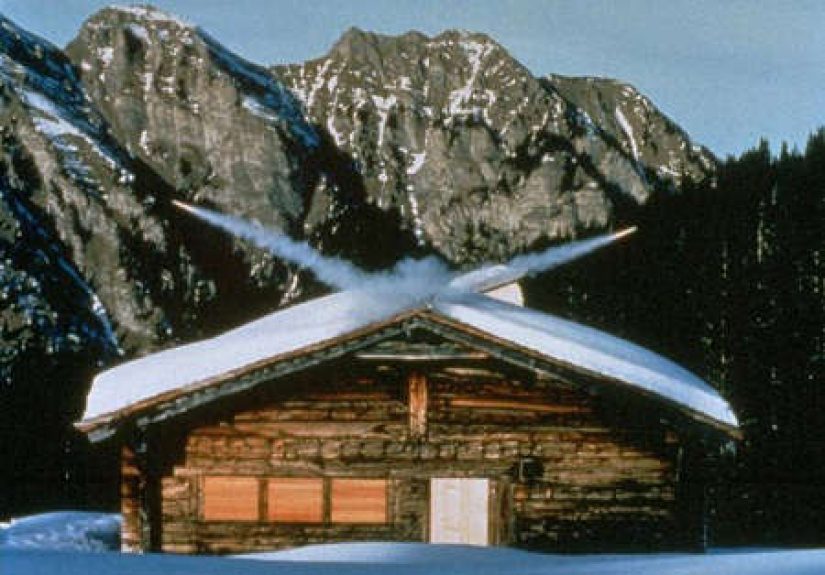
The story starts with a small, anonymous alpine hut near Gstaad that sat unused for roughly fifty years before its conversion.
The building’s proportions, timber supports, and secluded setting created what the architects described as a “magical air” worth protecting.
Translation: the place already had the vibe; the renovation’s job was to keep it from losing that vibe in the name of “updates.”
This isn’t a mansion pretending to be rustic. It’s a functional, unassuming structure that had aged into characterespecially the log construction,
whose timber beams had darkened over time until they looked almost blackened.
AFGH’s approach was to reveal and frame those existing qualities rather than overwrite them.
Why This Project Hits So Hard: The Power of “Minimal Change”
In renovation culture, there are two loud temptations: (1) “Let’s open everything up,” and (2) “Let’s make it new, but like old.”
The Alpine Hut chooses a third path: minimal intervention with maximum clarity.
The best compliment you can give this conversion is that it doesn’t look like a conversionat least from the outside.
This design attitude aligns with a preservation-minded principle used widely in rehabilitation work:
keep distinctive materials and features, and introduce a new use with as little disruption as possible.
The result isn’t a museum; it’s a living space that respects the original structure’s logic.
The Exterior: Quiet Upgrades That Don’t Shout “RENOVATED!”
AFGH limited façade changes to what the hut actually needed: doors and windows.
That’s it. No dramatic glass cube. No heroic cantilever. No “statement” cladding.
If the hut is a sentence, the architects didn’t rewrite itthey corrected punctuation.
Roof and chimney: tradition, refreshed
The roof was re-tiled with new shingles, and a chimney was built in a traditional style.
It’s a practical move that also supports the hut’s visual continuity.
From the outside, the “up-to-date” conversion is barely perceptible; the changes are subtle enough to blend with the hut’s original character.
The Windows: A Small Detail With Big Architectural IQ
Here’s a detail you’ll want to steal (metaphoricallyplease don’t pry windows out of Swiss huts):
the windows are a mix of traditional and contemporary elements, divided horizontally into three.
Even better, they can be slid as a whole.
Why does that matter? Because tiny huts have tiny problemslike how you get furniture inside without removing half the wall.
Sliding the entire window improves the ability to furnish the space despite restricted conditions.
It’s a practical solution that becomes a signature design gesture, the kind that makes architects nod silently at parties.
A tiny window with a job description
There’s also a small additional sliding window made in the local carpentry tradition.
Its purpose is wonderfully specific: regulating airflow when kindling the fire.
This is the kind of detail that screams “someone actually uses this building,” which is always the highest form of design credibility.
Inside: Traditional Plan, Modern Comfort
Once you step in, the interior plan follows a traditional division: kitchen, stall, and larder.
Even if you’re not keeping animals (most art collectors aren’tthough anything is possible), that original organization gives the hut a clear spatial rhythm.
AFGH works with it rather than against it.
This is a key lesson for any cabin renovation: don’t ignore the building’s native logic.
Old structures often have plans shaped by climate, storage needs, and daily routine.
When you honor that logic, the renovation feels inevitable instead of forced.
The Stone Blocks: When a Kitchen Becomes a Landscape Feature
The most striking contemporary insertion is the use of massive stone blocks for the kitchen and bathroom (the bathroom sits in the former larder).
The stone comes from a local quarry, and its unpretentious appearance is exactly why it works.
Think of these stone elements as architectural “anchors.”
The aged timber has texture, warmth, and history; the stone has weight, coolness, and a quiet permanence.
Put them together and you get tensionin the good waylike a duet where neither singer tries to outshine the other.
Functionally, stone also makes sense in a hut: it’s durable, handles moisture well in wet zones, and feels groundedliterally and visually.
A monolithic stone kitchen reads almost like a boulder that wandered indoors and decided to stay.
Floors and Ceilings: Thick Planks, Thin Drama
The ceilings and floors are new, but built traditionally using 14-centimeter-thick wooden planks.
The thickness is substantial enough that the architects considered additional insulation unnecessary.
This is a smart reminder that “performance” isn’t always achieved with flashy layers and futuristic materials.
In some contexts, mass and continuity do a lot of work: thick wood moderates temperature swings, feels solid underfoot,
and maintains the hut’s tactile authenticity.
It also avoids a common renovation tragedy: where the building becomes technically upgraded but emotionally flattened.
Rustic + Modern Without the Cringe
Plenty of projects claim to blend “rustic and modern,” and then proceed to install shiny finishes that look terrified of dirt.
The Alpine Hut succeeds because it doesn’t treat modernity as a costume.
Modern elements show up as simple, legible interventions: stone blocks, carefully designed openings, and furnishings created for the space.
The result is a dialogue rather than a makeover.
The timber remains timberdark, imperfect, real.
The stone remains stoneheavy, blunt, calm.
Together, they create a restrained interior that feels elevated without losing its hut-ness.
Design Lessons You Can Borrow for Any Cabin Renovation
1) Preserve what can’t be faked
Patina, proportion, and material honesty are difficult to manufacture convincingly.
If your building already has those, treat them like rare ingredientsdon’t drown them in sauce.
2) Change the minimum, but change it well
The most powerful interventions here are not numerous; they’re precise.
A good window strategy and a strong interior insertion can do more than a dozen cosmetic gestures.
3) Let function drive the “signature” detail
Sliding windows aren’t just coolthey solve a real constraint.
The small airflow window isn’t decorativeit supports fire-starting.
When details earn their keep, they age better (and they’re harder to hate later).
4) Use local materials like you mean it
“Local” can be a buzzword, but in mountain architecture it’s also common sense.
Local stone looks at home because it is home.
It connects the interior to the landscape without needing a dramatic design speech.
5) Keep the outside calm, let the inside do the talking
This hut doesn’t advertise its renovation.
That restraint creates a stronger reveal when you enter: the interior feels intentional,
not like a marketing campaign.
FAQ: Quick Answers for Curious Remodelers
Is this an example of adaptive reuse?
Yes. The hut’s function shifts into a residence while retaining its historic character and plan logic.
It’s a model of how “new use” doesn’t have to mean “new personality.”
Why not add more insulation?
Many renovations do require additional insulationespecially in harsh climates.
Here, the thick plank floors and ceilings (plus the overall hut scale and traditional construction approach)
were treated as sufficient, keeping the assembly simple and the interior character intact.
What’s the big idea in one sentence?
Make the hut feel more itself, not less.
Conclusion: A Renovation That Whispers (and That’s the Point)
The Alpine Hut by AFGH is persuasive because it doesn’t chase drama.
It shows how to convert a humble, aging structure into a livable space by focusing on what matters:
preserve the irreplaceable timber, keep the plan’s logic, introduce stone elements with confidence,
and refine the openings so light and air behave.
If you’re looking for a template, this isn’t one (and thank goodnesstemplates are how we end up with identical “rustic modern” cabins everywhere).
But if you’re looking for principlesminimal change, maximum respect, and details that solve real constraintsthis hut is a master class.
It’s proof that the best renovations don’t scream “LOOK WHAT I DID.”
They quietly say, “This was always here. We just helped you notice.”
Architect-Style Visit Notes: of “Being There” (Without the Jet Lag)
Imagine approaching the hut on foot, the kind of walk where the snow squeaks under your boots and your breath shows up like a speech bubble.
From a distance, the building doesn’t perform for youit simply exists, calm and compact, perched on its timber supports as if it has been waiting
for centuries for someone to show up with decent coffee.
Up close, the first thing you notice is what isn’t there: no flashy exterior additions, no “modern cabin” theatrics.
The hut looks like a hut. That’s the trick.
Then your eye catches the subtle “ruptures”the doors and windowsinserted with restraint, like a respectful handshake between eras.
Now, the window moment: you see the horizontal divisions, and you may think, “Nice proportion.”
But then you realize the whole window can slide, and suddenly it’s not just prettyit’s clever.
In your head, you picture moving a chair, a table, maybe a large art piece (because this is an art collector’s retreat),
and you understand that this detail isn’t a flourish. It’s a survival skill for small spaces.
Step inside and your senses recalibrate.
The timber is darker than you expectalmost blackenedlike the building has been gently toasted by time.
The air feels warmer, not just in temperature but in mood.
You can’t fake that kind of material presence.
If you’re visiting with an architect friend, this is the moment they go quiet,
because the building is doing what every good building does: it’s teaching without explaining.
You move through the traditional sequencekitchen, stall, larderand it feels oddly rational,
like the hut is reminding you that comfort used to come from smart organization, not square footage.
Then the stone blocks appear, and they feel almost geologicalkitchen and bath as carved mass rather than cabinetry and décor.
The temperature shift is real: stone holds coolness, and that coolness makes the timber feel even warmer.
In the kitchen, you notice how the stone doesn’t try to look delicate.
It’s blunt, straightforward, and absolutely confidentlike it could survive a century of cooking without even a scratch to its ego.
In the bathroom, that same stone logic feels practical: water belongs here, and the material is unbothered by it.
Look up and down and you’ll catch the new floors and ceilingsthick wooden planks built in a traditional manner.
You feel the weight underfoot, the solidity, the sense that the building is holding you rather than hovering beneath you.
It’s the opposite of flimsy.
And as you stand there, you realize the “modern” part of the renovation isn’t a style.
It’s a set of decisions: preserve what’s irreplaceable, intervene only where necessary, and let materials speak in their own voices.
You leave with a strange feeling: you didn’t just tour a renovated cabin.
You watched a building keep its identity while becoming usable again.
That’s the kind of design experience that stickslong after the snow melts and your inbox refills.