Table of Contents >> Show >> Hide
- Why Efficient Scaling Became the 2023 Obsession
- What the ICONIQ View Gets Right
- The Metrics That Matter More Than Startup Swagger
- The Operator Playbook for Building Resilience Through Efficient Scaling
- Common Mistakes Companies Make When They Hear “Efficient Growth”
- What This Means for Founders, CFOs, and Revenue Leaders Now
- Experience Notes: What Efficient Scaling Looks Like in the Real World
- Conclusion
There are business buzzwords, and then there are business survival words. In 2023, “efficient scaling” was firmly in the second category. The old startup party trick of growing fast and figuring out the math later suddenly stopped getting applause. Boards wanted discipline. Customers wanted proof of value. Finance teams wanted fewer surprises. And operators everywhere wanted one thing above all: a growth plan that did not collapse the second the market got moody.
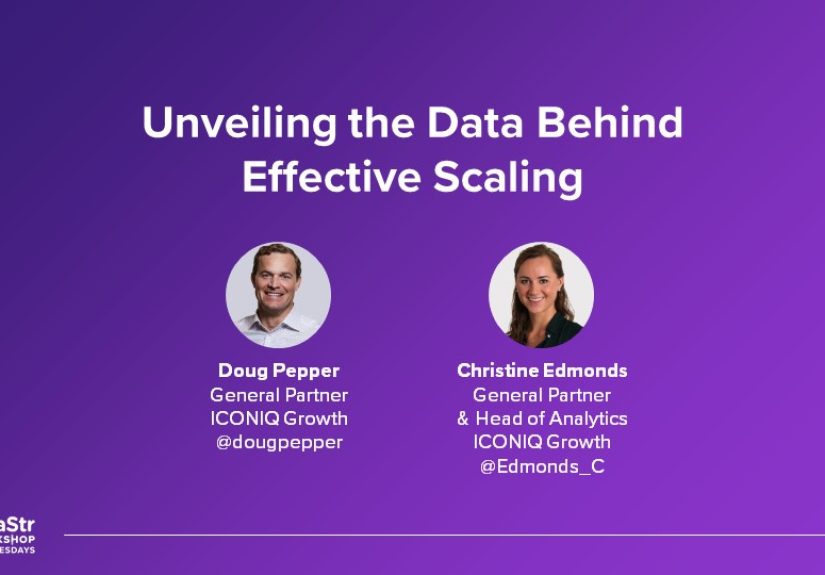
That is why the conversation featuring Doug Pepper and Christine Edmonds landed so well. Instead of serving another reheated “do more with less” slogan platter, the ICONIQ Growth leaders focused on what healthy scaling actually looks like when capital is expensive, buying cycles are longer, and every line item gets interrogated like it owes someone rent. The session was rooted in operating data, not startup mythology, and that made the message more useful. It also made it more uncomfortable in the best possible way.
The big takeaway from the video is simple: resilience is not built by shrinking into a corner and hoping the economy says sorry. It is built by scaling with intention. That means protecting growth, but refusing to buy it at sloppy prices. It means tracking the metrics that show whether your business is becoming sturdier as it gets bigger. And it means accepting a very 2023 truth: headcount growth is not the same thing as company progress. Sometimes it is. Sometimes it is just a very expensive way to feel busy.
Why Efficient Scaling Became the 2023 Obsession
The backdrop matters. Across software, leaders were navigating slower IT spending, valuation compression, tougher fundraising, and buyers who suddenly remembered how to say, “Let’s revisit next quarter.” In that environment, the most resilient companies were not necessarily the loudest or the flashiest. They were the ones that could preserve momentum while tightening execution.
That shift changed the conversation from vanity to durability. Revenue growth still mattered, of course, but it had to coexist with margin discipline, predictable forecasting, strong retention, and better sales efficiency. In other words, a company could no longer swagger into the room waving top-line growth while hiding a burn problem behind the potted plant.
Pepper and Edmonds framed this beautifully. Their lens was not “stop investing.” It was “invest better.” That distinction is everything. Efficient scaling does not mean starving the company. It means making sure each dollar, each hire, and each go-to-market motion earns the right to exist.
What the ICONIQ View Gets Right
One reason this session stands out is that ICONIQ’s framework avoids the fake binary between growth and efficiency. For a while, the startup world talked as if leaders had to pick one camp: either swing wildly for growth or become monks of profitability. Real operators know better. Businesses that endure are usually those that learn how to grow with enough discipline that growth itself becomes more repeatable.
That is where ICONIQ’s broader research around software performance is useful. Their work consistently points leaders back to a practical set of operating signals: growth quality, net retention, sales efficiency, productivity per employee, and the balance between topline ambition and bottom-line control. It is not glamorous. It is just effective. Which, in 2023, was frankly much cooler than glamorous.
The video also reinforces a point many founders resist until the spreadsheet forces therapy upon them: resilience is operational before it is emotional. Yes, leadership mindset matters. Yes, teams need trust. But a company becomes resilient when it can see problems early, benchmark intelligently, and make corrections before the quarter turns into a campfire.
The Metrics That Matter More Than Startup Swagger
1. Growth still matters, but quality matters more
Fast growth is exciting. Efficient growth is investable. The difference is whether revenue is arriving with healthy economics and realistic repeatability. In the 2023 climate, high-performing companies were not just asking, “How fast are we growing?” They were asking, “What is this growth costing us, and can we sustain it?”
That is why measures like net magic number, burn multiple, and customer acquisition payback became so important. They reveal whether go-to-market spend is translating into future revenue or simply powering a very elaborate confidence trick. A company may still choose to invest aggressively, but it should know exactly which motion is paying back and which one is just burning premium fuel in neutral.
2. Retention is the grown-up metric
When markets tighten, retention stops being a back-office metric and becomes the plot twist. New logo growth gets harder. Expansion becomes more precious. Churn becomes less forgivable. That is why resilient companies obsess over customer outcomes, product stickiness, and expansion pathways.
If customers are renewing, expanding, and deepening usage, the business has leverage. If they are hesitating, downsizing, or politely ghosting after the pilot, no amount of inspirational all-hands language will save the model. Efficient scaling in 2023 meant understanding that retention is not merely customer success theater. It is the engine that makes future growth cheaper.
3. Productivity per employee is no longer optional
One of the sharpest lessons from the efficient growth era is that teams must be judged by output, not just organizational charts that look impressively crowded in board decks. ARR per FTE and related productivity measures gained attention because they force leaders to confront whether the company is actually becoming stronger as it adds people.
This does not mean people are spreadsheets in hoodies. It means leadership has to design systems, tooling, reporting, and decision-making in ways that let talent produce real leverage. Hiring more people into vague roles with fuzzy ownership is not scaling. It is corporate cosplay.
4. Forecast accuracy is a resilience muscle
Edmonds’ analytics-heavy perspective is especially valuable here. Resilient companies are not magically right all the time; they are just less casually wrong. They measure topline attainment, compare performance against plan, and learn quickly when reality drifts from narrative.
This matters because forecasting discipline affects everything else: hiring, cash planning, territory design, compensation, board communication, and investor confidence. A company that repeatedly misses plan and then acts surprised is not scaling efficiently. It is speed-running disappointment.
5. Resilience is cross-functional, not a finance side quest
Another strong theme in the broader body of research surrounding this conversation is integration. Finance cannot own efficiency alone. Revenue teams shape it through sales productivity and pricing. Product shapes it through activation, retention, and expansion paths. Customer success shapes it through renewals and time to value. Leadership shapes it through prioritization and trade-offs.
In other words, resilience is not a spreadsheet handed down by finance like a weather report. It is the result of an operating model where the company knows what it is solving for and where waste is not confused with ambition.
The Operator Playbook for Building Resilience Through Efficient Scaling
Tighten your ideal customer profile
In loose markets, companies can get away with fuzzy targeting. In hard markets, fuzzy targeting gets expensive fast. One of the cleanest ways to improve resilience is to narrow the segments, buyer types, and use cases where the product wins fastest and sticks longest. Efficient scaling starts by selling to customers who actually need what you are offering, not to anyone with a pulse and a procurement process.
Upgrade pricing and packaging
2023 forced many SaaS leaders to reconsider whether legacy seat-based or broad-bundle pricing still matched customer behavior. The strongest companies treated pricing as a strategic lever, not a dusty PDF attachment at the end of the sales process. They aligned pricing more closely with value, created cleaner expansion paths, and reduced friction in adoption.
When pricing reflects real usage and real outcomes, growth becomes more resilient because expansion feels earned rather than extracted. Customers are much happier to pay more when the product is clearly doing more. Shocking, I know.
Invest in commercial productivity, not just commercial headcount
Efficient scaling asks a ruthless but healthy question: can revenue grow faster than sales and marketing expense? The companies that handled 2023 well did not merely slash budgets and celebrate with stale muffins. They improved territory design, enabled reps more effectively, clarified ownership, automated support work, and made performance data easier to act on.
That shift matters because productivity compounds. A better go-to-market system can keep generating returns long after the latest cost-cutting memo has been forgotten by history, or at least buried in Slack.
Protect customer success as a growth lever
During tougher markets, some teams treat post-sale functions as a cost center to trim. That is usually a mistake. If expansion is more efficient than acquisition, then customer success, onboarding, services, and support become part of the growth engine. Companies that keep customers healthy preserve net retention, accelerate references, reduce churn risk, and make every future sales dollar work harder.
Build reporting that drives decisions, not decoration
Too many dashboards are gorgeous museums of irrelevant sadness. The better model is simple: a few metrics, clearly defined, regularly reviewed, and tied to action. If leaders are tracking growth, retention, efficiency, productivity, and plan attainment with consistent definitions, they can course-correct early. If every function has its own reality, the company is not data-driven. It is just multilingual in confusion.
Common Mistakes Companies Make When They Hear “Efficient Growth”
The first mistake is overcorrecting into fear. Some companies reacted to 2023 by freezing so many decisions that they protected the downside and accidentally strangled the upside. Efficient scaling is not the same as endless caution. Resilient companies still place bets. They just place fewer dumb ones.
The second mistake is cutting muscle instead of fat. Leaders trim customer success, product velocity, or top-performing sales capacity, then wonder why efficiency gets worse six months later. Short-term optics can damage long-term operating health if the cuts remove the very functions that drive retention and intelligent growth.
The third mistake is managing by benchmark alone. Benchmarks are useful, but they are not commandments etched into SaaS stone tablets. The right target depends on stage, motion, product complexity, customer segment, and market reality. Use benchmarks to sharpen judgment, not replace it.
What This Means for Founders, CFOs, and Revenue Leaders Now
The lasting lesson from Pepper and Edmonds is that resilience is built in the middle of the mess, not after it. You do not wait for a perfect market to become disciplined. You become disciplined so the imperfect market does less damage.
For founders, that means telling a cleaner story about how growth will happen and what it will cost. For CFOs, it means creating reporting that turns ambiguity into action. For CROs and revenue leaders, it means focusing less on activity theater and more on repeatable revenue productivity. For boards, it means rewarding companies that can balance ambition with rigor instead of confusing bravado with strategy.
Most of all, it means accepting that efficient scaling is not a temporary 2023 slogan. It is a durable leadership habit. Markets may warm up, capital may loosen, and optimism may come strutting back into the room wearing expensive shoes. But the companies that learned resilience through disciplined scaling will still have the advantage. They will know how to grow without losing the plot.
Experience Notes: What Efficient Scaling Looks Like in the Real World
In practice, the experience of building resilience through efficient scaling rarely feels dramatic in the Hollywood sense. It is usually quieter than that. It looks like a leadership team spending more time on deal quality than raw pipeline volume. It looks like a finance leader asking whether the forecast reflects reality or just hope wearing a spreadsheet costume. It looks like a product team prioritizing features that increase activation and expansion instead of chasing every shiny request that lands in the queue.
Teams living through this shift often describe the same emotional arc. At first, efficient scaling feels restrictive. Everyone worries it means smaller goals, slower hiring, and less room to experiment. But after the initial panic fades, something interesting happens: clarity improves. Teams begin to understand which segments convert fastest, which channels actually pay back, which customers expand naturally, and which workflows are wasting human energy. When the noise drops, signal gets louder.
Operators also discover that resilience is deeply cultural. The healthiest companies are not the ones pretending everything is fine. They are the ones willing to look directly at ugly numbers without turning every dashboard review into a blame festival. When people trust the data and trust one another, they can make sharper decisions faster. That alone becomes a competitive edge.
Another recurring experience is that better systems beat heroic effort. In inefficient companies, growth depends on a handful of stars dragging everything uphill. In resilient companies, the system helps ordinary good performers produce extraordinary results more consistently. Reps know where to focus. Managers coach from real data. Customer success teams understand renewal risk sooner. Product leaders see where usage ties to expansion. Finance is not cleaning up mysteries after the quarter ends. Everyone works harder on the right things and less on organizational archaeology.
There is also a humbling lesson in how often “efficient scaling” turns out to be an exercise in subtraction. Companies add fewer priorities, fewer custom deals, fewer vanity initiatives, fewer meetings, fewer tools, fewer layers, and fewer stories they tell themselves about why messy execution is somehow strategic. That subtraction creates room for the good stuff: better customer experience, faster decisions, more accountable planning, and stronger economics.
And yes, there is a human side to all this. Efficient scaling can be uncomfortable because it forces companies to grow up in public. It asks leaders to trade startup drama for operational maturity. But teams that make that transition often come out stronger, calmer, and more confident. They stop treating resilience like a crisis response and start treating it like a design principle. That is the real payoff. Not just surviving a weird market, but building a company that can keep its footing when the market gets weird again. Because, if 2023 taught us anything, it is that uncertainty does not send a calendar invite first.
Conclusion
Building resilience through efficient scaling is ultimately about precision. The ICONIQ perspective, backed by broader SaaS research, makes the case that great companies do not merely cut costs or chase growth. They create a tighter connection between strategy, metrics, execution, and customer value. In 2023, that approach separated companies that were simply reacting from those that were actually becoming stronger. The lesson still holds: resilience is not built by doing less. It is built by doing the right things with more discipline, more visibility, and a lot less nonsense.