Table of Contents >> Show >> Hide
- What This Chemex Actually Is (And Why the Glass Handle Matters)
- Quick Specs That People Actually Care About
- Why Chemex Coffee Tastes “Cleaner”
- How to Brew with the Chemex 8-Cup Glass Handle (A Practical Method)
- Two Real Recipes You Can Start With
- Dialing In: What to Adjust When It Tastes “Off”
- Choosing Coffee for the Chemex (Because It’s Not “One Bean to Rule Them All”)
- Cleaning and Care: Keeping It Gorgeous (And Not Funky)
- Who This Brewer Is Perfect For (And Who Might Gently Pass)
- Common Questions People Ask (Usually While Holding a Bag of Filters)
- Conclusion: A Classic, With a Handle That Makes Life Easier
- of Real-World Experience with the Chemex 8-Cup Glass Handle
Some coffee makers try really hard to look like a spaceship control panel. The Chemex 8-cup with a glass handle takes the opposite approach: it’s basically a beautiful hourglass that quietly insists, “Relax. You can do this.” No buttons. No apps. No “firmware update available” while you’re under-caffeinated.
If you’re here because you want a clean, aromatic cup that tastes like the beans you paid for (not yesterday’s mystery oils), the Chemex glass-handle 8-cup is one of the most iconicand genuinely practicalways to get there. It’s equal parts design object and daily workhorse… assuming you don’t treat borosilicate glass like a hockey puck.
What This Chemex Actually Is (And Why the Glass Handle Matters)
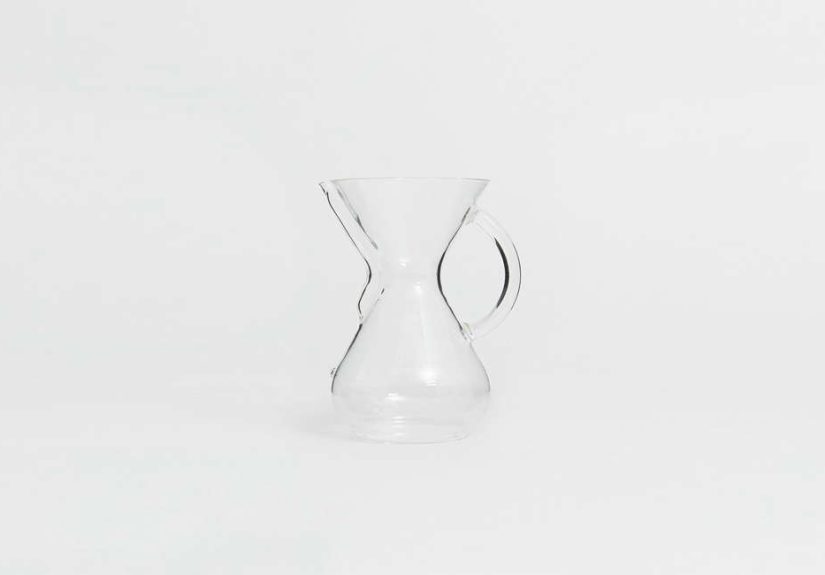
The “eight cup” Chemex is a manual pour-over brewer made from heat-resistant borosilicate glass. The glass-handle version swaps the classic wooden collar/leather tie for a graceful integrated handle that gives you more control when pouringespecially helpful when the brewer is full and you’re trying not to recreate a coffee waterfall.
The headline benefit of the glass handle is simple: it’s always ready. No collar to remove, no tie to re-seat, no “why is this leather wet?” moment after washing. You pick it up, you pour, you look like you know what you’re doing.
Quick Specs That People Actually Care About
Chemex “cups” are not the same as the cups your heart wants them to be. The brand’s traditional measurement is 5 ounces per cup, so “8-cup” works out to about 40 ounces total. In real-life mug math, that’s usually around 3–4 satisfying mugs, depending on your mug’s ego.
- Capacity: ~40 oz (8 Chemex cups)
- Material: Non-porous, heat-resistant borosilicate glass
- Handle: Integrated glass handle for grip and pour control
- Filters: Uses Chemex bonded paper filters (commonly square filters for 6/8/10-cup sizes)
- Style of coffee: Exceptionally clean and clear, with low sediment
Why Chemex Coffee Tastes “Cleaner”
1) The filters do a lot of heavy lifting
Chemex bonded paper filters are famously thicker than typical drip filtersoften described as roughly 20–30% thicker than many alternatives. That thickness slows the flow a bit and helps trap more fine particles and oils. The result is a cup with high clarity: bright, sweet, and detailed, with very little sediment.
2) The glass is chemically inert and non-porous
Borosilicate glass doesn’t absorb odors and old flavors the way some materials can over time. Translation: your Ethiopian floral coffee won’t have a surprise cameo from last week’s garlic-chili “experiment.”
3) The brew style encourages good habits
A Chemex naturally nudges you toward best practices: weighing coffee, pouring in stages, letting the grounds bloom, and using a consistent grind. It’s not fussy for the sake of being fussyit’s fussy because physics is real.
How to Brew with the Chemex 8-Cup Glass Handle (A Practical Method)
You don’t need a barista certification. You do need a kettle, a filter, coffee, and the willingness to pour water like you’re watering a plant you actually like.
Gear checklist
- Chemex 8-cup glass-handle brewer
- Chemex bonded paper filters (square filters are a common match for 6/8/10 cup)
- Burr grinder (recommended)
- Scale + timer (highly recommended if you like repeatable results)
- Kettle (gooseneck helps, but any steady pour works)
Step-by-step brew (balanced and repeatable)
- Heat water to around 200°F (a little below boiling). If you don’t have a thermometer, bring it close to a boil and let it sit briefly.
- Rinse the filter with hot water. This warms the brewer and helps remove any paper taste. Discard the rinse water.
- Grind coffee medium-coarse (think: coarser than standard drip, not quite French press boulders). Add grounds to the filter and level the bed with a gentle shake.
- Bloom: Start your timer and pour just enough water to fully saturate the grounds (typically about 2–3x the coffee’s weight). Let it sit about 30–45 seconds.
- Main pour: Continue pouring in slow spirals to keep the bed evenly saturated. Aim to finish pouring by around the 3–4 minute mark for many recipes, then let it draw down.
- Total brew time: Often lands around 4–5 minutes, depending on dose, grind, and pouring style. If it’s dramatically faster or slower, adjust grind size.
Two Real Recipes You Can Start With
The sweet spot for many Chemex brews lives in the neighborhood of a 1:15 to 1:17 coffee-to-water ratio. Lighter roasts often taste great closer to 1:16–1:17 (a bit more water), while medium roasts may feel fuller nearer 1:15–1:16.
Recipe A: “Two big cups” (weekday-friendly)
- Coffee: 45 g
- Water: 750 g
- Ratio: ~1:16.7
This is a popular, practical range for a clean, sweet cupenough volume to share, not so much that your arm files a complaint with HR.
Recipe B: “Near-full 8-cup batch” (friends are here, act normal)
- Coffee: 60–70 g
- Water: 1000–1150 g
- Ratio: ~1:16 to 1:17
The brewer’s stated capacity is about 40 ounces, so you can scale toward the top end if you want a fuller batch. If drawdown stalls, go slightly coarser on the grind before you start blaming the moon phase.
Dialing In: What to Adjust When It Tastes “Off”
If it tastes bitter or harsh
- Grind a little coarser (over-extraction often hides here).
- Pour a bit faster or reduce total brew time slightly.
- Try slightly cooler water (still hot, just not volcanic).
If it tastes sour, thin, or “underdeveloped”
- Grind a little finer (under-extraction is a frequent culprit).
- Extend the brew time by pouring more slowly and evenly.
- Make sure you fully saturate the grounds during bloom.
If it clogs or drips forever
- Grind coarserChemex filters are thick, and fines can slow everything down.
- Pour more gently (avoid digging a crater in the bed).
- Use fresh filters and ensure proper placement so the filter isn’t sealing the spout completely.
Choosing Coffee for the Chemex (Because It’s Not “One Bean to Rule Them All”)
The Chemex is famous for clarity, which makes it especially flattering for coffees with distinct aroma and acidity: florals, citrus, berries, stone fruit, and tea-like profiles. Light to light-medium roasts often shine because the thick paper filters keep the cup crisp and articulate.
Prefer darker roasts? You can still use a Chemex, but expect a cleaner, less oily version of that flavor. If you love heavy body and oils, a metal-filter brewer might match your vibe better. The Chemex is more “high-definition” than “buttery movie theater.”
Cleaning and Care: Keeping It Gorgeous (And Not Funky)
Daily cleanup
Toss the filter and grounds, then rinse with warm water and a little mild dish soap. Because the glass is non-porous, it doesn’t hang onto smells easilybut coffee oils can still build up, so a quick wash is worth it.
Dishwasher vs. hand wash
Many Chemex brewers are described as dishwasher safe, but hand washing is gentler and reduces the risk of accidental clanks. If you do use a dishwasher, keep it stable and away from heavier items that could bump it during the cycle.
Deep clean (when it starts looking like “abstract art”)
For mineral film or coffee oil buildup, a classic home approach is a warm-water-and-vinegar soak, followed by a thorough rinse. A bottle brush helps you reach the lower curves without inventing a new yoga pose for your hand.
Pro tip: If you frequently brew and refrigerate leftover coffee, rinse sooner rather than later. Coffee residue that dries on glass is basically espresso’s clingy cousin.
Who This Brewer Is Perfect For (And Who Might Gently Pass)
You’ll love the Chemex 8-cup glass handle if…
- You want clean, clear pour-over coffee with very little sediment.
- You often brew for 2–4 people (or for one person with ambitious mug sizes).
- You like simple gear that lastsno parts to replace, no tech to fail.
- You care about design and want something countertop-worthy.
You might prefer something else if…
- You crave heavy body and lots of oils (a metal-filter option may suit you).
- You want “push button, get coffee” on busy mornings.
- You have a complicated relationship with fragile objects and gravity.
Common Questions People Ask (Usually While Holding a Bag of Filters)
Do I really need Chemex paper filters?
You can use other filters that fit, but the Chemex bonded filter is a big part of the signature taste. Thicker paper tends to produce that famously clean cup. Switch to reusable metal and you’ll get more oils and bodystill good, just different.
Why does it say “8 cups” if I get fewer mugs?
Because the brewer’s “cup” is measured in 5-ounce increments. Your favorite 16-ounce mug is doing its own thing.
Can I make iced coffee with it?
Absolutely. Brew stronger (use a bit more coffee or less water) and pour over ice. The clean profile can make iced coffee taste especially crisp and refreshing.
Conclusion: A Classic, With a Handle That Makes Life Easier
The Chemex Eight Cup Glass Coffee Maker with Glass Handle is a rare product that’s iconic for good reasons: it’s simple, durable (within the limits of “glass”), and consistently capable of producing a bright, clean cup that shows off your coffee’s character. If you enjoy the ritual of pour-over and want a brewer that can handle weekday routines and weekend guests, it’s a seriously satisfying upgrade.
And if nothing else, it will quietly improve your kitchen’s aesthetic by at least 17%. That’s not science. That’s just vibes.
of Real-World Experience with the Chemex 8-Cup Glass Handle
The first week I used the 8-cup glass-handle Chemex, I learned two things fast: (1) it makes coffee that tastes “finished,” like the flavors have been combed neatly into place, and (2) it will absolutely reveal if you’ve been winging it with your grind size. My initial brew was delicious but took forever to drain, which is Chemex-speak for “your grinder is throwing fines like confetti.” A slightly coarser grind fixed it, and suddenly the drawdown felt smooth and predictable.
The glass handle is the underrated star when you’re brewing near capacity. With a full batch, the brewer has some weight, and the handle gives you a confident grip for serving without wrapping your hand around warm glass. It’s also great when you’re pouring the last cup and the carafe is lightercontrol stays consistent, and you don’t do that awkward fingertip pinch that makes you feel like you’re defusing a bomb in a spy movie.
Flavor-wise, the “Chemex effect” is real. The first time I brewed a light roast with bright fruit notes, the cup felt almost tea-likeclear, aromatic, and clean enough that you could pick out specific flavors instead of “coffee… but louder.” That clarity also makes it fantastic for sharing with people who claim they “don’t like coffee,” because a well-brewed Chemex can be sweet and fragrant without heavy bitterness. It’s basically the diplomat of coffee makers.
It also changed how I host. When friends come over, the 8-cup size hits a nice sweet spot: big enough to serve a small group, small enough that you’re not committing to a gallon of coffee if plans change. I’ll often brew a near-full batch, then keep it warm by setting the Chemex on a mug warmer or simply serving right away. If it cools, it still tastes decent, but the aromatics shine hottestliterally and figuratively.
Cleanup is where the Chemex wins points every single time. Pop the filter out, quick rinse, a little soap, done. On days when I procrastinate and the coffee oils cling to the glass like they’re paying rent, a vinegar-and-warm-water swirl brings it back to sparkling. The glass handle means fewer parts, fewer crevices, fewer “how did coffee get in there?” mysteries.
The biggest “real life” lesson: consistency matters more than fancy technique. When I keep the ratio steady, pour evenly, and avoid disturbing the bed like I’m digging for buried treasure, the Chemex gives me repeatable, genuinely excellent coffee. It’s not about perfectionit’s about not changing five variables at once and then blaming the universe. The Chemex is patient, but it’s not psychic.