Table of Contents >> Show >> Hide
- Why Christmas Trees Are Such a Magnet for Trouble
- Start With the Safest Tree Setup Possible
- Decorate for the Lowest Branches First
- Lights, Cords, and Outlets: The Not-So-Merry Electrical Section
- Pet-Proofing the Tree Without Making It Ugly
- Kid-Proofing the Tree Without Starting a Tiny Rebellion
- Holiday Plants and Food Hazards You Should Not Ignore
- Your Nightly Christmas Tree Safety Checklist
- When the Tree Starts Looking Unsafe, Listen to It
- Conclusion
- Real-Life Experiences: What Families Often Learn the Hard Way
The Christmas tree is supposed to be the star of the living room. In many homes, though, it also becomes a climbing gym for the cat, a shiny mystery for the toddler, a chew toy for the dog, and an electrical project nobody asked for. That does not mean you need to cancel the twinkle lights and celebrate around a fern. It just means your holiday setup needs to be smarter than your most curious family member.
If you have kids, pets, or both, Christmas tree safety is not about being dramatic. It is about preventing the very predictable chain of events that starts with “That looks cute” and ends with broken ornaments, upset stomachs, singed cords, or a toppled tree. The good news is that a safer holiday setup is absolutely possible. With a few practical adjustments, you can keep the room festive without turning December into a month-long risk assessment.
This guide covers the most important Christmas tree pet kids safety tips, from choosing the right tree and lights to handling ornaments, cords, candles, snacks, and those holiday plants that look innocent until someone eats one. Think of it as the cheerful, common-sense playbook for people who want a beautiful tree and a peaceful season.
Why Christmas Trees Are Such a Magnet for Trouble
A decorated tree is basically a sensory jackpot. To a small child, it is full of sparkles, colors, hooks, and things hanging at eye level. To a pet, it can smell like the outdoors, rustle when touched, and glitter like a challenge. Add lights, extension cords, fragile glass, edible decorations, and water at the base, and suddenly your cozy tradition has several built-in hazards.
The biggest concerns usually fall into a few categories: fire risk, electrical risk, choking hazards, cuts from broken ornaments, poisoning from holiday plants or unsafe foods, and tip-over injuries. Most accidents do not happen because families are careless. They happen because ordinary holiday habits are designed for adults but experienced by children and pets who have very different ideas about what a Christmas tree is for.
That is why the safest approach is not one magic trick. It is layering protections: choosing better materials, placing the tree wisely, decorating strategically, and building a nightly safety routine that becomes as automatic as turning off the coffee maker.
Start With the Safest Tree Setup Possible
Pick the right location
Where you place the tree matters almost as much as what you put on it. Set it at least several feet away from fireplaces, radiators, space heaters, candles, heat vents, and other heat sources. It should also never block a doorway or path of escape. A tree that looks great in the corner but traps traffic during an emergency is not actually in a great spot.
If you have a rambunctious dog, a cat with acrobatic ambitions, or a toddler who treats furniture like an obstacle course, avoid high-traffic pinch points. Give the tree a little breathing room so tails, toys, and running feet are less likely to collide with the stand.
Choose real or artificial with safety in mind
A real tree brings that unmistakable holiday smell, but it also needs daily care. A dry real tree is a genuine fire hazard, so if you choose one, commit to watering it consistently. Freshness matters. Needles should be hard to pull off, not raining down like festive confetti every time someone brushes past.
An artificial tree can be a good option for families who want less maintenance, but do not assume “fake” means “foolproof.” Look for one labeled as fire resistant, and inspect older trees for worn branches, exposed wire, or damage from storage. Dust, deterioration, and mystery attic conditions do not make holiday décor more charming.
Secure the tree like you mean it
If there is one tip every pet owner and parent should take seriously, it is this: anchor the tree. Use a sturdy stand that matches the tree size, tighten it properly, and if needed, secure the tree to the wall with a transparent fishing line or a furniture anchoring strap placed discreetly. This matters even if your pet is “usually calm” or your child is “not that grabby.” Holiday confidence is how people end up vacuuming pine needles at midnight.
A stable tree protects everyone. It reduces the chance of injuries from a falling trunk, broken ornaments, shattered light bulbs, and spilled tree water.
Decorate for the Lowest Branches First
Keep the bottom third simple and safe
The lower part of the tree is prime real estate for tiny hands and curious noses. Treat it differently from the rest of the tree. Put soft, non-breakable, non-toxic ornaments near the bottom. Think fabric, wood, felt, paper, or sturdy plastic that does not shatter. Save sentimental glass ornaments, heirloom decorations, and anything with glitter shedding or sharp edges for the upper branches.
This one change alone can dramatically cut the risk of cuts, choking, and tears. And yes, emotional damage from a broken childhood ornament counts as holiday trauma in some households.
Skip metal hooks when possible
Traditional ornament hooks are tiny, sharp, and easy to remove. For households with pets or young children, ornament loops, ribbon ties, or twist-on fasteners are often safer choices. If you do use hooks, place those ornaments higher up and make sure nothing dangles within easy reach.
Avoid edible ornaments
Popcorn garlands, candy canes, cookie ornaments, and chocolate decorations may look charming, but they send the wrong message to both kids and pets: this tree is a snack bar. Dogs do not read boundaries, and toddlers are not known for detailed risk assessment. If it is edible, fragrant, or looks suspiciously like a treat, it does not belong within reach.
Lights, Cords, and Outlets: The Not-So-Merry Electrical Section
Holiday lights are wonderful. Holiday light hazards are less magical. Before decorating, inspect every string of lights for frayed cords, cracked sockets, loose bulbs, and worn insulation. If a set looks questionable, retire it. The holidays are not the time to explore whether electrical tape can solve everything.
Use the right lights in the right places
Indoor lights should stay indoors. Outdoor lights should be rated for outdoor use. Follow the manufacturer’s instructions on how many strands can be safely connected. Do not overload outlets or run a tangle of extension cords under rugs, through doorways, or across walkways where people trip and pets chew.
Keep cords out of reach
Pets may chew cords. Young children may pull them. Both can get hurt. Tuck cords behind furniture when possible, use cord covers in exposed areas, and keep excess length bundled safely out of reach. A dangling plug is surprisingly tempting to someone under three feet tall or someone with whiskers.
Turn everything off at night
Make it a house rule: tree lights go off when you go to bed or leave the house. Not “later.” Not “after one more episode.” Off. This one habit reduces fire risk and helps prevent unsupervised nibbling, pulling, or overheating while everyone is asleep.
Pet-Proofing the Tree Without Making It Ugly
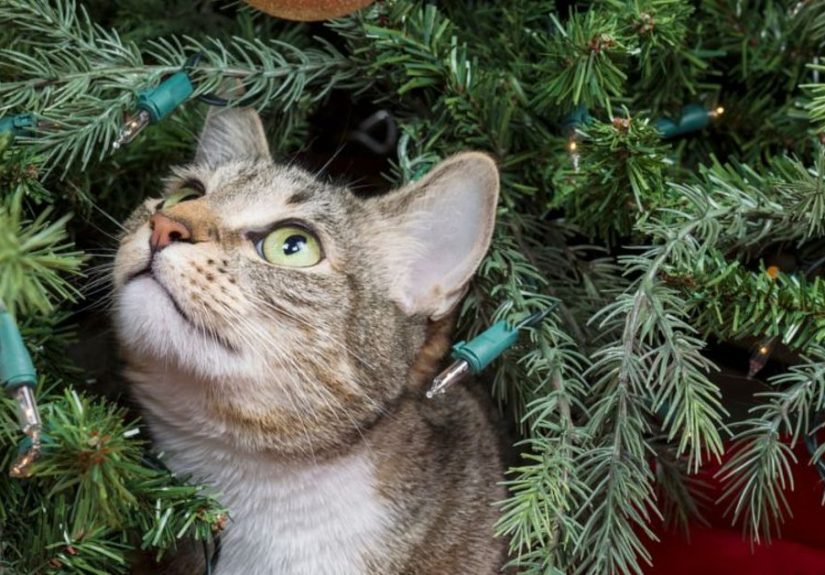
You do not need to decorate like a minimalist monk just because you have pets. You do, however, need to think like one. Cats climb. Dogs sniff and chew. Puppies steal. Kittens launch themselves toward shimmering objects with Olympic commitment.
Watch out for tinsel, ribbon, and string-like décor
Tinsel may look festive, but for pets, especially cats, it can be dangerously appealing. Ribbon, curling gift wrap, ornament strings, and bead garlands can also cause serious intestinal problems if swallowed. In plain English: if your pet likes string, do not hang string on the tree and act surprised when the emergency vet enters the chat.
Cover or block access to tree water
Tree water can collect bacteria, and some families add preservatives or other substances to it. That is not something pets or children should drink. Use a covered tree stand when possible or create a barrier so the base is not easy to access. This is one of those hazards many people forget until they catch a dog happily slurping from the stand like it is a holiday beverage station.
Be careful with sprays and flocking
Artificial snow, preservative sprays, fragrance products, and decorative treatments can be irritating if touched, inhaled, or licked. If you use them, choose carefully and keep treated branches out of reach. When in doubt, simpler is safer.
Kid-Proofing the Tree Without Starting a Tiny Rebellion
Children do not need a lecture every time they walk near the tree. They need a setup that supports safer behavior. A few thoughtful choices can lower risk without turning your living room into a no-fun zone.
Create a “yes zone” on the tree
Let kids help decorate the bottom portion with sturdy, child-safe ornaments. This gives them ownership while reducing the temptation to grab fragile pieces higher up. When children feel included, they are often less likely to treat the tree like forbidden treasure.
Move hazards upward
Place breakable ornaments, metal hooks, small decorations, ornament caps, and keepsakes on the top half of the tree. Keep batteries from light-up décor secured and out of reach. Small detachable parts can become choking hazards fast.
Do not use candles on or near the tree
This one is non-negotiable. Real candles and evergreen branches are not a charming old-fashioned combo. They are a terrible idea with good lighting. If you want the glow, use flameless candles and keep them placed where they cannot be knocked over by a child, pet, or one enthusiastic holiday dance move.
Holiday Plants and Food Hazards You Should Not Ignore
The tree is only part of the picture. Seasonal plants and treats also create problems. Holly and mistletoe are classic examples that should stay well out of reach. Poinsettias are often treated like villains, but they are generally associated with mild irritation rather than the dramatic poisoning myths people repeat every December. Still, “not usually deadly” is not the same as “great snack for the dog,” so keep all decorative plants away from curious mouths.
Then there is the food. Chocolate, sugar-free candy containing xylitol, alcohol, fatty table scraps, and baked goods left within reach can all be dangerous for pets. For children, small hard candies, ornament-shaped treats, and open bowls of nuts can also be choking concerns depending on age. During the holidays, adults often focus on the big meal and forget the coffee table full of hazards five inches off the ground.
Your Nightly Christmas Tree Safety Checklist
The safest families are not necessarily the fanciest or the strictest. They are the ones with repeatable routines. Before bed or before leaving home, do this quick check:
- Turn off and unplug tree lights and illuminated decorations.
- Check that no cords are exposed, pinched, or dangling.
- Make sure the tree stand is stable and the tree is upright.
- Remove any fallen ornaments, hooks, ribbon, or berries from the floor.
- Refill water for a real tree, then secure the base area again.
- Extinguish real candles anywhere in the room.
- Put holiday snacks, candy, and alcohol away.
- Do one final sweep at child and pet eye level. That is where the trouble usually lives.
This takes only a few minutes, but it prevents the kind of overnight accidents that turn a festive morning into a frantic one.
When the Tree Starts Looking Unsafe, Listen to It
Sometimes the answer is not more supervision. Sometimes the answer is that the setup is no longer working. If your tree is drying out fast, leaning, shedding excessively, shorting the lights, or becoming the centerpiece of daily pet parkour, it is okay to scale back. Remove the most tempting ornaments. Reposition the tree. Add a barrier. Or take it down early if it has become dry or unstable.
Holiday traditions are supposed to serve your family, not the other way around. A slightly simpler tree is still a Christmas tree. A safer home is still festive. Nobody wins an award for keeping up a risky setup just because it looked good in early December.
Conclusion
The best Christmas tree pet kids safety tips are not complicated, but they do require intention. Start with a stable tree in a smart location. Keep real trees watered. Use lights and cords carefully. Decorate the lower branches with safe materials. Keep breakables, hooks, plants, and edible treats out of reach. Skip tinsel. Cover the tree water. Turn everything off at night. And remember that the most effective holiday safety plan usually looks a lot like everyday common sense wearing a Santa hat.
A beautiful tree and a safe home can absolutely coexist. In fact, the most joyful holiday rooms are often the ones designed around real life: the dog that investigates everything, the toddler who wants to help, the cat who believes gravity is optional, and the adults who would very much like to enjoy the season without an urgent care visit. Build for that reality, and your tree can stay merry, bright, and upright.
Real-Life Experiences: What Families Often Learn the Hard Way
In real homes, Christmas tree safety lessons rarely arrive as dramatic movie moments. They usually show up as small, slightly ridiculous incidents that suddenly make every safety warning feel very wise. A parent hangs glass ornaments low because they look perfect there, then hears the unmistakable sound of one shattering before breakfast. A dog ignores the tree for three days, which gives everyone false confidence, then decides on day four that ribbon is apparently cuisine. A toddler who never cared about cords all year becomes deeply fascinated by the one glowing wire in the living room. Holiday chaos has a sense of timing.
One common experience among families with young children is discovering that “don’t touch” is not actually a decorating strategy. Kids are drawn to whatever sparkles, swings, lights up, or appears newly important to adults. Parents often find that the easiest solution is not endless correction but a smarter layout: soft ornaments on the bottom, treasured keepsakes on top, and a few child-friendly decorations that let little ones participate safely. Once kids have a role, the tree becomes less of a forbidden object and more of a shared tradition.
Pet owners tell a similar story. Many dogs are interested in the base of the tree first, especially if there is water, a tree skirt, or wrapped gifts underneath. Cats, meanwhile, often view the entire setup as a personal climbing structure designed by elves for their entertainment. Families who have lived through one toppled tree become fast believers in anchoring systems. It turns out “my cat has never done that before” is not the reassuring sentence people think it is in December.
Another frequent lesson involves cords and convenience. Plenty of people mean to tidy them later. Later is usually too late. The moment lights are plugged in and left dangling, they become visible, tempting, and easy to grab. Families who switch to cord covers, better routing, and a strict unplug-at-bedtime routine often say the house feels calmer almost immediately. Less clutter around the tree means fewer surprises on the floor and fewer opportunities for nibbling, tugging, or tripping.
Food also plays a bigger role than many expect. Guests set down chocolates, cookies, cocktails, or plates near the tree without thinking much about it. Then a dog samples something unsafe, or a child mistakes a decorative candy for an invitation. Experienced hosts learn to scan low surfaces the way airport security scans luggage: quickly, repeatedly, and with deep suspicion for anything festive and unattended.
What these experiences have in common is simple. Families do best when they design the holiday around how people and animals actually behave, not how they hope everyone will behave. The safest homes are not the ones with the most rules. They are the ones that quietly remove temptation, reduce hazards, and make the right choices easier. That is the real secret to a happier season. A safe Christmas tree does not feel less magical. It feels like the kind of magic that survives the month.