Table of Contents >> Show >> Hide
Few stories about toxic relationships have aged as well as
Les Liaisons Dangereuses and its many screen incarnations. Long before
we were subtweeting exes and doom-scrolling messy situationships, the Marquise
de Merteuil and the Vicomte de Valmont were weaponizing desire, reputation, and
gossip with terrifying precision. Today, the most famous version is the 1988
film Dangerous Liaisons, but it’s hardly the only one we’ve got
moody 18th-century drama, soapy modern teen updates, and even Korean and
Chinese retellings circling the same wicked little idea: seduction as a blood
sport.
In this guide to Dangerous Liaisons rankings and opinions,
we’ll break down the best adaptations, rank the most unforgettable characters,
and look at why critics and audiences are still arguing about this story
decades later. Consider this your spoiler-friendly, fan-level deep dive into
love, power, and very bad decisions made in excellent costumes.
Why “Dangerous Liaisons” Still Obsesses Us
The franchise began with Pierre Choderlos de Laclos’s 1782 epistolary novel
Les Liaisons Dangereuses, a scandalous collection of letters detailing
how two aristocratic ex-lovers entertain themselves by destroying other
people’s lives for fun and status. The core premise that people with power
will often treat love as a game and other humans as pawns is depressingly
timeless.
The 1988 film Dangerous Liaisons, directed by Stephen Frears and
written by Christopher Hampton, adapts both the novel and Hampton’s own
stage play. It’s set in pre-revolutionary France and stars Glenn Close as the
Marquise de Merteuil, John Malkovich as the Vicomte de Valmont, and Michelle
Pfeiffer as the virtuous Madame de Tourvel, with Uma Thurman and Keanu Reeves
as younger victims pulled into their schemes. The movie was a critical hit,
scoring a 94% approval rating on Rotten Tomatoes and winning three Academy
Awards for Best Adapted Screenplay, Best Costume Design, and Best Production
Design. It was also nominated for Best Picture and acting Oscars for Close and
Pfeiffer, cementing its prestige status.
Critics praised its sharp dialogue, the icy elegance of its leads, and its
lavish yet psychologically precise look at aristocratic rot. The costumes are
still held up as some of the best 18th-century work ever put on screen, and
the film’s chilly emotional arc a seducer undone by genuine feeling gives
it a tragic backbone rather than mere soapiness.
Ranked: The Best Dangerous Liaisons Adaptations
Because this story has been adapted so many times, fans have naturally started
ranking their favorites. While lists vary, a rough consensus emerges from
film polls, critic essays, and fan debates: the 1988 film is widely seen as
the definitive version, followed closely by the modern teen remix
Cruel Intentions, with several other adaptations filling out the
long tail.
#1. Dangerous Liaisons (1988): The Gold Standard
If you ask critics and cinephiles which adaptation to watch first, they almost
always point to the 1988 film. It routinely lands at the top of “best
adaptation” lists, and even fan polls ranking all versions of
Les Liaisons Dangereuses tend to put it in first place.
Why the dominance? For starters, it’s ruthlessly well-made. The screenplay
keeps the novel’s game-of-chess structure but trims it into a tight, two-hour
emotional trap. Glenn Close’s Merteuil is one of the great villain
performances: she’s poised, witty, and terrifyingly self-aware, turning each
scene into a masterclass in weaponized charm. John Malkovich’s Valmont is
divisive some critics think his modern, offbeat energy clashes with the
period setting, while others love the sense that he’s a predator who knows
exactly how clever he is. Either way, the dynamic between them is electric.
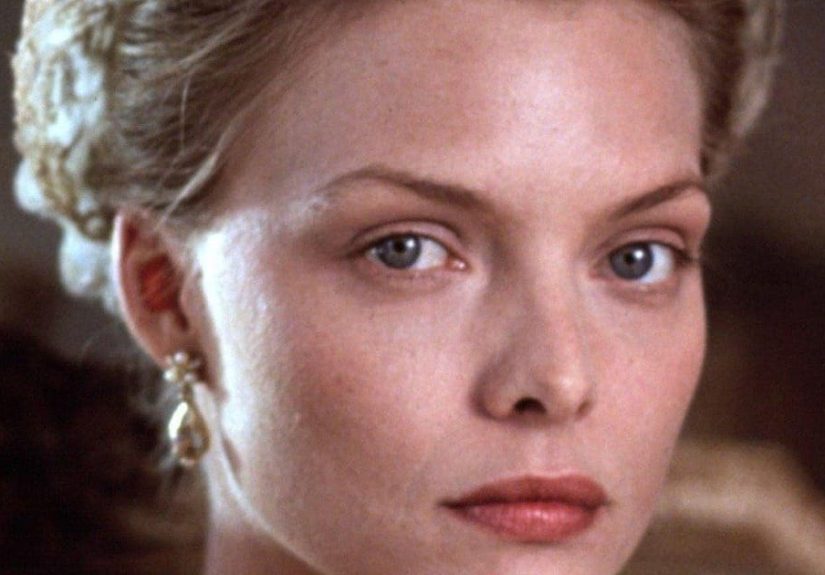
Michelle Pfeiffer’s Madame de Tourvel, meanwhile, is the film’s emotional
anchor. Her arc from cautious reserve to shattering heartbreak is what gives
the story its enduring sting. Even viewers who enjoy the scheming often leave
the film feeling oddly protective of her, which is exactly the point.
Add in George Fenton’s baroque-influenced score, meticulous production design,
and costumes that look like they fell out of a museum in the best way, and
it’s hard to argue against this version as the high watermark.
#2. Cruel Intentions (1999): The Teen-Dirtbag Masterpiece
On paper, transplanting 18th-century French aristocrats to privileged New York
prep-school kids sounds like a joke. On screen,
Cruel Intentions ends up being a shockingly effective remix of the
same story. It replaces letters with diaries and bets, swaps powdered wigs
for school uniforms, and lets late-’90s pop tracks do some of the emotional
heavy lifting.
For a whole generation of viewers, Cruel Intentions was their first
exposure to the core plot of Dangerous Liaisons and many still rank
it above more faithful period versions. The film leans into its teen-drama
vibe, but the bones are the same: Kathryn (Sarah Michelle Gellar) is a
Merteuil figure, Sebastian (Ryan Phillippe) is the Valmont stand-in, and
Annette (Reese Witherspoon) plays the Tourvel role, the “good” person
everyone underestimates.
Critics have pointed out that the movie streamlines the politics but keeps the
central idea of social power being used to manipulate sex and reputation. It’s
less philosophical, more MTV but still surprisingly faithful in terms of
character dynamics and the way Sebastian’s real feelings become his undoing.
#3. Valmont (1989): The Overlooked Cousin
Miloš Forman’s Valmont had the bad luck of being released just a
year after Frears’s Dangerous Liaisons, which meant the market was
already saturated with powdered seducers. Adapted directly from the novel, it
has a lighter, more romantic tone and emphasizes different aspects of the
story, often giving characters like Cécile and Danceny more space to breathe.
While it rarely tops rankings, Valmont shows up consistently in the
second or third slot on fan lists and polls. Viewers who find the 1988 film
too icy sometimes prefer its warmer, more humanistic approach. Think of it as
the “what if this story had 20% more heart and 20% fewer razor-sharp
monologues?” version.
#4. Other Notable Takes: Global Scheming
Beyond the big three, there are several noteworthy adaptations that pop up in
rankings and fan discussions:
-
A 1959 French film, often appreciated by purists for its closer proximity to
the original language and setting. -
The 2003 Korean film Untold Scandal, which shifts the action to
18th-century Korea and reframes the story through local cultural norms while
keeping the central plot intact. -
The 2012 Chinese film Dangerous Liaisons, which relocates the
manipulation to 1930s Shanghai, making the social stakes more about
modernizing elites and shifting political winds than powdered courtiers.
These versions rarely top English-language rankings, but they demonstrate just
how adaptable the underlying story is. Wherever you have hierarchy, social
currency, and people with too much time and resentment on their hands, you
can insert a Merteuil-and-Valmont duo and let chaos ensue.
Ranking the Most Fascinating Characters
Part of what makes Dangerous Liaisons so rewatchable is that your
sympathies can shift over time. On a first viewing, the schemers might seem
thrilling; on a second, they look pathetic; on a third, you start noticing how
the so-called innocents participate in the same toxic ecosystem. Here’s a
character ranking based largely on how memorably they’re portrayed in the 1988
film and its most famous modern adaptation.
1. Marquise de Merteuil – The Architect of Chaos
In almost every ranking and critical essay, the Marquise sits at the top.
Glenn Close’s portrayal in the 1988 film is chillingly controlled: she’s
hypersmart, obsessively self-made within a rigid social system, and utterly
unwilling to let men dictate the terms of her life. Instead, she flips the
script and becomes the one pulling the strings.
What keeps Merteuil from being a simple villain is that we can see exactly
how she became this way. The society she lives in leaves her with very few
avenues for genuine power, so she weaponizes the ones available sex,
gossip, and social performance. Glenn Close’s iconic final scene, silently
stripping off the armor of cosmetics while the opera thunders, remains one of
the most haunting images in the genre.
2. Vicomte de Valmont – The Seducer Who Accidentally Catches Feelings
Valmont is the classic rake who finally meets someone he can’t treat as a
game. John Malkovich’s take is divisive; some viewers prefer more conventionally
charming versions of the role, while others love his oddly modern, reptilian
presence. Either way, his arc from bored manipulator to self-destructive
lover is the fulcrum of the story.
He’s ranked just below Merteuil because, in most versions, he lacks her
long-term vision. He’s brilliant at tactics, terrible at strategy. Merteuil
understands systems; Valmont is just trying to win each individual round,
which is why he ends up outplayed.
3. Madame de Tourvel – The Heart of the Story
Madame de Tourvel often ranks high in audience affection, even when she’s not
the flashiest character. Pfeiffer’s performance in the 1988 film earned
rave reviews and award recognition for a reason: she makes Tourvel’s piety
feel like sincere moral courage rather than naive prudishness.
When Valmont genuinely falls in love with her, the story’s tone shifts. What
was a clever game suddenly has real emotional stakes and the cruelty of
Merteuil’s revenge lands much harder. Without Tourvel’s vulnerability and
integrity, the whole thing would just be mean-spirited entertainment. With
her, it becomes tragedy.
4. Cécile and Danceny – The Collateral Damage
In both the period films and Cruel Intentions, the younger couple
represents the collateral damage of elite games. They’re not perfect often
naive, sometimes shallow but they are clearly outmatched. Uma Thurman’s
Cécile in the 1988 film is heartbreaking precisely because she thinks she’s
playing a flirtation game when she’s actually walked into a psychological
buzzsaw.
Rankings that emphasize moral horror often place Cécile and Danceny high on
the “most tragic” list. They’re the ones the story is implicitly warning us
about: the people whose lives are permanently altered by someone else’s
boredom.
Critics vs. Fans: Where Opinions Clash
One reason Dangerous Liaisons is so much fun to argue about is that
critics and fans don’t always agree. Critics tend to focus on the 1988 film’s
craftsmanship the script, the performances, the production design and its
place in the prestige cinema canon. Fans, especially those who grew up in the
’90s and 2000s, often have deep nostalgic attachment to
Cruel Intentions and rank it higher emotionally, even if they admit
the original period film is “better” on paper.
There’s also long-running debate about Malkovich’s casting. Some reviewers at
the time argued that his offbeat, modern presence undercut the romantic
seducer image, while others felt that his cold, slightly alien energy made the
character more unsettling and more believable as a predator. Modern reappraisals
often land on the side of “it works,” especially as audiences become more
attuned to charm as a tool and not always a virtue.
Costumes and design, however, are almost universally praised. Historical
fashion writers and film historians still cite the 1988 film as a benchmark
for 18th-century costuming on screen, both for accuracy and for how the
clothes reinforce character psychology Merteuil’s polished armor, Valmont’s
peacock display, Tourvel’s soft, modest lines.
Where to Start if You’re New to Dangerous Liaisons
If you’re just wandering into this world of scheming exes and emotional
drive-bys, here’s a practical watch/read order:
-
Start with the 1988 film. It’s the clearest, most elegantly
executed version and gives you the baseline characters and themes. -
Then watch Cruel Intentions. You’ll enjoy spotting
the ways the story has been translated into late-’90s prep-school culture:
the bet, the diaries, the reputational warfare via rumor. -
Sample another adaptation. Try Valmont if you want
a softer tone, or an Asian adaptation if you’re curious how the themes look
in a different cultural context. -
Circle back to the novel or a stage version. The original
epistolary structure is fascinating once you know the broad strokes of the
story you can see how much of the horror lies in what characters choose
to write (or not write) to each other.
By that point, you’ll probably have your own personal ranking and you’ll be
fully equipped to argue with strangers on the internet about whether Glenn
Close’s Merteuil or Sarah Michelle Gellar’s Kathryn is the superior agent of
chaos.
Personal Experience: Living With Dangerous Liaisons in Your Head
Spend enough time with Dangerous Liaisons in all its forms, and you
start doing something dangerous yourself: you begin to spot Merteuils and
Valmonts in real life. Not in the sense of people wearing elaborate wigs and
writing letters on parchment, but in the way social circles, workplaces, and
online communities can reward the same cold-blooded calculation.
One of the most striking “experiences” many viewers report after watching
these adaptations is a kind of delayed moral whiplash. The first time through,
you might find yourself charmed by the intelligence of the schemers. Their
lines are sharp, their plans clever, their emotional distance weirdly
seductive. But on a rewatch especially if you’re older, have lived through
a few messy relationships, or have watched friends get hurt by slow-burn
manipulation you notice different things. The jokes feel harsher. The games
feel less like witty sport and more like cruelty on a time delay.
Another common experience is realizing how often you’ve seen watered-down
versions of this story in modern media without realizing it. Once you know
the template, Dangerous Liaisons rankings and opinions become a kind
of lens: suddenly, that streaming drama about rich kids ruining each other
with secrets looks like a casual remix; that office melodrama about career
sabotage feels like it could be relocated to 18th-century salons without
changing a single line of dialogue. The setting changes, the technology
changes, but the structure of power plus boredom plus resentment remains
eerily familiar.
There’s also the unavoidable experience of picking “your” version. For some
viewers, the 1988 film becomes the forever favorite the one they revisit
every few years, quoting Merteuil’s lines under their breath whenever they
see petty power plays at parties. For others, especially those who first met
the story through Cruel Intentions, the teen version sits at the top
of their personal rankings no matter how many critics insist the period film
is superior. Nostalgia, soundtrack, and timing all matter as much as camera
angles and award counts.
On a more reflective note, sitting with these stories over time can make you
more alert to the difference between wit and kindness. Dangerous
Liaisons is packed with brilliant dialogue and strategic brilliance, but
it’s also a cautionary tale about what happens when you treat emotional
intelligence as a weapon rather than a bridge. The older you get, the more
you might find your rankings shifting: fewer points for cutting put-downs,
more respect for characters like Tourvel who refuse to play the game at all.
Ultimately, the most valuable experience the story offers isn’t the thrill of
watching perfectly executed schemes. It’s the quiet, unsettling feeling that
maybe the real power move isn’t winning the game, but refusing to turn people
into pieces in the first place. You can still enjoy the gorgeous costumes,
the deliciously evil speeches, and the endlessly debatable
Dangerous Liaisons rankings and opinions but you might
also walk away with a sharper radar for manipulation in your own life. And
that, in its own way, is the most dangerous liaison of all: the one between
art and the way you decide to live after the credits roll.