Table of Contents >> Show >> Hide
- Why Riley and Val Sparked So Much LGBTQ+ Speculation
- Why the Word “Queerbaiting” Became Central to the Debate
- The Counterargument: Not Every Intense Girl Friendship Is Romantic
- What Inside Out 2 Actually Gets Right About Identity
- Why “Subtext” No Longer Feels Like Enough
- Experience Matters: Why This Debate Feels So Personal to Viewers
- Final Take: The Debate Says as Much About Hollywood as It Does About Riley
- SEO Tags
Note: Publish-ready HTML body only, written in standard American English and cleaned of unwanted reference artifacts for web publishing.
For a movie about emotions, Inside Out 2 sure managed to create a few outside the theater too. Excitement? Absolutely. Nostalgia? Naturally. Anxiety? The film has that covered. But one of the loudest reactions swirling around Riley’s return involved something Pixar never stated outright: whether the sequel was quietly hinting at an LGBTQ+ storyline, then backing away before it had to say the quiet part out loud.
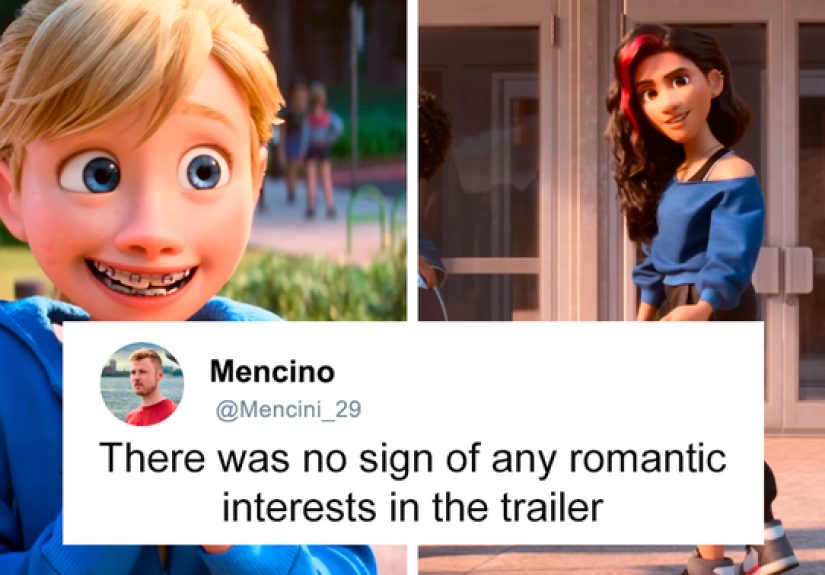
That debate did not come out of thin air. Fans watched Riley meet hockey star Val Ortiz with the kind of dazed, awkward intensity that made half the internet go, “Oh, that’s a crush,” while the other half went, “Or maybe she just wants to be cool.” Then later reporting about alleged behind-the-scenes efforts to make Riley seem “less gay” poured gasoline on an already blazing conversation. Suddenly, what might have stayed a fan theory turned into a much bigger cultural fight about queer subtext, studio caution, and whether family films still think implication is enough in 2026.
And that is why this conversation hit so hard. Inside Out 2 is not some tiny indie drama floating under the radar. It is one of the biggest animated releases in recent memory, a massive box office success, and a movie built around a 13-year-old girl figuring out who she is. Put all that together, add a visibly intense new friendship with an older girl, and the internet was never going to respond with a calm, measured shrug. It was always going to become a discourse hurricane in skates.
Why Riley and Val Sparked So Much LGBTQ+ Speculation
The most obvious reason is also the simplest: the movie gives viewers a lot of familiar visual and emotional cues. Riley does not react to Val like she is meeting a random teammate. She reacts like she has been hit by a cinematic truck full of admiration, nerves, and “please do not let me say something embarrassing.” In the official screenplay, Riley is literally overwhelmed when Val reaches out to help her up, awkwardly lets go of Val’s hand, and becomes visibly flustered during their first exchange. Later scenes keep leaning into Riley’s desperate wish for Val to like her, to invite her in, and to see her as special.
Now, to be fair, adolescent hero worship is real. So is social panic. So is the universal teen condition known as “I would like one cool older person to validate my existence immediately.” Inside Out 2 is a movie about identity, peer pressure, and the emotional chaos of trying to fit in. Riley wanting Val’s approval works perfectly well within that framework.
But this is where the debate gets interesting: many queer viewers recognized something more specific in Riley’s body language and emotional intensity. It was not just that she admired Val. It was the flavor of the admiration. The awkwardness. The fixation. The way the film lights up Riley’s world whenever Val enters it. The way Riley neglects her old friends while chasing connection with this one older, impressive girl. For viewers who remember what a first same-gender crush felt like before they had language for it, those scenes rang very loud bells.
The trailer already had fans connecting the dots
Long before the full movie arrived, the trailer had already kicked off speculation. Riley’s starstruck look, her new-school awkwardness, and the sequel’s whole puberty-era premise made people wonder whether Pixar might finally be heading toward openly queer coming-of-age territory. That reaction was not random fan fiction invented in a vacuum. It came from what was on the screen. Audiences saw a familiar setup and did what audiences always do: they interpreted it through their own experiences.
That is an important point, because the debate is not just about what Pixar “meant.” It is about what the film communicates. Movies are not math equations where only the creator’s answer counts. If a large chunk of viewers read a scene as coded attraction, that reading matters, especially when the story deals with identity, secrecy, belonging, and the social terror of adolescence.
The movie keeps things suggestive, not explicit
And here is the heart of the frustration: Inside Out 2 never actually confirms anything. Riley is not explicitly written as queer. She is not given a romantic arc with Val. The film stays in that maddeningly familiar gray zone where everything feels loaded, but nothing is stated. That is exactly why accusations of queerbaiting caught fire. People were not arguing over a confirmed storyline. They were arguing over a storyline that seemed possible, emotionally legible, and then carefully fenced off.
In other words, viewers were not yelling because Pixar made Riley openly gay. They were yelling because Pixar seemed to flirt with the possibility and then stop at the edge of commitment, like a studio executive who loves risk right up until risk starts costing money.
Why the Word “Queerbaiting” Became Central to the Debate
Queerbaiting is one of those terms that gets thrown around online so often that it can start to lose shape. At its core, though, the idea is pretty straightforward: a movie, show, or marketing campaign hints at queer themes strongly enough to attract queer audiences and allies, but stops short of making the representation explicit. The promise is there. The payoff is not.
That is why the word kept resurfacing around Inside Out 2. For some viewers, the Riley-Val dynamic felt like exactly that kind of tease. Not a confirmed romance. Not a canon coming-out arc. Just enough emotional texture to generate buzz, essays, fan edits, and hopeful speculation, while still remaining vague enough for the studio to deny that anything specific was ever intended.
Then the conversation got even hotter after reporting circulated that former Pixar employees had alleged repeated notes to make Riley come across as “less gay,” and to make her dynamic with Val feel as platonic as possible. If true, that reporting did not just intensify fan disappointment. It changed the meaning of the whole conversation. Suddenly, the subtext was not merely accidental or audience-driven. It looked, at least to critics, like something the film may have contained in earlier stages and then deliberately softened.
That distinction matters. Fans can accept ambiguity when ambiguity feels artistically honest. They get angrier when ambiguity looks engineered. If viewers believe a studio saw queer possibility, panicked, and pulled back, the result feels less like nuance and more like retreat.
Disney and Pixar were already carrying baggage into this conversation
The reason this story exploded so quickly is that Disney and Pixar did not enter it with a spotless reputation. The broader company has spent years getting criticized from opposite directions at the same time: some audiences accuse it of being too “woke,” while others say it keeps teasing inclusive progress without following through in a meaningful way. That contradiction is basically the Disney brand of modern culture-war chaos.
Pixar, in particular, has had a complicated recent history with LGBTQ+ representation. The same-sex kiss in Lightyear became a flashpoint. Later controversies involving animated projects and representation choices only deepened the sense that queer inclusion inside the company can still feel tentative, negotiable, and vulnerable to nervous corporate recalculation. So when the Riley debate surfaced, many people did not view it as one isolated case. They saw a pattern.
That is why the backlash was so emotionally charged. It was not just about Riley. Riley became the latest symbol in a much older argument: why do major family studios still seem comfortable with queer possibility, but uncomfortable with queer clarity?
The Counterargument: Not Every Intense Girl Friendship Is Romantic
To be fair, the other side of the debate is not ridiculous. Plenty of viewers pushed back on the queerbaiting label and argued that the film is really about social ambition, identity panic, and the painful urge to reinvent yourself in front of the “right” crowd. Riley’s obsession with Val, in this reading, is about approval and aspiration, not desire. She wants Val’s life, Val’s confidence, Val’s place in the hockey hierarchy, and maybe Val’s effortless cool. That does not automatically equal a crush.
This argument also points out something worth remembering: adolescence is messy before labels ever show up. A 13-year-old can feel admiration, envy, longing, insecurity, and attraction in one giant emotional smoothie, and even she may not know what is going on. In that sense, Inside Out 2 arguably captures something true by keeping Riley’s feelings scrambled rather than neatly defined.
There is also a broader cultural caution here. Some viewers worry that reading every emotionally intense same-gender bond as romantic can flatten the complexity of friendship. Girls are allowed to be fascinated by other girls without every glance turning into a relationship forecast. That is a fair point. But it does not erase the equally fair point coming from queer viewers who saw a familiar pattern and felt dismissed for noticing it.
The strongest version of the counterargument is not “You are wrong to read Riley as queer.” It is “The film leaves enough ambiguity that multiple readings are possible.” And honestly, that is true. The trouble is that ambiguity can feel artistic to one audience and evasive to another. That is why this debate has lasted so long.
What Inside Out 2 Actually Gets Right About Identity
Even amid the controversy, the movie does a lot well. In fact, part of the reason the queer reading landed so strongly is that Inside Out 2 is excellent at dramatizing identity formation. Riley is not just nervous. She is actively building a new version of herself under pressure. The movie turns that process into a visible system of beliefs, anxieties, and self-protective emotional habits, which is exactly what makes it resonate far beyond the hockey camp plot.
That emotional architecture is powerful because it mirrors how many teenagers actually experience change. You do not always become a “new you” through one dramatic revelation. Sometimes you become a new you by slowly absorbing what gets you approval, what gets you excluded, what makes you feel safe, and what makes you feel seen. The sequel understands that deeply.
That is also why questions about Riley’s possible queerness feel so narratively natural rather than bolted on. The film is already about hidden feelings, self-editing, social performance, and the fear that your real self might cost you belonging. Those are not exclusively queer themes, of course, but they are extremely recognizable queer themes. The overlap is impossible to ignore.
So yes, the movie works as a general story about growing up. But it also leaves a lot of space for LGBTQ+ viewers to see themselves in Riley’s confusion. That double function is part of the film’s strength and part of the reason the studio gets criticized for not going one step further.
Why “Subtext” No Longer Feels Like Enough
There was a time when queer audiences were trained to survive on crumbs. A coded glance here. A “close friendship” there. A villain with suspiciously stylish energy. Pop culture practically ran on implication. Fans learned to read between the lines because the lines themselves were never going to help.
But the standards have changed. Or at least, the audience expects them to. Viewers in 2026 are less interested in congratulating giant studios for maybe, sort of, potentially implying queerness if you squint. They want actual characters, actual choices, and actual clarity. Not because every story must become a romance, but because representation that only exists in plausible deniability starts to feel exhausting.
That exhaustion is really what the phrase “enough queerbaiting” captures. It is not just a complaint about one movie. It is burnout. It is viewers saying they are tired of doing all the interpretive labor while billion-dollar companies collect praise for bravery they never fully displayed.
And to be blunt, that frustration makes sense. Inside Out 2 proved that audiences will show up in massive numbers for a movie about a girl going through puberty, anxiety, and emotional change. The sky did not fall. The box office certainly did not panic. So for many critics, the lingering question is obvious: if a studio is willing to tell a sophisticated story about identity, why is queer identity still treated like the extra-scary setting on the control panel?
Experience Matters: Why This Debate Feels So Personal to Viewers
One reason the Riley conversation refuses to die is that it touches a nerve beyond movie criticism. For many people, especially queer viewers, it maps onto very real emotional experiences from adolescence. Not the big cinematic version where violins swell and everyone suddenly understands themselves in one perfect moment. The smaller, more awkward version. The version where you do not know whether you want to be someone, be near someone, or be liked by someone so badly it makes your brain short-circuit.
That confusion is incredibly common. Plenty of people look back on middle school or early high school and realize their “I just think she’s really cool” phase was doing a lot of heavy lifting. Sometimes it was admiration. Sometimes it was envy. Sometimes it was attraction wearing a fake mustache. Sometimes it was all three at once, which is very inconvenient but also very teenage.
That is why Riley’s scenes with Val landed so hard. They feel familiar in a way that is hard to explain unless you have lived it. The stomach-drop when the person you are hyper-aware of suddenly talks to you. The weird effort to act casual while your inner monologue becomes an emergency broadcast system. The way one person’s attention can temporarily rearrange your entire sense of self. That is not exclusively a queer experience, but it is absolutely one many queer viewers recognized on sight.
There is also the matter of secrecy. Inside Out 2 is obsessed with what Riley hides, what she edits, and what she buries in order to become acceptable. Again, that is universal in one sense. Every teenager performs a version of themselves socially. But for queer viewers, that emotional choreography can hit differently. A lot of people grow up learning to monitor gestures, crushes, jokes, reactions, and even the direction of their attention before they can articulate why. They become editors of themselves long before they become authors.
So when a film presents a main character who is visibly overwhelmed by another girl, terrified of not fitting in, and quietly reorganizing herself around social survival, queer audiences do not need the movie to issue a press release for the resonance to kick in. They feel it immediately. They remember things. They bring their own history into the theater. That is not overreading. That is how art works.
The frustration begins when those viewers feel like they are invited to recognize themselves, but not welcomed enough to be acknowledged. That is the emotional difference between subtext that feels generous and subtext that feels withholding. One says, “We see you.” The other says, “We see that you see it, but we are not saying it out loud.” And yes, those feel very different.
This is also why some straight viewers are surprised by the intensity of the reaction. To them, the film may simply look like a smart story about anxiety and hockey politics. But to others, it brushes up against years of learned pattern recognition. Years of decoding movies that hinted instead of declared. Years of being told they were imagining something, only for later interviews, scripts, or production notes to confirm there was more going on behind the curtain. After enough rounds of that, audiences become very sensitive to the difference between accidental ambiguity and corporate caution.
That does not mean every viewer must agree Riley is queer. It means the emotional charge around the debate is real, rooted, and earned. People are not reacting this strongly because they are bored. They are reacting because stories about becoming yourself matter, and because representation in major family animation still feels like a threshold Hollywood keeps approaching without fully crossing.
Final Take: The Debate Says as Much About Hollywood as It Does About Riley
At the end of the day, Inside Out 2 remains a sharp, emotionally intelligent sequel about adolescence, anxiety, friendship, and the messy construction of identity. But it also became something else: a mirror reflecting how audiences now talk about queer representation in mainstream family entertainment.
Some viewers see Riley and Val and think the movie contains obvious queer subtext. Others see a story about belonging and self-conscious hero worship. Both readings can coexist. The real reason the debate got so heated is that people are tired of studios relying on that coexistence as a shield. Ambiguity can be beautiful. It can also be convenient.
And that is the real cultural sticking point. Inside Out 2 opened the door to a conversation Hollywood has been tiptoeing around for years: if audiences are ready for emotionally rich stories about identity, then maybe they are also ready for those stories to stop whispering around queer possibility and start speaking plainly. Until that happens, every intense stare, every maybe-crush, and every suspiciously cautious studio decision will keep launching another round of debate. Honestly, at this point, the internet has its skates on and is warmed up.
SEO Tags
Research note: This article synthesizes current reporting, reviews, and film materials from major U.S. sources including Disney, Reuters, AP, TIME, RogerEbert.com, Teen Vogue, Forbes, Them, TheWrap, Rotten Tomatoes, Box Office Mojo, and the official screenplay.