Table of Contents >> Show >> Hide
- Europa 101: A Small Moon With a Very Big Secret
- What Would “Plate Tectonics” Look Like on an Icy Moon?
- The Evidence: Europa’s Surface Keeps Acting Like It Has a Recycling Program
- So… What Could Be Driving Plate Motion on Europa?
- Why Scientists Care So Much: Tectonics Could Feed the Ocean
- A Second Route to the Ocean: “Sinking Ice” as a Chemical Elevator
- How the Europa Clipper Mission Can Test the Tectonics Hypothesis
- Healthy Skepticism: The Case Isn’t Closed (Because It’s Science)
- Bottom Line: If Europa Recycles Its Ice, It Recycles Opportunity
- Experience: Field Notes From an Imaginary Day on Europa (500-ish Words)
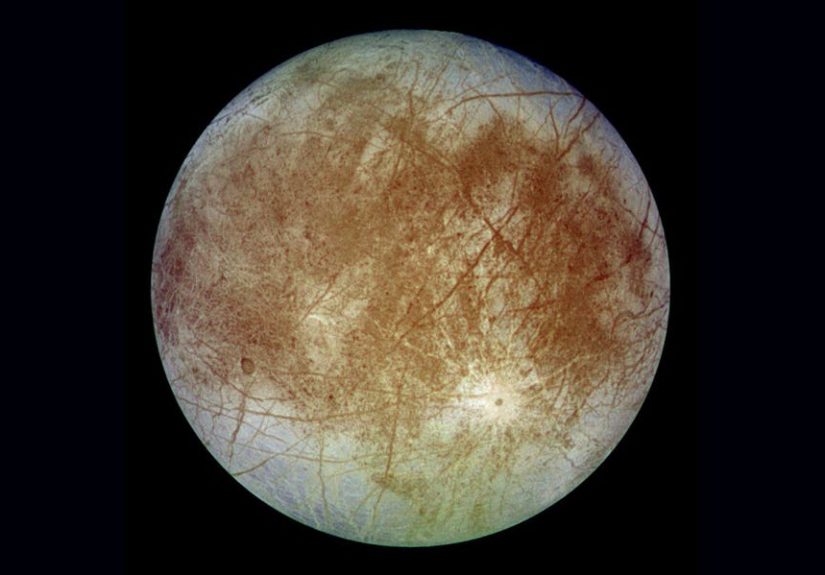
If you’ve ever looked at a photo of Jupiter’s moon Europa and thought, “Wow, that place looks like a frozen stress ball,” congratulations:
you are scientifically aligned with the last few decades of planetary geology. Europa’s surface is crisscrossed with long ridges, broken plates of ice,
and weird “band” features that look like the moon got into a fight with a giant box cutter and lost.
Now the plot thickens (and so might the ice): a growing stack of research suggests Europa may not just be crackedit may be tectonically active.
In other words, Europa’s ice shell could be doing a chilly remix of Earth’s plate tectonics, complete with spreading zones and subduction-like recycling.
That’s a big deal for one reason that makes astrobiologists do the human equivalent of tail-wagging: recycling can move chemicals, energy, and nutrients
between the surface and the ocean belowexactly the kind of planetary plumbing life tends to appreciate.
Europa 101: A Small Moon With a Very Big Secret
Europa is one of Jupiter’s large moons, slightly smaller than Earth’s Moon, and it’s famous for what it hides: strong evidence points to a global,
salty liquid-water ocean beneath its icy crust. The ocean may contain more water than all Earth’s oceans combined. That ocean, plus chemical ingredients
on the surface and internal heat from tidal flexing, makes Europa a top-tier candidate in the “where might life exist beyond Earth?” conversation.
But here’s the catch: an ocean under ice is like a pantry behind a locked door. You can stock it with interesting chemistry, but you still need a way
to move ingredients around. On Earth, plate tectonics helps cycle materials between surface, mantle, and oceans. On Europa, the “rocks” are mostly ice
but the principle of recycling can still apply.
What Would “Plate Tectonics” Look Like on an Icy Moon?
Earth’s plate tectonics is powered by heat inside the planet, making rigid plates move atop a softer layer. Plates spread at mid-ocean ridges, and
they sink back down at subduction zones. Europa can’t copy-paste Earth’s system (no granite continents, no mantle convection doing the same job),
but it can approximate the key behaviors:
- Spreading: the surface pulls apart, creating new “crust” (fresh ice) in the gap.
- Convergence and recycling: older surface ice is forced downward into warmer ice below (subduction-like behavior).
- Shear motion: blocks slide sideways along faults, similar to transform boundaries.
Earth’s Plates Are Rock. Europa’s Plates Are Ice. Still Counts (Sort Of).
If you’re thinking, “Ice plates can’t behave like rock plates,” you’re rightice is weaker, temperature-sensitive, and can flow more easily.
But that actually helps Europa’s case. In the right temperature range, ice can act rigid near the surface and softer below, giving you the
classic “brittle lid over ductile layer” setup tectonics loves.
Also, Europa gets repeatedly flexed by Jupiter’s gravity. Think of it like bending a plastic ruler back and forth. Do it enough times,
and stress builds, cracks form, and the surface starts rearranging itself. It’s not gentle, but geology rarely is.
The Evidence: Europa’s Surface Keeps Acting Like It Has a Recycling Program
The tectonics story on Europa didn’t appear overnight. It’s been built from spacecraft images, mapping of surface features, and mechanical modeling.
Here are the biggest clues.
Clue #1: Spreading Bands That Look Like Icy Mid-Ocean Ridges
Europa has long, bright “bands” where the crust appears to have pulled apart and refrozen, forming new surface ice. These can resemble the way
new crust forms at Earth’s mid-ocean ridgesexcept Europa’s version may involve warm ice or slushy water-ice mixtures rising up and refreezing.
Spreading alone is interesting. But spreading creates a bookkeeping problem:
if new surface is being made, where does old surface go?
Clue #2: “Missing” Crust and Boundaries That Hint at Subduction
In a landmark analysis of Europa imagery, researchers reconstructed how some surface blocks used to fit together and found an awkward result:
after lining up the surrounding features, there seemed to be a region of crust that was simply gonelike someone tore out a strip of Europa
and forgot to put it back. One explanation is that it didn’t vanish; it went down, forced beneath neighboring ice along a low-relief
boundary. That’s essentially subduction, Europa-style.
This matters because subduction-like recycling is the hallmark of a tectonically active shell. It’s the difference between “a cracked ice rink”
and “a planet-like system that constantly renews itself.”
Clue #3: Models Say Subduction Can Work Under Realistic Europan Conditions
Observations are only half the battle. The other half is physics: can Europa’s ice actually sink like a plate?
Modeling work tied to Jupiter’s tidal forcing suggests that subduction-like behavior is feasible under plausible conditionsespecially if parts of the
ice shell are relatively thin, warm beneath the surface, and mechanically weakened by fractures, brines, or repeated tidal stress.
One recent modeling approach emphasizes that Europa’s “tectonics” may be episodicswitching on during periods when orbital conditions
enhance tidal heating, then relaxing into quieter stretches. That kind of stop-and-go geology is still geology, and it could explain why the surface
looks both young and complex without demanding Earth-level tectonic speeds everywhere, all the time.
So… What Could Be Driving Plate Motion on Europa?
Europa has three main “engines” that could make the ice shell behave like a tectonic system:
1) Tidal Flexing: Jupiter as a Giant, Invisible Hand
Europa’s slightly stretched orbit means Jupiter’s gravity squeezes and relaxes the moon as it moves along its path. That repeated deformation generates heat
and creates stress fields that can fracture and mobilize the surface. If you need a cosmic reason why Europa can’t just sit still and be normal,
blame Jupiter.
2) Temperature Gradients: A Brittle Lid Over Softer Ice
Near the surface, the ice is cold, rigid, and brittleeasy to crack. Deeper down, the ice is warmer and can flow more easily.
That layering is ideal for a plate-like lid that can move, detach, and potentially be recycled into the interior.
3) Salts and Brines: Nature’s “Loosen This Bolt” Fluid
Europa’s surface chemistry includes salts, and radiation can alter surface materials over time. Salty or impurity-rich ice can be weaker and denser than
pure ice. That can help certain patches sink or deform, creating pathways for downward transporteven if the motion isn’t a perfect Earth analog.
Why Scientists Care So Much: Tectonics Could Feed the Ocean
The most exciting implication of icy plate tectonics isn’t that Europa is trying to cosplay as Earth. It’s that recycling could connect two environments:
the radiation-processed surface and the ocean below.
Jupiter’s radiation constantly bombards Europa’s surface ice, breaking apart water molecules and creating oxidants (oxygen-bearing compounds).
Measurements indicate Europa produces oxygen at a rate far lower than some older estimatesbut still substantial. If even a fraction of that oxidizing
chemistry is delivered into the ocean, it could provide chemical energy that hypothetical microbes could use (the way some Earth organisms use chemical
gradients instead of sunlight).
On Earth, tectonics and hydrothermal activity at the seafloor are major engines for chemical energy. On Europa, the story may be more complicated:
recent work suggests Europa’s seafloor might be relatively quiet today, with little active faultingpotentially limiting hydrothermal
activity. But here’s the twist: even if the rocky seafloor isn’t putting on a volcanic fireworks show, the ice shell could still be
a powerful conveyor belt for surface chemicals.
A Second Route to the Ocean: “Sinking Ice” as a Chemical Elevator
Plate tectonics isn’t the only way to move material downward. Newer research highlights a mechanism that sounds like something your freezer does when
nobody’s watching: salt-rich surface ice may slowly sink.
The idea is simple and kind of elegant. Salty, impurity-laden ice can become denser and mechanically weaker than the cleaner ice around it.
Over time, it can detach and “founder” downwardmore like a slow drip than a dramatic plungepotentially reaching the ocean on timescales as short as
tens of thousands of years under favorable conditions. That’s geologically quick. It also means Europa might deliver oxidants and nutrients to the ocean
even if large-scale, Earth-like plate motion is limited or intermittent.
How the Europa Clipper Mission Can Test the Tectonics Hypothesis
The next phase of Europa science won’t rely on squinting at a limited set of images and whispering “subduction?” into a coffee mug.
A dedicated spacecraft mission is designed to map Europa in detail, measure the ice shell structure, look for places where the surface might exchange
material with the interior, and assess habitability.
High-resolution imaging can identify candidate subduction-like boundaries and track how bands and ridges interact. Ice-penetrating radar can help reveal
internal structurelayers, pockets of brine, or disrupted zones consistent with recycling. Gravity and magnetic measurements can refine our picture of the
ocean and ice thickness. Composition mapping can identify surface chemistry that might be transported downward (or erupted upward).
If Europa really has active or episodic plate tectonics, the mission should find a world with:
- Clear networks of spreading bands that connect into larger plate-like blocks
- Boundaries where surface material appears compressed, overridden, or removed
- Geologic “freshness” patterns consistent with recycling and resurfacing
- Chemical signatures that suggest communication between surface and subsurface
Healthy Skepticism: The Case Isn’t Closed (Because It’s Science)
Europa’s tectonics story is compelling, but it’s not a slam dunkat least not yet. There are a few reasons:
- Limited coverage: Past missions imaged only portions of Europa at the highest resolution, which can bias interpretation.
- Ice is weird: It fractures, flows, heals, and refreezes in ways that can mimic multiple processes.
- Alternative explanations: Some features could result from localized melt-through, brine intrusion, or diapirism rather than plate motion.
- Timing questions: Europa might have been more active in the past, with present-day activity varying by region or epoch.
Still, the recurring theme across studies is hard to ignore: Europa looks like it has mechanisms to create new surface material and remove old material,
and the physics of ice shells under tidal stress can support recycling processes.
Bottom Line: If Europa Recycles Its Ice, It Recycles Opportunity
Active plate tectonics on Europawhether global, regional, or episodicwould reshape how we think about icy ocean worlds.
It would mean Europa’s surface isn’t just a frozen crust; it’s a dynamic interface between space and sea. That’s exactly the kind of interface where
interesting chemistry happens. And where interesting chemistry happens long enough, life sometimes tries to move in.
So yes, Europa might be running a tectonic program. Not as fast as Earth’s, not as loud as a volcano, and definitely not friendly to your toes.
But if the ice shell is recycling, Europa is doing something profoundly planet-like: keeping the surface young, moving chemicals around,
and giving its hidden ocean a steady stream of potential “food.”
Experience: Field Notes From an Imaginary Day on Europa (500-ish Words)
Let’s be clear up front: nobody has walked on Europa. But if we couldif you could step out onto that pale, scarred ice under a sky dominated by Jupiter’s
swirling cloudswhat would “active tectonics” feel like from the ground?
You wouldn’t hear earthquakes the way you do on Earth. Europa’s ice would transmit vibrations differently, and without air, there’s no sound the way
we’re used to. Still, you might feel it: a faint shiver through your boots, the kind you notice more in your stomach than your ears.
Somewhere beyond the horizon, the ice shell is flexingsqueezed by Jupiter like a slow, cosmic stress test.
The “plates” wouldn’t look like neat puzzle pieces. They’d look like jagged slabs in a frozen parking lot after a brutal winterexcept the cracks run for
miles, and the ridges rise like long, low waves turned to stone-cold ice. You’d stand at the edge of a band and see a bright strip of newer surface
material stitched between older terrain, like Europa patched itself and didn’t bother sanding the seam.
If you were a field geologist (the kind who gets excited about measuring a crack), you’d do what geologists always do: map the boundaries, follow the lines,
and ask what moved where. At one boundary, you’d notice something oddfeatures that should line up across the contact, but don’t. The “story” of the surface
feels incomplete, like pages torn from a book. That’s when the tectonics idea hits you: maybe the pages aren’t missing. Maybe Europa filed them
downward.
Now imagine your instruments. A ground-penetrating radar unit (yes, the sci-fi-looking one) sends pulses into the ice. The return signal hints at layered
structure belowinterfaces that could be old surfaces, buried and stacked, or zones where warmer, softer ice deformed and swallowed fractures like a slow
conveyor belt. You don’t need a smoking-gun trench like Earth’s Mariana Trench to suspect recycling; on Europa, the evidence might be subtle:
low relief at the surface, deformation patterns, and internal layering that whispers “motion” instead of shouting it.
The most dramatic “experience” might be psychological: realizing that the surface isn’t a dead shell. It’s a system. The cracks and ridges aren’t random;
they’re the record of stress and response, of a moon that’s still spending energy today. If you’re thinking about habitability, that matters.
A static ice lid is a sealed container. A moving lid is a mixing spoon.
At the end of your imaginary shift, you’d look back at Jupiter, huge and bright, and you’d understand the irony: Europa’s tectonics may be powered by
something it can’t escape. Jupiter’s gravity is both the jailer and the engine. The same force that locks Europa into a punishing radiation environment
also kneads the moon, potentially warming it, cracking it, and helping it recycle surface chemistry into the ocean.
And if Europa really does have active (or on-again, off-again) plate tectonics, then those cracks beneath your feet aren’t just scars.
They’re doorsslow doors, icy doors, stubborn doorsbut doors all the same.