Table of Contents >> Show >> Hide
- Halloween Has Officially Entered Its Maximalist Era
- Why the Front Yard Became the Main Stage
- The Props Are Bigger, Smarter, and More Theatrical Than Ever
- What Makes a Yard Feel Like a Haunted Attraction
- Why People Love Going So Big
- The Tradeoffs Behind the Spectacle
- How to Get the Look Without Losing the Plot
- What This Trend Really Says About Halloween
- Experiences: When Front Yards Start Feeling Like Mini Haunted Parks
- Conclusion
There was a time when Halloween decorating meant one pumpkin on the porch, a polyester ghost in the tree, and maybe a bowl of fun-size candy guarded by a witch with suspiciously judgmental eyes. Those simpler days are not exactly gone, but they have definitely been upstaged. Across American neighborhoods, front yards are turning into full-on Halloween productions, complete with towering skeletons, animatronics, glowing pathways, dramatic sound effects, and enough fog to make your mail carrier feel like an extra in a horror reboot.
What used to be a one-night holiday has become a monthslong spectacle. Homeowners are planning earlier, buying bigger, and decorating with a level of ambition that feels closer to theme-park design than casual seasonal styling. Some displays are spooky, some are hilarious, and some live in that delightful sweet spot between “adorably absurd” and “should we call the neighborhood Facebook group?” Either way, extravagant Halloween decor is no longer a niche hobby. It is a cultural event, a creative outlet, and in some neighborhoods, an annual attraction people actually drive over to see.
That shift did not happen by accident. Retailers now release Halloween collections astonishingly early, oversized props routinely sell out, and design experts are encouraging homeowners to think in themes, layers, lighting, and mood. The modern Halloween yard is not just decorated. It is staged. And the front lawn has quietly become one of the most theatrical spaces in suburban America.
Halloween Has Officially Entered Its Maximalist Era
If you want to understand the rise of extravagant Halloween decor, start with one obvious truth: people are spending real money on this holiday now. Halloween is no longer just about costumes and candy. Decorations have become a major spending category of their own, and outdoor displays are getting the star treatment. Once giant props proved that shoppers were willing to buy something much larger than a wreath and much louder than a ceramic pumpkin, the industry happily opened the crypt and kept adding more.
The result is a Halloween landscape where “go big or go home” feels less like a suggestion and more like a design brief. Giant skeletons, monster pets, towering scarecrows, oversized inflatables, and motion-activated creatures now dominate the seasonal conversation. These pieces are not subtle, but subtlety is not the point. They are meant to be seen from the street, photographed from the sidewalk, and discussed by neighbors who pretend to be casually impressed while secretly wondering whether they, too, need a 12-foot skeleton named Gary.
Retail timing has also changed the game. Halloween merchandise now hits the market far earlier than it used to, which gives enthusiasts more time to plan elaborate setups and fuels the sense that spooky season is no longer a weekend affair. It is a season-season. By the time August is still pretending to be summer, some homeowners are already plotting graveyards, creepy archways, and coordinated skeleton family dramas in their front yard.
Why the Front Yard Became the Main Stage
The front yard was always part of Halloween, but it used to be more of a backdrop. Now it is the main character. That makes perfect sense when you think about how people experience the holiday. Trick-or-treaters do not tour your living room. They approach your walkway, your porch, your shrubs, your mailbox, and whatever possessed mannequin you zip-tied to the railing at midnight. The outdoor space is where first impressions happen, so it has become the natural place for all the visual drama.
Design publications have also pushed this idea further, encouraging homeowners to treat the entry path and porch as an immersive scene. The most effective displays do not just dump random props across the lawn like a haunted yard sale. They guide people. A glowing walkway builds anticipation. A porch vignette adds detail. A looming figure near the roofline creates scale and surprise. The best setups feel theatrical because they use the same basic trick every good attraction uses: they create a sequence.
Social media has poured fake blood on the whole trend and made it even bigger. A decorated yard is no longer just for the kids on your block. It is for Instagram, TikTok, neighborhood forums, family group chats, and the group text where someone inevitably writes, “You need to see this house on Maple.” Once a display becomes shareable, it stops being local decor and starts functioning like an event. That is how a front yard becomes a destination.
The Props Are Bigger, Smarter, and More Theatrical Than Ever
The symbol of the whole movement is, of course, the giant skeleton. Ever since oversized skeletons exploded into popularity, they have changed expectations for outdoor Halloween decor. Not only are they massive enough to dominate a yard, but they also gave homeowners a flexible centerpiece that could be styled in dozens of ways. One week the skeleton is menacing. The next week it is sitting on the roof holding coffee. By October 31, it may be presiding over a fully developed bone-themed cinematic universe.
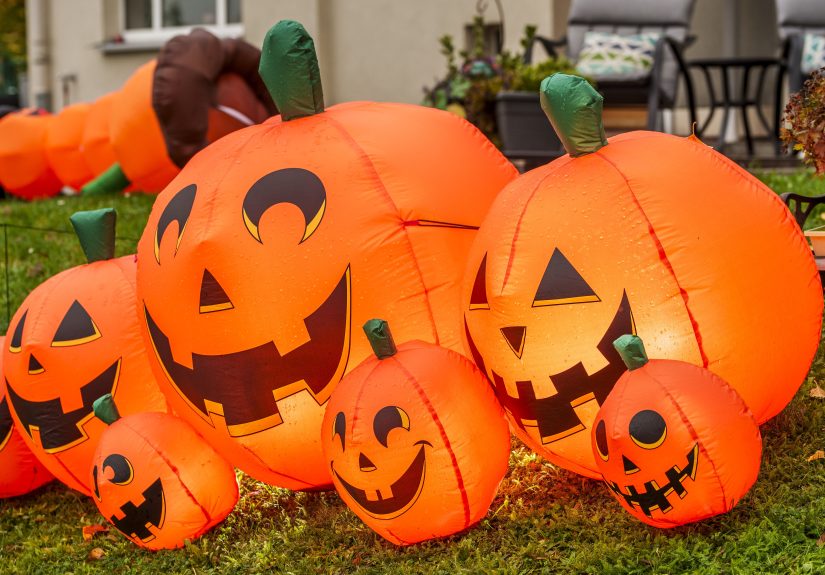
And the market did not stop at one giant skeleton. Retailers have expanded the category with companion pets, dragons, scarecrows, Frankenstein-inspired figures, massive jack-o’-lantern arches, upgraded lighting, animated heads, and app-connected features that let props talk, move, or glow in increasingly dramatic ways. In other words, the fog machine has entered its tech era. When a yard decoration can swivel, speak, flash custom eye effects, and interact with guests, the line between “holiday decor” and “mini attraction” gets wonderfully blurry.
That evolution matters because it changes how homeowners think. Instead of asking, “What can I put on the porch?” they now ask, “What scene can I create?” A giant prop is no longer just an object. It is an anchor. Once you have an anchor, the rest of the display becomes world-building: tombstones, layered lighting, creepy foliage, spooky sound, thematic costumes, and smaller props that make the yard feel intentional instead of chaotic.
What Makes a Yard Feel Like a Haunted Attraction
1. A Strong Theme
One of the biggest differences between a memorable display and a messy one is theme. Design experts increasingly recommend choosing a concept and sticking to it. Haunted graveyard. Witch’s apothecary. Gothic mansion. Pumpkin infestation. Skeleton garden party. Monster movie mash-up. Pick one lane and decorate like you mean it.
A theme creates cohesion, and cohesion is what makes a front yard feel immersive. Without it, even expensive pieces can look random. With it, a handful of props can feel impressive. A simple display of pumpkins, lanterns, dried florals, black crows, and old-fashioned candlelight can look far more sophisticated than a lawn full of unrelated inflatables having some kind of loud seasonal identity crisis.
2. Lighting That Does the Heavy Lifting
Halloween is basically a lighting holiday disguised as a candy holiday. During the day, your skeleton is just large plastic confidence. At night, with the right shadows and glow, it becomes theater. Purple uplighting on shrubs, orange flicker lights on steps, dim path lights, silhouette effects in windows, and carefully placed spotlights can transform a regular suburban yard into something moody, cinematic, and just creepy enough.
This is why so many extravagant displays look better after sunset. Light gives shape to fear, humor, and surprise. It also helps homeowners build contrast. A dark lawn with one dramatically lit focal point can feel more powerful than a bright yard with twenty props all shouting at once. Halloween, like comedy, is often about timing. Lighting controls the reveal.
3. Movement and Sound
Once a display includes motion or audio, it stops being static decor and starts behaving like an attraction. Animatronics that cackle, skeletons that move, dragons that light up, or speakers tucked behind bushes all create anticipation. The key is restraint. A little movement goes a long way. Too much, and your house starts feeling less like a haunted attraction and more like an electronics aisle with unresolved emotional issues.
The best yards use sound to deepen atmosphere rather than attack every passing toddler. Wind effects, low music, distant howls, or occasional triggered sounds can be more effective than constant screaming. Nobody wants to collect candy while a plastic ghoul is operating at airport-runway volume.
Why People Love Going So Big
Part of the appeal is obvious: it is fun. Halloween gives adults permission to be playful, weird, theatrical, and a little ridiculous in public, which is a rare gift. Christmas has rules. Thanksgiving has expectations. Halloween says, “Would you like to put a seven-foot skeleton dog beside a bubbling cauldron and call it art?” Frankly, that kind of freedom is refreshing.
But extravagant outdoor decor also creates community. Neighbors talk about it. Kids remember it. Families add it to their trick-or-treat route. In some places, elaborate yard displays have become annual traditions people wait for, the same way they wait for holiday light tours in December. A great Halloween yard creates a shared experience, and shared experiences are hard to beat in a world where so much entertainment happens through screens.
There is also a maker culture element here. Many of the most admired displays are not just store-bought collections thrown outside. They are layered, customized, repaired, repainted, programmed, or handmade. People build facades, carve custom signs, create props from foam, sew costumes for skeletons, and rig old decorations into new storylines. That craftsmanship is part of what turns a front yard into a local attraction. People can tell when imagination is doing the heavy lifting.
The Tradeoffs Behind the Spectacle
Budget and Storage Are Very Real Monsters
Extravagant Halloween decor looks magical from the curb, but it can be brutally practical behind the scenes. Giant props cost money. Animated pieces cost more. Weatherproofing, extension cords, timers, storage totes, replacement lights, and maintenance all add up. Then there is the final boss battle: where exactly are you supposed to store a giant skeleton in November?
This is one reason some giant decorations seem to linger long after Halloween. Sometimes it is a joke. Sometimes it is a style statement. Sometimes it is because taking the thing apart feels like a cross between furniture assembly and archaeological excavation. Once you have spent hours setting up your yard masterpiece, the idea of immediately dismantling it can feel emotionally unreasonable.
Neighbors, Noise, and HOA Rules
Not every neighborhood welcomes a full front-yard fright festival with equal enthusiasm. HOAs may regulate display size, lighting, sound, or duration. Even without formal rules, common sense matters. If your display blocks sidewalks, blinds drivers with strobe lights, or blasts creepy soundtracks until midnight, you are not creating seasonal joy. You are auditioning to become the reason someone writes a strongly worded Nextdoor post.
The smartest decorators know how to dial things in. They keep pathways clear, scale sound for the setting, and make sure visitors are delighted rather than inconvenienced. A haunted attraction can still be neighbor-friendly. In fact, the best ones usually are.
Curb Appeal Can Cut Both Ways
There is also the real-estate angle. If you are selling your home in the fall, restrained seasonal decor tends to have broader appeal than a giant inferno creature looming over the azaleas. Design and real-estate experts often point out that natural elements like pumpkins, hay bales, lanterns, and fall florals can support curb appeal, while extreme props may distract from the house itself. Translation: your giant glowing ghoul may be iconic, but it is not always helping buyers imagine brunch on the porch.
How to Get the Look Without Losing the Plot
You do not need a blockbuster budget to make your yard look impressive. The secret is editing. Start with one hero piece, whether that is a giant skeleton, a dramatic archway, a large spiderweb, or a strong porch scene. Then build around it with texture, repetition, and light.
- Choose one focal point: Let one big element carry the display.
- Layer natural materials: Pumpkins, gourds, hay, corn stalks, and branches help the scene feel grounded.
- Repeat shapes and colors: Matching lanterns, repeated tombstones, or consistent orange-purple lighting creates visual rhythm.
- Use height: Decorate steps, railings, shrubs, porch ceilings, and rooflines, not just the grass.
- Keep the walkway usable: Scary is fun. Tripping over a hidden extension cord is not.
The best extravagant displays are not always the biggest. They are the ones that feel complete. When every piece contributes to the same mood, even a medium-size yard can feel like a full haunted experience.
What This Trend Really Says About Halloween
At its core, this trend is about more than giant props and social media bragging rights. It reflects the way Americans now celebrate at home. People want experiences, not just objects. They want holidays to feel immersive, visual, and memorable. The front yard has become a public-facing canvas where homeowners can entertain, tell a story, make neighbors laugh, and give trick-or-treaters a moment they will talk about all the way to the next block.
That is why extravagant Halloween decor resonates. It turns an ordinary neighborhood into a temporary world. One house becomes a haunted graveyard. Another becomes a gothic pumpkin palace. Another becomes the place with the giant skeleton family dressed for dinner. It is silly, theatrical, creative, and maybe a little over-the-top. Which, to be fair, is exactly what Halloween deserves.
Experiences: When Front Yards Start Feeling Like Mini Haunted Parks
There is something completely different about walking through a neighborhood where Halloween has gone gloriously off the rails. You do not just notice one decorated house and move on. You slow down. Kids start pointing from halfway down the block. Adults pretend they are only there for the children, then immediately pull out their phones to take photos of a giant skeleton lounging on a porch swing like it pays property taxes. The whole street feels charged, as if ordinary suburban landscaping has agreed to star in a spooky ensemble cast for one month only.
The experience usually starts before you even reach the front steps. There is often a shift in mood first: colored light spilling onto the sidewalk, music floating through the air, a path lined with carved pumpkins, or a figure positioned just far enough back that you do a double take. Good displays know how to build suspense. They reveal themselves in layers. Maybe the giant spiderweb is obvious right away, but the smaller details take a second to register. A skeleton peeking from a second-story window. A row of flickering lanterns beneath dead branches. Tiny bones tucked into a flower bed like the garden has a backstory it is not ready to discuss.
Then comes the crowd behavior, which is half the fun. People linger. They compare favorites. Kids debate which house was scariest and which one was “actually funny.” Teenagers who claim they are too old for trick-or-treating suddenly become deeply invested in judging animatronic quality. Parents start planning a second lap around the block because they missed the talking scarecrow or the dragon by the garage. Even neighbors who never speak much during the rest of the year end up standing near the curb chatting about setup timelines, weatherproof extension cords, and whether that roof skeleton is secured by engineering or pure seasonal faith.
The most memorable yards also have personality. They are not just creepy. They are specific. One display might go all-in on classic horror, with fog, grave markers, and eerie silence broken by the occasional creak. Another might be playful, with skeletons posed like they are hosting a barbecue, gardening badly, or drinking coffee on the porch like spooky retirees. That humor matters. It makes the displays feel human. You get a glimpse of the people behind them: dramatic, crafty, mischievous, and clearly willing to spend an unreasonable amount of time dressing a skeleton in flannel for comic effect.
By the end of the night, what stays with people is not just the size of the props. It is the feeling. A great Halloween yard creates a little pocket of wonder. For a few minutes, a familiar street becomes theatrical and strange. The glow is warmer, the shadows are longer, and the house at the corner is no longer just the house at the corner. It is the haunted attraction everybody talks about until November, when the pumpkins collapse, the fog machines go quiet, and one giant skeleton somehow remains standing in the yard like a proud seasonal monument to overachievement.
Conclusion
Extravagant Halloween decor is turning front yards into haunted attractions because people no longer want a holiday that simply sits there. They want one that performs. Oversized props, layered lighting, themed storytelling, and clever outdoor staging have transformed Halloween into an experience people can walk through, photograph, laugh at, and remember. The best displays are not just bigger than they used to be. They are more intentional, more immersive, and more connected to neighborhood life.
So yes, the giant skeleton may be absurd. The dragon may be unnecessary. The app-controlled animatronic might be a little extra. But that is exactly why the trend works. Halloween is the rare moment when being delightfully too much is not a design flaw. It is the entire point.