Table of Contents >> Show >> Hide
- What Happened to the Felicity Ace?
- Why This Story Blew Up Far Beyond Shipping News
- A Timeline of the Felicity Ace Sinking
- What Was Actually Lost?
- Environmental Concerns: More Than an Oil Slick Story
- The Legal and Safety Aftermath
- What the Felicity Ace Tells Us About Modern Shipping
- The Human Experience of the Felicity Ace Sinking
- Conclusion
Some news stories feel like they were engineered by a particularly dramatic screenwriter. The Felicity Ace sinking was one of them: a massive cargo ship, nearly 4,000 vehicles, luxury badges with serious fan clubs, a fire in the middle of the Atlantic, and a final plunge that turned brand-new cars into the world’s most expensive artificial reef. It had everything except a happy ending for the cargo.
But the real story is bigger than the headline-friendly loss of Porsches, Bentleys, Audis, Lamborghinis, and Volkswagens. The Felicity Ace disaster became a symbol of how modern shipping has changed. Cars are more complex, cargo risks are more complicated, and fires at sea are still one of the nastiest problems in maritime transport. Throw in questions about lithium-ion batteries, insurance exposure, environmental concerns, and stranded customers waiting on dream cars, and this was never just a “luxury car ship sinks” story. It was a warning flare for the entire supply chain.
What Happened to the Felicity Ace?
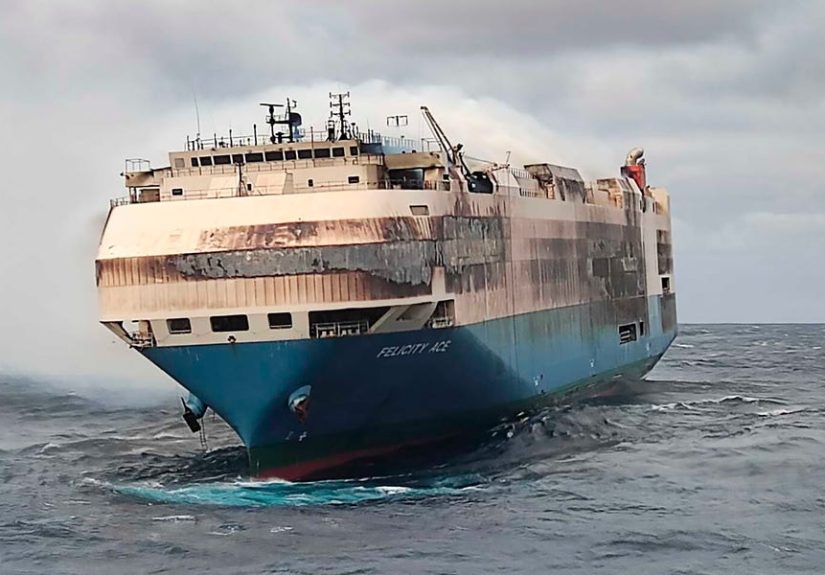
The Felicity Ace was a roll-on/roll-off vessel, the kind of ship designed to carry vehicles efficiently across oceans. In February 2022, it left Emden, Germany, bound for Davisville, Rhode Island, carrying thousands of Volkswagen Group vehicles for the U.S. market. Then came the disaster. A fire broke out while the ship was in the Atlantic near the Azores, and the crew had to abandon ship. All 22 crew members were evacuated safely, which is the single best sentence in this entire saga.
From there, the vessel became a floating nightmare. Salvage teams tried to manage the situation, but rough seas and the intensity of the fire complicated everything. Reports at the time suggested that lithium-ion batteries in some electric vehicles onboard may have made the blaze more difficult to control. That point mattered because even when batteries are not the confirmed source of ignition, they can make firefighting much harder once a fire takes hold. In other words, the ship did not just catch fire; it became the sort of fire that makes everyone in shipping lose sleep.
The blaze burned for days. The ship drifted. The salvage operation moved slowly. Then, on March 1, 2022, while under tow, the Felicity Ace lost stability, listed, and sank in deep Atlantic water near the Azores. Just like that, one of the most talked-about cargo incidents of the year went from crisis to catastrophe.
Why This Story Blew Up Far Beyond Shipping News
Luxury brands made it irresistible
Let’s be honest: if the ship had been carrying only mid-priced fleet sedans and a few practical hatchbacks, the internet would still have cared, but not that much. The cargo included high-profile brands people obsess over. Porsche customers were waiting on special orders. Lamborghini models were reportedly among the vehicles onboard. Bentley and Audi were in the mix too. This was not just freight. It was aspiration, status, collector culture, and delayed gratification sitting in metal decks over the Atlantic.
That made the loss deeply personal for some buyers. A car that existed on paper, in a dealer system, or in a factory-to-customer pipeline suddenly became unrecoverable. For many people, the Felicity Ace was the moment they learned that even a brand-new vehicle can vanish before it ever reaches a showroom floor.
The electric vehicle angle added a bigger debate
The ship also landed in the middle of a wider conversation about transporting electric vehicles safely. Early reporting highlighted that some EVs were onboard and that lithium-ion batteries may have helped keep the fire burning. That does not mean public reporting conclusively proved an EV started the fire. In fact, the exact cause has remained contested. Still, the incident helped push a serious industry question into public view: are ships, crews, and emergency procedures fully prepared for large-scale vehicle fires involving modern battery systems?
That question did not sink with the ship. It stayed afloat and kept getting louder.
A Timeline of the Felicity Ace Sinking
Departure and cargo
The vessel departed Germany carrying roughly 3,965 Volkswagen Group vehicles intended for the United States. The trip should have been routine. Roll-on/roll-off shipping is the invisible muscle behind global auto distribution, moving vehicles from factories to dealers with impressive efficiency.
Fire at sea
In mid-February 2022, fire broke out onboard while the ship was near the Azores. The crew abandoned ship and was rescued safely. Images of smoke pouring from the vessel spread quickly, turning a maritime emergency into international news.
Salvage delays
Salvage teams headed to the vessel, but bad weather and sea conditions slowed efforts. Fire at sea is already a brutal challenge; fire at sea on a vehicle carrier loaded with thousands of cars is a logistical and operational headache with flames attached.
Sinking during tow
After nearly two weeks of drifting and damage, the ship sank on March 1 while being towed. Reports said it developed a starboard list before going under. What had already been a total cargo loss became a full marine casualty.
What Was Actually Lost?
The obvious answer is cars. A lot of them. But the deeper answer is that several different kinds of value went down with the vessel.
First, there was pure inventory loss. Thousands of vehicles vanished, from ordinary retail deliveries to premium and specialty models. Second, there was production disruption. Some vehicles could be replaced relatively quickly; others involved tighter supply, longer lead times, or special configurations that made replacement much trickier. Reports after the sinking indicated manufacturers were working on individual solutions for affected customers, and some brands moved to replace lost vehicles rather than leave buyers staring into the abyss of indefinite delay.
Third, there was insurance exposure. Estimates of the total financial hit varied across outlets, but everyone agreed on the central point: this was a huge loss. Not “someone dented a bumper in port” huge. More like “boardroom meetings suddenly got very tense” huge. When a ship, its cargo, the salvage attempt, and possible pollution response all enter the same sentence, the money meter starts spinning fast.
Finally, there was reputational loss. For automakers, shipping firms, insurers, and regulators, the incident became a public case study in what can go wrong when modern cargo meets old maritime dangers.
Environmental Concerns: More Than an Oil Slick Story
Whenever a large vessel sinks, environmental concerns arrive immediately, and for good reason. Early official monitoring indicated debris and a limited visible oil sheen near the site, and authorities kept watch for pollution issues. That was somewhat reassuring in the short term, but the larger concern did not disappear just because the surface looked manageable.
The wreck went down in deep water along with vehicles, fuel, oils, plastics, metals, and battery systems. Scientists and environmental observers worried not only about immediate contamination but also about what submerged wreckage can mean over time for marine ecosystems. The area near the Azores is ecologically important, and the ship’s final resting place raised hard questions about long-term monitoring. When thousands of manufactured products hit the ocean floor at once, “out of sight, out of mind” is not a real environmental policy.
The Legal and Safety Aftermath
Lawsuits added a new chapter
Two years later, the story came roaring back into headlines when lawsuits alleged that a Porsche electric vehicle battery may have triggered the fire and that shipping interests were not adequately warned about the risks involved. Those claims intensified public debate, but they did not magically convert allegations into settled fact. The key distinction matters. Public reporting showed serious accusations and a legal fight, not a neat final answer tied with a bow.
That uncertainty is part of what makes the Felicity Ace such a significant case. The ship became a crossroads where product risk, cargo disclosure, firefighting capability, and maritime liability all collided. If a vehicle battery was involved, what should carriers have known? If it was not the root cause, why was the fire still so hard to control? Either way, the incident exposed the gap between technological change and operational readiness.
The shipping industry started adjusting
Insurers and maritime safety organizations did not shrug and move on. Industry reports after the sinking pointed to fire as one of the biggest causes of serious vessel losses, and the Felicity Ace became a reference point in discussions about battery-related cargo risks. By 2024, the International Maritime Organization had endorsed a roadmap for developing fire-safety measures for ships carrying new-energy vehicles, including battery electric vehicles.
That does not mean the rulebook is finished. It means the industry got a very expensive reminder that the rulebook needs updating. Fire detection, firefighting systems, crew training, stowage rules, thermal monitoring, and cargo declarations all suddenly looked more urgent. Maritime regulation tends to move carefully, but disasters have a way of speeding up the conversation.
What the Felicity Ace Tells Us About Modern Shipping
The Felicity Ace sinking matters because it reveals how fragile global logistics can look once something goes badly wrong far from shore. Vehicle carriers are designed for efficiency, not drama. They move enormous volumes of cargo with remarkable routine. Yet routine can create a false sense of simplicity. Modern vehicles are packed with electronics, high-energy battery systems, sophisticated materials, and complicated supply-chain dependencies. The cargo is smarter than it used to be, but that also means it can behave differently in emergencies.
This incident also showed that supply chains are emotional, not just mechanical. People were not mourning a stack of anonymous VIN numbers. They were grieving delayed purchases, rare builds, business inventory, and promises that had already been sold to customers. A cargo ship sinking in the Atlantic somehow managed to feel personal to people sitting in U.S. suburbs checking dealer updates on their phones.
In that sense, the Felicity Ace was a globalized tragedy in miniature: products built in one country, shipped across an ocean, sold into another market, financed and insured across multiple systems, and instantly transformed into a shared public story when something failed.
The Human Experience of the Felicity Ace Sinking
One reason the Felicity Ace story stuck so hard in the public imagination is that it was not just about a ship or a cargo manifest. It was about people caught at strange points along the same supply chain. Start with the crew. Their experience was the most immediate and the most dangerous. When fire breaks out at sea, there is no easy exit, no nearby fire department, and no comforting idea that help will arrive in five minutes. The safe evacuation of all 22 crew members was the quiet triumph inside an otherwise miserable event.
Then there were the customers, many of whom had likely spent months waiting for vehicles that already felt half-real. Anyone who has tracked a factory order knows the ritual: production date, shipping notification, dealer estimate, obsessive refresh, hopeful daydream. The Felicity Ace turned that anticipation into absurd disappointment. Imagine getting the call that your car exists, was built, was loaded, crossed an ocean halfway, and is now at the bottom of the Atlantic. That is such a specific kind of heartbreak it almost sounds fictional, except it happened to real buyers.
Dealers and automaker representatives had their own awkward front-row seats. They had to explain a surreal situation to customers while probably learning new details themselves in real time. A delayed delivery is common. A lost vessel carrying your exact vehicle is not part of the usual script. In the weeks after the sinking, affected brands had to pivot from logistics mode to damage-control mode, then into replacement planning. That meant managing expectations for people who were disappointed, confused, and in some cases waiting on rare or tightly allocated models.
The experience also hit marine insurers, salvage specialists, and regulators in different ways. For them, the story was less “my car is gone” and more “our assumptions may be outdated.” Fires aboard vehicle carriers are frightening because ships are isolated ecosystems. Water, foam, suppression systems, access routes, crew response time, cargo layout, and weather all matter. Add the possibility of battery involvement, and even seasoned professionals have to rethink procedures. The Felicity Ace was not just a loss event. It was a stress test, and the test results were uncomfortable.
Environmental observers experienced the incident from yet another angle. To them, the anxiety did not end when the headlines faded. A wreck on the ocean floor can become a long-tail problem, especially when it includes fuel residues, manufactured materials, and battery components. So while some readers saw a dramatic luxury-car story, others saw a reminder that consumer culture and marine risk are tightly linked.
That is why the Felicity Ace still resonates. It touched the crew trying to survive, the buyer waiting on a dream car, the dealer making a painful phone call, the insurer counting losses, the regulator revising safety assumptions, and the environmental watcher wondering what remains after the cameras leave. Same sinking, very different experiences, one shared conclusion: modern shipping is astonishingly efficient until the moment it is not.
Conclusion
The Felicity Ace sinking was dramatic enough to dominate headlines, but its lasting importance comes from what it revealed. This was a story about fire, freight, technology, risk, and the uncomfortable reality that global commerce still depends on systems that can fail in very physical ways. Nearly 4,000 vehicles were lost, but the bigger loss may have been the illusion that shipping modern cars across oceans is a simple, low-drama routine.
Years later, the ship still serves as a case study for automakers, insurers, maritime operators, and regulators. It pushed questions about EV fire response, cargo transparency, and marine safety into the spotlight. And for everyone who followed the story, it left behind one unforgettable image: a vessel full of brand-new cars, drifting and burning in the Atlantic, before finally disappearing beneath the surface. If there is a lesson here, it is not just that disasters happen. It is that supply chains need to evolve as fast as the products they carry.