Table of Contents >> Show >> Hide
- What Is the Hatch Restore 3?
- Design & Build: Aesthetic Enough for Instagram
- Features: What the Hatch Restore 3 Actually Does
- Hatch Restore 3 vs. Restore 2 (and the Competition)
- Real-World Sleep Improvements: What Users Say
- Pros and Cons of the Hatch Restore 3 (2025)
- Who Is the Hatch Restore 3 Best For?
- Is the Hatch Restore 3 Worth It in 2025?
- Extra: Real-Life Experiences & Use Cases With Hatch Restore 3 (2025)
If your current alarm routine involves doomscrolling until midnight and then getting jump-scared awake by your phone, the Hatch Restore 3 is basically the polite friend who takes your phone away and tucks you into bed. Launched in early 2025, this smart sunrise alarm clock and sound machine promises gentler wake-ups, calmer nights, and (hopefully) fewer snooze-button marathons. But at around $169.99 plus an optional subscription, is it really worth it this year, or is it just another pretty gadget on your nightstand?
In this in-depth Hatch Restore 3 review for 2025, we’ll break down what it actually does, how it’s different from the Restore 2, what real users and reviewers are saying, and who should (and definitely shouldn’t) spend their money on it.
What Is the Hatch Restore 3?
The Hatch Restore 3 is a smart bedside device that combines three major functions in one: a sunrise alarm clock, a sound machine, and a guided sleep coach. It’s designed to help you fall asleep more naturally and wake up in sync with your body’s circadian rhythm instead of relying on harsh blue light and shrill phone alarms.
Using the Hatch Sleep app, you create customizable routines that typically have three stages:
- Unwind: Soft lighting plus relaxing sounds, meditations, or stories to transition away from screens.
- Sleep: Continuous soundscapes (like white, brown, or red noise, or nature sounds) to help you stay asleep.
- Sunrise Alarm: A gradual light that brightens over 10–60 minutes paired with gentle wake-up sounds.
Unlike many budget sunrise alarm clocks, the Restore 3 is very intentionally designed to support a “phone-down” bedroommeaning once you set your routines, you can control a lot from the device itself instead of grabbing your phone every night.
Design & Build: Aesthetic Enough for Instagram
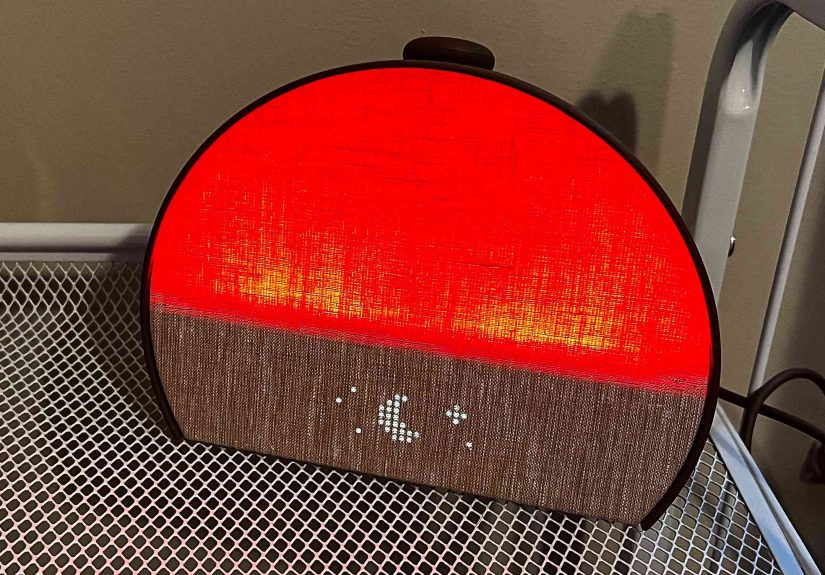
If your nightstand is prime real estate for design objects, the Hatch Restore 3 will fit right in. It has a rounded, fabric-front design with a wood-like base and comes in soft bedroom-friendly colors like Putty, Greige, and Cocoa, with limited-edition shades like Rosy appearing as special runs.
It’s compact enough not to dominate your nightstand. Retailers list dimensions around 7.2 inches long, just over 5 inches tall, and under 3 inches deepbasically the size of a small book standing on its side.
The light panel covers most of the front, with a discrete digital clock display and a fabric speaker grille that wraps around the device. It feels like a smart speaker crossed with a modern table lamp, which is a big visual upgrade over classic alarm clocks.
New Buttons, Better Tactile Controls
One of the biggest design changes from the Restore 2 is on top: the Restore 3 has three tactile buttons instead of two, plus additional side controls. Reviewers consistently praise these new buttons for making the device actually usable without reaching for your phone.
- The “Big Button”: A large multi-purpose button that can start or stop routines and act as a simple tap-to-snooze or tap-to-stop alarm control.
- Pause button: Lets you pause what’s playinga soundscape, meditation, or routinewithout fumbling through the app.
- Unwind Swap button: Quickly toggles between different unwind options if you don’t want last night’s meditation again.
- Side buttons: Dedicated buttons for bedside light and alarm on/off, making it feel more like a traditional lamp + clock combo.
This might sound small, but in practice it’s a big quality-of-life upgrade. When you’re half asleep, having a giant “just fix it” button is a lot more comforting than navigating a touchscreen app.
Features: What the Hatch Restore 3 Actually Does
Sunrise & Sunset Light Simulation
The headline feature is its sunrise alarm. Instead of jolting you awake, the Restore 3 gradually brightens the room with warm, sun-like tones, then pairs that with gentle audio like birdsong, chimes, or soft music. You can set the sunrise duration (for example, 30 minutes before your alarm time) and tweak brightness levels.
Independent testers have measured the Restore 3 as brighter than the Restore 2, hitting around 250 lux at 18 inchesenough to trigger your body’s wake signals more effectively. While it’s not as bright as full-size wake-up lamps specifically designed just for light therapy, it’s a noticeable step up for a bedside device.
On the flip side, the light can also dim gradually like a sunset, helping your brain wind down instead of going from “full daylight” phone screen to “complete darkness” in two seconds.
Sound Machine & Audio Library
The Restore 3 is also a full-fledged sound machine. Out of the box, you get a selection of built-in soundsthink ocean waves, rain, wind, brown noise, white noise, and night sounds. Retailers and reviewers note that the Restore 3 ships with 50+ new sounds compared with previous models, including richer nature soundscapes and more nuanced noise profiles.
What sets Hatch apart is the depth of its audio content if you opt for the subscription. The Hatch+ library adds:
- Guided meditations for stress, anxiety, and sleep
- Bedtime stories and “sleep journeys”
- Podcast-style spoken content
- Specialized sound mixes like “red noise” to mask city noise
Reviewers repeatedly comment that the audio quality is surprisingly good for a bedside device, with richer, less “tinny” sound than many cheaper sunrise clocks.
Hatch+ Subscription: Free vs. Paid
Here’s where things get interesting: the Restore 3 works without a subscription, but the full magic definitely depends on Hatch+. With your purchase, you get a free trial of Hatch+. After that, it’s about $4.99 per month or $49.99 annually.
With no subscription, you still get:
- Core sunrise and sunset lighting
- Basic alarm tones and some soundscapes
- Basic routines you can configure in the app
With Hatch+, you unlock:
- Dozens of premium soundscapes and noise profiles
- Guided meditations and sleep stories
- Special curated routines for different goals (stress relief, earlier wake-ups, etc.)
- More frequent content updates and seasonal programs
Many reviewers feel the subscription is reasonably priced given how often they use the contentespecially couples or families who rely on it nightly. Others see it as an annoying “extra tax” on top of an already premium device. Expect this to be a key deciding factor if you hate ongoing fees.
Phone-Free Routines & App Experience
To set up Restore 3, you’ll need the Hatch Sleep app and a Wi-Fi connection. Setup isn’t instant and some reviewers mention minor app hiccups and occasional connectivity quirks, but once it’s up and running, daily use is mostly smooth.
The app lets you customize:
- Bedtime and wake-up times
- Light colors and brightness
- Sound types and volumes
- Routines for weekdays vs. weekends
After routines are set, you can rely heavily on the physical controlsgreat if your goal is to keep your phone out of the bedroom and avoid late-night scrolling.
Hatch Restore 3 vs. Restore 2 (and the Competition)
What’s New vs. Restore 2?
Compared to the Hatch Restore 2, the Restore 3 doesn’t reinvent the conceptit refines it. Major changes include:
- Brighter light: Independent testing shows around 30% higher brightness, making the sunrise effect more effective.
- More physical controls: Additional top and side buttons for easier phone-free use.
- Expanded sound library: More built-in sounds plus deeper integration with Hatch+.
- Refined design: Slightly updated shape, textures, and color choices that look more like decor than a gadget.
DigitalTrends and other reviewers note that while both devices offer broadly similar features, the Restore 3 is more customizable and a better long-term pick if you’re buying new in 2025. If you already own a Restore 2 and it’s working well, most experts don’t see this as a must-upgrade unless you really want the brighter light and extra buttons.
How It Compares to Cheaper Sunrise Clocks
At around $169.99, the Restore 3 is definitely at the “treat yourself” end of the alarm clock spectrum. Cheaper sunrise alarm clocks from brands like JALL, Dreamegg, or Momcozy often come in under $60–$80 and still offer basic sunrise lighting and simple sounds.
The differences you’re paying for with Hatch are:
- Higher build quality and aesthetics
- Better sound and more polished soundscapes
- A deeper, growing content library via subscription
- Smarter, more flexible routines
- More refined app and controls
In short, if you just want a light that gradually turns on, a budget sunrise clock will do the job. If you want something that feels more like a dedicated sleep coach and long-term lifestyle upgrade, the Restore 3 is more compelling.
Real-World Sleep Improvements: What Users Say
Across Amazon reviews, lifestyle blogs, and tech publications, a few themes keep repeating:
- Gentler mornings: Many users say they wake up feeling less groggy and less tempted to smash the snooze button when the light starts gradually before the sound.
- Less phone time in bed: Because the Restore 3 provides meditations, noise, and a clock, people feel less compelled to use their phone as a multi-tool at night.
- Better sleep continuity: Soundscapes (especially brown or red noise) help block city noise, snoring partners, or traffic, particularly in apartment living.
- More consistent routines: The simple act of having a bedtime “program” encourages earlier wind-down times and more regular sleep schedules.
Of course, not everyone suddenly becomes a morning person. A few common complaints pop up:
- Subscription fatigue: Some buyers feel frustrated that the most interesting content sits behind a paywall, even after spending $170 on the hardware.
- App quirks: Occasional connectivity or pairing issues, especially right out of the box.
- Light could be brighter for some users: For people wanting clinical-level light therapy, it may still feel a little underpowered compared with dedicated SAD lamps.
Pros and Cons of the Hatch Restore 3 (2025)
Pros
- Excellent blend of sunrise alarm, sound machine, and sleep content in one device
- Stylish, bedroom-friendly design with multiple color options
- Brighter and more functional than the Restore 2, with better buttons and controls
- High-quality sound and a deep content library with Hatch+
- Encourages healthier routines and less phone use at night
- Strong reviewer and user satisfaction, especially for city dwellers and light sleepers
Cons
- High upfront price around $169.99 compared with budget sunrise clocks
- Subscription feels almost necessary to get the most out of it
- Requires Wi-Fi and app setup; occasional connectivity hiccups
- Light still not as bright as dedicated therapeutic light boxes
- Not wireless or battery-operated; it’s meant to live on your nightstand full-time
Who Is the Hatch Restore 3 Best For?
The Hatch Restore 3 makes the most sense if you see sleep as a habit you want to actively improve rather than something you just “fall into” when you’re exhausted. It’s especially well-suited for:
- Chronic snoozers: If you hit snooze 4–5 times every morning, a gradual sunrise paired with soft sounds can make waking up feel less brutal.
- Phone addicts in bed: If your phone is both your alarm and your bedtime entertainment, the Restore 3 lets you offload some of those tasks and keep the phone away from your pillow.
- Light sleepers or city dwellers: Continuous noise like red, brown, or white noise helps mask unpredictable sounds in apartments or busy neighborhoods.
- Routine lovers: If you enjoy structure and like the idea of guided routines, the Hatch ecosystem will feel very satisfying.
On the other hand, it might not be ideal if:
- You already sleep well and just want a basic alarm clock.
- You hate subscriptions on principle and refuse to pay for any ongoing service.
- Your main need is medical-grade light therapy for seasonal depressionthis is more of a sleep lifestyle product than a full-strength therapy lamp.
Is the Hatch Restore 3 Worth It in 2025?
In 2025, the Hatch Restore 3 stands out as one of the best all-around sunrise alarm clocks for people who want more than just a light that turns on. It blends attractive design, thoughtfully curated content, and genuinely helpful routines in a way that many cheaper competitors simply can’t match.
Is it perfect? No. The subscription model will be a dealbreaker for some, and occasional app quirks may annoy more tech-averse users. But if your sleep currently looks like “TikTok until 1 a.m., panic wake-up at 7,” this device gives you a realistic, pleasant path to something better.
Think of it less as a clock and more as a bedside sleep system. If that sounds like what you needand you’re okay with the pricethen yes, the Hatch Restore 3 is absolutely worth considering in 2025.
Extra: Real-Life Experiences & Use Cases With Hatch Restore 3 (2025)
To really understand where the Hatch Restore 3 shines, it helps to zoom in on how different types of people actually use it day to day. While everyone’s experience is unique, reviews and testimonials share several relatable patterns.
The Night Owl Trying to Become a Morning Person
Picture someone who proudly calls themselves “not a morning person.” They stay up late scrolling, fall asleep with their phone on their chest, and wake up feeling like they’ve been yanked out of another dimension. A month into using the Restore 3, that same person might report something like this:
They set up a simple routine: 30 minutes before bed, the light shifts to a warm, amber glow while a guided meditation plays. Once the meditation ends, a soft brown noise kicks in for the night. In the morning, the sunrise begins 20–30 minutes before the alarm time, gradually brightening the room from deep red to warm daylight. By the time the sound starts, they’re already closer to awake than half-asleep.
Is this magic? Not exactlybut it creates a predictable pattern their brain starts to recognize. Instead of feeling ambushed by the morning, they have a built-in ramp that makes wake-ups more manageable, even on weekdays.
The City Dweller Fighting Noise
For urban dwellers, the Restore 3’s value is often less about waking up and more about staying asleep. Car horns, sirens, hallway noise, and upstairs neighbors moving furniture at 11 p.m. all chip away at deep rest.
Here, the Restore 3’s continuous soundscapes and specific noise colorslike red noise, which many people find especially good at masking traffic and urban humbecome the star feature. Paired with its ability to double as a gentle nightlight for late bathroom breaks, it turns a chaotic sonic environment into a more consistent, soothing background.
Instead of waking up to every slammed door, users report sleeping through minor disturbances because their brains adapt to the steady soundbed the Hatch provides.
The Couple with Different Sleep Styles
One underrated use case: couples who do not share the same sleep personality. Maybe one partner wants to be up at 6 a.m. doing yoga, while the other thinks anything before 8 a.m. is illegal.
With the Restore 3, routines can be tailored to specific days and times, and alarms can be fine-tuned so the light does most of the waking while the sound stays relatively gentle. Some couples report splitting routinesusing the sunrise feature primarily for whoever needs the earlier wake-up, while the other partner continues to sleep through low-level light or masks it with their own sleep mask.
Because the device is easy to control via physical buttons, it’s also simple to adjust on the fly if one partner decides they’re not joining the “early bird club” that day.
The Parent Reclaiming Evenings
Parentsespecially of young kidsoften describe the Restore 3 as less of a “sleep gadget” and more of a boundary-setting tool. When the kids finally go down, it’s tempting to use the quiet time to binge-watch or scroll until way too late.
A lot of parents use the Restore 3’s unwind routine as a hard stop for the day. Once the bedside light kicks in and those familiar night sounds start, that’s the cue to close the laptop, finish the episode, or put the phone away. Because the device is already set up and waiting, they don’t have to decide to “be good” every nightthe routine nudges them towards better habits without needing constant willpower.
When the Honeymoon Phase Ends
Like any gadget, there’s a honeymoon period where everything feels new and exciting. The more interesting question is: does the Hatch Restore 3 still pull its weight after a few months?
From long-term reviews, the answer is often yes, but in a quieter way. The device tends to fade into the backgroundnot as something you think about constantly, but as the default rhythm of your evenings and mornings. People stop raving about it every day and instead simply notice that they’re sleeping a bit more consistently, waking a bit less miserably, and touching their phone a bit less in bed.
That’s ultimately the kind of “boring good” you actually want from a sleep device. If a product reshapes your habits without demanding constant attention, it’s doing its job.
So if you’re evaluating the Hatch Restore 3 in 2025, don’t just ask, “Does it wake me up?” Ask, “Does it gently push me toward a better routine without making my life more complicated?” For many users, that answer has been a solid yes.