Table of Contents >> Show >> Hide
- What Is a Liminal Space?
- Why Do Liminal Space Pictures Feel So Familiar and Unsettling?
- The Internet Turned Empty Hallways Into a Whole Aesthetic
- What Makes a Great “Favorite Liminal Space” Photo?
- Popular Types of Liminal Spaces People Love to Share
- Why We Keep Looking at These Images
- How to Take Your Own Liminal Space Picture
- The Emotional Side of Favorite Liminal Spaces
- Experiences Related to “Hey Pandas, Show Me A Picture Of Your Favorite Liminal Space”
- Conclusion
Note: This article is an original, publish-ready synthesis based on current public discussions of liminal spaces, online photo communities, architecture, internet aesthetics, nostalgia, and visual psychology.
Some photos look normal for half a second. Then your brain leans forward, squints suspiciously, and whispers, “Something is off.” That is the magic of a liminal space. It might be an empty school hallway after the bell, a hotel corridor that seems to stretch into next Tuesday, a quiet mall food court with one lonely plastic chair, or a parking garage glowing under fluorescent lights like it knows a secret.
The phrase “Hey Pandas, show me a picture of your favorite liminal space” fits perfectly into the internet’s favorite kind of visual challenge: simple, oddly specific, and capable of unlocking hundreds of strange memories. People love sharing liminal space pictures because they are not just photos of empty places. They are little emotional traps. You look at them and suddenly remember childhood vacations, late-night errands, closed swimming pools, school stairwells, airport delays, and that one hallway in your cousin’s apartment building that absolutely had ghost energy.
Liminal spaces have become one of the most fascinating online aesthetics because they sit between comfort and discomfort. They are familiar, but not welcoming. Empty, but not peaceful. Nostalgic, but not exactly happy. They are the visual equivalent of walking into a room and forgetting why you came in, except the room is a 1998 bowling alley and the carpet pattern looks like it was designed by a sleep-deprived alien.
What Is a Liminal Space?
A liminal space is a place of transition. The word “liminal” comes from the idea of a threshold: the moment between one state and another. In everyday life, liminal spaces are the areas we usually pass through rather than stay in. Think hallways, staircases, elevators, airports, bus stations, waiting rooms, empty roads, motel lobbies, parking lots, and school corridors.
These spaces are not usually designed to be destinations. They are built to move us from one point to the next. That is why they feel so strange when they are photographed without people. A school hallway should have students. A mall should have shoppers. A playground should have noise, movement, and at least one parent holding a coffee like it is a survival tool. When those expected signs of life disappear, the place becomes suspended. It is not abandoned exactly, but it is not alive either.
That suspended feeling is the heart of liminal space photography. A good liminal image does not need a monster, a dramatic filter, or a fog machine from a Halloween clearance aisle. It only needs a familiar place shown in an unfamiliar way. The eeriness comes from absence, timing, lighting, and context.
Why Do Liminal Space Pictures Feel So Familiar and Unsettling?
Liminal spaces work because the brain loves patterns. We recognize the purpose of a place almost instantly. A classroom means students. A hotel hallway means doors, travelers, luggage, and someone struggling with a key card. A grocery store aisle means carts, labels, bright lights, and one person blocking the cereal section while reading every nutrition label like it is a legal contract.
When the expected activity is missing, the brain notices. It asks: Where is everybody? What time is it? Did something happen here? Am I early, late, or trapped in a low-budget dream sequence?
This is why empty transitional spaces often create a soft sense of unease. They are not necessarily scary. In fact, many liminal space pictures feel comforting. But they create emotional confusion because they combine safety and strangeness. A clean hallway is not dangerous. A quiet indoor pool is not haunted by default. Yet when these places are too empty, too still, or too brightly lit, they become uncanny.
The most powerful liminal spaces often contain three ingredients: familiarity, emptiness, and ambiguity. Familiarity says, “You know this place.” Emptiness says, “Something is missing.” Ambiguity says, “Good luck figuring out what.” Together, they create a picture that feels less like a photograph and more like a memory you borrowed from someone else.
The Internet Turned Empty Hallways Into a Whole Aesthetic
Liminal spaces existed long before the internet gave them a name, but online culture turned them into a full visual language. Communities on social platforms began collecting images of empty malls, old arcades, dim corridors, indoor pools, deserted schools, office buildings, rest stops, and strange corners of public architecture. The appeal grew because these images gave people a shared way to describe a very specific feeling: nostalgia with a small side of panic.
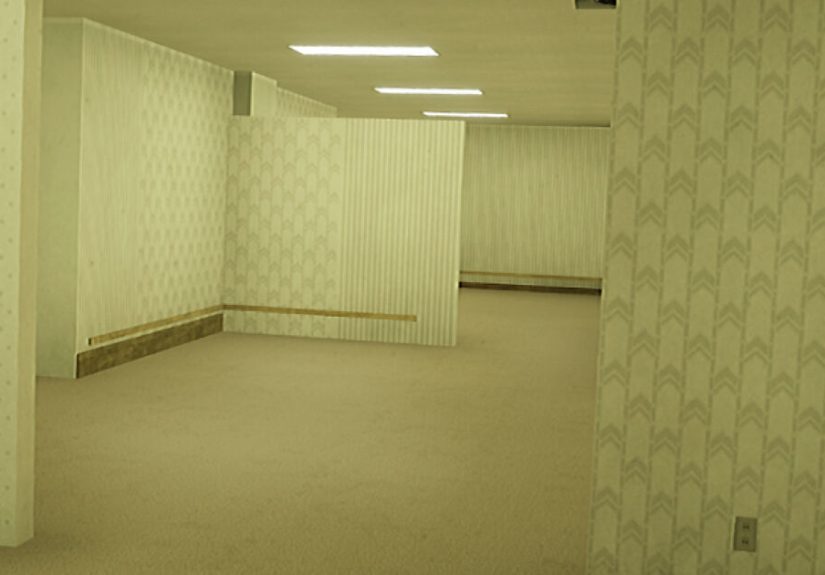
The Backrooms helped push liminal spaces into mainstream internet culture. The idea of endless yellow rooms, buzzing fluorescent lights, damp carpet, and impossible office corridors became a modern digital myth. It took the everyday ugliness of old commercial interiors and turned it into surreal horror. Suddenly, a badly lit hallway was no longer just a hallway. It was a portal. A warning. A place where the wallpaper had opinions.
But not every favorite liminal space has to be creepy. Some are soft and dreamy. A laundromat at midnight can feel lonely but calm. An empty airport gate before sunrise can feel like a pause button for the world. A quiet suburban street under orange streetlights can feel like childhood, summer, and a mysterious bicycle ride all at once. Liminal space pictures are popular because they let people bring their own memories into the frame.
What Makes a Great “Favorite Liminal Space” Photo?
If someone says, “Hey Pandas, show me a picture of your favorite liminal space,” they are not just asking for a random empty room. The best submissions usually have atmosphere. They make viewers feel as if they arrived one minute after something ended or one minute before something begins.
1. The Place Should Feel Transitional
Hallways, stairwells, elevators, bridges, airport terminals, hotel corridors, and parking garages are classic choices because they are built for movement. Nobody says, “Let’s spend a cozy afternoon in this hospital corridor.” At least, nobody you should trust with weekend plans.
2. The Space Should Be Empty or Almost Empty
People change the mood of a photo. A crowded mall is commerce. An empty mall is a question. A school hallway full of students is ordinary. A school hallway at 7:43 p.m., with one flickering light and polished floors, is suddenly a scene from your subconscious.
3. Lighting Matters More Than Drama
Fluorescent lights, sunset glow, blue evening shadows, greenish pool reflections, and orange streetlights all create liminal energy. The lighting should feel real, not overly edited. Liminal space photography often works best when it looks accidental, like the camera caught the world during an awkward pause.
4. Nostalgia Is a Secret Ingredient
Many favorite liminal space pictures include design elements from the 1980s, 1990s, and early 2000s: patterned carpets, beige walls, old food courts, arcade colors, motel art, plastic chairs, tiled pool rooms, and wallpaper that looks like it was chosen during a staff meeting nobody survived emotionally. These details make viewers feel as if they have been there before, even when they have not.
Popular Types of Liminal Spaces People Love to Share
Empty Schools
Schools are powerful liminal spaces because they are built around noise, schedules, and crowds. When empty, they become strangely theatrical. A hallway after hours, a cafeteria with chairs stacked on tables, or a gym with one basketball sitting alone can feel like childhood packed into a single frame.
Hotels and Motels
Hotel hallways are liminal royalty. They are temporary by nature. Nobody belongs to a hotel corridor. Everyone is passing through, half-awake, carrying a suitcase, looking for room 317 while pretending not to be nervous about the ice machine noises.
Malls and Food Courts
Dead malls and quiet food courts are loaded with nostalgia. They remind many people of weekend trips, neon signs, soft pretzels, arcade tokens, and department stores with carpeted perfume sections. When these spaces are empty, they feel like the past forgot to close the door.
Parking Garages
Parking garages are ordinary, but they photograph like psychological thrillers. Concrete, echo, low ceilings, directional arrows, and fluorescent lights create a strong sense of waiting. Add rain outside or a single car in the distance, and congratulations: you have created cinematic unease for free.
Indoor Pools
Empty indoor pools are some of the most beloved liminal spaces. The water reflects light, the tile amplifies sound, and the lack of swimmers makes everything feel paused. A pool without people feels like summer after everyone has gone home.
Airports and Train Stations
Airports are liminal even when crowded, because everyone is between places. But an empty airport terminal at night is something special. It feels global and lonely at the same time. The chairs wait. The screens glow. The carpet has seen things.
Why We Keep Looking at These Images
Liminal space pictures are addictive because they invite interpretation. Unlike a typical landscape photo, they do not tell you what to admire. They ask you what you remember. They make you search your own mental archive for matching places: the hallway outside a childhood dentist, the motel stairwell from a family road trip, the empty church basement after a holiday party, the school corridor before a big exam.
They also offer a break from the overstimulation of modern online life. Social media is loud, polished, crowded, and constantly asking for attention. Liminal images do the opposite. They are quiet. They hold still. They do not sell you a productivity course or ask you to become your “best self” by 6 a.m. They simply exist, usually under suspicious lighting.
That quietness can feel strangely healing. A liminal space does not demand performance. It gives viewers permission to pause. In a world where everyone is rushing from one notification to another, a picture of an empty hallway can feel like a tiny rebellion.
How to Take Your Own Liminal Space Picture
If you want to join the “Hey Pandas” spirit and share your favorite liminal space, you do not need professional camera equipment. A phone is enough. What matters is observation.
Look for places people usually ignore: the back hallway of a community center, an empty office lobby, a hotel ice machine room, a stairwell at dusk, a closed playground, a quiet laundromat, or the corridor outside a movie theater after the last showing. The best liminal spaces often hide in plain sight.
Try shooting when the place is naturally empty: early morning, late evening, after closing time, during bad weather, or between busy periods. Keep the composition simple. Straight lines, centered hallways, repeating doors, long shadows, and symmetrical layouts all help create that “I have been here in a dream” feeling.
Avoid over-editing. Heavy filters can make a photo feel fake. Liminal spaces are most powerful when they look believable. The viewer should think, “This could be anywhere,” followed quickly by, “Why do I feel like I need to leave?”
The Emotional Side of Favorite Liminal Spaces
When people share their favorite liminal space, they are often sharing more than a location. They are sharing a feeling attached to a moment of transition. Maybe the picture reminds them of moving away, changing schools, visiting relatives, working a night shift, waiting for a flight, or wandering through a place that used to be busy.
That is why the word “favorite” matters. A favorite liminal space is not always the prettiest or creepiest one. It is the one that sticks. It might be a plain apartment hallway because it reminds someone of childhood visits. It might be a grocery store parking lot after rain because it captures the feeling of being alone but not lonely. It might be an empty beach restroom at sunset because, for reasons nobody can fully explain, it looks like the final level of a dream.
Liminal spaces are personal because transition is personal. Everyone knows what it feels like to be between chapters. Between homes. Between jobs. Between versions of yourself. That is why these photos resonate so deeply. They turn invisible emotional states into visible places.
Experiences Related to “Hey Pandas, Show Me A Picture Of Your Favorite Liminal Space”
The fun of a prompt like “Hey Pandas, show me a picture of your favorite liminal space” is that it turns ordinary people into accidental archivists of weirdness. You do not need to travel to a famous landmark. You only need to notice the strange poetry of places most people rush through. One person might upload a photo of an empty school hallway with lockers glowing under pale lights. Another might share a deserted motel pool, where the blue water looks too still and every chair seems to be waiting for guests who checked out years ago. Someone else might post a picture of a suburban sidewalk at 5:30 a.m., when the sky is gray, the houses are silent, and the world feels like it has not fully loaded yet.
My favorite kind of liminal space experience is the late-night grocery store. Not the busy version with carts squeaking and someone debating avocados like a courtroom attorney. I mean the nearly empty store an hour before closing. The aisles are too bright. The music is too cheerful. The freezer section hums like background machinery in a spaceship. You turn a corner and see a perfectly arranged display of cereal boxes, but no people. Suddenly, buying milk feels like participating in a surreal art installation called “Capitalism at Bedtime.”
Another classic experience is the hotel hallway after midnight. Every door looks identical. The carpet pattern is somehow both ugly and hypnotic. The ice machine rattles in the distance like a tiny industrial ghost. You walk quietly because the whole building feels asleep, even though hundreds of strangers are behind those doors living temporary lives. That is liminality in its purest form: you are not home, not outside, not fully private, not fully public. You are in the in-between, wearing socks, holding a room key, and wondering why the hallway seems longer on the way back.
Then there are childhood liminal spaces, the ones that hit with nostalgia. Empty school gyms. Church basements after potlucks. Community pools during adult swim. Mall corridors near closing time. The weird back room of a bowling alley. These places feel powerful because they carry memory without people in the frame. You can almost hear sneakers squeaking, chairs scraping, arcade machines beeping, or someone’s parent saying, “We’re leaving in five minutes,” which everyone knew meant at least twenty.
Sharing these pictures online creates a strange kind of connection. People from different cities and different generations recognize the feeling instantly. They may never have visited that exact hallway, but emotionally, they have been there. That is the beauty of liminal space photography: it proves that even the most ordinary places can become shared emotional landmarks. A picture of an empty stairwell can say, “I was here during a pause in my life,” and thousands of viewers can answer, “Same.”
So if you are looking for your favorite liminal space, do not hunt for something obviously spooky. Look for a place that makes time feel thin. A place that seems to remember people but does not currently contain them. A place that feels like waiting, leaving, returning, or becoming. Take the photo before the moment disappears. The best liminal space pictures do not shout. They quietly tap you on the shoulder and say, “Hey, you have been here before, even if you haven’t.”
Conclusion
“Hey Pandas, show me a picture of your favorite liminal space” is more than a fun internet prompt. It is an invitation to notice the emotional power of in-between places. Liminal spaces remind us that not every meaningful location is grand, beautiful, or famous. Sometimes the most memorable places are empty hallways, silent pools, quiet parking lots, and forgotten corners of everyday life.
These images fascinate us because they blend nostalgia, uncertainty, architecture, and imagination. They make ordinary spaces feel cinematic. They turn waiting into atmosphere. They reveal the strange beauty of places we usually ignore. And, most importantly, they remind us that life itself is full of thresholds. We are all moving from one room to another, one chapter to another, one version of ourselves to the next. Occasionally, the hallway deserves a picture too.