Table of Contents >> Show >> Hide
- What is a HIFU facial?
- How HIFU works (in plain English)
- What can a HIFU facial treat?
- Results timeline: When you’ll see changes (and how long they last)
- What does a HIFU facial feel like?
- Downtime and aftercare
- Side effects and risks (including the rare stuff)
- Who is a good candidate for HIFU?
- HIFU vs. other skin-tightening options
- How much does a HIFU facial cost in the U.S.?
- How to choose a safe provider (this part matters)
- FAQs about HIFU facials
- Bottom line
- Real-World Experiences (Extra): What it’s like to actually get a HIFU facial
- References consulted (U.S.-based sources)
If you’ve ever looked in the mirror, gently lifted your cheek with two fingers, and thought,
“Wow… I would like this version of my face to stick around,” welcome. That little
“lift-and-hold” move is basically the unofficial audition tape for a HIFU facial:
a non-surgical skin-tightening treatment that uses focused ultrasound to encourage your skin
to firm up from the inside outno scalpel, no stitches, no hiding under a scarf for two weeks.
In this guide, we’ll break down what HIFU is, how it works, what results to realistically expect,
what it feels like (spoiler: “warm massage” is not the universal review), typical U.S. costs,
safety considerations, and how to choose a provider who won’t treat your face like a science fair project.
What is a HIFU facial?
HIFU stands for High-Intensity Focused Ultrasound. A “HIFU facial” is an umbrella term
people use for ultrasound-based skin tightening and lifting treatmentsmost famously
microfocused ultrasound with visualization (often referred to by the brand name Ultherapy in the U.S.).
The goal is simple: deliver focused energy below the skin’s surface to stimulate collagen remodeling and
create a gradual tightening effect.
Important nuance: not every device marketed as “HIFU” is the same. In the United States, some ultrasound
systems are FDA-cleared for specific aesthetic indications (like lifting the brow, tightening under the chin/neck,
and improving lines on the chest). That’s a meaningful distinction from “FDA-approved for everything” (which is
not how most aesthetic devices are regulated or described).
Also: a HIFU facial is not the same as those gentle “ultrasonic facial” spa treatments meant for cleansing
or product penetration. HIFU is about targeted energy at depththink “structural support,” not “surface glow.”
How HIFU works (in plain English)
Your skin has layers. On top is the epidermis (the part you moisturize). Under that are deeper layers where
collagen lives and where “lift” is either happening… or quietly moving out.
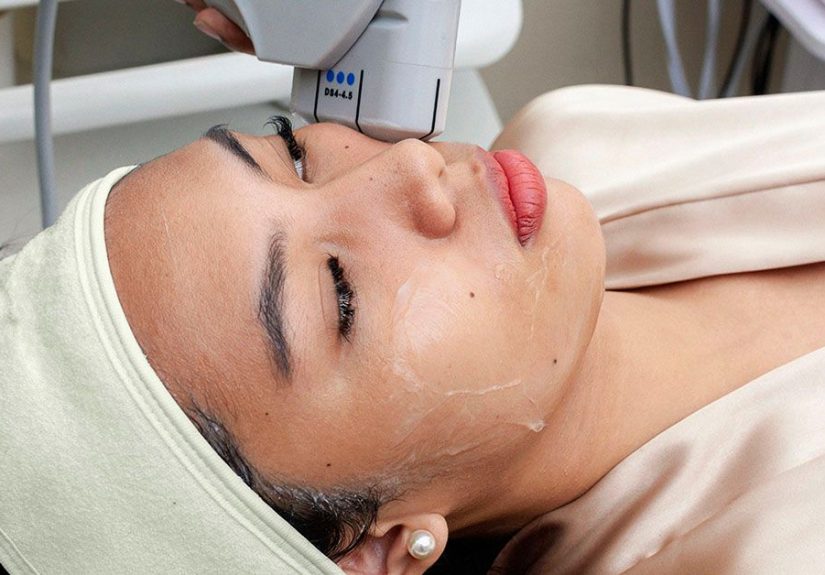
A HIFU device uses a handheld applicator to send focused ultrasound energy to precise depthscommonly
in the dermis and deeper support tissue. That energy creates tiny, controlled “hot spots” beneath the surface.
Your body responds the way it does to most controlled injuries: it repairs, remodels, and (ideally) builds
new collagen and tightens existing collagen fibers over time.
The “why” behind the lift
- Collagen stimulation: Collagen is like the scaffolding that keeps skin firm. HIFU nudges your body to rebuild it.
- Tissue tightening: Heat can cause immediate contraction in some collagen, with continued tightening as remodeling occurs.
- Depth targeting: Some systems can reach deeper foundational layers than many surface-focused treatments.
Many ultrasound lifting systems also use imaging/visualization to help the provider see tissue layers and deliver
energy at the intended depth. That’s one reason provider training matters: the “where” is as important as the “wow.”
What can a HIFU facial treat?
HIFU is generally best for mild to moderate skin laxitythe “I’m noticing gravity” stage, not the
“my jawline has relocated” stage.
Common treatment areas
- Brow and upper face: subtle brow lift, smoother-looking forehead area
- Cheeks and jawline: mild lifting, improved definition
- Under the chin and neck: tightening and improved appearance of lax tissue
- Upper chest (décolleté): improvement in fine lines and wrinkles for some candidates
What HIFU doesn’t do well
- Deep folds or major sagging: HIFU won’t match a surgical facelift.
- Texture issues (pores, acne scars): It’s not primarily a resurfacing treatment.
- Volume loss: If the main issue is hollowing (temples, cheeks), you may need a different approach (often fillers or biostimulatorsdiscussed with a qualified clinician).
Results timeline: When you’ll see changes (and how long they last)
HIFU results are usually gradual. If you want an instant, dramatic “new face” moment, that’s not the vibe here.
This is more “your friend says you look refreshed, and you pretend it’s just sleep.”
Typical timeline
- Right after treatment: Some people notice mild tightness or subtle lift, but many see little change immediately.
- Weeks 4–12: Collagen remodeling ramps up. This is when improvements often become more noticeable.
- Up to ~6 months: Some candidates continue to see incremental improvement as collagen rebuilds.
How long do results last?
Longevity varies by age, skin quality, lifestyle (sun exposure, smoking), and how much laxity you started with.
Many people budget for maintenance about every 12–24 months. Some organizations discussing non-invasive
tightening note that results can persist longer for certain people with good skincare and sun protectionbut it’s
safest to plan for maintenance if you want to keep the effect.
What does a HIFU facial feel like?
Honest answer: it dependson the device, settings, the area treated, and your personal “pain vocabulary.”
Providers often describe sensations like heat, tingling, or brief zaps.
Common sensations
- Warmth under the skin
- Quick, sharp pulses (more common over bony areas like the jaw)
- Pressure and tenderness afterward (sometimes)
Many clinics offer strategies to make the session easier, such as topical numbing, cold air, or recommending
an over-the-counter pain reliever beforehand (only if appropriate for youask your provider).
Downtime and aftercare
One reason people love ultrasound skin tightening is the minimal downtime. Most people go back to normal life the same day.
That said, “no downtime” doesn’t mean “nothing happened.” It means you can usually function without looking like you lost a boxing match.
What you might notice after treatment
- Temporary redness (often resolves within hours)
- Mild swelling
- Tenderness to touch, tingling, or sensitivity (can last days to weeks in some cases)
- Occasional bruising or temporary numbness in small areas
Simple aftercare tips
- Be gentle with skin for a day or two: mild cleanser, moisturizer, sunscreen.
- Skip aggressive exfoliants right away if you feel tender (your face just did a workoutdon’t add burpees).
- Sun protection is non-negotiable if you want collagen to stick around.
- Follow your provider’s instructions if they recommend specific skincare timing.
Side effects and risks (including the rare stuff)
When performed correctly by a trained medical professional using an appropriate device, ultrasound skin tightening is generally considered safe.
Still, it’s an energy-based treatment, and energy-based treatments deserve respect.
Common, temporary side effects
- Redness and swelling
- Pain during treatment
- Tenderness, tingling
- Small areas of bruising or numbness
Less common or rare complications
- Transient nerve effects (temporary nerve irritation) reported in clinical contexts for certain systems
- Burns or welts (usually related to technique, poor coupling, or inappropriate settings)
- Unwanted fat loss (reported anecdotally by some patientsrisk may be influenced by depth, settings, anatomy, and provider technique)
- Asymmetry or uneven results
Translation: choose your provider like you’re choosing someone to cut your hair before a weddingexcept this time the tool is focused ultrasound.
Who is a good candidate for HIFU?
Many reputable clinical sources describe ideal candidates as people with mild to moderate laxity, often in their 30s and up,
who want modest lifting and tightening without surgery.
You may be a good fit if you…
- Have early jowling, softer jawline definition, or mild neck laxity
- Want gradual, natural-looking improvement
- Prefer little to no downtime
- Are okay with “noticeable but not dramatic” results
You may want a different approach if you…
- Have significant loose skin (surgical options may be more effective)
- Primarily need volume restoration (fillers/biostimulators may be more relevant)
- Have active skin infections, open wounds, or certain medical considerations that your clinician flags
Always disclose your medical history, skincare treatments, and any recent injectables or procedures. The “my face is basically a timeline of aesthetic decisions”
conversation helps your provider keep you safe.
HIFU vs. other skin-tightening options
HIFU vs. radiofrequency (RF) tightening
Both HIFU and RF heat tissue to stimulate collagen. The big difference is often depth and targeting.
Some ultrasound systems can reach deeper structural layers than many RF devices, which may matter if your goal is lifting rather than surface texture.
RF can be excellent for overall firmness and texture, and may be more comfortable for some people depending on the device.
HIFU vs. RF microneedling
RF microneedling can be great for texture (pores, acne scarring) plus some tightening. HIFU is often chosen for
lift/structure. Many people combine modalities over timeif done thoughtfully by experienced clinicians.
HIFU vs. a facelift
A facelift physically repositions and removes tissue. HIFU encourages the body to remodel collagen.
Think of it like the difference between tailoring a jacket (facelift) and using a steamer to reduce wrinkles (HIFU).
Both can help, but they’re not the same tool for the same job.
How much does a HIFU facial cost in the U.S.?
Cost varies widely based on the device used, provider expertise, geographic region, and how many areas you’re treating.
In the U.S., patient-reported pricing for leading microfocused ultrasound treatments commonly lands in the
low-thousands for a session, with lower-end partial treatments and higher-end full face/neck packages.
Typical U.S. price ranges (real-world budgeting)
- Small area (e.g., brow or under-chin only): often starts around the high-hundreds to low-thousands
- Lower face/jawline: frequently in the $1,500–$3,000+ range
- Full face + neck: commonly $2,500–$4,000+, and can be higher in major metros or premium practices
Why prices vary so much
- Area size: More surface area = more time and more energy delivery.
- Number of “lines” or pulses: Some pricing is based on how much energy is delivered.
- Provider training and medical oversight: Expertise costs money (and can save your face).
- Device legitimacy: Established, regulated platforms tend to cost more than mystery machines.
Insurance typically doesn’t cover cosmetic ultrasound tightening. If you see a deal that seems too good to be true,
ask what device is being used and who is supervising the treatment. Your future selfies will thank you.
How to choose a safe provider (this part matters)
HIFU is highly technique-dependent. The difference between “subtle lift” and “why does my face feel weird?” can be training, anatomy knowledge,
and device settings.
Provider checklist
- Medical credentials: Look for a board-certified dermatologist or plastic surgeon, or treatment performed by trained staff under appropriate physician supervision.
- Device transparency: They should tell you what platform they’re using and why it’s appropriate for your goals.
- Realistic consultation: They explain what HIFU can and can’t do and discuss alternatives if you’re not a good candidate.
- Before/after photos: Of their own patients (with consent), showing similar concerns to yours.
- Safety discussion: They review side effects and what to do if you experience unexpected symptoms.
Green flag: your provider treats your face like it’s attached to a living human with nerves, fat pads, and an actual social lifebecause it is.
FAQs about HIFU facials
How many sessions do I need?
Many ultrasound tightening treatments are designed as a single-session procedure for appropriate candidates,
but some people benefit from additional sessions depending on response and degree of laxity. Your provider should recommend a plan based on your anatomy and goals.
Is it safe for all skin tones?
Many dermatology organizations note that ultrasound tightening can be used across skin tones because it doesn’t rely on targeting pigment the way some lasers do.
Still, individual risk depends on device, settings, and provider expertiseso choose wisely.
Can I do HIFU if I have fillers?
Possibly, but timing and placement matter. Tell your provider what you’ve had (and when). They may adjust treatment depth, avoid certain areas,
or recommend spacing procedures.
Does it replace a facelift?
No. HIFU is best viewed as a non-surgical tightening option for mild to moderate laxity.
It can be a great “not ready for surgery” choicebut it can’t replicate surgical repositioning.
What age is best for HIFU?
There’s no magic birthday. Many providers see strong satisfaction in patients who have early laxity and good baseline skin quality.
If laxity is severe, you may get limited benefit.
Bottom line
A HIFU facial (especially microfocused ultrasound treatments like Ultherapy in the U.S.) can be a smart,
science-backed option for people who want modest lifting and tightening with minimal downtime.
It works by delivering focused ultrasound energy below the skin to stimulate collagen remodelingresults build gradually over months,
and many people maintain improvements with periodic touch-ups.
The biggest predictors of a good outcome are: being the right candidate, having realistic expectations, and choosing an experienced provider using a legitimate device.
If you get those right, HIFU can be the “quiet luxury” of aesthetic treatments: not flashy, but it upgrades the structure.
Medical note: This article is for educational purposes and isn’t medical advice. A qualified clinician can tell you what’s appropriate for your skin, anatomy, and health history.
Real-World Experiences (Extra): What it’s like to actually get a HIFU facial
Let’s talk about the part people whisper about in group chats: the experience. Because reading “focused ultrasound stimulates collagen” is one thing.
Feeling it near your jawline is… a different kind of educational.
Most appointments start pretty casually. Your skin gets cleansed, a clear ultrasound gel goes on (yes, it’s coldbecause the universe loves balance),
and the provider maps out the areas they’ll treat. If the system includes imaging, they may use it to visualize tissue layers before delivering energy.
Then the pulses begin.
During treatment, experiences usually fall into a few camps:
-
“That’s spicy, but manageable.” Many people describe brief, sharp pulsesespecially over bony areas like the jaw, chin, or brow.
It’s not constant pain; it’s more like intermittent “pop” sensations that make you rethink every time you said, “I have a high pain tolerance.” -
“I’m fine, I’m fine, I’m… blinking Morse code.” Some report the lower face is more intense than the cheeks.
The pulses can feel deeper, like a quick zing under the skin. - “Honestly, I expected worse.” With numbing, good technique, and the right settings, some people find it totally tolerablemore heat and pressure than pain.
Right after the session, a common reaction is, “Wait… that’s it?” You might look slightly flushed or a bit puffy, but many people return to normal activities immediately.
Some apply makeup the same day. Others prefer to baby their skin for 24 hours, mostly because it feels tender and they don’t want their face touched
(including by their own hands, pets, or overly affectionate relatives).
The next few days can bring subtle reminders that something happened under the hood:
mild soreness when you press certain spots, a “tight” feeling, or sensitivity along the jawline.
Some people notice tingling or numbness in small areas that fades over time. Bruising is less common but possible,
especially if you tend to bruise easily.
Now for the part that tests everyone’s patience: results. Many people don’t see a dramatic change right away.
Instead, you get a slow burn of improvement. Around the 4–8 week mark, some begin noticing a slightly more defined jawline,
a bit less “softness” under the chin, or a subtle lift that makes the face look more rested. Friends might say you look “fresh”
and you’ll pretend you’ve been hydrating and meditating (even if you’ve been surviving on iced coffee and good intentions).
By about 2–3 months, many report the peak “oh, there it is” momentespecially in photos. The effect is usually not a facelift-level transformation.
It’s more like turning the sharpness up by a few notches: features look a little more supported, contours a little cleaner.
And because it’s gradual, it tends to look naturallike you did something… but not like you did something.
A few real-world lessons people often share:
- Choose your provider carefully. People with the best experiences often mention trust, thorough consultations, and clear expectations.
- Don’t bargain-hunt with energy devices. “Discount HIFU” can become “expensive regret” if the device or technique is questionable.
- Plan around big events. Even with minimal downtime, give yourself a cushion in case you’re puffy or tender for a few days.
- Maintenance is normal. Many people treat this like a periodic tune-up, not a one-and-done forever fix.
The most realistic takeaway from patient stories is this: HIFU can be a great option when it matches the right face, the right expectations,
and the right hands. If you’re hoping for subtle lift, tighter-looking skin, and a “refreshed” vibe without downtime, it’s often a happy match.
If you’re expecting your face to time-travel 10 years overnight, you’ll likely be disappointedand your provider should tell you that up front.
References consulted (U.S.-based sources)
This article synthesizes information from reputable U.S. medical organizations, academic databases, and established health platforms, including:
- Cleveland Clinic (Ultherapy overview, candidacy, recovery)
- American Academy of Dermatology (non-invasive tightening and ultrasound overview)
- American Society for Dermatologic Surgery (ultrasound therapy expectations and risks)
- U.S. Food & Drug Administration (510(k) documentation for focused ultrasound aesthetic indications)
- Ultherapy / Merz Aesthetics (FDA-cleared indications and safety information)
- RealSelf (patient-reported cost ranges and experience themes)
- WebMD (consumer medical overview of ultrasound tightening / Ultherapy)
- PubMed / PubMed Central (peer-reviewed literature on microfocused ultrasound)
- ClinicalTrials.gov (registered studies involving microfocused ultrasound systems)
- American Board of Cosmetic Surgery (general guidance on choosing qualified providers for non-surgical tightening)