Table of Contents >> Show >> Hide
- The Short Answer: When Can You Bike After Hip Replacement?
- Why Biking Is Often a Good Exercise After Hip Replacement
- What Happens Before You Start Biking Again?
- How to Start on a Stationary Bike After Hip Replacement
- When Can You Ride a Regular Bike Outside?
- Signs You May Be Ready to Resume Biking
- Warning Signs to Stop and Call Your Care Team
- Best Types of Bikes After Hip Replacement
- How to Progress Without Overdoing It
- Common Mistakes People Make When Returning to Cycling
- Real-World Experiences: What Returning to Biking Can Feel Like
- Conclusion: So, How Soon Can You Resume Biking After Hip Replacement?
After a hip replacement, many people look at their bike with the same emotional intensity usually reserved for long-lost pets, favorite recliners, and the first cup of coffee after surgery. The good news? Biking is often one of the more hip-friendly exercises after total hip replacement because it is low impact, smooth, and easier on the new joint than running, jumping, or pretending you are still 22 at a pickup basketball game.
The more honest answer, however, is: you can usually resume stationary biking before outdoor biking, but the exact timeline depends on your surgeon’s instructions, your physical therapy progress, your incision healing, your balance, and how your new hip responds. Some patients may be cleared for gentle stationary cycling within days or weeks. Others may need more time. Outdoor cycling commonly comes later because the biggest danger is not pedalingit is falling.
Note: This article is for general education and web publishing purposes only. Hip replacement recovery is personal. Always follow your orthopedic surgeon’s and physical therapist’s advice before getting back on any bike, stationary or outdoor.
The Short Answer: When Can You Bike After Hip Replacement?
For many patients, the rough timeline looks like this:
- First few days to 2 weeks: Walking, basic physical therapy, gentle range-of-motion work, and learning safe movement patterns usually come first.
- Within days to a few weeks: Some patients may begin very gentle stationary biking if cleared by their care team.
- Around 4 to 6 weeks: Many people can gradually increase time or resistance on a stationary bike, depending on comfort and medical clearance.
- Around 6 to 12 weeks or later: Outdoor biking may be considered if balance, strength, reaction time, incision healing, and confidence are strong enough.
- 3 months and beyond: Many patients are doing well with low-impact activities, though strength and endurance can keep improving for a year.
That timeline is not a race. There is no medal for being the first person in the neighborhood to wobble past a mailbox after surgery. The goal is to protect your new hip, rebuild strength, and return to cycling in a way that keeps you moving for years.
Why Biking Is Often a Good Exercise After Hip Replacement
Biking after hip replacement can be useful because it provides cardiovascular exercise without the repetitive pounding that comes with high-impact sports. Unlike running, where each step sends force through the joints, cycling lets your legs move in a controlled circular pattern while the seat supports much of your body weight.
That makes stationary biking especially helpful during rehabilitation. It can support hip flexibility, leg strength, circulation, endurance, and confidence. It also gives many patients a mental boost. After surgery, the first few weeks can feel like your world has shrunk to ice packs, medication schedules, pillows, and the thrilling sport of “Can I pick this up without bending too far?” A stationary bike can feel like the first small doorway back to normal life.
Stationary Bike vs. Outdoor Bike
The stationary bike usually wins the “first bike back” award because it is controlled, stable, and low risk. You do not have to dodge potholes, dogs, cars, curbs, gravel, surprise squirrels, or that one neighbor who backs out of the driveway like a movie villain.
Outdoor biking requires more from your body. You need enough strength to start, stop, steer, turn, and react quickly. You also need balance and confidence. Even a slow fall can be a serious problem after hip replacement, especially in the early healing phase. For that reason, many surgeons and therapists prefer patients to build endurance indoors first before moving outdoors.
What Happens Before You Start Biking Again?
Before biking returns to your routine, your care team usually wants to see that you can handle basic recovery milestones. These may include walking safely, getting in and out of a chair, managing stairs if needed, controlling swelling, and following hip precautions. Your incision also needs to be healing well, especially before pool activity or more demanding exercise.
In the early recovery period, physical therapy typically begins quickly. Patients often start with walking, ankle pumps, gentle strengthening, transfers from bed to chair, and basic daily movements. These early exercises may look simple, but they are doing serious behind-the-scenes work. They help restore circulation, reduce stiffness, rebuild muscle control, and teach your body to trust the new joint.
Hip Precautions Still Matter
Depending on your surgical approach and your surgeon’s protocol, you may be told to avoid certain movements for a while. Common precautions may include not bending the hip past 90 degrees, not crossing your legs, and avoiding twisting or pivoting on the operated leg. Not every patient receives the same restrictions, but the principle is the same: protect the new hip while tissues heal.
This matters for biking because bike setup affects hip position. A low seat can force too much hip flexion. A high-resistance workout can overload muscles that are still recovering. A rushed outdoor ride can turn a promising recovery into a very dramatic story you did not want to star in.
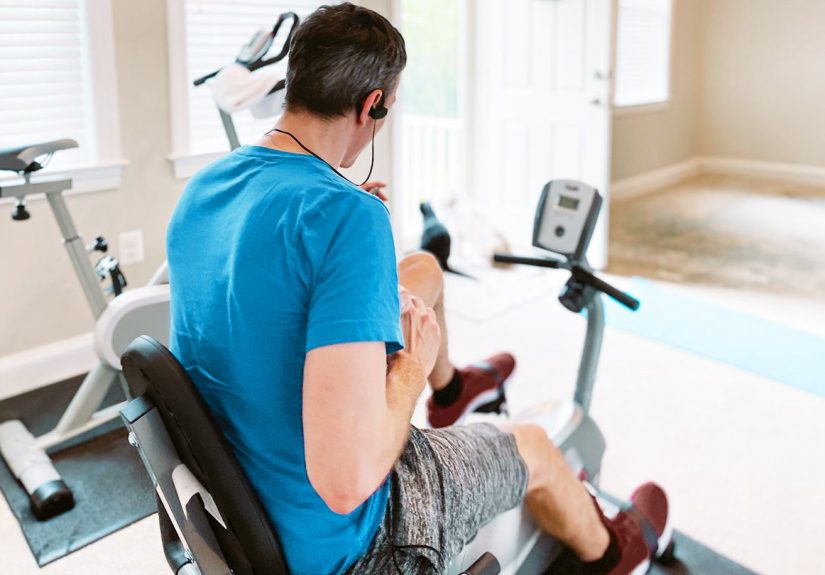
How to Start on a Stationary Bike After Hip Replacement
Once your surgeon or physical therapist clears you, the stationary bike should feel boring at first. That is a compliment. Your first rides are not about burning calories, crushing personal records, or pretending the physical therapy room is the Tour de France. They are about smooth motion, comfort, and safe progress.
Set the Seat High Enough
Seat height is one of the most important details. The seat should usually be adjusted so your knee is nearly straight at the bottom of the pedal stroke, while still allowing you to pedal comfortably. A higher seat can help reduce excessive hip bending. If the seat is too low, your hip may flex too much at the top of the pedal stroke, which may not be appropriate early in recovery.
Pedal Backward First
Some rehabilitation programs recommend pedaling backward first because it may feel easier and help you find a comfortable circular motion. Once backward pedaling feels smooth, your therapist may have you move to forward pedaling. Think of it as politely introducing your new hip to the bike instead of barging in with a playlist and resistance level 12.
Start With No or Very Light Resistance
Resistance should be minimal in the beginning. Your first goal is motion, not muscle conquest. Short sessions, such as 5 to 10 minutes, may be enough at first. Over time, you may work toward 10 to 15 minutes, then 20 to 30 minutes several times per week, depending on your plan.
A common progression is to increase time before increasing resistance. If your hip feels calm during and after the ride, that is a good sign. If soreness, swelling, limping, or pain increases, your body may be voting “too much, too soon.” Listen to that vote.
When Can You Ride a Regular Bike Outside?
Outdoor biking usually requires more patience. Even if your legs can pedal, your whole body has to be ready. You need safe balance, reliable strength, quick reaction time, and enough confidence to handle real-world conditions. Your surgeon may also want your incision fully healed and your physical therapy progress on track before clearing outdoor rides.
Many patients start thinking about outdoor cycling somewhere around 6 to 12 weeks after surgery, but this varies widely. Some people may need longer, especially if they had complications, poor balance before surgery, low bone density, another joint problem, nerve symptoms, dizziness, or limited strength. Others may progress faster because they were active before surgery and recover smoothly.
Your First Outdoor Ride Should Be Almost Laughably Easy
When you do return outdoors, choose a flat, quiet, familiar route. Avoid traffic, steep hills, wet roads, gravel, clipped-in pedals, busy intersections, and group rides where someone inevitably shouts “easy pace” before sprinting like a caffeinated gazelle.
Your first ride might be 5 to 15 minutes. That may sound tiny, especially if you were a serious cyclist before surgery, but it is a smart test ride. The question is not “Can I ride?” The better question is “How does my hip feel later today and tomorrow?” Recovery feedback often arrives after the workout, not during the exciting part.
Signs You May Be Ready to Resume Biking
Before resuming biking after hip replacement, look for practical readiness signs. These do not replace medical clearance, but they help you understand what your care team may be looking for.
- You can walk safely without feeling unstable.
- Your pain is controlled and trending downward.
- Your swelling does not spike after activity.
- You can get on and off the bike without awkward twisting.
- You understand and follow your hip precautions.
- Your physical therapist has tested your strength and balance.
- Your surgeon has cleared you for cycling.
For outdoor cycling, add one more requirement: you should be able to stop, put a foot down, turn, look over your shoulder, and react without panic. A new hip does not enjoy surprises.
Warning Signs to Stop and Call Your Care Team
Some muscle fatigue is normal during rehabilitation, but certain symptoms deserve attention. Stop biking and contact your surgeon or physical therapist if you notice increasing hip pain, sharp pain, new swelling, warmth or redness near the incision, drainage, fever, calf pain, shortness of breath, sudden weakness, a feeling that the hip shifted, or worsening limp.
Pain that steadily improves is different from pain that gets louder after every workout. Your recovery plan should feel progressive, not punishing. The best rehab plan is the one that moves you forward without irritating the new joint or the healing tissues around it.
Best Types of Bikes After Hip Replacement
Upright Stationary Bike
An upright stationary bike is common in physical therapy clinics and home gyms. It allows a familiar cycling position and easy resistance control. The key is proper seat height and a low-resistance start.
Recumbent Bike
A recumbent bike has a larger seat and back support. Some people find it more comfortable, especially if balance is limited. However, the hip angle can vary by model, so setup matters. Ask your therapist whether a recumbent position is appropriate for your surgical precautions.
Indoor Trainer
If you already own a road bike, an indoor trainer may let you ride your familiar bike safely indoors. However, mounting and dismounting can be trickier than using a standard stationary bike. Make sure the bike is stable, the seat is adjusted properly, and you have support nearby at first.
Outdoor Bike
When you return outdoors, choose comfort over ego. A bike with an easy step-through frame, stable handling, flat pedals, and an upright position may be safer in early outdoor rides than an aggressive race setup. Save the aerodynamic heroics for later.
How to Progress Without Overdoing It
A smart biking plan after hip replacement increases gradually. Start with short, easy sessions. Add minutes slowly. Keep resistance light until your therapist or surgeon says it is appropriate to increase. Avoid standing climbs, sprint intervals, hard gears, and long rides too early.
One simple approach is the “next-day rule.” If your hip feels fine during the ride and still feels fine the next day, the dose was probably reasonable. If you are more swollen, sore, tired, or limping the next day, reduce the time, resistance, or frequency.
Warm up gently. Cool down slowly. Keep your cadence smooth. Hydrate. Wear supportive shoes. If biking outdoors, wear a helmet, avoid risky routes, and consider riding with someone calm and patient. Do not choose the friend who thinks every ride should include “just one little hill.” That person is not invited yet.
Common Mistakes People Make When Returning to Cycling
Doing Too Much Because It Feels Good
Hip replacement often reduces the deep arthritis pain that bothered people for years. That relief can be exciting. But less joint pain does not mean all tissues are fully healed. Muscles, tendons, balance, and endurance still need time to catch up.
Ignoring Bike Fit
A poor bike fit can create unnecessary strain. A seat that is too low, handlebars that force too much bending, or pedals that make it hard to get your foot free can all create problems. Early on, comfort and control matter more than performance.
Riding Outside Before Balance Returns
The road does not care that you are recovering. It still has cracks, cars, leaves, dogs, and surprise puddles. If your balance is questionable, stay indoors longer. Stationary biking may not be glamorous, but neither is explaining to your surgeon that you fell while trying to beat your old segment time.
Real-World Experiences: What Returning to Biking Can Feel Like
Many people imagine that returning to biking after hip replacement will feel like flipping a switch: surgery, recovery, clearance, bike ride, victory music. In real life, it is usually more like turning a dimmer knob. The progress is gradual, sometimes uneven, and often surprisingly emotional.
One common experience is the shock of how easy the first stationary bike session looksand how meaningful it feels. A patient may sit on the bike, pedal backward for a few minutes, and realize, “I am moving my hip again without that old grinding pain.” The ride may last only five minutes, but mentally it can feel like crossing a finish line. The funny part is that the workout might not impress anyone on a fitness app. No trophies. No dramatic calorie burn. Just a quiet little win in a physical therapy room, which is exactly the kind of win recovery is built on.
Another experience is learning patience the hard way. Someone who used to bike 20 miles before breakfast may assume a 15-minute indoor ride is harmless. Then the hip feels cranky that evening, and the next morning brings extra stiffness. That does not always mean something is wrong. It may simply mean the body is reminding the rider that healing tissue has a strict management style. The lesson is usually clear: increase one thing at a time. Add a few minutes, not minutes plus resistance plus hills plus a victory lap around the neighborhood.
Outdoor biking can feel both exciting and strange. The first time back outside, even experienced cyclists may feel cautious. Getting on the bike may require a new strategy. Starting and stopping may feel less automatic. Looking over the shoulder may feel awkward. A route that once seemed boring may suddenly look like an obstacle course designed by a committee of potholes. This is why flat, quiet, familiar roads are ideal at first. Confidence returns through repetition, not bravado.
Some riders also discover that their goals change. Before surgery, biking may have been about speed, distance, competition, or weekend adventure. After surgery, it may become about freedom: riding to the park, keeping up with family, commuting comfortably, or enjoying movement without the old hip pain. That shift can be surprisingly satisfying. The bike becomes less of a performance machine and more of a reminder that the body can come back.
There can also be small frustrations. Clipping into pedals may feel risky at first. A high top tube may be harder to step over. Long rides may cause fatigue sooner than expected. Hills may need to wait. These adjustments are not failures. They are temporary edits to the cycling story. Many patients do better when they treat early rides as practice sessions rather than proof of fitness.
The best experiences usually come from people who respect the process. They get clearance, use the stationary bike first, build slowly, keep communication open with their physical therapist, and choose safe outdoor conditions. They celebrate small milestones: the first smooth pedal stroke, the first 10-minute ride, the first outdoor loop, the first time they finish a ride and forget about the hip for a while. That is the real magic of biking after hip replacementnot rushing back, but returning wisely enough that cycling can stay part of life for the long haul.
Conclusion: So, How Soon Can You Resume Biking After Hip Replacement?
You may be able to resume gentle stationary biking within days or weeks after hip replacement if your surgeon or physical therapist clears it. Many patients gradually increase stationary bike time and light resistance around 4 to 6 weeks. Outdoor biking usually comes later, often around 6 to 12 weeks or beyond, because it requires balance, strength, safe reaction time, and a lower risk of falling.
The safest answer is not a single date on the calendar. It is a checklist: healed incision, controlled pain, stable walking, improving strength, good bike setup, no warning symptoms, and medical clearance. Biking can be a fantastic low-impact way to rebuild endurance and enjoy your new hip, but the smartest cyclists after hip replacement are not the fastest ones. They are the ones who return gradually, listen carefully, and keep the rubber side down.