Table of Contents >> Show >> Hide
- What an Audition Really Is
- Step 1: Know What Kind of Audition You Are Doing
- Step 2: Choose Material That Fits You
- Step 3: Prepare Beyond Memorization
- Step 4: Get the Practical Stuff Right
- Step 5: How to Audition in the Room
- Step 6: How to Nail a Self-Tape Audition
- Step 7: Handle Callbacks Like a Pro
- Common Audition Mistakes to Avoid
- Experience Matters: What Auditions Teach You Over Time
- Final Thoughts on How to Audition
Auditioning is one of those strange human activities where you walk into a room, try to look relaxed, and pretend your heartbeat is not doing a full drum solo in your chest. Whether you are auditioning for a play, a musical, a film, a TV role, a commercial, or a self-tape callback, the basics stay surprisingly consistent: know what you are auditioning for, prepare like a professional, and make it easy for the people behind the table or camera to imagine you in the role.
If you have ever wondered how to audition without spiraling into a panic, overacting into another dimension, or showing up dressed like the role’s distant cousin, you are in the right place. This guide breaks down how to audition in a way that is practical, realistic, and actually useful. No magic tricks. No fake “just be confident” nonsense. Just the habits, choices, and strategies that help performers walk in ready.
What an Audition Really Is
Before you can learn how to audition well, it helps to understand what an audition is really for. It is not only a talent test. It is also a collaboration test. Casting directors, directors, choreographers, music directors, and faculty panels are not just asking, “Are you talented?” They are asking, “Do you fit this project? Are you prepared? Can you take direction? Can we work with you?”
That means the best auditions are not about proving you are the most intense person in a ten-mile radius. They are about showing that you understand the material, you can bring it to life truthfully, and you can adapt when given an adjustment. In other words: talent matters, but so do judgment, listening, and professionalism.
Step 1: Know What Kind of Audition You Are Doing
Not all auditions are built the same. A college musical theatre audition is different from a TV self-tape. A commercial callback is different from a straight-play general audition. The more specifically you understand the format, the better your preparation will be.
Common audition types include:
- In-room auditions: You perform live for a panel, casting team, or creative staff.
- Self-tape auditions: You record and submit your performance on video.
- Callbacks: A second or later round where you may be asked to do adjustments, read new material, sing again, or work with scene partners.
- General auditions: You present material without a specific role being assigned yet.
- Open calls: Larger, sometimes more competitive auditions where many performers are seen.
- Invited auditions: More targeted sessions, often through an agent, school process, or direct request.
The smartest performers do not prepare in a generic way. They prepare for this audition. Read the instructions closely. Then read them again, because many audition disasters begin with a performer skipping a detail and discovering too late that the slate was supposed to be separate, the monologue had a time limit, or the file had to be labeled a certain way. Nothing says “I am ready for professional work” like actually following directions.
Step 2: Choose Material That Fits You
If you are selecting your own audition material, this is where many people accidentally turn their audition into a hostage situation. They pick material that is wildly wrong for their age, type, vocal comfort zone, or current skill level. Do not do that.
The best audition pieces are not the flashiest ones. They are the ones you can perform honestly, clearly, and with confidence. Good material should feel connected to you, not like a costume you are wearing over your instincts. If your monologue or song does not fit your voice, emotional range, or energy, it will fight you the whole way through.
When choosing material, ask yourself:
- Does this piece suit my age range and casting type?
- Can I perform it truthfully instead of forcing it?
- Do I understand the full story and context?
- Can I do it well on my best day and still do it well on a nervous day?
- Does it show something specific about me as an artist?
If you are singing, choose material you can sing consistently, not just once in the shower when the stars aligned and your shampoo gave you courage. If you are doing a monologue, choose one with a clear objective, a real sense of relationship, and a reason for the character to speak right now.
Step 3: Prepare Beyond Memorization
A lot of performers think preparation means “I know the words.” That is only the beginning. Real audition prep means knowing what you are saying, why you are saying it, who you are talking to, what changed just before the scene, and what you want by the end.
Break down the material
Read the entire play, script, or scene if possible. If you are working with sides, learn the circumstances surrounding the scene. For songs, know the character, the story, and what the lyric is doing dramatically. If you are asked about the material and your answer is basically, “Well, she seems upset,” that is not analysis. That is surviving on vibes.
Practice out loud, not just in your head
Auditions live in the body and voice, not just the brain. Rehearse on your feet. Time your material. Practice transitions into and out of the piece. Work with a coach, teacher, accompanist, or reader when possible. And yes, rehearse in front of humans if you can. Family, friends, classmates, roommates, and tolerant pets all count.
Build flexibility into your prep
You do not want to be so locked into one exact delivery that a direction note sends your performance crashing into a wall. Good performers come in prepared, but not frozen. Leave room for play, adjustment, and surprise.
Step 4: Get the Practical Stuff Right
Sometimes people lose auditions before they even start because the practical details are messy. Your materials, clothing, timing, and setup all send signals.
What to wear to an audition
Dress in a way that suggests the role without turning the room into Halloween. The goal is to help the casting team see you in the part while keeping the focus on your face and performance. Clean, flattering, simple clothing usually wins. Costumes usually do not. Distracting prints, giant accessories, and anything that looks like it belongs at a nightclub sponsored by sequins should stay home.
For stage auditions, a polished version of “dress toward the role” often works well. For camera auditions, solid colors and clean lines are usually better than busy patterns. Wear something you can move in, breathe in, and forget about once you begin.
Headshot, resume, and profile
Keep your headshot current. Keep your resume accurate. Keep your casting profiles updated with your real information, credits, training, sizes, and special skills. “Horseback riding” should mean you can actually do horseback riding, not that you once sat on a pony at a birthday party in third grade.
Arrive early
If the audition is live, aim to arrive with time to breathe, check in, and settle yourself. Running in late and out of breath is a rough way to start. Your goal is to enter the room looking calm, even if your internal monologue is doing cartwheels.
Step 5: How to Audition in the Room
The audition room is not a place to perform your anxiety. It is a place to do the work simply and clearly.
Your entrance matters
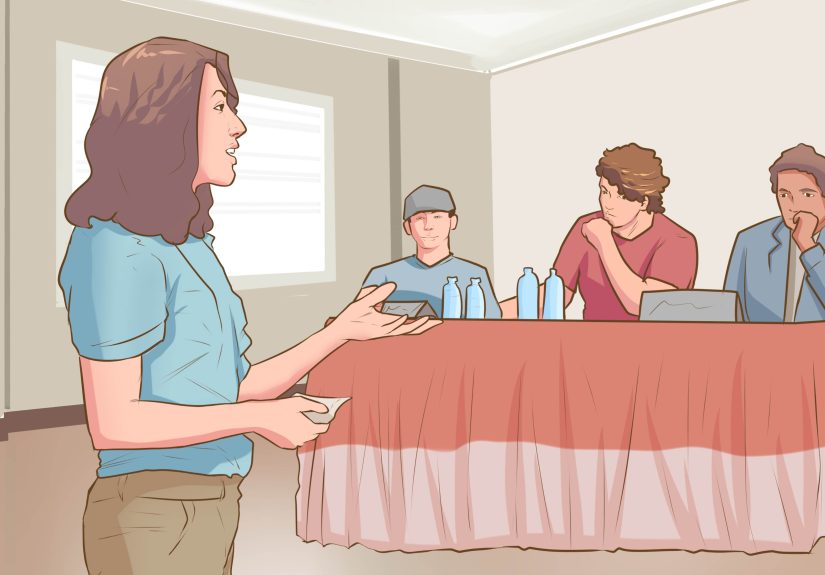
Walk in, take your cue from the room, and get started. Be friendly and professional, but do not force small talk or burst in “in character.” Most of the time, the strongest first impression is calm readiness. People remember actors who come in prepared and grounded, not actors who arrive like they are trying to win Best Entrance at the Audition Olympics.
Slate simply
If a slate is requested, keep it brief and natural. Usually that means your name and the requested identifying information such as title, playwright, or song/show. Do not turn the slate into a personality competition. You are not hosting an awards show. Just be clear and pleasant.
Focus on connection, not showing off
Whether you are performing a monologue or reading sides, your focus should be active. You are talking to someone for a reason. You want something. You are responding to what is happening. That sense of action is far more compelling than generalized “big emotion.”
Take adjustments well
This is huge. If someone gives you a note, do not defend your original choice, apologize for being human, or look terrified that you have been found out by the acting police. Listen. Take a second. Try the adjustment fully. Directors and casting teams love performers who can pivot.
Step 6: How to Nail a Self-Tape Audition
Self-tapes are no longer the backup option. They are central to modern auditioning. That means your self-tape setup should be clean, simple, and professional even if you are filming in your apartment between a laundry basket and a plant that has seen better days.
Self-tape basics
- Film horizontally unless instructed otherwise.
- Use clear, even lighting.
- Choose a clean, neutral background.
- Make sure audio is crisp and easy to understand.
- Frame yourself appropriately for the request.
- Keep the camera steady at eye level.
- Follow the requested slate and file instructions exactly.
In many cases, a medium or tighter shot works best because casting needs to see your eyes and expression. If they request full body, give them full body in one frame. Do not create a dramatic camera pan worthy of a nature documentary. This is an audition, not a reveal shot for a superhero franchise.
Use a good reader
If the scene has another character, get a reader with clear diction and steady energy. Their job is not to steal the scene or sound like they are reading legal warnings on a medication ad. They should support the tape and keep your eyeline close to the camera without making you stare directly into the lens unless instructed.
Do not overcomplicate the tech
You do not need a Hollywood studio. A smartphone, decent light, clear sound, and a solid backdrop can absolutely work. What matters most is that the tape looks intentional and lets your performance come through without distractions.
Step 7: Handle Callbacks Like a Pro
Getting a callback is not a promise of booking the role, but it is a strong sign that your first audition worked. Now your job changes slightly. At a callback, they are often testing flexibility, consistency, chemistry, and range.
Come prepared. Revisit the material. Research the project more deeply. Be ready for new sides, changes in tone, direction notes, and more specific questions. Stay focused on the work rather than on the outcome. The more you obsess over whether you are “winning,” the more likely you are to tighten up and stop listening.
Callbacks are also where your professionalism becomes especially visible. Be kind, stay present, and keep your energy clean in waiting areas. People notice more than performers think.
Common Audition Mistakes to Avoid
- Choosing material that is wrong for you: Hard does not automatically mean impressive.
- Ignoring the instructions: This is one of the fastest ways to be ruled out.
- Overacting: Bigger is not always better. Truth usually wins.
- Underpreparing: Nerves are easier to manage when preparation is strong.
- Not taking direction: Flexibility is bookable.
- Distracting wardrobe or background: The work should be the star.
- Apologizing too much: Recover and keep going.
- Comparing yourself in the waiting room: A terrible use of energy, and somehow everyone still does it.
Experience Matters: What Auditions Teach You Over Time
The funny thing about learning how to audition is that nobody becomes good at it by reading one article and suddenly floating into the room like a serene professional swan. Most people learn through repetition, awkwardness, small wins, weird surprises, and the occasional deeply humbling experience. In fact, auditioning itself becomes a skill separate from performing. A brilliant actor can still struggle in auditions at first, while a less experienced performer may do well simply because they understand the format and stay calm under pressure.
One of the most common experiences performers talk about is realizing that the audition they thought was a disaster was not a disaster at all. They forgot a line, had to restart a phrase, or left the room convinced they had ruined everything. Then they got the callback. Why? Because the people in the room were not looking for robotic perfection. They were looking for truth, focus, and someone who could recover. That is a powerful lesson. The room is often more forgiving than your inner critic.
Another common experience is learning the hard way that preparation must include the practical side. A performer may have brilliant acting choices but show up late, forget the sheet music, bring the wrong cut, or submit a self-tape with terrible sound. Those experiences sting, but they teach a lasting lesson: being talented and being reliable must go together. The audition process rewards both art and organization.
Many performers also discover that the material they love most is often the material that auditions best. There is usually a turning point where someone stops picking pieces because they seem impressive and starts choosing pieces that actually feel alive in their body and voice. Suddenly the work gets clearer. The performance breathes more. The nerves do not disappear, but they become manageable because the actor trusts the material instead of wrestling it in public.
Self-tapes create their own version of this education. At first, many actors overdo them. They spend hours chasing the “perfect” take, adjusting a lamp twelve times, or filming so many versions that the scene loses all freshness. Over time, experienced performers get more efficient. They learn how to set up quickly, make two or three strong choices, review the tape with a professional eye, and send it. That efficiency is not laziness. It is craft. It means they understand the point of the self-tape: capture a strong, watchable audition, not produce a feature film from the corner of your living room.
Perhaps the biggest experience-related lesson is emotional. Auditions teach resilience. You can prepare beautifully and still not book the role because someone else is taller, sounds younger, matches the ensemble better, or looks more like the lead’s sibling. That is not failure. That is casting. The performers who last are the ones who learn to separate their self-worth from the result. They treat each audition as a chance to practice the craft, build a reputation, and be remembered for future opportunities.
So yes, experience helps. It teaches you how to walk in, breathe, connect, listen, adjust, and leave without carrying the whole room home with you. And that may be the most useful audition skill of all.
Final Thoughts on How to Audition
If you want to know how to audition successfully, here is the simplest answer: choose material that fits you, prepare deeply, follow instructions, present yourself professionally, and stay flexible in the room or on camera. That is the foundation. Everything else is refinement.
Some auditions will go great. Some will feel odd. Some will teach you more than they reward you. But every solid audition builds your skill, your confidence, and your reputation. The goal is not to be flawless. The goal is to be prepared, present, and castable.
And when in doubt, remember this: the audition panel is not waiting for you to fail. They are hoping you are the answer to their problem. Your job is to make it easy for them to say yes.