Table of Contents >> Show >> Hide
- Quick refresher: What passive voice is (and what it isn’t)
- Step 1: Learn the most common passive “fingerprints”
- Step 2: Ask the magic question: “Who did what?”
- Step 3: Put the doer in the subject position
- Step 4: Replace “helper verb piles” with one strong verb
- Step 5: Track the “agentless passive” (the passive with no actor)
- Step 6: Use passive voice on purpose (yes, really)
- Step 7: Build a fast editing workflow to catch passive voice
- Step 8: Practice conversions (and keep your meaning intact)
- A quick checklist: Avoid passive voice without overcorrecting
- Conclusion
- Real-World Experiences: What Writers Usually Notice When They Cut Passive Voice (About )
Passive voice isn’t a villain. It’s more like glitter: fine in small, intentional amounts, but if it gets everywhere,
you’ll still be finding sparkles in your writing six drafts later.
If you’re here, you probably want sentences that feel clearer, tighter, and more confidentespecially for blogs,
business writing, essays, and anything meant to persuade or explain. Active voice usually delivers that. Passive voice
can blur responsibility, stretch sentences with extra helper verbs, and make your prose sound like it’s wearing a
trench coat and refusing to show ID.
Let’s fix that. Below are eight practical steps to spot passive voice quickly, revise it without breaking your meaning,
and keep the passive for the rare moments when it actually helps your reader.
Quick refresher: What passive voice is (and what it isn’t)
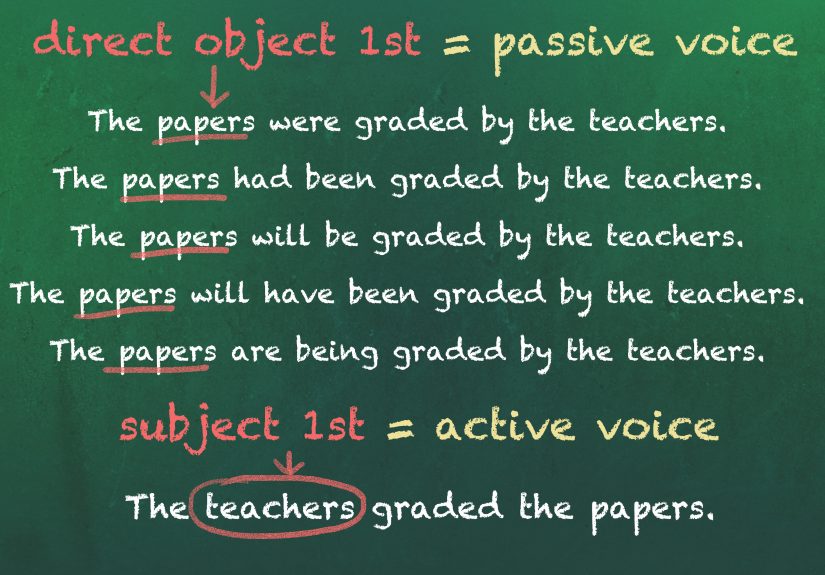
In active voice, the subject does the action:
Active: “The editor revised the headline.”
In passive voice, the subject receives the action:
Passive: “The headline was revised (by the editor).”
Passive voice often uses a form of to be (is/are/was/were/been/being) plus a past participle
(revised, written, chosen), and it may include a “by…” phrase. But here’s the important nuance: not every sentence with
“to be” is passive. “The headline is catchy” is just a linking verb + adjective, not passive voice.
Your goal isn’t to eliminate every passive sentence like you’re on a grammar-themed reality show. Your goal is to
choose the clearest voice for your readermost of the time, that’s active.
Step 1: Learn the most common passive “fingerprints”
Passive voice is easiest to catch when you know what it typically looks like. Watch for these patterns:
1) “To be” + past participle
- was written, is known, were delivered, has been updated
2) Optional “by…” phrase
- “The proposal was approved by the committee.”
- “The decision was made by leadership.”
3) The sentence starts with the “receiver,” not the “doer”
- “The emails were sent…” (Okay, but who sent them?)
Pro tip: if your sentence reads like it’s trying to dodge accountability“Mistakes were made”you’re probably staring at
passive voice (and maybe a tiny bit of drama).
Step 2: Ask the magic question: “Who did what?”
Passive sentences often hide the actor (the doer). So interrogate your sentence gently, like a friendly detective:
Passive: “The timeline was changed.”
Question: Who changed it?
Active options:
- “The project manager changed the timeline.”
- “Our team changed the timeline after the scope expanded.”
- “The client changed the timeline during the second review.”
Notice what just happened: the sentence got clearer, and the reader now understands responsibility, context, and the
reason they should keep reading.
Step 3: Put the doer in the subject position
Once you identify the actor, make that actor the subject of the sentence. This is the simplest “conversion” move.
Before-and-after examples
- Passive: “The report was completed by the intern.”
Active: “The intern completed the report.” - Passive: “A recommendation was provided by the consultant.”
Active: “The consultant provided a recommendation.” - Passive: “The new policy will be announced by HR.”
Active: “HR will announce the new policy.”
This step alone can clean up a surprising amount of passive voiceespecially in blog intros, headlines, and topic
sentences where you want energy and clarity.
Step 4: Replace “helper verb piles” with one strong verb
Passive voice loves stacking helper verbs. Active voice prefers a single, decisive verb.
Watch how wordiness disappears
- Passive: “The final draft was reviewed and was approved.”
Active: “The editor reviewed and approved the final draft.” - Passive: “The feature is being tested by QA.”
Active: “QA is testing the feature.” - Passive: “The decision has been made to postpone the launch.”
Active: “Leadership decided to postpone the launch.”
If you want your writing to sound confident, upgrade your verb choices. Instead of “was done,” try “built,” “tested,”
“measured,” “launched,” “fixed,” “confirmed,” “compared,” or “recommended.”
Step 5: Track the “agentless passive” (the passive with no actor)
The sneakiest passive voice is the one that omits the actor entirely. It’s grammatically legalbut often informationally
vague.
Common agentless passive phrases
- “It is believed that…”
- “It was decided that…”
- “It is recommended that…”
- “Research was conducted…”
These can be useful in academic contexts when the actor is truly unimportant, but in blogs and business writing, they
often feel slippery. Try these revisions:
- Passive: “It is recommended that you update your password.”
Active: “Security experts recommend updating your password.” - Passive: “It was decided that the meeting would be moved.”
Active: “The team decided to move the meeting.” - Passive: “Research was conducted on customer retention.”
Active: “We analyzed customer retention data over six months.”
The active versions don’t just “sound better”they communicate who holds the claim, who took the action, and how much
confidence the reader should place in it.
Step 6: Use passive voice on purpose (yes, really)
Some writing situations call for passive voice. Several major style authorities explicitly allow itand even prefer it in
specific contexts. The key is intent.
Good reasons to keep the passive
- The doer is unknown: “My bike was stolen last night.” (If you don’t know who did it, you can’t responsibly name them.)
- The doer is irrelevant: “The package was delivered at 9:12 a.m.” (The delivery matters more than the driver.)
- You want to emphasize the receiver: “The patient was diagnosed within 24 hours.”
- You’re describing a process: “The solution was heated to 212°F.”
Also: sometimes passive voice creates a tactful tone. “An error was found in the invoice” can be a calmer opening than
“You sent us the wrong invoice,” depending on the relationship and stakes. (Use your powers responsibly.)
Step 7: Build a fast editing workflow to catch passive voice
The easiest way to reduce passive voice is to catch it during revision, not while drafting. Here’s a workflow that works
for blog posts, essays, and professional writing.
Round 1: Do a “to be” scan
Use Find (Ctrl+F / Cmd+F) for: is, are, was, were, be, been, being. Not all matches are passive, but many
passive sentences start there. Flag the suspicious ones for Round 2.
Round 2: Highlight “by…” phrases
Search for “by” and review each case. If the “by…” phrase names a doer, you can often flip the sentence
into active voice quickly.
Round 3: Use a toolbut don’t obey it like a robot
Editors like Grammarly and Hemingway can highlight passive voice. They’re helpful for spotting patterns, but they can
over-flag (or miss nuance), especially with sentences that use “to be” without being passive.
Think of these tools like smoke detectors: useful alerts, occasionally dramatic, not always a five-alarm fire.
Step 8: Practice conversions (and keep your meaning intact)
Converting passive to active voice is a skill. Like any skill, you get better by doing it on purpose for a short,
focused sessionthen letting your brain return to regular life.
A simple 10-minute drill
- Copy 10 sentences from your draft that feel sluggish or vague.
- Underline the main verb in each sentence.
- Ask: “Who did what?”
- Rewrite so the doer is the subject and the verb is specific.
- Read both versions out loud. Keep the one that sounds clearest.
Example drill (mini)
Passive: “The customer’s request was not addressed in time.”
Active: “Our support team didn’t address the customer’s request in time.”
The active version might feel more blunt, but it’s also more honest and actionable. If you need a more neutral tone,
you can still keep active voice:
Active (tactful): “Our support team missed the response window for the customer’s request.”
A quick checklist: Avoid passive voice without overcorrecting
- Clarity first: If passive hides the actor and the actor matters, revise.
- Keep the focus: If the receiver matters more than the doer, passive may be fine.
- Prefer strong verbs: Replace “was done” with a specific action.
- Don’t ban “to be”: Not every “is/was” is passive voice.
- Vary your rhythm: All-active-all-the-time can sound punchy… and exhausting.
Conclusion
Avoiding passive voice isn’t about following a rigid ruleit’s about writing sentences that clearly show who is doing
what, using strong verbs that move the reader forward. Use the eight steps above to spot passive patterns, rewrite with
intention, and keep the passive voice for the moments when it genuinely improves emphasis, tone, or clarity.
If you do nothing else: practice asking “Who did what?” and putting that doer at the front of the sentence. Your writing
will instantly sound more direct, more confident, and more human.
Real-World Experiences: What Writers Usually Notice When They Cut Passive Voice (About )
Writers often discover something funny when they start hunting passive voice: the biggest improvement isn’t “grammar.”
It’s thinking. Passive voice tends to show up in the exact places where your message is fuzzywhere you’re
not sure who owns a decision, where you’re trying to sound formal, or where you’re describing a process without deciding
what the reader should focus on.
A common real-world scenario happens in workplace writing. Someone drafts a project update full of lines like “The
timeline was adjusted,” “Concerns were raised,” and “It was determined that we should pivot.” On the surface, it sounds
professional. But readers end up asking the same questions in Slack (or email, or a meeting): Who adjusted it?
Who raised concerns? Who determined that? Passive voice doesn’t just slow down comprehensionit can force
extra back-and-forth because the writing didn’t include the missing actors.
Blog writing has its own version of this. Many drafts begin with passive, distant phrasing“It is believed that…” or
“It has been shown…”because the writer wants to sound credible. But credibility usually increases when you name your
source clearly: “Nutrition researchers have found…” or “A 2024 survey of 1,000 customers suggests…” Even if you don’t link
out, you’re signaling that the claim belongs to someone and that evidence exists. Readers trust that more than a
floating, ownerless statement.
Another experience writers report: once they revise passive voice, they start revising structure. Active
voice encourages you to pick a real subject for the sentence, which often reveals what the paragraph is actually about.
For example, “User feedback was collected and changes were made” becomes “We collected user feedback and changed the
onboarding flow.” That rewrite doesn’t just improve a sentenceit clarifies the paragraph’s point: what “we” did and why
it matters.
There’s also a tone shift that surprises people. Active voice can feel “too direct” at first, especially if you’re used
to formal writing. The trick is learning that you can be direct and polite. Compare “Your request was denied”
with “We can’t approve your request right now.” Both deliver the same outcome, but the active version sounds more human
and more usable. It often reduces reader frustration because it feels like a person is speaking, not an automated policy
generator.
Finally, writers who practice these revisions tend to develop a strong editing habit: they stop trying to remove passive
voice everywhere and start using it deliberately. They keep passive sentences for process descriptions (“The mixture was
heated”), for unknown actors (“The window was broken”), or for reader focus (“The patient was diagnosed quickly”).
Everything else becomes cleaner by default. That’s the endgame: not perfection, but control.