Table of Contents >> Show >> Hide
- Meet Acorn Squash: What You’re Working With
- How to Choose the Best Acorn Squash (So Your Oven Doesn’t Do All the Work)
- Prep Like a Pro: Washing, Cutting, and Not Losing a Finger
- The Best Ways to Bake Acorn Squash
- Method 1: Bake Acorn Squash Halves (Classic, Simple, Reliable)
- Method 2: Bake Acorn Squash Wedges or Slices (Faster, More Edges = More Flavor)
- Method 3: Bake Acorn Squash for Stuffing (Dinner Inside a Vegetable Bowl)
- Quick Timing Guide: Temperature and How Long to Bake Acorn Squash
- How to Know It’s Done (Without Overthinking It)
- Common Mistakes (And the Easy Fixes)
- Roasting the Seeds (Because Free Snacks Are the Best Snacks)
- Storage and Reheating (So Future-You Gets a Break)
- Nutrition Notes (A.K.A. “This Tastes Like Comfort Food, But It’s Actually Good for You”)
- FAQ
- Real-Life Kitchen Notes: of “What People Learn After Baking Acorn Squash a Few Times”
- Conclusion
Acorn squash is the cozy sweater of the produce aisle: ribbed, sturdy, and quietly confident it can turn into dinner with almost no effort. If you’ve ever stared at one and thought, “How do I get into this thing without filing a police report?”you’re in the right place. This guide will walk you through how to bake acorn squash so it comes out tender, caramelized, and flavored exactly how you want it (sweet, savory, or “I put hot sauce on everything”).
We’ll cover the best oven temps, how long to bake it depending on the cut, seasoning ideas that actually make sense, and the little real-world tricks that keep your squash from turning into either (a) crunchy disappointment or (b) a sugary lava situation. Let’s bake.
Meet Acorn Squash: What You’re Working With
Acorn squash is a winter squash with dark green skin and orange flesh that tastes lightly sweet and nutty. The skin is edible once cooked (you don’t have to eat it, but you can), and the shape makes it perfect for roasting in halves, wedges, or slicesor using as an edible bowl for stuffing.
How to Choose the Best Acorn Squash (So Your Oven Doesn’t Do All the Work)
Baking can’t fix everythinglike a squash that’s already halfway to compost. Here’s what to look for:
- Heavy for its size: Heavier usually means denser flesh and better texture.
- Dull, firm skin: A matte finish is your friend; shiny can mean it was picked too early.
- No soft spots, cracks, or moldy/sunken areas: That’s damage (and not the cute, rustic kind).
- Minimal orange coloring on the outside: A little is fine, but lots can signal tougher, fibrous flesh.
- Stem attached if possible: It’s a freshness bonus and helps with storage.
Prep Like a Pro: Washing, Cutting, and Not Losing a Finger
Step 1: Wash the squash
Yes, even though you’re “not eating the skin.” You’ll drag your knife through that skin and straight into the flesh, so rinse under cool water and rub it clean.
Step 2: Make cutting easier (the underrated hack)
If your squash feels like a decorative bowling ball, microwave it for 1–2 minutes to soften the exterior slightly. It won’t cook itjust makes it less likely to skid, crack, or fight back.
Step 3: Cut safely
- Use a large, sharp chef’s knife (dull knives slipsharper is safer).
- Place a damp towel under your cutting board so it doesn’t wander off.
- Slice a tiny bit off the bottom if needed so the squash sits steady.
- Cut from tip to stem (or slice off the stem end first, then halve).
Step 4: Scoop out seeds
Use a sturdy spoon or an ice-cream scoop. Scrape out seeds and stringy bits until the cavity looks clean. Save the seeds if you want a crunchy snack later (we’ll get there).
The Best Ways to Bake Acorn Squash
There are a few “right” waysyour best option depends on whether you want maximum caramelization, fast weeknight ease, or stuffable halves. Here are the main approaches.
Method 1: Bake Acorn Squash Halves (Classic, Simple, Reliable)
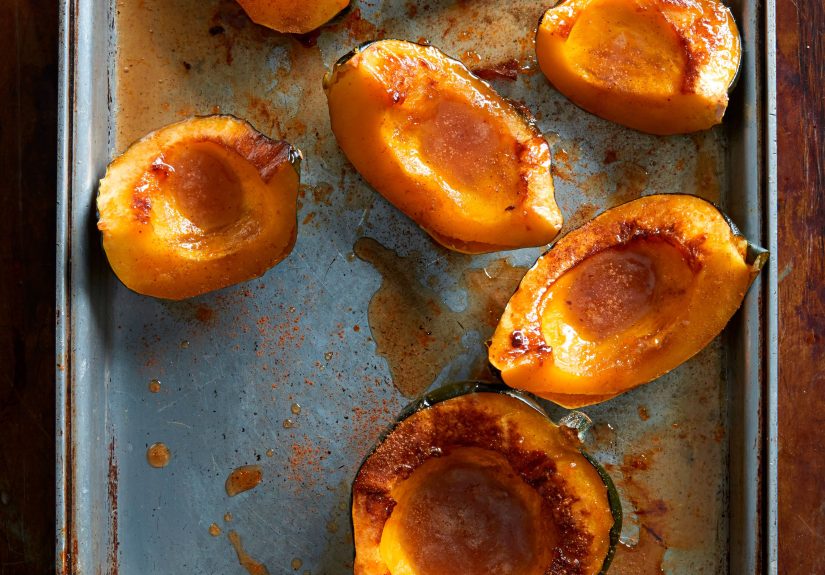
This is the go-to method for buttery, tender squash you can serve as a side or turn into a meal with toppings. You can roast halves cut-side up for more browning, or cut-side down for softer, steamier flesh.
Basic savory halves (great with chicken, pork, or grain bowls)
Ingredients (serves 2–4):
- 1 acorn squash, halved and seeded
- 1–2 tbsp olive oil or melted butter
- 1/2 tsp kosher salt (adjust to taste)
- Black pepper
- Optional: thyme, rosemary, smoked paprika, or chili powder
Steps
- Preheat the oven to 400–425°F.
- Season: Brush the cut sides with oil or butter, then season with salt and pepper. Add herbs/spices if you want savory vibes.
- Choose your orientation:
- Cut-side up = more browning and caramelization.
- Cut-side down = softer, moister texture (especially good if you’ll mash it).
- Bake on a rimmed sheet pan for 45–60 minutes, depending on size. It’s done when a fork or small knife slides in easily with almost no resistance.
- Rest 5 minutes, then serve warm.
Classic sweet halves (brown sugar & butter style)
If you grew up with squash that tasted suspiciously like dessert, welcome home. This version is sweet, buttery, and perfect with roast turkey, ham, or “I’m eating this straight off the tray.”
- Fill each cavity with a small pat of butter.
- Add 1–2 tsp brown sugar (or maple syrup) per half.
- Optional: cinnamon, nutmeg, pinch of salt to balance sweetness.
Bake at 350–400°F until very soft and browned on topusually 50–75 minutes. If the sugar is browning too fast, loosely tent with foil for the last 15 minutes.
Method 2: Bake Acorn Squash Wedges or Slices (Faster, More Edges = More Flavor)
Want more caramelized bits per bite? Cut your squash into wedges or 3/4-inch slices. More surface area means more browning. More browning means more “why is this so good?”.
Steps
- Preheat oven to 425°F (or 400°F if your oven runs hot).
- Cut squash into 3/4-inch slices or wedges.
- Toss with olive oil, salt, pepper, and your chosen seasonings.
- Spread in a single layer (don’t crowdcrowding steams).
- Roast 20–30 minutes, flipping once, until browned and tender.
Seasoning combos that don’t feel like a personality quiz
- Maple + chili powder + lime (sweet heat with brightness)
- Brown butter + sage + lemon (classic fall energy)
- Cumin + smoked paprika + garlic (savory, slightly smoky)
- Cinnamon + nutmeg + pinch of salt (warm and cozy)
- Za’atar + olive oil + flaky salt (bold, herby, snackable)
Method 3: Bake Acorn Squash for Stuffing (Dinner Inside a Vegetable Bowl)
Stuffed acorn squash is a full meal that looks impressive, even if you made it while wearing sweatpants and listening to a podcast about crime. The trick is to bake the halves until tender but still firm, so they hold their shape.
Stuffable bake
- Preheat oven to 375°F.
- Brush cut sides with oil, season lightly with salt and pepper.
- Place cut-side down and bake 40–45 minutes until tender but not collapsing.
- Flip, fill with stuffing (grains + veggies + protein), and bake 10–15 minutes more if needed.
Stuffing ideas: quinoa with roasted chickpeas and spices, sausage-apple-onion, wild rice with mushrooms, or a taco-style filling. Acorn squash plays well with bold seasoning.
Quick Timing Guide: Temperature and How Long to Bake Acorn Squash
Your oven, your squash size, and your cut thickness will change the exact timing. But these ranges will get you very close.
| Cut & Method | Oven Temp | Approx. Time | Best For |
|---|---|---|---|
| Halves (simple roast) | 425°F | 50–55 min | Tender halves, easy side |
| Halves (lower & slower) | 350°F | 45–50+ min | Coordinating with other dishes |
| Wedges / 3/4-inch slices | 425°F | 20–25 min | Caramelized edges, faster cook |
| Stuffable halves (cut-side down) | 375°F | 40–45 min | Stable “bowls” for filling |
| Covered bake with water in pan | 400°F | 60–75 min | Extra soft, dessert-style squash |
How to Know It’s Done (Without Overthinking It)
Your acorn squash is done when:
- A fork or small knife slides into the thickest part easily.
- The flesh looks deeper orange and feels soft.
- Edges are browned and the surface looks slightly caramelized.
If it’s not done, keep baking. Squash is forgivingundercooking is the real enemy. The best baked acorn squash is fully tender, not “kind of okay if you chew with determination.”
Common Mistakes (And the Easy Fixes)
1) It’s bland
Winter squash needs salt. Even sweet versions benefit from a pinch to sharpen flavor. Also: fat carries flavorolive oil, butter, or a finishing drizzle goes a long way.
2) It’s watery or mushy
Mushy usually happens when it steams too much (covered too long, crowded pan, or cut-side down the entire time). If you want caramelization, roast uncovered and give pieces space.
3) The sugar is burning
Brown sugar and maple can scorch at high heat. If you’re baking sweet halves at 425°F, consider adding the sugar halfway throughor tent with foil if the top is getting too dark too fast.
4) It’s taking forever
Big squash + low oven + thick cuts = long bake. Raise the temp toward 425°F, slice into wedges, or pre-soften briefly in the microwave (especially if you’re short on time).
Roasting the Seeds (Because Free Snacks Are the Best Snacks)
Don’t toss the seeds unless you truly hate joy. Here’s the simple way:
- Rinse seeds to remove stringy bits.
- Pat dry (they crisp better when dry).
- Toss with a little olive oil and salt.
- Bake at 375°F for about 20 minutes, shaking once or twice, until crisp.
Optional upgrades: smoked paprika, cinnamon sugar, garlic powder, or a pinch of cayenne.
Storage and Reheating (So Future-You Gets a Break)
- Whole squash: Store in a cool, dry, dark place (around 50–60°F) with ventilation.
- Cut squash: Wrap tightly and refrigerate; use within several days.
- Cooked squash: Refrigerate in an airtight container for about 4 days.
- Freezing: Cook, scoop out flesh, mash/purée, and freeze for longer storage (great for soups and baking).
Reheat roasted pieces at 350°F until warmed through (best texture), or microwave for speed. If you want edges to crisp again, a quick broil at the end helps.
Nutrition Notes (A.K.A. “This Tastes Like Comfort Food, But It’s Actually Good for You”)
Acorn squash brings fiber and key nutrients like vitamins A and C and potassium. Translation: it’s sweet and cozy without being a total nutritional shrug. Pair it with a protein (beans, chicken, turkey, tofu) and something green, and you’ve got an easy balanced meal.
FAQ
Do I need to peel acorn squash before baking?
Nope. The skin softens as it bakes, and many people eat it. If you don’t want to eat it, the flesh scoops away easily once cooked.
Should I bake it cut-side up or down?
Up for browning and caramelization. Down for softer, steamier flesh (and for stuffed halves so they don’t dry out early). You can also do a hybrid: start cut-side down for 20 minutes, flip up for the final stretch.
What temperature is best for baking acorn squash?
For most roasted results, 400–425°F gives great caramelization. For slower coordination with other dishes, 350–375°F works well.
Can I bake acorn squash ahead of time?
Absolutely. Roast it, refrigerate, then reheat in the oven. If you’re stuffing it, bake the squash halves ahead, then fill and warm later.
Real-Life Kitchen Notes: of “What People Learn After Baking Acorn Squash a Few Times”
If you’ve never baked acorn squash before, the first “experience” is usually the cutting. This is where confidence meets physics. Many home cooks discover that acorn squash is less a vegetable and more a seasonal test of grip strength. The best workaround isn’t bravadoit’s strategy: a steady cutting board, a sharp knife, and the tiny microwave pre-softening trick that makes the skin just pliable enough to behave. Suddenly, you’re not wrestling dinner; you’re preparing it.
The second experience is timingbecause squash doesn’t care about your schedule. You’ll set a timer for 40 minutes, open the oven, and realize the squash is still in its “firm handshake” stage. That’s normal. What most people learn fast is that acorn squash is happiest when it’s actually done. Tender means a fork slides in without that squeaky resistance. And if you accidentally bake it longer? It usually gets sweeter, softer, and more caramelizednot ruined.
Then comes the seasoning identity crisis. Some households grow up on the butter-and-brown-sugar version, so the first time someone tries a savory roastolive oil, herbs, black pepperit can feel like a plot twist. But that’s where acorn squash shines: it’s flexible. Sweet versions feel like dessert disguised as a side dish. Savory versions feel like a roasted-vegetable upgrade that plays nicely with anything from pork chops to grain bowls. The “aha” moment for a lot of cooks is realizing you can do both in the same batch: two halves sweet, two halves savory. It’s like hosting a tiny dinner party for your own taste buds.
Another common experience is discovering the power of edges. Wedges and slices roast faster and taste “bigger” because more surface caramelizes. People who thought they “didn’t like squash” often change their minds after eating a browned, seasoned wedge with crispy bits. That’s not a personality transformationit’s just the Maillard reaction doing its job. The practical lesson: don’t crowd the pan. If the pieces are touching, they steam, and steamed squash is fine… but roasted squash is the reason you turned on the oven in the first place.
And finally, there are leftovers. This is the sneaky benefit that turns a one-time side dish into a weeknight advantage. Leftover baked acorn squash gets mashed into oatmeal with cinnamon, blended into soup, tucked into tacos, or stirred into mac and cheese like a secret ingredient. Some people scoop the cold flesh straight into a salad with feta and toasted nuts and wonder why they didn’t start doing this sooner. The best part is that it still feels cozybecause it is. Baking acorn squash is less about following a rigid recipe and more about learning a dependable pattern: pick a good squash, get it tender, and season it like you mean it.
Conclusion
Baking acorn squash is one of those kitchen skills that pays you back immediately: it’s affordable, flexible, and hard to truly mess up as long as you bake it until tender. Start with simple halves, try wedges when you want more caramelized edges, and graduate to stuffed squash when you want dinner to look like you tried harder than you did. Sweet or savory, the best baked acorn squash is warm, soft, and flavorfulbasically fall on a plate.