Table of Contents >> Show >> Hide
- Why Vinegar Works on Stove Grease
- Before You Start: A Few Smart Safety Rules
- What You’ll Need
- How to Clean Your Stove With Vinegar: Step by Step
- Step 1: Remove loose crumbs and surface mess
- Step 2: Wipe the surface with warm, soapy water first
- Step 3: Spray on your vinegar solution
- Step 4: Wipe with a microfiber cloth or nonabrasive sponge
- Step 5: Bring in baking soda for the stubborn layer
- Step 6: Clean the removable parts separately
- Step 7: Rinse and dry
- How to Clean Different Types of Stoves With Vinegar
- Common Stove-Cleaning Mistakes That Make Grease Harder to Remove
- How Often Should You Clean Your Stove?
- What to Do if Vinegar Alone Is Not Enough
- Real-World Stove Cleaning Experiences: What It Usually Looks Like in Actual Kitchens
- Final Thoughts
- SEO Tags
If your stove has developed that mysterious, sticky sheen that somehow manages to feel both oily and dusty at the same time, welcome to the club. It starts innocently enough: one sizzling skillet, one enthusiastic pasta sauce bubble, one “I’ll wipe it later.” A few dinners later, your stovetop looks like it has been lacquered in bacon memories.
The good news is that you do not need a chemistry degree, a hazmat suit, or a cleaner with a warning label long enough to qualify as a short novel. In many cases, white vinegar can help loosen grease, cut through residue, and make the whole mess easier to wipe away. Pair it with warm water, a little dish soap, and baking soda for the stubborn stuff, and you can take your stove from grimy to respectable without turning cleaning day into a dramatic event.
This guide walks you through exactly how to clean your stove with vinegar, what works best for different stove types, which mistakes to avoid, and how to keep grease from staging a comeback. In other words, this is your stovetop’s redemption arc.
Why Vinegar Works on Stove Grease
Vinegar gets a lot of praise in cleaning circles, and for once the hype is not entirely exaggerated. White vinegar is mildly acidic, which helps loosen certain kinds of grime, dissolve some mineral residue, and break up the thin, sticky film that builds up on stovetops over time. It is especially handy for everyday grease, splash marks, and that annoying dull haze left behind after cooking.
That said, vinegar is not magic in a bottle wearing an apron. For heavy, baked-on grease, it usually works best as part of a team effort. Warm water softens the grime, dish soap helps cut through oily residue, and baking soda adds gentle scrubbing power when the stove has clearly been through some things. So yes, vinegar is the star of this show, but it still needs a supporting cast.
Before You Start: A Few Smart Safety Rules
1. Make sure the stove is fully cool
Do not try to clean a hot stovetop unless your manufacturer specifically recommends a warm-surface method for that model. Most of the time, you want the surface cool to the touch so you do not burn your hands, bake the cleaner onto the finish, or turn a simple wipe-down into a regrettable life lesson.
2. Never mix vinegar with bleach or ammonia
This is the big one. Do not combine vinegar with bleach, and do not mix random cleaners just because the sink area has become a chemistry improv stage. Keep the room ventilated, open a window if possible, and stick with one cleaning plan at a time.
3. Check your stove’s surface type
Gas, electric coil, glass, ceramic, induction, and stainless steel surfaces all have slightly different cleaning needs. Vinegar is useful on many of them, but the tools and timing matter. A nonabrasive sponge that is perfect for a glass cooktop may not be enough for greasy grates, while a harsh scrubber can scratch smooth surfaces in record time.
4. Read the manual if your stove has specialty finishes
If your range has coated grates, brass accents, delicate markings, or a manufacturer-specific cleaning recommendation, follow that first. Cleaning a stove is satisfying. Accidentally removing the finish is not.
What You’ll Need
- White distilled vinegar
- Warm water
- Mild dish soap
- Baking soda
- Spray bottle
- Microfiber cloths
- Nonabrasive sponge or soft scrub pad
- Soft toothbrush or small detail brush
- Plastic scraper or cooktop scraper if your stove surface allows it
- Dry towel
For most jobs, a simple spray of equal parts vinegar and warm water works well. If your stovetop has a thicker layer of grease, add a few drops of dish soap to the spray bottle. That small addition can make a surprisingly big difference.
How to Clean Your Stove With Vinegar: Step by Step
Step 1: Remove loose crumbs and surface mess
Start with the least glamorous but most useful move: clear the deck. Remove grates, burner caps, drip pans, knobs, or any removable parts that your manual says can come off safely. Then use a dry paper towel or microfiber cloth to sweep away crumbs, charred flakes, and any loose debris. Cleaning grease is easier when you are not just smearing dinner confetti around.
Step 2: Wipe the surface with warm, soapy water first
This is the part many people skip, and then they wonder why the vinegar seems to be negotiating with the grease instead of evicting it. Use a cloth or sponge dipped in warm water mixed with a little dish soap to wipe the surface first. This removes the top layer of oil and softens the residue underneath. Think of it as the pregame warm-up for your cleaner.
Step 3: Spray on your vinegar solution
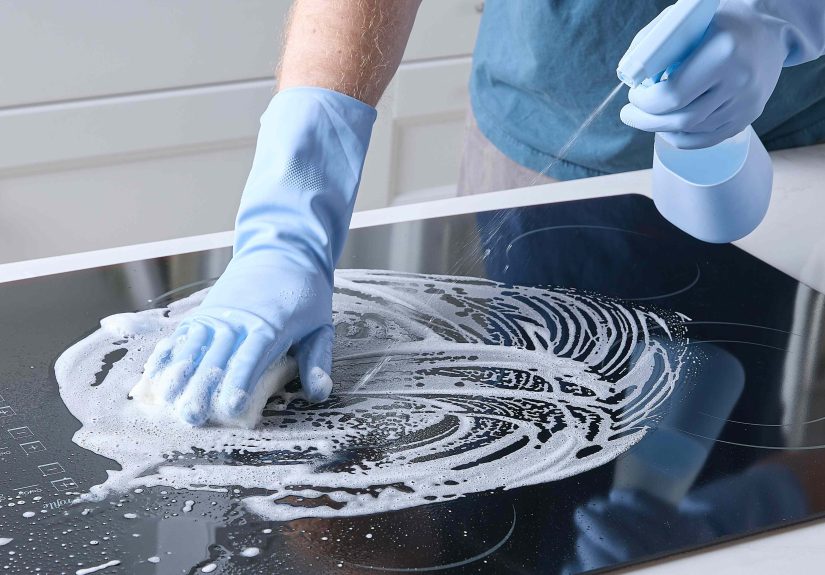
Mix equal parts white vinegar and warm water in a spray bottle. For heavier grease, add a few drops of dish soap. Spray the solution generously over the greasy areas and let it sit for 5 to 10 minutes. If the grease is especially stubborn, let it sit a little longer, but do not let it dry completely on the surface.
This waiting period matters. It gives the vinegar time to loosen grime instead of asking your elbow to do all the work later.
Step 4: Wipe with a microfiber cloth or nonabrasive sponge
After the solution has had time to work, wipe the stove using a damp microfiber cloth or soft sponge. Move in steady, overlapping passes rather than frantic circles of frustration. Often, the first wipe removes far more grease than expected. For corners, seams, or around burners, use a soft toothbrush or detail brush.
Step 5: Bring in baking soda for the stubborn layer
If the grease still looks like it has signed a long-term lease, it is time for baking soda. Sprinkle baking soda lightly over the problem areas, then spray a little more vinegar on top or apply a baking soda paste made with a small amount of water. Let it sit for 10 to 15 minutes.
Then scrub gently with a nonabrasive pad. The goal is to lift the grime, not sand your stove down to a new zip code. For thick, cooked-on patches, a plastic scraper can help, especially on compatible glass or ceramic surfaces. Just hold it at a low angle and work carefully.
Step 6: Clean the removable parts separately
While the stovetop is soaking, tackle the pieces you removed earlier.
Grates and burner caps: Soak them in hot, soapy water first. If grease remains, wipe or spray with vinegar solution and scrub gently. If they are uncoated cast iron or another rust-prone material, avoid long soaking unless your manual says it is safe.
Knobs: Wash in warm, soapy water, rinse well, and dry completely before putting them back. If your knobs are not removable, spray the cloth rather than the stove directly to avoid moisture getting where it should not.
Drip pans: These usually respond well to a combination of dish soap, vinegar, and baking soda, especially if you let them soak before scrubbing.
Step 7: Rinse and dry
Once the grease is gone, wipe the entire stove with a clean cloth dampened with plain water. This removes leftover vinegar, soap, and baking soda residue. Then dry the surface with a clean microfiber cloth.
Do not skip the rinse. You do not want to heat cleaner residue the next time you make eggs. Eggs are innocent in this story.
How to Clean Different Types of Stoves With Vinegar
Gas stoves
Gas stoves collect grease in all the fun places: around burner heads, under grates, near the back edge, and in those tiny crevices that appear to have been designed by someone with a grudge. Vinegar works well on the enamel or metal surface when paired with a soft cloth and dish soap. For burner caps and grates, soak and scrub separately. Make sure every part is completely dry before reassembling the stove.
A soft brush is especially helpful around ignition areas, but keep moisture controlled. You want clean burners, not damp drama.
Glass, ceramic, and induction cooktops
These surfaces look gorgeous until one pot of oatmeal erupts and suddenly the cooktop resembles a topographical map. For glass and ceramic tops, use vinegar with a microfiber cloth or nonabrasive pad. For burned-on residue, use baking soda and a scraper made for cooktops if your manufacturer allows it.
Avoid steel wool, rough scrubbers, and overzealous scraping. If your cleaning method sounds like it belongs in a garage instead of a kitchen, it is probably too aggressive.
Electric coil stoves
Electric coil stoves need a little extra caution. Remove the coils only if your manual says that is safe, and do not soak the coils themselves. Clean around them using a cloth, soapy water, and vinegar solution as needed. Drip pans often carry the real grease burden here, so give them the deeper soak-and-scrub treatment.
Stainless steel surfaces
Vinegar can help remove grease and add shine on stainless steel, but do not leave it sitting too long. Wipe gently and always follow the grain of the steel. Finish with a damp cloth and dry immediately to reduce streaks. Stainless steel loves to show fingerprints, smudges, and your cleaning mistakes equally, so the dry buff matters.
Common Stove-Cleaning Mistakes That Make Grease Harder to Remove
Using too much cleaner
More product does not always mean more clean. In fact, overusing cleaner can leave a sticky film that attracts fresh grime faster. A light, even spray is usually enough.
Scrubbing too aggressively
If the grease is not lifting, the answer is usually more dwell time, not more rage. Let the vinegar or paste sit longer before scrubbing.
Ignoring the rinse step
Cleaner residue can leave streaks, attract dirt, or create an unpleasant smell when the stove heats up. Always wipe again with clean water.
Waiting too long between cleanings
Fresh grease is annoying. Old grease is personal. The longer it sits, the more it hardens and the harder it clings.
Using the wrong tool
Abrasive pads, harsh powders, or metal scrapers can damage many stove finishes. Choose tools that match your surface.
How Often Should You Clean Your Stove?
For light maintenance, wipe the stovetop after cooking or at least once a day if you cook often. A deeper vinegar clean once a week helps prevent buildup. If frying, sautéing, or anything involving enthusiastic oil splatter is a regular part of your life, you may need more frequent touch-ups.
The best stove-cleaning strategy is not heroic. It is boringly consistent. Five minutes today saves you thirty-five minutes of scrubbing next Saturday while muttering, “How did it get this bad?”
What to Do if Vinegar Alone Is Not Enough
Sometimes grease becomes less of a mess and more of a monument. If vinegar alone is not cutting it, do this:
- Wash with warm, soapy water first.
- Spray with a vinegar and water solution.
- Apply baking soda paste to stubborn patches.
- Let it sit longer.
- Use a nonabrasive pad or approved scraper.
- Repeat once instead of going straight to harsh products.
That layered approach is usually more effective than attacking the stove with one single cleaner and a dream.
Real-World Stove Cleaning Experiences: What It Usually Looks Like in Actual Kitchens
One of the most common experiences people have with stove grease is assuming the problem is worse than it really is. The surface looks terrible, so they expect a full weekend project. Then they do a first pass with warm, soapy water and realize half the mess was just sitting on top waiting to be wiped away. That is the moment many people discover that the real enemy is not always the grease itself. It is procrastination wearing sweatpants.
Another common experience happens with glass cooktops. Someone sees a cloudy, greasy film and reaches for the toughest scrubber in the house, only to pause at the last second and choose a microfiber cloth instead. Good decision. A vinegar spray, a little patience, and a gentle pad usually do more than aggressive scrubbing, and without the heartbreak of added scratches. People are often surprised by how much “stuck-on” grime is really just softened residue that needed a few minutes to loosen.
Gas stove owners usually have a different story. Their frustration is less about the flat surface and more about the parts: the grates, burner caps, oily corners, and those little edges where grease seems to migrate and build a retirement community. In real kitchens, the most effective habit is cleaning in stages. Let the grates soak while you wipe the stovetop. Spray the surface while you clean the knobs. Work in layers instead of trying to do every greasy inch at once. This makes the job feel manageable, and it usually produces better results.
There is also the classic “I used vinegar and it helped, but the really ugly stuff stayed put” experience. That is normal. Vinegar is useful, but it is not a jackhammer. People often get the best results when they stop expecting one ingredient to do everything. Add a little dish soap for oily film. Use baking soda for crusted patches. Let the cleaner sit. Wipe, repeat, and then rinse. That combination usually turns a discouraging mess into a solved problem.
Another real-world lesson is that drying the stove matters more than most people think. Many people finish cleaning, step back proudly, and then notice streaks once the light hits the surface from the side. A final dry buff with a clean microfiber cloth is often the difference between “technically clean” and “suspiciously polished.” It is a tiny step, but it makes the whole stove look newer.
And then there is the emotional experience, which is honestly part of the topic. Cleaning a greasy stove feels unpleasant right up until the moment it starts working. Then it becomes weirdly satisfying. You wipe one strip clean, compare it to the grimy area beside it, and suddenly you are invested. You are no longer cleaning. You are winning.
People who successfully keep grease under control almost always end up with the same conclusion: the secret is not a miracle product. It is doing small cleanups before the grease turns into a hard, sticky layer that could survive a minor natural disaster. A quick vinegar wipe after dinner is easy. A deep degreasing session after three weeks of frying is a character-building exercise. Most of us would prefer the first option.
Final Thoughts
If your stove is wearing a thick layer of grease like an old overcoat, vinegar can absolutely help you strip it off. Used the right way, it loosens residue, freshens the surface, and makes wiping easier. Pair it with warm water, mild dish soap, and baking soda for the tougher messes, and you have a simple, affordable cleaning method that works on many common stovetop surfaces.
The biggest takeaway is this: start gently, let the cleaner sit, use the right tool for your surface, and always finish with a rinse and dry. Your stove does not need punishment. It needs a smart cleaning routine and maybe a little less “I’ll deal with it tomorrow” energy.
Once you get that greasy layer off, keeping it clean is much easier. And the next time you cook, your pan should be the only thing sizzling.