Table of Contents >> Show >> Hide
- What Is an Illusion Kick?
- Before You Try It: Quick Prerequisites
- How to Do an Illusion Kick: 12 Steps
- Step 1: Pick your “kicking leg” and your “support leg”
- Step 2: Start in a relaxed fighting stance (not a statue stance)
- Step 3: Create a small angle step to load the hips
- Step 4: Turn your head first (spot like a dancer, not a confused owl)
- Step 5: Pivot on the ball of the support foot
- Step 6: Keep the torso tallthen slightly “tilt” for the illusion
- Step 7: Chamber the kicking knee (tight, fast, and close)
- Step 8: “Hide” the kick behind the turn for a split second
- Step 9: Whip the lower leg through in a hooking/reverse-round path
- Step 10: Re-chamber immediately after the strike
- Step 11: Land softly and finish the rotation under control
- Step 12: Repeat with a progression plan (low → smooth → higher)
- Drills That Make the Illusion Kick Click
- Common Mistakes (and How to Fix Them)
- FAQ
- Experience Notes: From Real Practice (So You Don’t Have to Learn the Hard Way)
- Conclusion
The illusion kick is the martial-arts version of a magic trick: your leg “disappears,” your opponent blinks,
andsurpriseyour heel is suddenly saying hello from an angle their brain did not approve.
It’s flashy, it’s sneaky, and it’s one of those skills that looks impossible right up until you learn the mechanics.
This guide breaks the illusion kick down into clean, repeatable piecesso you can build it safely, add height,
and keep your knees and ego intact. You’ll get a 12-step roadmap, key drills, and the most common mistakes
(including the classic “I spun… and kicked… something… probably air”).
What Is an Illusion Kick?
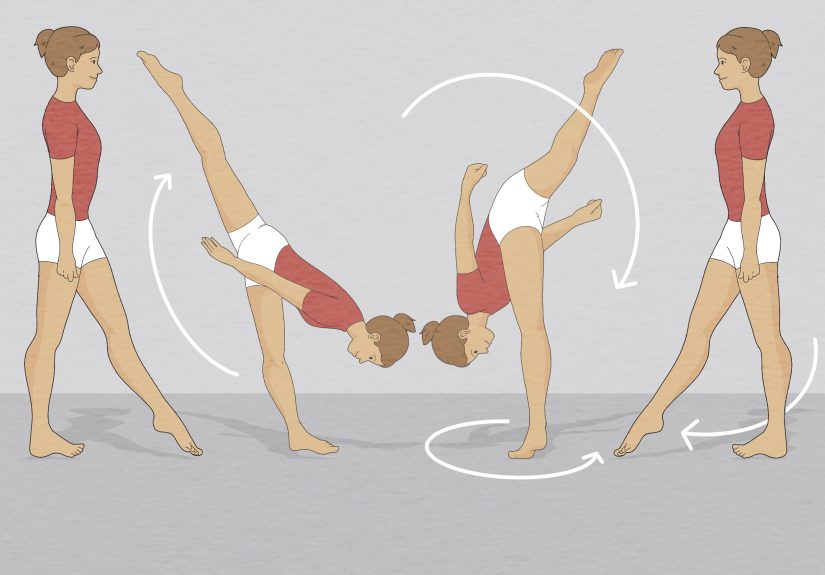
In modern tricking and flashy striking, an illusion kick is a deceptive spinning kick
that sells one rotation while delivering the strike from a surprising line. People often describe it as a “deceiving spin kick”
or a “spin reverse round kick” because the setup resembles a spin, but the kick whips through in a way that looks like your foot
teleported.
Translation: your body says “I’m turning away,” then your leg says “plot twist.” When it’s done well, it’s clean, fast,
and ridiculously satisfying.
Before You Try It: Quick Prerequisites
Skills that make the illusion kick way easier
- A solid roundhouse kick chamber and snap (you can hit a pad without flailing).
- Comfort pivoting on your support foot (turning smoothly without your heel glueing itself to the floor).
- Basic control on a spinning hook kick or reverse roundhouse (even at low height).
- Balance on one leg and the ability to land without collapsing like a lawn chair.
Warm-up (don’t skip this unless you enjoy hobbling)
The illusion kick demands hip rotation, hamstring length, and core stability. Do a short, dynamic warm-up first:
light cardio, hip circles/leg swings, walking high kicks, lunges, and a few easy pivots. Save long static stretching
for after training.
Safety setup
- Surface: a mat, spring floor, or grass beats concrete. Always.
- Target: start with air, then a light pad, then a held targetdon’t go full-action-movie on day one.
- Rule: if your knee feels “sharp” or “pinchy,” stop and scale down. Your future self will thank you.
How to Do an Illusion Kick: 12 Steps
This version focuses on a classic tricking-style illusion: a smooth pivot, a disguised rotation, and a whipping heel/instep
line that reads like a surprise spinning hook/reverse round hybrid. Train both sides eventuallybut start
with your stronger kick.
-
Step 1: Pick your “kicking leg” and your “support leg”
Decide which leg will strike. If your right roundhouse is cleaner, start right. Your other leg becomes the support.
Simpleand yes, your “bad side” will complain later. That’s normal. -
Step 2: Start in a relaxed fighting stance (not a statue stance)
Keep your knees soft, hands up, and shoulders loose. You want spring in your legs, not “I’m posing for a poster”
stiffness. Your stance should feel athleticlike you could sprint or hop immediately. -
Step 3: Create a small angle step to load the hips
Take a subtle step or shift that pre-rotates your body. Think “set the turn,” not “travel across the zip code.”
The illusion kick loves compact setups because they hide intent and keep your axis tight. -
Step 4: Turn your head first (spot like a dancer, not a confused owl)
Before your hips commit, your eyes should find the target. A quick head turn helps the rest of the body rotate efficiently,
and it keeps you from kicking into the void like you lost your Wi-Fi. -
Step 5: Pivot on the ball of the support foot
Let the support foot rotate on the ball/toes so your hips can turn freely. If your heel stays planted, your knee becomes the
unwilling volunteer for all that torqueand it did not sign the waiver. -
Step 6: Keep the torso tallthen slightly “tilt” for the illusion
Stay upright through the pivot, then allow a controlled lean/tilt as the kick begins. The tilt sells the deception and gives
your leg space to whip through. Controlled is the keyword; this is not a trust fall. -
Step 7: Chamber the kicking knee (tight, fast, and close)
Bring your knee up into a chamber position as the rotation happens. A tight chamber gives you speed and protects your joints.
A sloppy chamber gives you… interpretive dance. -
Step 8: “Hide” the kick behind the turn for a split second
This is the heart of the illusion kick: your body rotation makes it look like you’re still turning away,
while the chamber is quietly preparing to fire. The kick should feel late to you and sudden to everyone watching. -
Step 9: Whip the lower leg through in a hooking/reverse-round path
Extend the lower leg in a smooth arc. Depending on your style and target, you’ll strike with the heel (hooking line)
or instep/shin (roundhouse line). The key is hip-driven rotationthe leg follows the hips, not the other way around. -
Step 10: Re-chamber immediately after the strike
Snap it out, then pull it back. Re-chambering protects your knee, keeps your balance, and makes the kick look crisp.
If you leave your leg hanging out there, you’re basically mailing your balance to someone else’s address. -
Step 11: Land softly and finish the rotation under control
Let the kick’s momentum settle into a controlled landing. Most people should aim to land balanced, chest up, and ready to move.
Think “quiet feet.” If your landing sounds like you dropped a refrigerator, dial it back and rebuild. -
Step 12: Repeat with a progression plan (low → smooth → higher)
Your first goal is consistency, not height. Start low, prioritize clean pivots and timing, then gradually raise the target line.
Film a few reps. Your brain lies. Video doesn’t.
Drills That Make the Illusion Kick Click
1) Pivot-and-spot drill (no kicking)
Practice the head turn + support-foot pivot combo 10–20 times per side. Keep it smooth, quiet, and controlled.
This builds the rotation mechanics without stressing the kicking leg.
2) Chamber holds (build balance + control)
Pivot to your setup position and hold the chamber for 2–3 seconds. Then set down. Repeat for 6–10 reps.
If you wobble, goodyour stabilizers just got invited to the party.
3) Low-line illusion kicks to a target
Use a low pad or a hand target around mid-thigh height. Low targets force you to refine timing and hip position
without chasing height.
4) Hip mobility + hamstring love
The illusion kick rewards mobile hips and long hamstrings. Add a short mobility routine a few times per week
(hip-openers, 90/90 work, controlled leg swings). If you’re tight, don’t “force” heightearn it.
5) Core stability basics
A strong core helps you rotate without folding. Planks, side planks, and controlled bicycle-style core work
can improve body controlespecially when fatigue makes technique fall apart.
Common Mistakes (and How to Fix Them)
Mistake: Your support heel stays planted
Fix: practice pivoting on the ball of the foot and keep the knee tracking safely over the toes.
Reduce speed until the pivot is automatic.
Mistake: You “throw” the leg without a chamber
Fix: drill the chamber holds. The chamber is your loading phase; skipping it kills speed and control.
Mistake: You lose the target and kick the air behind you
Fix: spot earlier. Turn the head first, find the target, then let shoulders and hips follow.
Mistake: Your upper body collapses forward
Fix: keep your chest “proud,” lean only as much as needed, and strengthen your trunk control.
If you’re folding, lower the kick and slow the rotation.
Mistake: The landing is loud and unstable
Fix: reduce power, re-chamber faster, and aim for a soft, athletic landing. Control firststyle second.
(Style shows up automatically once control stops ghosting you.)
FAQ
Is the illusion kick the same as a spinning hook kick?
They’re related. A spinning hook kick is a clear 360-style spin with a hooking heel path.
The illusion kick borrows that hook/reverse-round line, but emphasizes deceptiontiming the kick so it “appears” from an unexpected angle.
How long does it take to learn?
If you already have clean pivots and a decent hook/reverse round, you might get a workable illusion kick in a few sessions.
For most people, making it clean and consistent takes a few weeks of focused practice.
What should I feel if I’m doing it right?
A smooth pivot, hips driving the rotation, a quick whip of the lower leg, and a controlled landing.
You should not feel sharp knee pain or a “jammed” hip sensationthose are signals to scale down and reassess.
Experience Notes: From Real Practice (So You Don’t Have to Learn the Hard Way)
The first time I tried an illusion kick, I was absolutely sure I nailed itright up until someone politely asked,
“Was that… supposed to be a kick?” That’s the illusion kick’s greatest prank: it convinces you you’re doing something
dramatic while everyone else sees a cautious spin and a leg that changes its mind halfway through.
The biggest breakthrough usually isn’t “more power.” It’s better timing. When beginners struggle, they often
kick too early because they’re nervous about the spin. That makes it look like a normal roundhouse with extra confusion.
When you delay the kick by a fractionjust long enough for the rotation to sellthe strike suddenly looks sneaky. It’s like comedy:
the punchline only works if you pause before it.
Filming your reps helps in a brutally honest way. What you think is a “clean pivot” might actually be a heel-stuck swivel
that forces your knee to absorb rotation. On video, the fix is obvious: get onto the ball of the foot and let the hip turn
without fighting the floor. A good illusion kick looks smooth even in slow motion. A bad one looks like your shoe is arguing
with gravity.
A surprisingly useful cue is “head first, hips second.” If you don’t spot the target, your body panics and
you either over-rotate or you fling the leg just to feel like you’re doing something. The moment you learn to whip your head around
and re-find the target, your shoulders and hips follow naturallyand the kick lines up. It also makes the movement feel safer,
because you’re not guessing where the world is.
Height comes last. A lot of people try to hit head height on day one, and that usually turns the kick into a balancing experiment
with a high probability of a wobbly landing. The better approach is to build a low, repeatable illusion kick to a thigh-height target.
Once the kick is consistent, raising the target is just a matter of mobility, speed, and confidence. (And yes, confidence is a skill
it improves when you stop scaring yourself with wild attempts.)
Finally: train the exit. The illusion kick looks coolest when it doesn’t end with you stumbling three steps and pretending it was “part of the combo.”
Practice landing quietly, re-chambering fast, and finishing in a stance where you could throw another kick immediately. That’s when the illusion kick
stops being a party trick and starts feeling like real movement controlflashy, functional, and honestly kind of addicting.
Conclusion
The illusion kick is equal parts technique and timing: pivot cleanly, spot early, chamber tight, and whip the kick only after your rotation sells the fake.
Train it low and controlled, then build height once your landings are consistent. Do that, and your “magic trick” becomes a reliable skill
one that looks wild, feels smooth, and doesn’t require sacrificing your knees to the tricking gods.