Table of Contents >> Show >> Hide
- First, a non-negotiable safety rule
- Why dogs bite during grooming (so you can fix the real problem)
- Set yourself up for success: the right tools (and the right vibe)
- The 12-step plan to groom a dog that bites
- Step 1: Rule out pain and medical triggers
- Step 2: Decide what must happen today (and what can wait)
- Step 3: Create a low-stress grooming zone
- Step 4: Learn your dog’s early warning signs
- Step 5: Teach a “start button” behavior
- Step 6: Pair grooming stuff with ridiculously good rewards
- Step 7: Desensitize in micro-steps (yes, smaller than you think)
- Step 8: Use cooperative handlingless grabbing, more guiding
- Step 9: Consider muzzle training (not emergency muzzling)
- Step 10: Choose the safest grooming method for each task
- Step 11: Keep sessions short, end early, and “bank wins”
- Step 12: Know when to hand it to the pros (and how to choose the right ones)
- Mini playbook: common bitey-grooming situations
- How long does this take?
- Conclusion: safety first, progress second, perfection never
- Additional : real-world experiences and lessons people learn fast
Grooming a dog that bites is like trying to fold a fitted sheet in a windstorm: technically possible, emotionally humbling, and best done with a plan. The goal isn’t to “power through” a haircut while your dog auditions for a vampire movie. The goal is safety (for you, your dog, and anyone nearby) and progress (even if that progress looks like “we touched the brush for one second and nobody screamed”).
This guide walks you through a calm, behavior-friendly approach that many trainers, veterinary teams, and fear-free groomers use: reduce stress, build trust, and teach your dog that grooming predicts good thingsnot wrestling. If your dog has a serious bite history, don’t treat this as a DIY challenge. Think of it as a skill-building program that may require a pro team.
First, a non-negotiable safety rule
If your dog is actively trying to bite, you do not “just hold tighter.” You pause. You back up. You change the setup. And if you can’t do that safely, you stop and call a professional groomer experienced with behavior cases, your veterinarian, or a credentialed trainer.
Red flags that mean “stop and get help”
- Repeated hard snapping or lunging during handling
- Freezing, whale eye (white of the eye showing), or stiff body right before a bite
- Growling that escalates when you continue
- History of bites that broke skin
- Matting so severe it’s pulling the skin (this can be painful and dangerous to remove at home)
- Any sign grooming pain is involved (yelping, limping, flinching, sensitivity in a specific spot)
Why dogs bite during grooming (so you can fix the real problem)
Dogs usually bite during grooming for one of four reasons: pain, fear, overwhelm, or learned history (“snapping makes the scary thing stop”). A dog who bites at the brush might have sore skin, tight mats, arthritis, an ear infection, dental pain, or a bad memory of being restrained. Your plan changes depending on the cause.
Translation: before you work on “nicer manners,” make sure you’re not asking your dog to tolerate something that hurts. A basic vet check is often step zero for “suddenly bitey during grooming.”
Set yourself up for success: the right tools (and the right vibe)
You don’t need a salon in your bathroom. You need the basics that reduce stress and keep hands out of the danger zone.
Helpful gear
- High-value treats (think tiny pieces of chicken, cheese, or whatever makes your dog do math in their head)
- Lick mat or food puzzle to create calm, steady licking (many dogs find it soothing)
- Soft brush and/or comb suited to your dog’s coat (wrong tool = ouch)
- Nail file or grinder (often easier to go slowly than to “clip and pray”)
- Basket muzzle (if you truly need bite protection; allows panting and treat delivery when fitted correctly)
- Non-slip mat for the floor or tub (slipping increases panic)
- Timer (short sessions beat long battles)
What to avoid
- Improvised restraint (pinning, sitting on, “alpha” holds)it often increases fear and bite risk
- Forcing tools into a terrified dog’s space “to show them it’s fine” (their teeth disagree)
- Home sedation without a veterinarian’s guidance
- Rushing through mats with scissors if you’re not trained (skin can tear easily under mats)
The 12-step plan to groom a dog that bites
These steps are designed to be used like building blocks. Some dogs move quickly. Some need weeks. Your success metric is not “full groom today.” It’s “we stayed safe and built trust.”
Step 1: Rule out pain and medical triggers
If biting is new, worse than usual, or happens around a specific body part (ears, paws, hips, mouth), schedule a veterinary exam. Pain changes behavior. Fixing the pain often fixes the “attitude.”
Step 2: Decide what must happen today (and what can wait)
Break grooming into “must-do” and “nice-to-do.” Must-do might be: remove one mat that’s pulling skin, clean poop stuck in fur, or trim nails before they curl into pads. Nice-to-do is the Instagram makeover. Prioritize health and comfort over aesthetics.
Step 3: Create a low-stress grooming zone
Choose a quiet room with a non-slip surface and minimal surprises. Turn off the “jump scare” stuff: loud music, excited kids, doorbells, other pets crowding in. Keep sessions short and predictable: same spot, same routine, same calm energy.
Step 4: Learn your dog’s early warning signs
Bites rarely come out of nowhere. Watch for stiffening, holding breath, lip licking, turning the head away, pinned ears, tucked tail, whale eye, growling, or suddenly refusing treats. Those are your “too much” signals. When you see them, you’re going too fast.
Step 5: Teach a “start button” behavior
A start button is a simple cue that says, “I’m ready.” Examples: your dog rests their chin in your palm, stands on a mat, or touches their nose to your hand. If the dog moves away, you pause. This gives your dog control, which reduces panic and biting.
Step 6: Pair grooming stuff with ridiculously good rewards
The brush appears → treat rain. Clippers turn on across the room → treat rain. You touch a paw for one second → treat rain. You’re changing the emotional meaning of grooming from “danger” to “snack announcement.” Keep it easy enough that your dog can stay under threshold (not freaked out).
Step 7: Desensitize in micro-steps (yes, smaller than you think)
For a bitey dog, “micro” might mean: show the brush, then hide it. Next: brush touches shoulder for half a second. Next: one gentle stroke. Next: two strokes. If the dog tenses, you went too fargo back a step. Progress is rarely linear, and that’s normal.
Step 8: Use cooperative handlingless grabbing, more guiding
Instead of holding your dog in place, guide them into positions that feel stable (standing on a mat, leaning into your leg, licking a treat smear). Support the body gently. Keep hands away from the mouth. The more trapped a fearful dog feels, the more likely they are to bite to escape.
Step 9: Consider muzzle training (not emergency muzzling)
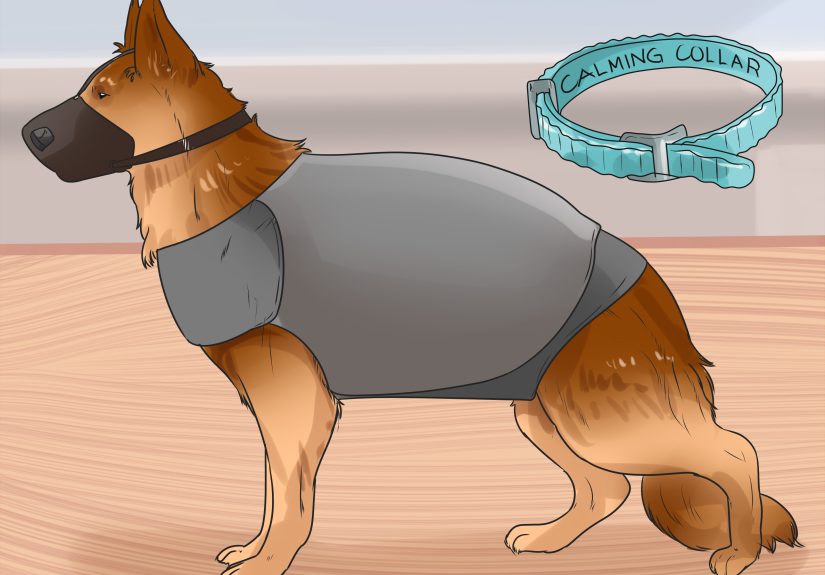
If your dog truly poses a bite risk, a properly fitted basket muzzle can be a safety tool while you do behavior work. The key word is trained: you teach the dog the muzzle predicts treats and comfort, not panic. If you slap a muzzle on a dog who already hates handling, you may increase fear and make grooming harder. If you’re unsure, work with a qualified positive-reinforcement trainer.
Step 10: Choose the safest grooming method for each task
Not all grooming has to look the same:
- Brushing: use a soft tool, work in tiny sections, and stop before your dog gets irritated.
- Mats: if mats are tight to the skin, prioritize professional removal; at home, you can worsen pain fast.
- Bathing: use a handheld sprayer or cup, warm water, and a non-slip mat; avoid blasting the face.
- Drying: towel-dry first; if the dryer noise triggers biting, skip it and air-dry in a warm room.
- Nails: for many dogs, brief filing/grinding with treats is easier than clipping large chunks.
Step 11: Keep sessions short, end early, and “bank wins”
Set a timer for 1–5 minutes. Stop while your dog is still doing okaydon’t wait for the growl. Ending on a good note teaches your dog: grooming ends safely. That trust pays dividends. Do multiple mini-sessions across the week instead of one epic showdown.
Step 12: Know when to hand it to the pros (and how to choose the right ones)
Some dogs need a team: a veterinarian to address pain and discuss safe medication options (if appropriate), a groomer who uses low-stress/fear-free techniques, and a trainer who can coach desensitization. Look for professionals who talk about cooperative care, go slowly, use rewards, and prioritize safety over “getting it done.” If someone’s plan is “we’ll just hold him down,” keep shopping.
Mini playbook: common bitey-grooming situations
If your dog bites during nail trims
- Start with paw touches paired with treatsno tools at first.
- Then show the tool, reward, put it away.
- Work up to touching one nail briefly (no clipping), reward, stop.
- Try filing or grinding for a second at a time if clipping is the trigger.
- If nails are dangerously overgrown, ask your vet clinic about a low-stress nail trim plan.
If your dog bites the brush
- Switch to a softer brush or a comb that doesn’t yank.
- Brush the easy spots first (shoulders, back) before sensitive areas (belly, legs).
- Use the “one stroke → treat” rhythm.
- If you hit mats, don’t rip through thempause and consider professional help.
If your dog bites when you touch the face, ears, or mouth
- Assume discomfort is possible and consider a vet check (ears and teeth are common culprits).
- Practice brief “face nearby” touches paired with treats, then back off.
- Skip non-essential face grooming until trust improves.
How long does this take?
It depends on your dog’s history and stress level. Some dogs improve noticeably in a couple of weeks of tiny, consistent sessions. Others need monthsand that’s still a win if everyone stays safe. The real flex is patience, not speed.
Conclusion: safety first, progress second, perfection never
Grooming a dog that bites isn’t about dominating a difficult pet. It’s about turning grooming into a predictable, low-stress routine your dog can tolerateand eventually accept. Start with a medical check if pain is likely, work in tiny steps, use big rewards, and don’t hesitate to bring in professionals. Your dog doesn’t need a flawless blowout. They need to feel safe in their own skin. (Preferably while that skin is not wearing a felt coat of tangles.)
Additional : real-world experiences and lessons people learn fast
People who live with “spicy” dogs often discover that biting during grooming isn’t a personality flawit’s communication. One common experience is the dog who seems fine until you reach for the paws. The first couple of attempts might look like classic stubbornness: pulling away, hiding feet, then escalating to a snap. But when owners slow down and treat paw handling like a training program (not a single event), the dog’s whole mood changes. A typical breakthrough happens when the dog realizes their consent matters: they offer a paw touch or stand calmly on a mat because they’ve learned “I can leave if I need to.” Ironically, giving a dog an exit often makes them stay.
Another frequently reported scenario involves matting. Many owners of long-coated dogs (including doodle mixes and double-coated breeds) learn the hard way that mats can be genuinely painful. When brushing hurts, biting becomes a reasonable strategy from the dog’s point of view: it makes the pain stop. In these cases, people often get better results by pausing home brushing and choosing a professional dematting or a shorter haircut, then committing to a gentler maintenance routine afterward. The “experience” lesson is humbling but valuable: sometimes the kindest grooming choice is less grooming today.
You’ll also hear stories about the dog who only bites in the bathtub. The pattern is usually fear plus slippinglike trying to take a shower while standing on ice. When owners add a non-slip mat, keep water warm, reduce noise, and feed steady rewards (a lick mat is a fan favorite), the dog’s tension drops. Another small change that helps is switching from a loud forced-air dryer to towel drying and letting the coat finish air-drying in a warm room. People are often surprised that it wasn’t the “bath” their dog hatedit was the chaos around the bath.
One of the most useful experiences people share is learning to read the “pre-bite” signals. Many bites are preceded by a freeze so subtle you miss it until you know what to look for. Owners describe a moment where the dog stops wiggling, the body stiffens, and the eyes look wider. Once they start honoring that early warningpausing, tossing treats, taking a breakbiting often decreases because the dog no longer needs to escalate to be heard. This is also why short sessions matter: a dog can do one minute calmly when five minutes would push them over the edge.
Finally, plenty of families have the “we called in the pros” experienceand feel relief, not defeat. A fear-free groomer or veterinary team can handle the urgent grooming needs while you work on long-term training at home. Many people learn a practical rhythm: professionals manage the heavy-duty tasks (severe mats, sanitary trims, complicated nail issues), while owners maintain trust-building micro-sessions between visits. Over time, the dog’s tolerance grows, the groom appointments get easier, and the household stops treating grooming day like a high-stakes sport. The consistent theme across these experiences is simple: safety and compassion create progress faster than force ever will.