Table of Contents >> Show >> Hide
- Why Soil Preparation Matters for Roses
- How to Prepare Soil for Roses: 8 Steps
- Step 1: Choose the Right Spot Before You Touch the Soil
- Step 2: Get a Soil Test Instead of Guessing Like a Gardening Cowboy
- Step 3: Check Drainage Before You Build a Beautiful Root Swamp
- Step 4: Clear the Bed of Weeds, Grass, and Old Roots
- Step 5: Loosen the Soil Deeply and Widely
- Step 6: Add Organic Matter the Smart Way
- Step 7: Adjust pH and Texture Based on Your Soil Type
- Step 8: Finish the Bed, Let It Settle, and Mulch After Planting
- Common Mistakes to Avoid When Preparing Soil for Roses
- Real-World Experience: What Preparing Soil for Roses Taught Me
- Conclusion
- SEO Tags
If roses had a dating profile, their first demand would be painfully clear: must love good soil. You can buy the prettiest rose in the garden center, whisper encouraging things to it, and even give it a fancy trellisbut if the soil is dense, soggy, starved, or wildly off in pH, that rose will respond with all the enthusiasm of a cat being dressed for a holiday card.
The good news is that preparing soil for roses is not mysterious. It is mostly a matter of creating the conditions rose roots love: loose structure, good drainage, steady moisture, lots of organic matter, and a soil pH that lets nutrients actually do their job. Once that foundation is right, roses reward you with stronger growth, better blooms, and fewer dramatic fainting spells in summer.
This guide walks you through how to prepare soil for roses in 8 practical steps, with enough detail to help beginners avoid common mistakes and enough nuance to satisfy gardeners who have already sacrificed a weekend or two to the rose gods.
Why Soil Preparation Matters for Roses
Roses are not impossible to grow, but they are honest plants. When the soil is wrong, they show it fast. Poor drainage can lead to root stress and disease. Compact soil can slow root expansion. Soil with too little organic matter dries out too quickly or turns into a brick after rain. And if the pH is out of range, nutrients can be present in the soil but still remain frustratingly unavailable to the plant.
That is why proper rose bed preparation is not just a “nice extra.” It is the whole opening act. Healthy roots lead to healthy canes, better flower production, and improved resilience during heat, cold, and dry spells. In other words, great roses begin below the surface.
How to Prepare Soil for Roses: 8 Steps
Step 1: Choose the Right Spot Before You Touch the Soil
Yes, this is a soil article, but location still matters. A rose bed should be in a spot with at least six hours of direct sun, preferably morning sun. Morning light helps dry dew from the leaves, which is a nice way of saying it gives fungal problems fewer opportunities to throw a party.
Try to avoid areas crowded by tree roots or large shrubs. Roses do not enjoy fighting mature plants for water and nutrients. Even perfect soil can become disappointing if it is packed with roots from a nearby maple that has already claimed the zip code.
Look for a space where water does not stand after rain. If your chosen area stays soggy, prepare for a raised bed or a significant drainage fix before planting. Roses like moisture, but they absolutely do not want to marinate in it.
Step 2: Get a Soil Test Instead of Guessing Like a Gardening Cowboy
If you want to know how to prepare soil for roses properly, start with a soil test. This is the most useful first move because it tells you what your soil is doing instead of what you think it is doing. Many gardeners assume their soil is acidic, alkaline, nutrient-poor, or compacted based on vibes alone. Roses prefer data.
A soil test will usually tell you the pH and the levels of key nutrients such as phosphorus, potassium, calcium, and magnesium. It may also include organic matter percentage and amendment recommendations. That means you can fix the real problem instead of tossing random products at the bed like confetti.
For most roses, a slightly acidic soil is ideal. A pH in the neighborhood of 6.0 to 6.5 is the sweet spot many experts recommend, though some guidance stretches slightly above or below that range depending on local conditions. If your pH is too low, lime may be recommended. If it is too high, sulfur is often the standard adjustment. Butand this is importantdo not add either until you have test results. Chemistry is less charming when it is improvised.
Step 3: Check Drainage Before You Build a Beautiful Root Swamp
Drainage is one of the biggest factors in rose success. The easiest way to check it is with a simple percolation or drainage test. Dig a hole about 12 to 18 inches deep, fill it with water, and see how long it takes to drain. If water hangs around for hours and hours, your site has a drainage problem that needs fixing before you plant.
Heavy clay soil is often the culprit, but even apparently decent soil can drain poorly if it is compacted. If the site fails the drainage test, you have a few options:
- Build a raised bed.
- Improve the bed across a broad area with compost and other organic matter.
- Address compaction by loosening the soil deeply.
- Consider choosing another location if the site stays consistently wet.
One of the most common mistakes in rose planting is trying to “fix” drainage by adding rich amendments only inside the planting hole. That can create a texture difference between the hole and the surrounding soil, which may encourage water to collect around the roots instead of moving through the bed naturally. Translation: the hole becomes a decorative bathtub. Roses did not ask for a spa day.
Step 4: Clear the Bed of Weeds, Grass, and Old Roots
Before you add anything good, remove what is likely to cause trouble. Strip out weeds, turfgrass, stones, and old roots from the planting area. If you are converting a lawn patch into a rose bed, do not simply dig a hole in the grass and call it done. Grass competes aggressively for moisture and nutrients, and buried weeds have a rude habit of returning just when you start feeling confident.
Clear a bed that is wider than the eventual planting hole. Roses perform better when their roots can expand into a prepared area rather than hitting a hard wall of poor soil three inches from the crown. A broader prepared zone also makes watering and mulching more effective after planting.
If the space has hosted struggling plants before, inspect the area for compaction, construction debris, or leftover rubble. New homes and renovated landscapes often come with one bonus feature nobody asked for: subsoil plus random chunks of concrete.
Step 5: Loosen the Soil Deeply and Widely
Once the bed is cleared, loosen the soil. This is where the real work begins, and yes, your shovel may have opinions.
For a new rose bed, loosen the soil 12 to 18 inches deep, or even deeper if your soil is heavily compacted. The goal is not to create a fluffy cloud that collapses in the first rain, but to open the soil enough for air, water, and roots to move more freely. If you are preparing a single planting spot, make the loosened area wider than the root zone. If you are planting several roses, prepare the whole bed rather than treating each planting hole like a separate project.
In especially hard soil, double-digging or deep cultivation can be helpful. That sounds dramatic, but it simply means loosening the soil in layers so roots do not run into a dense barrier under the surface. Roses appreciate a deep root run, especially in climates with summer heat.
For bare-root roses, the planting hole should be wide enough to spread the roots naturally without cramming, bending, or forcing them into an awkward underground yoga pose. For container roses, dig a hole wide enough to encourage roots to move outward into the prepared bed.
Step 6: Add Organic Matter the Smart Way
Organic matter is the hero of rose soil prep. Compost improves structure, supports microbial life, increases moisture retention in sandy soil, and improves aeration in heavy soil. It also helps create the crumbly, fertile texture rose roots love.
Good choices include:
- Finished compost
- Composted manure
- Leaf mold
- Composted pine bark
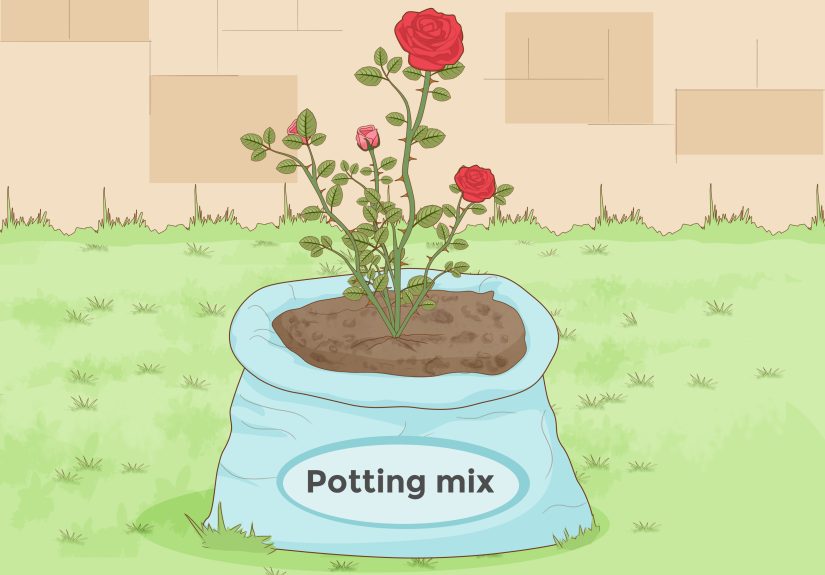
- Well-aged organic planting mixes designed for garden beds
Work the organic matter into the entire prepared bed, not just the planting hole. This point deserves repetition because it is one of the most practical distinctions between roses that merely survive and roses that settle in beautifully. Mixing compost broadly creates a more uniform soil texture, which helps roots travel and water drain more evenly.
How much should you add? That depends on your starting soil. A modest amount may be enough for decent loam, while poor clay or sandy ground may need a more generous incorporation. The key is balance. You want improved structure, not a fluffy peat-and-compost pocket that shrinks, dries out, or drains differently from the surrounding soil.
Avoid using fresh manure or unfinished compost. Those can burn roots, tie up nitrogen, or introduce problems you definitely do not want to explain to your neighbors.
Step 7: Adjust pH and Texture Based on Your Soil Type
Now that you know your test results and have improved the structure, make targeted corrections.
If your soil is too acidic, lime is often used to raise the pH. If your soil is too alkaline, sulfur is commonly used to lower it. Follow the soil test recommendations rather than guessing the amount. Changing soil pH is not instant, and it is not a one-size-fits-all situation. Clay soils, sandy soils, and organically rich soils all respond differently.
You should also tailor the bed to your native soil:
- Clay soil: Add organic matter generously, loosen deeply, and consider raised beds if drainage is slow.
- Sandy soil: Add compost to improve water and nutrient retention.
- Loam soil: Congratulations. Do a happy little dance, then improve it modestly with compost and move on.
If your soil is severely compacted or chronically wet, a raised bed may be the most practical solution. Raised beds warm earlier in spring, improve drainage, and give you more control over texture. They are especially helpful where the native soil is stubborn, shallow, or badly disturbed by construction.
Step 8: Finish the Bed, Let It Settle, and Mulch After Planting
After amendments are mixed in, rake the bed smooth and water it lightly to help the soil settle. If you have time, preparing the bed a bit ahead of planting is ideal. Settled soil gives you a more accurate planting depth and a more stable root zone.
When you are ready to plant, place the rose at the proper depth for your climate and rose type, then backfill with the improved native soil. Water thoroughly to eliminate air pockets. After planting, apply a 2- to 3-inch layer of mulch around the rose, keeping it slightly away from the canes.
Mulch does several useful things at once: it moderates soil temperature, helps conserve moisture, suppresses weeds, and slowly improves the top layer of soil as it breaks down. Shredded bark, composted wood mulch, or similar organic mulch works well. Just do not pile it against the base of the plant like a volcano. Mulch volcanoes belong in the gardening hall of shame.
Common Mistakes to Avoid When Preparing Soil for Roses
- Skipping the soil test: Guesswork can waste time and money.
- Ignoring drainage: Roses hate wet feet more than gardeners hate bindweed.
- Amending only the planting hole: This can trap water and limit root spread.
- Using fresh manure: Too hot, too risky, too messy.
- Planting into hard, compacted soil: Roots do not magically drill through concrete-like ground.
- Forgetting mulch: Bare soil dries out faster and invites weeds.
Real-World Experience: What Preparing Soil for Roses Taught Me
The first time I planted roses, I treated soil prep like the preheating step on a frozen pizza box: technically important, but probably negotiable. I dug a nice-looking hole, tossed in a bag of generic garden soil, planted the rose, watered it, and stood back with the confidence of a person who had absolutely not done enough research.
For a few weeks, the plant looked fine. Then summer arrived, the leaves started sulking, and the whole thing developed the energy of a Victorian heroine near a fainting couch. It turned out the soil around the planting hole was dense clay, and my “special” hole had become a water-holding bowl after every heavy rain. The rose was not being pampered. It was being slowly inconvenienced to death.
That experience changed the way I approach rose bed preparation. Now I never think in terms of a single hole. I think in terms of the entire root zone. If the surrounding soil is poor, the rose does not care that the hole itself was beautiful for one afternoon. Roots eventually have to live in the wider bed, so the wider bed needs to be worth living in.
I also learned that compost is powerful, but only when used with some restraint and common sense. Dumping huge amounts of fluffy organic material into one spot may feel generous, but it does not always create stable, functional soil. What works better is blending finished compost evenly through the bed and building structure gradually. Roses seem to respond best when the soil feels balanced rather than dramatic.
The soil test lesson was another humbling one. In one garden, I was convinced the problem was lack of fertilizer. The leaves were pale, growth was weak, and I was ready to go shopping for every rose food product with a picture of a bloom on the label. A test showed the real issue was pH. Once that was corrected, the plant used the nutrients already in the soil more effectively. The rose was basically saying, “I do not need more snacks. I need the pantry door unlocked.” Fair enough.
I have also seen how much mulch matters after the prep work is done. In beds where I mulched consistently, moisture stayed more even, weeds were less aggressive, and the soil surface stayed softer. In beds where I got lazy, the top layer baked hard, weeds moved in like they were paying rent, and watering became a much bigger chore. Mulch is not glamorous, but neither is carrying extra hoses around in July.
Perhaps the biggest takeaway is that roses become much easier once the soil is right. People often describe roses as fussy, but I think many of them are simply honest. Put them in a cramped, soggy, nutrient-confused patch of ground, and they complain. Put them in loose, rich, well-drained soil with the right pH, and suddenly they look a lot less high-maintenance. The same rose that struggled in bad ground can become vigorous, leafy, and bloom-heavy once its roots are given a decent place to live.
So if you are preparing soil for roses, do the unglamorous work first. Test. Dig. Amend broadly. Fix drainage. Mulch. Future youthe version standing in the garden with a healthy rose covered in bloomswill be annoyingly grateful.
Conclusion
Learning how to prepare soil for roses comes down to one simple principle: build the bed for roots, not just for appearances. Start with a good site, test the soil, correct drainage, loosen deeply, add organic matter across the whole bed, adjust pH carefully, and finish with mulch. These eight steps create the kind of soil roses can actually thrive in, which means fewer setbacks and more flowers worth bragging about.
If you do the groundwork well, your roses will reward you above ground. And that is a trade any gardener should take.