Table of Contents >> Show >> Hide
- The Big Truth: Your Cat Isn’t Evil, But Your Cat Is Extremely Committed to Boundaries
- Top Signs Your Cat Looks Like a Tiny Furry Assassin
- When Your Cat Is Not Plotting Murder, Just Rehearsing for the Olympics
- The Most Misunderstood “Murder Plot”: Redirected Aggression
- Territorial Behavior: Your Home, According to the Cat, Is Also the Cat’s Kingdom
- When Your Cat Suddenly Acts Mean, Check for Pain First
- How To Lower the Odds of a Feline Coup
- Common Scenarios That Feel Sinister But Usually Aren’t
- 500 More Words of Real-World Experience: What Cat Owners Commonly Notice
- Conclusion
- SEO Tags
Let’s get one thing straight right away: your cat is probably not secretly planning your dramatic downfall. Your cat does not have a corkboard, red string, and a tiny paw-written manifesto. What your cat does have is a very expressive body, a strong opinion about personal space, and the emotional range of a tiny landlord who expects rent in treats.
That is exactly why this topic is so funny and so useful. People joke that cats are scheming little gremlins, but feline behavior experts say something more practical: cats give warnings. Lots of them. The problem is that humans often miss the signs, keep petting, keep pushing, keep hovering, and then act shocked when Mr. Whiskers launches a tactical counterattack from the arm of the sofa.
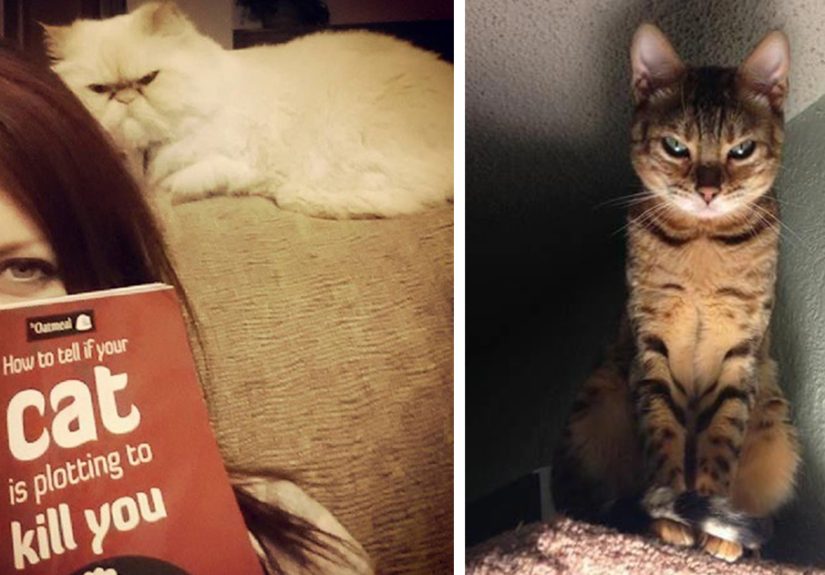
If you want to know how to tell if your cat is “secretly planning to kill you,” the real answer is this: learn the difference between normal cat behavior, playful ambushes, fear-based aggression, territorial drama, overstimulation, and behavior changes that might actually signal pain or illness. Once you know what to watch for, your cat becomes much easier to read and far less mysterious. Still judgmental. But less mysterious.
The Big Truth: Your Cat Isn’t Evil, But Your Cat Is Extremely Committed to Boundaries
Cats are experts at saying, “I would prefer that you did not.” They say it with their ears, tail, eyes, whiskers, posture, and movement. When people ignore those signals, the cat may escalate from subtle discomfort to swatting, biting, hissing, or full theatrical outrage. That does not mean your cat is plotting murder. It means your cat feels threatened, overstimulated, frustrated, scared, cornered, or wildly under-entertained.
In other words, the “secret plan” is usually one of these:
- “Please stop touching me.”
- “That outdoor cat is on my property and now I am emotionally unavailable.”
- “I have too much energy and your ankle is moving like prey.”
- “My back hurts, my tooth hurts, or something else feels wrong.”
- “This hallway belongs to me, peasant.”
Top Signs Your Cat Looks Like a Tiny Furry Assassin
1. The pupils go huge and the face changes
Wide, dilated pupils can show excitement, fear, arousal, or aggression. On their own, they do not prove anything. Combined with a tense body, fixed stare, ears back, or a low crouch, they often mean your cat is not in a cuddly mood. If your cat suddenly looks like it just saw a ghost, a tax auditor, and a cucumber at the same time, back off and reassess.
2. The ears rotate, flatten, or pin back
Relaxed cats usually hold their ears in a neutral position. Cats that are stressed, annoyed, fearful, or preparing to act often turn the ears sideways or flatten them backward. This is one of the clearest early signs that the vibe has changed. It is the feline equivalent of someone slowly removing their glasses before a fight scene.
3. The tail starts broadcasting bad news
A softly held tail is one thing. A tail that lashes, flicks hard, puffs up, or tucks close to the body is another. A twitching tail tip can be an early warning during petting. A bottle-brush tail can mean fear or high arousal. A tail wrapped tightly under the body suggests distress. If the tail is delivering a speech, you should listen.
4. The body goes from soft to tense in half a second
A relaxed cat looks loose. An irritated cat often freezes, crouches, arches, leans away, or holds the body stiffly. Some cats flatten low to the ground. Others rise up with an arched back and raised fur to look bigger. Either way, this is not the body language of “please continue kissing my forehead.”
5. The whiskers and fur join the conspiracy
Whiskers can press back in anxiety or shift forward in intense focus. Fur standing up along the spine or tail is another sign your cat is highly aroused. No, your cat is not becoming a Halloween decoration for your entertainment. Your cat is telling you the situation has escalated.
When Your Cat Is Not Plotting Murder, Just Rehearsing for the Olympics
Play aggression looks alarming because play mimics hunting
One reason cats seem delightfully unhinged is that healthy play often includes stalking, chasing, pouncing, grabbing, kicking, and biting. That sounds like a villain origin story, but it is actually normal feline behavior. The issue starts when a cat is bored, under-stimulated, or never learned appropriate play boundaries. Then your hands, calves, or midnight feet under the blanket become prime “prey.”
If your cat hides behind a chair and ambushes your ankles like a tiny jungle predator, that usually points to play-related aggression, not a criminal mastermind. Young cats and high-energy cats are especially famous for this nonsense. Interactive wand toys, rolling toys, food puzzles, and regular play sessions can make a huge difference. Your ankles deserve a more peaceful future.
Petting-induced aggression is the cat version of “I’m done now”
Some cats enjoy affection in small, carefully measured doses. A few strokes on the head and neck? Lovely. Twelve minutes of enthusiastic full-body rubbing while someone baby-talks at maximum volume? Absolutely not.
Many cats show subtle warning signs before they bite or swat during petting. They may freeze, flick the tail, lower the ears, tense the body, ripple the skin along the back, or shift away. When people miss those cues, the cat may escalate to a nip. That bite can feel sudden to you, but to the cat it was the final memo after several ignored emails.
The Most Misunderstood “Murder Plot”: Redirected Aggression
This is one of the biggest reasons a nice cat can seem to turn into a furry thunderstorm out of nowhere. A cat sees something upsetting it cannot reach, like another cat outside the window, a strange animal in the yard, a loud noise, or a stressful event. The cat becomes intensely aroused. Then a person walks by and accidentally becomes the nearest available target.
This is called redirected aggression, and it can be surprisingly intense. If your cat is locked onto the window, growling, staring, hissing, or pacing, that is not the moment to scoop your cat up and whisper, “Who’s mad?” That is how people end up explaining a bite mark at urgent care with the sentence, “He was upset about a squirrel.”
Give the cat space. Reduce access to the trigger if possible. Use calm management, not punishment. And never assume a cat in that state is available for negotiation.
Territorial Behavior: Your Home, According to the Cat, Is Also the Cat’s Kingdom
Cats are territorial. That matters most in multi-cat homes, but it can also affect how a cat responds to visitors, windows, doorways, furniture, or favored resting spots. Some cats block hallways. Some camp in front of the litter box like nightclub bouncers. Some stare another cat into retreat without touching a whisker. Others go straight to chasing.
Territorial tension can look subtle at first: staring, blocking, stalking, following, sitting in a doorway, or claiming high-value spots. Then one day everyone is surprised by a loud hallway explosion and blames the moon. Usually the tension started earlier and the signals were simply missed.
In homes with multiple cats, the fix is often less about “making them be friends” and more about reducing competition. More litter boxes, more feeding stations, more resting spots, more vertical space, more hiding areas, and more predictable routines can lower stress dramatically.
When Your Cat Suddenly Acts Mean, Check for Pain First
This part is not funny, but it is important. A sudden change in cat behavior can be a medical issue. Cats in pain may hide, resist handling, lash out when touched, or show aggression that seems out of character. Dental disease, arthritis, hyperthyroidism, neurologic problems, and other medical conditions can change behavior fast.
If your normally social cat starts biting during petting, avoids being picked up, growls when touched, or becomes reactive without an obvious reason, do not jump straight to “my cat hates me now.” Talk to a veterinarian. Cats are masters at disguising discomfort until they absolutely cannot.
How To Lower the Odds of a Feline Coup
Respect the warning signs
If the ears go back, the tail starts snapping, the body stiffens, or the cat freezes, stop interacting. Immediately. Not after “one more kiss.” Not after “let me just fix your little paw.” Right then.
Play with purpose
Schedule daily interactive play that lets your cat stalk, chase, pounce, and “catch” something appropriate. Wand toys are gold. So are food puzzles and toy rotation. A bored cat is more likely to invent chaos.
Do not use punishment
Yelling, spraying water, hitting, or “showing the cat who’s boss” tends to increase fear and make aggression worse. It may stop behavior in the moment, but it often damages trust and raises tension long-term. Cats learn best when they feel safe.
Improve the environment
Cats need more than food and a sunny rectangle on the floor. They benefit from perches, scratching surfaces, hiding places, multiple resources, and routes that let them move around without conflict. Enrichment is not extra. It is behavior insurance.
Watch for patterns
Does the biting happen at night? Near the window? During lap time? After another pet enters the room? When you touch the lower back? Patterns reveal triggers, and triggers reveal solutions.
Common Scenarios That Feel Sinister But Usually Aren’t
The midnight face stare
Terrifying? Yes. Evidence of a murder plot? Probably not. Your cat may want food, attention, movement, or simply enjoy being weird in low light like a tiny haunted taxidermy exhibit.
The ankle ambush from under the bed
Usually play aggression. Your cat is acting like a hunter because cats are hunters. The solution is better play, not a tiny trial.
The sudden lap bite
Often overstimulation. Your cat likely sent several subtle warnings first. Learn them and end petting sooner.
The window rage episode
Classic redirected aggression risk. Another animal outside may be the real target. Do not grab the cat with bare hands.
The hallway block and hard stare
That is often territorial or social tension, especially in multi-cat households. It may look quiet, but it is not nothing.
500 More Words of Real-World Experience: What Cat Owners Commonly Notice
A lot of cat owners describe the same strange arc. At first, the behavior seems random. The cat is sweet one minute and dramatic the next. Someone says, “He attacked me for no reason,” but once you slow the story down, the reason starts to appear. Maybe the cat had been staring out the window for ten straight minutes at a neighborhood cat. Maybe a child kept petting after the tail started flicking. Maybe another cat in the house had been silently blocking the hallway for weeks. What looked like a betrayal was usually communication that no one translated in time.
One of the most common experiences is the “lap surprise.” A cat jumps up, purrs, circles, settles, and seems completely content. The person relaxes, pets a little longer, and then suddenly gets a nip on the hand. Most owners remember only the bite. They do not remember the stillness right before it, the quick tail movement, the slight ear swivel, or the skin twitch along the back. Once they start watching for those clues, the “surprise” happens much less often.
Another classic experience is the ambush cat. Owners laugh about the cat waiting behind a doorway and launching at moving feet like a tiny action hero. It is funny until it is not. In many homes, this behavior improves once the cat has better outlets for prey-style play. A cat that gets regular wand-toy sessions, puzzle feeding, and things to climb often becomes less interested in treating human ankles like a sport.
Multi-cat households tell a different story. The tension may not begin with a fight. It may begin with staring, sitting in pathways, avoiding certain rooms, eating faster, hiding more, or using the litter box less comfortably. Owners often notice the explosion first and miss the quiet campaign that came before it. Once they add more resources, separate feeding areas, vertical resting spaces, and controlled reintroductions when needed, the house often becomes calmer. Not because the cats become best friends overnight, but because they no longer have to negotiate every inch of shared territory like hostile diplomats.
Then there is the cat whose behavior changes suddenly. Many owners first assume the cat is moody, aging badly, or becoming “mean.” Later they discover dental pain, arthritis, or another medical problem. This experience changes how people think about behavior. They stop seeing aggression as pure attitude and start seeing it as information. That shift matters. A cat that bites when touched may be protecting a painful body, not expressing evil genius.
Perhaps the biggest lesson owners report is that cats become easier to live with once people stop asking, “How do I control this cat?” and start asking, “What is this cat telling me?” That question changes everything. The cat still may be dramatic. The cat still may sprint across the house at 2:13 a.m. for no reason visible to science. But the relationship improves when the human notices triggers, respects limits, offers enrichment, and gets veterinary help when behavior changes abruptly. In the end, most cats are not secretly planning to kill you. They are just incredibly committed to being understood on their own weird, whiskered terms.
Conclusion
If your cat seems like it is secretly planning your demise, the truth is usually far less cinematic and far more helpful: your cat is signaling fear, frustration, overstimulation, territorial stress, boredom, or pain. The best response is not punishment, panic, or a dramatic reading of feline intentions. It is observation. Learn the ears, the tail, the pupils, the posture, and the context. Add enrichment. Respect boundaries. Rule out medical causes. And remember that the cat who stares at you from the hallway like a fluffy mob boss may simply want more play, more space, or fewer bad decisions from the humans in the house.