Table of Contents >> Show >> Hide
- Why Washing Dog Toys Matters More Than Most People Think
- Know Your Toy Before You Wash It
- What You Need to Clean Dog Toys
- How to Wash Dog Toys Step by Step
- How Often Should You Wash Dog Toys?
- What Not to Do When Cleaning Dog Toys
- When to Toss Instead of Wash
- A Simple Cleaning Routine That Actually Works
- Common Questions About Washing Dog Toys
- Conclusion
- Everyday Experiences With Washing Dog Toys: What Dog Owners Learn Fast
If your dog’s favorite toy smells like a mystery, looks like it survived a swamp expedition, and leaves behind a suspicious trail of slobber, congratulations: it is officially bath time. Dog toys go everywhere your dog goesliving room, backyard, car, dog bed, and sometimes places no toy should ever visit. They collect dirt, saliva, food residue, grass, and enough grime to make you side-eye that once-cute plush duck.
The good news is that learning how to wash dog toys does not have to become a full-time hobby. You do not need a laboratory, a hazmat suit, or a three-page spreadsheet titled “Squeaky Bone Sanitation Schedule.” You just need a simple routine, the right cleaning method for the toy type, and the wisdom to know when a toy needs washing versus when it needs a respectful retirement.
This guide breaks down exactly how to clean dog toys safely, how often to do it, what products to use, and when to toss a toy instead of trying to rescue it. Whether you are dealing with rubber chew toys, rope toys, plush squeakers, or food-stuffed puzzle toys, here is the simple, easy way to keep your dog’s toys cleaner and safer.
Why Washing Dog Toys Matters More Than Most People Think
Dog toys are not just messy. They can become tiny germ magnets. Toys that spend a lot of time in your dog’s mouth can collect bacteria, yeast, mold, and plain old funk. Food-dispensing toys are especially quick to get gross because leftover treats, peanut butter, canned food, or broth can hide in corners and crevices like they are paying rent.
Dirty toys can also transfer grime to your floors, furniture, dog bed, and hands. If your dog sleeps with a plush toy, carries a rope toy outside, then drags it back onto your couch like a prized hunting trophy, that toy has basically become a fuzzy mop with opinions.
Regular cleaning helps reduce odor, lowers the buildup of debris and germs, and gives you a chance to inspect toys for damage. That last part matters. A clean toy is good, but a clean toy with a split seam and loose stuffing is still a problem. Washing time is also safety-check time.
Know Your Toy Before You Wash It
Not all dog toys should be cleaned the same way. The easiest way to avoid ruining a toy is to match the cleaning method to the material.
Rubber and Plastic Dog Toys
These are usually the easiest to clean. Think chew bones, balls, fetch toys, and many treat-dispensing toys. Most can be washed with warm water and mild soap. Some are dishwasher-safe, but always check the manufacturer’s directions first. High heat can damage certain rubber toys, warp plastic, or shorten the toy’s life.
Plush and Fabric Dog Toys
Soft toys often collect the most drool and odor. Some can go in the washing machine, while others do better with a gentle hand wash. If the toy has delicate stitching, glued-on parts, or a squeaker that already sounds like it is considering retirement, use extra caution.
Rope Toys
Rope toys are the overachievers of dirt collection. Their fibers trap saliva, dust, food bits, and outdoor gunk very efficiently. They can sometimes be machine-washed or hand-washed, but if the rope is badly frayed, skip the cleaning heroics and replace it.
Food-Dispensing and Puzzle Toys
These need the most frequent attention because food residue can build up fast. Hollow rubber toys, treat puzzles, slow feeders, and lick-style enrichment toys should be cleaned after each use or at least very promptly. Dried peanut butter inside a toy may look harmless, but it has the cleaning personality of concrete.
What You Need to Clean Dog Toys
- Warm water
- Mild, unscented dish soap or pet-safe soap
- Pet-safe laundry detergent for washable plush toys
- A soft scrub brush, bottle brush, or old toothbrush
- A mesh laundry bag for small plush toys
- Clean towels
- A drying rack or a sunny, well-ventilated spot for air-drying
If you prefer a simple DIY option for deodorizing certain hard toys, a diluted vinegar-and-water solution can help with odor and grime. Just do not treat every toy like it is a salad ingredient. Always rinse thoroughly and check the manufacturer’s care guidance first.
How to Wash Dog Toys Step by Step
1. Start With a Damage Check
Before you wash anything, inspect each toy. Look for split seams, torn fabric, loose squeakers, cracked rubber, missing pieces, sharp edges, or strands hanging off rope toys. If the toy is broken enough to become a choking risk or could shed stuffing or fibers, do not wash it and send it back into service. Retire it.
2. Remove Loose Dirt and Debris
Shake off dust, scrape out dried mud, and remove trapped hair or grass. For stuffed puzzle toys or hollow rubber toys, knock out crumbs and leftover treats before adding water. This step makes cleaning easier and less disgusting, which is always a strong feature.
3. Wash Hard Toys With Warm Soapy Water
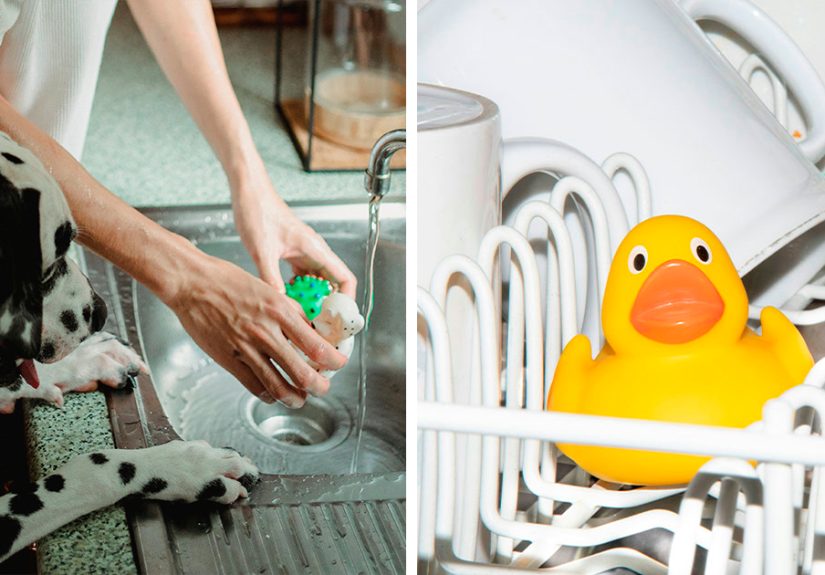
For rubber and plastic toys, wash with warm water and a small amount of mild soap. Use a brush to scrub grooves, seams, nubs, and holes where drool and food can hide. Rinse very well so no soap residue remains. If the toy is labeled dishwasher-safe, place it on the top rack and avoid high-heat drying unless the manufacturer specifically says it is fine.
4. Wash Plush Toys Gently
If the plush toy has a care label and it allows machine washing, place it in a mesh laundry bag or pillowcase and run a gentle cycle using pet-safe detergent. If the toy looks delicate, hand-wash it in warm water with a small amount of mild soap. Rinse thoroughly. Air-drying is usually the safest option, especially for toys with squeakers, plastic parts, or glued details.
5. Clean Rope Toys Thoroughly
Rope toys can be hand-washed in warm water with mild soap or machine-washed if the toy’s condition and care guidance allow it. Scrub any especially dirty areas, rinse well, and let the toy dry completely. If the rope smells funky even after washing or looks heavily frayed, it is probably time to replace it.
6. Clean Food Toys After Every Use
For KONG-style toys and other enrichment toys, wash them soon after your dog finishes. Soak them in warm soapy water if food is stuck inside, then scrub the interior with a bottle brush or toothbrush. Rinse until clean and let them dry fully before refilling. This is one of the easiest ways to prevent bacteria buildup and weird smells.
How Often Should You Wash Dog Toys?
The short answer: more often than most people do, but not so often that you turn your laundry room into a toy spa.
- Food-dispensing toys: after every use
- Frequently used rubber or plastic toys: about once a week
- Plush toys your dog carries, cuddles, or chews daily: weekly or every other week
- Rope toys: weekly if used often
- Outdoor toys: whenever visibly dirty, muddy, or funky
If a toy smells bad, feels slimy, looks dirty, or has been slobbered on for days like a treasured artifact, wash it sooner. Visible dirt beats any calendar reminder.
What Not to Do When Cleaning Dog Toys
- Do not use harsh cleaners unless the product is clearly pet-safe and fully appropriate for the toy.
- Do not leave soap residue behind.
- Do not assume every toy can handle high heat.
- Do not return a toy before it is completely dry.
- Do not ignore the manufacturer’s cleaning instructions.
- Do not keep damaged toys just because your dog loves them with great emotional intensity.
Yes, your dog may love the one-eyed plush squirrel that now resembles a cautionary tale. That does not mean it should continue its career.
When to Toss Instead of Wash
Some toys are washable. Some are washable once. Some are one bad squeaker away from becoming a vet bill.
Replace a dog toy if it has:
- Loose stuffing or exposed squeakers
- Cracks, splits, or broken plastic
- Sharp edges
- Severe fraying on rope toys
- Pieces missing
- A smell that survives cleaning like it pays taxes there
Also replace toys that have become too small for safe chewing. A toy that can fit too easily into your dog’s mouth may become a choking hazard.
A Simple Cleaning Routine That Actually Works
If you want a realistic routine, keep it easy:
- Rinse food toys right after use.
- Pick one day a week to wash the most-used toys.
- Keep a small rotation of toys so your dog always has something clean while others dry.
- Do a quick safety inspection every time you clean.
- Store clean toys in a dry bin or basket.
This routine keeps cleaning manageable and prevents the “how is every toy in this house simultaneously sticky?” moment.
Common Questions About Washing Dog Toys
Can you put dog toys in the dishwasher?
Some rubber and plastic toys are dishwasher-safe, especially certain well-known enrichment toys. Always check the label first, place them on the top rack if recommended, and be careful with high heat or heated dry cycles.
Can you put plush dog toys in the washing machine?
Many plush toys can be machine-washed on a gentle cycle, but delicate toys or those with glued parts may do better with hand washing. Air-drying is often safest.
Is vinegar safe for cleaning dog toys?
For some hard toys, a diluted vinegar-and-water soak can help with odor and grime. It is best used as an occasional helper, not as an excuse to skip rinsing. Always rinse well and avoid using any cleaning method that conflicts with the toy maker’s guidance.
How do you clean dog toys naturally?
The simplest natural approach is warm water, thorough scrubbing, and careful drying. For some toys, diluted vinegar can help. The key is not “natural-looking.” The key is “safe, rinsed, and fully dry.”
Conclusion
Learning how to wash dog toys is really about keeping things simple, safe, and consistent. You do not need a complicated system to keep your dog’s toys cleaner. Wash hard toys with warm soapy water, machine-wash or hand-wash plush toys carefully, clean food toys after every use, and replace anything damaged or unsafe. That alone will put you ahead of most toy baskets in America.
Clean toys smell better, last longer, and are more pleasant for both dogs and humans. Your dog may not thank you in words, but they will probably celebrate by immediately covering the freshly cleaned toy in slobber again. That, sadly, is just the circle of life.
Everyday Experiences With Washing Dog Toys: What Dog Owners Learn Fast
One of the funniest things about dog ownership is how normal weird things become. At first, washing dog toys sounds slightly ridiculous. Then one day you pick up a plush bone that feels damp for reasons you do not want to investigate, and suddenly dog toy hygiene becomes part of your personality.
Many dog owners learn the same lesson the hard way: the toy that looks “mostly fine” is often not fine at all. A rope toy can seem harmless until you rinse it and watch cloudy water come out like the toy has been storing secrets. A rubber puzzle toy may look clean on the outside, while the inside is basically a peanut butter cave system. Plush toys are even sneakier. They can look fluffy and innocent while smelling like wet socks and backyard adventures.
Another common experience is realizing that dogs are deeply loyal to the grossest toy in the house. You can buy a brand-new, adorable, premium toy, and your dog will still prefer the battered old duck that has survived rain, mud, and at least one mysterious disappearance under the couch. Washing that favorite toy can feel like handling a priceless historical object. You do it gently. You check the seams like a detective. You air-dry it like it belongs in a museum.
Dog owners also discover that timing matters. Cleaning toys right after play is far easier than waiting. Fresh slobber is annoying. Dried slobber is a building material. The same goes for food toys. If you wash a stuffed toy right after your dog empties it, the job takes two minutes. If you wait until the next morning, you are suddenly in a dramatic battle against dried pumpkin, peanut butter glue, or bits of kibble wedged into corners with the confidence of a permanent resident.
There is also the very real experience of learning that “washable” does not always mean “indestructible.” Some plush toys come out of the washer looking great. Others come out looking like they made poor life choices. This is why experienced dog owners become label readers. They stop guessing. They use mesh bags. They choose gentle cycles. They air-dry more often. They become surprisingly wise about squeaker preservation.
Then there is the rotation trick, which feels life-changing once you start doing it. Having a few clean toys in reserve makes the whole process easier. While one batch dries, your dog still has something safe to chew or carry around proudly. Rotation also keeps toys feeling fresh and interesting. To your dog, this looks like excellent customer service.
Perhaps the biggest lesson is that washing dog toys is not really about perfection. It is about maintenance. No one is trying to keep a chew toy in showroom condition. The goal is simply to keep toys cleaner, safer, and less likely to smell like an old gym bag. Once dog owners accept that, the task gets easier. It becomes less about scrubbing every inch with military precision and more about building a simple routine that works in real life.
And in real life, the best system is the one you will actually do. A quick rinse. A weekly toy wash. A safety check. A willingness to throw away the toy that has truly seen too much. Keep it simple, keep it easy, and your dog’s toy basket will be a lot less scary.