Table of Contents >> Show >> Hide
- What Josh Hutcherson Actually Said
- Why the Internet Reacted So Fast
- Was It Really Shade, or Just Internet-Speed Sarcasm?
- Why This Landed So Hard in the Taylor Swift Universe
- Josh Hutcherson Was the Perfect Viral Target
- What This Debate Really Says About Celebrity Culture
- The Bigger Swiftie Question: Community or Control?
- Related Online Experiences: When a Throwaway Joke Becomes a Loyalty Test
- Conclusion
It takes very little to set the internet on fire these days. A bad take will do it. A vague subtweet will definitely do it. And apparently, all it really takes in 2025 is Josh Hutcherson casually admitting he is not a Swiftie, followed by a half-joking line that landed like a match in a room full of dry confetti.
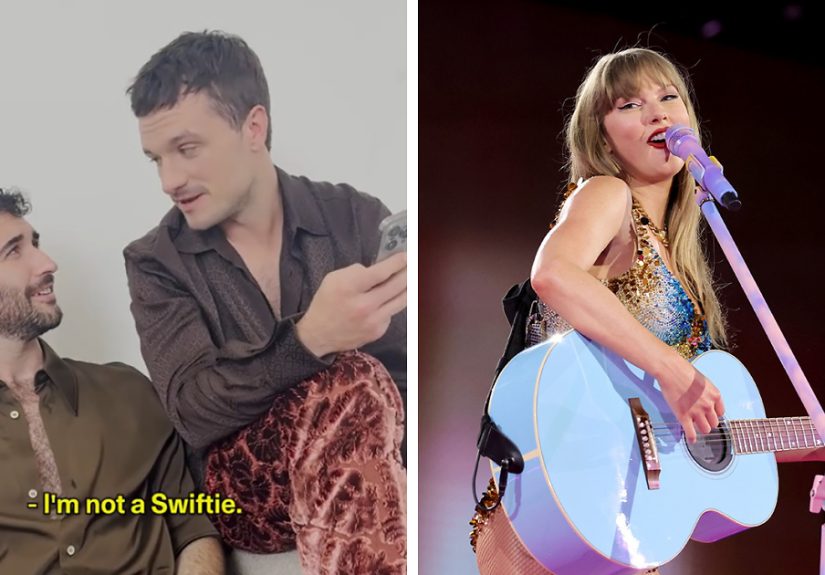
The moment was small, almost suspiciously small for the size of the explosion that followed. Hutcherson, best known to millions as The Hunger Games heartthrob with permanent "good guy energy," appeared in a light segment with Jordan Firstman and ended up talking about a photo of himself and his mother at Taylor Swift’s Eras Tour. Then came the question that launched a thousand opinion posts: was he a Swiftie? His answer was a fast, emphatic no. What should have been a breezy bit of celebrity banter suddenly became a full-blown online debate about gratitude, fandom, celebrity etiquette, and whether every public figure is required to kneel before the altar of Taylor Swift.
That is what made this story so sticky. It was never really just about Josh Hutcherson. It was about what fandom means now, what celebrity honesty costs, and why the internet treats a joke like sworn courtroom testimony. Somewhere between "not a fan" and "internet backlash," a pop-culture Rorschach test appeared. People saw whatever they wanted to see: disrespect, refreshing honesty, fake outrage, fan entitlement, or just another Tuesday online.
What Josh Hutcherson Actually Said
The viral moment came out of a playful camera-roll segment in which Hutcherson and Firstman scrolled through photos based on prompts. When the topic turned to a concert picture, Hutcherson showed a photo of himself and his mom at Taylor Swift’s Eras Tour in New Orleans. He explained that he had gone because his mother wanted to attend. Then came the fandom question, and Hutcherson made it clear he was not, in his words, "very much" a Swiftie.
What turned the moment from a simple preference into a controversy was the tone. He added that there was "no shade," but the exchange kept bouncing with sarcasm, and Firstman nudged the bit along by joking that there was maybe just a tiny bit of shade after all. Hutcherson leaned into the joke. Online, that tiny wink became the whole story.
Suddenly, the discourse split into camps. One side argued that he sounded dismissive about the biggest pop star on the planet after attending one of the most coveted tours in recent memory. The other side rolled its eyes and asked a reasonable question: since when did saying "I’m not a fan" become a moral failure?
Why the Internet Reacted So Fast
The VIP pit made everything louder
If Hutcherson had said the same thing from his couch while eating cereal in sweatpants, the story probably would have died in a few hours. But he had actually attended the Eras Tour, and not just as a random face in the upper deck. Reports and fan footage placed him in the VIP area during Swift’s New Orleans stop. In the logic of online fandom, that detail mattered a lot.
To critics, the issue was not simply that he was not a fan. It was that he had access to an experience many actual Swifties would have sold a kidney-shaped candle for. That helped fuel the backlash. The argument was less, "He must love Taylor Swift," and more, "Why enjoy premium access to a cultural event and then sound snippy about it later?" Whether that was a fair reading is another matter. But online arguments rarely wait for fairness to arrive.
Swiftie culture is not just fandom; it is community
This is the part casual observers sometimes miss. Taylor Swift fandom is not only about liking songs. It is a social world. It is friendship bracelets, inside jokes, outfit planning, clue hunting, livestreams, group chats, concert rituals, emotional autobiography, and enough shared vocabulary to qualify as a minor civilization. Fans do not simply consume the work. They build a community around it.
That helps explain why even a mild-seeming celebrity comment can trigger such a strong response. When fandom becomes part of identity, criticism does not feel like background noise. It feels personal. And when the artist at the center of that community is someone with a massive, highly engaged audience, the emotional temperature rises fast.
Was It Really Shade, or Just Internet-Speed Sarcasm?
Here is where the whole debate gets interesting. Hutcherson’s comment was not a scorched-earth rant. He did not insult Swift’s talent, question her success, or launch into a speech about overrated pop stars while dramatic thunder rolled in the distance. He said he was not a Swiftie, tried to soften it, and then joked along with Firstman.
In other words, this looked a lot like ordinary banter. But the internet is terrible at ordinary banter. Social media strips away rhythm, facial expressions, and the soft signals that tell us when someone is being playful. A clipped video can flatten tone until sarcasm looks harsh and harmless teasing sounds like a declaration of war. Add fandom loyalty to that equation and suddenly nuance gets thrown out a digital window.
That is why the same clip produced two wildly different reactions. Some viewers saw a smug jab. Others saw a grown man being honest that his mother brought him to a concert and he is not part of the fan base. Both readings tell us less about the actual sentence and more about the audience bringing emotional luggage to it.
Why This Landed So Hard in the Taylor Swift Universe
Taylor Swift exists at a level of cultural saturation where even small moments ricochet far beyond entertainment news. She is not just a singer with a loyal following. She is a full-scale pop ecosystem. Her concerts became global events, her fans created traditions that spread from stadiums to city streets, and her commercial power has been discussed in terms usually reserved for major industries and sports leagues.
That scale changes the rules. Within a fandom this large, every comment gets sorted, screenshotted, reframed, and redistributed. Fans can be joyful, generous, and wildly creative. They can also become overprotective, especially when they think an outsider is treating their favorite artist like a punchline. That tension has become one of the defining features of modern stan culture: enormous community energy mixed with occasional "please step away from the keyboard" behavior.
And yes, that contradiction matters. Swift’s fandom is beloved in part because it has built something fun and communal. But like many modern fandoms, it also contains a smaller, louder corner that can turn ordinary disagreement into public punishment. That is not unique to Swifties, but because Swift’s fan base is so visible, the dynamic is easier to spot.
Josh Hutcherson Was the Perfect Viral Target
Hutcherson is an especially fascinating person to get dropped into this machine. He has a likable public image, strong nostalgia value, and the kind of internet goodwill that usually protects celebrities from minor storms. He is Peeta Mellark. He is the guy many people still describe with the digital equivalent of a dreamy sigh. So when he said something interpreted as slightly bratty, it created dissonance.
That dissonance is catnip for online culture. The internet loves a "Wait, him?" moment. It loves a character arc, even when no real arc exists. Hutcherson went from beloved low-drama actor to alleged Taylor shade-thrower in record time, not because the offense was huge, but because the contrast was irresistible. The story was too neat. Nice guy says mildly snarky thing. Fans revolt. Defenders counterattack. Everybody posts. The algorithm eats well.
There was also a second layer that made the debate even stickier: people who are exhausted by stan culture immediately used the moment as proof that fandom has gone off the rails. That turned the conversation into a proxy war. It was no longer just Swift fans vs. Josh fans. It became Swiftie discourse vs. anti-Swiftie discourse, which is basically the online equivalent of tossing a soda can into a hornet nest.
What This Debate Really Says About Celebrity Culture
At its core, the Hutcherson-Swift debate reveals how little room celebrities have left for harmless indifference. In theory, not everyone has to adore the same artist. In practice, the internet increasingly treats neutral opinions as secret attacks. A public figure cannot just say, "It’s not really for me," without being pulled into a full symbolic battle over taste, loyalty, class, gender politics, or fandom etiquette.
That is a problem, because honest taste is normal. It is healthy, even. Pop culture would be incredibly boring if every actor, singer, and athlete gave the same polished answer about every massively popular star. There is something refreshing about a celebrity admitting they attended a famous concert for a family member and did not magically emerge wearing glitter boots and ranking Folklore deep cuts.
At the same time, there is a lesson here for public figures too. Tone matters. Celebrity banter lives forever online, where every raised eyebrow gets converted into a hot take. Hutcherson likely did not expect this response, but internet culture has trained audiences to hear casual sarcasm as coded disrespect. That does not mean he did anything terrible. It just means the public square now runs on overreaction, screenshots, and vibes.
The Bigger Swiftie Question: Community or Control?
The most useful way to understand this story is to hold two truths at once. First, Swift fandom has built one of the most vibrant fan communities in modern pop culture. It has created rituals, friendships, traditions, and enough handmade jewelry to bead-wrap the moon. That is real, and it is worth respecting.
Second, every massive fandom has a control problem. When emotional investment gets intense enough, some fans start treating public disagreement as betrayal. That is where affection mutates into enforcement. It stops being "I love this artist" and starts becoming "you must express your opinion correctly." That shift is where fandom stops being fun and starts becoming exhausting.
The Hutcherson moment hit that fault line perfectly. His defenders were not only defending him; they were pushing back against the idea that everyone must perform enthusiasm on command. His critics were not only defending Swift; they were defending the dignity of a fan community that often gets mocked, dismissed, or caricatured. No wonder the debate got loud. Both sides thought they were protecting something bigger than one joke.
Related Online Experiences: When a Throwaway Joke Becomes a Loyalty Test
If you spend enough time online, moments like this start to feel strangely familiar. You watch a clip that is maybe 20 seconds long. Someone says something dry, weird, or slightly sharper than expected. Within minutes, people are acting like they uncovered a secret manifesto. Then come the reaction posts, the reposts of reaction posts, the reactions to the reactions, and the inevitable person declaring, with the confidence of a medieval king, that "this says a lot about society."
That experience is part of what makes the Josh Hutcherson story relatable even for people who do not care about celebrity gossip. Most internet users have seen how quickly tone gets lost online. A joke becomes a statement. A preference becomes a character flaw. A tiny moment becomes a referendum on who is decent, who is fake, who is grateful, and who deserves to be dragged before the court of public opinion.
There is also the experience of watching fandom become a loyalty test. Maybe you have seen it in music. Maybe you have seen it in sports, movies, gaming, or book communities. The pattern is the same. Someone says, "I like this but I’m not obsessed," and that mild opinion somehow reads as treason. Online spaces often reward extremes, so moderation gets flattened. You are either devoted or disrespectful, in or out, a real fan or a hater. There is very little room left for normal human ambivalence.
That is why the Hutcherson moment resonated beyond the celebrity-news bubble. It reminded people of their own digital fatigue. The fatigue of watching people overread jokes. The fatigue of seeing every cultural preference turned into a moral contest. The fatigue of knowing that one mildly clumsy sentence can spiral into a week of discourse because platforms reward outrage the way slot machines reward noise.
And yet there is something almost funny about it too. The internet can turn any topic into high drama, even a man going to a concert with his mom and not becoming a full-time disciple afterward. There is comedy in that absurdity. The same culture that made friendship bracelets a beautiful shared ritual can also make one sarcastic comment feel like a global emergency. Human beings contain multitudes, and apparently one of those multitudes is "will absolutely lose it over a celebrity saying no thanks to pop fandom."
Maybe the healthiest takeaway is this: online culture is often less interested in what happened than in how emotionally useful it is. A moment becomes viral when it lets people project their frustrations, loyalties, fears, and favorites onto it. Josh Hutcherson’s comment worked like that. It was small enough to be endlessly interpretable and famous enough to travel. That is the perfect formula for digital chaos. Not wisdom. Not clarity. Definitely not peace. Just chaos with a trending tab.
Conclusion
Josh Hutcherson’s "snarky" comment about Taylor Swift sparked fierce debate online because it touched a modern cultural nerve. On the surface, it was a tiny celebrity moment: a joke, a shrug, a non-fandom confession. Underneath, it became a debate about access, gratitude, fandom identity, parasocial behavior, and whether the internet has forgotten how to let people simply not be huge fans of something popular.
The smartest reading is probably the least dramatic one. Hutcherson made a dry joke. Some Swifties took it personally. Other people overcorrected and used the backlash as evidence that all fandom is ridiculous. In reality, both the passion and the overreaction are part of the same messy internet ecosystem.
That is what makes this story memorable. It is not really about whether Josh Hutcherson likes Taylor Swift. It is about how celebrity culture now works. Every offhand comment can become a loyalty test. Every fandom can become a battleground. And every tiny spark can become a bonfire if enough people arrive carrying gasoline and Wi-Fi.