Table of Contents >> Show >> Hide
- Mango nutrition at a glance
- What those nutrients actually do (and why you should care)
- Health benefits of mango (what’s solid, what’s promising)
- Who should be cautious with mango?
- How to choose a mango that tastes like mango (not regret)
- How to store mango (and keep it from turning into a science experiment)
- How to cut a mango without losing a finger (or your dignity)
- How to eat mango: simple, delicious ideas
- Putting it all together
- Kitchen stories and real-world mango experiences (the practical kind)
- SEO Tags
Mango is the fruit equivalent of a vacation: bright, sweet, a little messy, and somehow it always shows up when you need a mood boost.
But beyond being the unofficial mascot of smoothies and summer salsas, mango also packs legit nutritionvitamins, fiber, and plant compounds
that do more than just make your taste buds clap.
Let’s dig into what’s actually in a mango, what the science suggests it can do for your health, and the easiest (and least sticky) ways to eat it.
Spoiler: you don’t need fancy toolsjust a cutting board, a knife, and a willingness to accept that mango juice is basically glitter.
Mango nutrition at a glance
Mango is a carbohydrate-rich fruit (as fruits tend to be), with most of its calories coming from natural sugars plus a helpful dose of fiber.
A common serving people recognize is 1 cup of mango piecesgreat for comparing nutrition without doing fruit math.
Typical nutrition for 1 cup of raw mango pieces
- Calories: about 99
- Carbohydrates: about 25 g (mostly natural sugars)
- Fiber: about 2.6 g
- Protein: about 1.4 g
- Fat: about 0.6 g
- Vitamin C: about 60 mg
- Folate: about 71 mcg
- Potassium: about 277 mg
Translation: mango is not “just sugar.” It’s a sweet fruit that brings micronutrients and fiber to the partymeaning it’s more
“dessert with benefits” than “candy wearing a fruit costume.”
What those nutrients actually do (and why you should care)
Vitamin C: the “repair crew” vitamin
Vitamin C supports collagen formation (important for skin, blood vessels, and connective tissue), helps with wound healing,
and improves the absorption of non-heme iron (the type found in plant foods). It also works as an antioxidant, helping protect cells
from oxidative stress.
If you’re the kind of person who wants numbers: many adults aim for around 75–90 mg per day of vitamin C, depending on sex and life stage.
A cup of mango gets you meaningfully closewithout you needing to chew a bell pepper like a brave little rabbit.
Vitamin A precursors: eye and immune support
Mango contains carotenoids (plant pigments your body can convert into vitamin A). Vitamin A is involved in vision, immune function,
and maintaining healthy skin and tissues. Carotenoids are also part of what gives mango that golden-orange “sunset” color.
Fiber: the underrated MVP
Fiber supports digestive health, helps you feel full, and can contribute to steadier blood sugar and healthier cholesterol levels.
Mango has a modest amountnot “beans level,” but enough to matter, especially if you pair it with other fiber-rich foods.
Potassium: your body’s fluid-and-muscle manager
Potassium plays a role in fluid balance and muscle function and is part of many heart-healthy eating patterns.
Mango contributes some potassium, though it’s not the only (or biggest) player in townbananas don’t own that category either, by the way.
Health benefits of mango (what’s solid, what’s promising)
Mango is not a magical fruit that will fix everything from your inbox to your blood pressure. But as part of an overall healthy diet,
it can support several systems in the body. Here’s howwithout the hype.
1) Immune support and tissue health
Mango’s vitamin C contributes to immune function and tissue repair. Think of it as giving your body supplies for maintenance work:
collagen production, healing, and antioxidant support. This doesn’t mean mango prevents colds (your coworkers will still share germs like it’s a hobby),
but it helps you meet nutrient needs that support normal immune function.
2) Digestive comfort (for many people)
Mango offers fiber, and fiber is one of the most consistent “boring but effective” nutrition tools for digestion.
For people who don’t get enough fiber overall, including fruit like mango can help keep things moving more regularly.
Also, mango contains various plant compounds, and research interest continues around how fruit polyphenols may support gut health.
Practical tip: if mango tends to upset your stomach, it might not be “mango is bad.” It might be “portion size and timing matter.”
Start smaller and see how you doespecially if you’re eating it solo on an empty stomach.
3) Heart health support (indirect, but real)
Mango doesn’t “treat cholesterol,” but it can support heart health because fruit adds fiber and nutrients to your overall pattern of eating.
Diets higher in fiber-rich foods are associated with benefits like improved cholesterol management and better blood sugar control.
Mango can be one tasty way to help you hit that “more plants, more often” goal.
4) Eye health nutrients
Mango’s carotenoids (including those related to vitamin A activity) support vision and immune function. This is part of why colorful fruits and vegetables
are encourageddifferent colors tend to signal different beneficial plant compounds.
5) Antioxidants and mango’s “plant-chemistry bonus”
Mango contains polyphenolsplant compounds that act as antioxidants. You may see the compound mangiferin mentioned in mango research;
it’s one of the better-known polyphenols found in mango (and is especially concentrated in parts like peel and seed).
The key takeaway: mango brings more than vitamins; it also brings bioactive plant compounds that researchers are still studying.
The grown-up disclaimer: antioxidant-rich foods are consistently linked to healthful dietary patterns, but isolated antioxidant supplements haven’t
reliably produced the same benefits. Whole fruit is the smarterand tastierstrategy.
6) Blood sugar: sweet fruit, smart strategy
Mango contains natural sugars, so it’s normal to wonder about blood sugar. The best approach is balanced context:
fruit also brings fiber, water, and nutrients, and for most people, fruit fits well in a healthy eating plan.
If you’re watching blood sugar (for diabetes, prediabetes, or just curiosity), try these tactics:
- Pair it: Eat mango with protein or healthy fat (Greek yogurt, cottage cheese, nuts) to slow digestion.
- Portion it: Start with 1/2 cup and see how your body responds.
- Choose whole fruit over juice: Whole mango keeps the fiber that juice usually loses.
Who should be cautious with mango?
Mango skin reactions (especially if poison ivy is your nemesis)
Some people react to mango peel or sap, which can trigger an itchy rash in sensitive individuals. If you’ve had strong reactions to poison ivy/oak,
you may be more likely to react to mango skin. The fruit flesh is often tolerated better than the peel, but individual reactions vary.
If you suspect a reaction, avoid handling the peel and consider buying pre-peeled/frozen mango, or ask someone else to peel it.
And if you’ve had serious allergic reactions to foods, don’t play “guess the trigger” aloneget medical guidance.
Latex-fruit cross-reactivity
Mango can be involved in latex-fruit cross-reactivity in some people with latex allergy. This doesn’t mean everyone with latex allergy will react to mango,
but it’s something to be aware of if you’ve had multiple cross-reactions.
IBS / low-FODMAP folks
Mango can be high in certain fermentable carbohydrates (FODMAPs) at typical serving sizes, which may trigger symptoms in some people with IBS.
If you’re doing a low-FODMAP elimination phase, mango may not be your best first pick. If you’re reintroducing foods, portion size becomes the whole game.
How to choose a mango that tastes like mango (not regret)
Color can be misleading because mango varieties look different. Instead, use these cues:
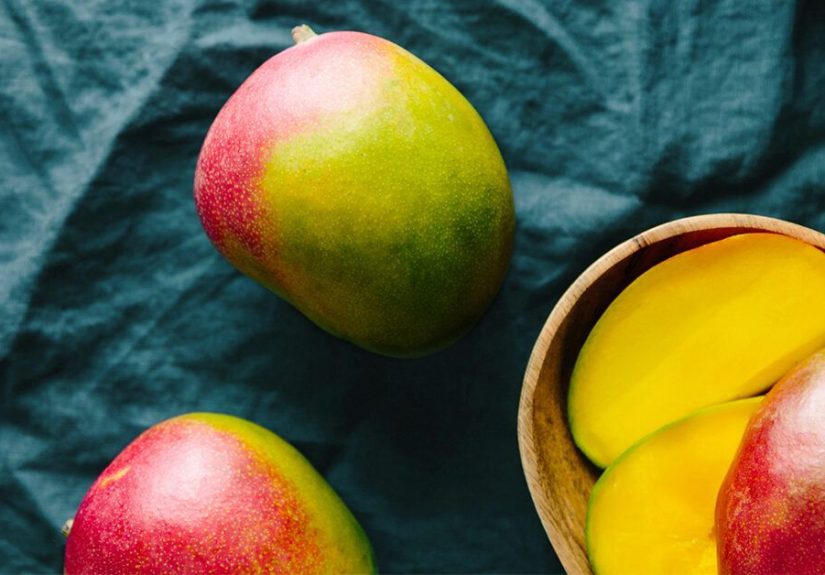
- Feel: A ripe mango gives slightly when you press gentlylike an avocado that’s behaving itself.
- Smell: A sweet, fruity aroma near the stem end is a good sign.
- Weight: Heavier mangoes often have more flesh and juiciness.
If it’s rock-hard and scent-free, it’s not ready. If it’s mushy and smells fermented, it’s ready for the compost bin’s retirement party.
How to store mango (and keep it from turning into a science experiment)
Ripening
Let unripe mangoes sit at room temperature. To speed ripening, place them in a paper bag. Once ripe, move them to the refrigerator
to slow things down and buy yourself a few extra days.
Refrigerating ripe mango
Ripe mango can generally hang out in the fridge for several days. If you want it ready-to-eat fast, keep it whole until you’re ready to cut;
cut fruit dries out quicker and absorbs fridge smells like it’s collecting souvenirs.
Food safety with cut mango
After cutting, refrigerate mango promptlyespecially if your kitchen is warm. As a general safety rule, don’t leave cut produce sitting out
for more than a couple hours. When in doubt, chill it.
Freezing mango
Frozen mango is a life hack. Peel and slice, freeze pieces on a tray so they don’t clump, then store in a sealed bag.
Frozen mango works beautifully in smoothies, thawed into yogurt bowls, or blended into sorbet-like desserts.
How to cut a mango without losing a finger (or your dignity)
Mango has a large, flat pit in the center. The goal is to cut the “cheeks” off on either side of the pit.
The classic “slice, dice, scoop” (aka the hedgehog method)
- Stand the mango upright and slice down one side of the pit to remove the first cheek. Repeat on the other side.
- Score the flesh in a grid pattern (don’t cut through the skin).
- Either scoop cubes out with a spoon, or flip the skin inside-out to make the famous “mango hedgehog.”
Bonus: it looks fancy. Downside: you will eat half the cubes while “just checking if it’s sweet.”
The “peel and slice” approach
If you want less mess, peel the mango with a vegetable peeler (carefully), then slice the flesh away from the pit.
This is great for mango slices in salads, tacos, or snacking.
How to eat mango: simple, delicious ideas
Eat it plain (yes, that counts)
Fresh mango is a complete snack. If you want it more filling, pair it with:
Greek yogurt, cottage cheese, a handful of nuts, or a smear of nut butter on toast with mango on top.
Blend it
- Simple smoothie: frozen mango + Greek yogurt + milk of choice + a squeeze of lime
- Green smoothie that doesn’t taste like lawn: mango + spinach + banana + water
- Protein-friendly: mango + protein powder + chia seeds + ice
Make it savory
- Mango salsa: diced mango + red onion + cilantro + lime + jalapeño + pinch of salt
- Salad upgrade: mango + cucumber + avocado + chili-lime dressing
- Taco topper: mango + cabbage + lime for brightness with fish, shrimp, or black beans
Go warm (yes, grilled mango is a thing)
Mango caramelizes nicely. Grill slices briefly and serve with:
yogurt, oatmeal, spicy grilled proteins, or even as a dessert with a sprinkle of cinnamon.
Dried mango: read the label
Dried mango is tasty and convenient, but it’s also easy to overeat because it’s concentrated.
Look for unsweetened options when possible, and treat portions like you would candy: enjoyable, but not accidental.
Putting it all together
Mango earns its popularity honestly: it’s flavorful, versatile, and brings vitamin C, carotenoids, fiber, and polyphenols to your plate.
The healthiest way to think about mango isn’t as a miracle fruitit’s as one bright, nutrient-rich option in a bigger pattern of eating
that includes many fruits, vegetables, proteins, and whole grains.
If you tolerate it well, enjoy it often. If you’re sensitive to the peel, IBS triggers, or blood sugar spikes, mango can still fit
you’ll just want smarter portions, better pairings, and a little extra attention to how your body responds.
Kitchen stories and real-world mango experiences (the practical kind)
Mango advice often sounds simple until you’re standing at the counter with a slippery fruit, a too-small cutting board, and the confidence of someone
who has watched exactly one “how to cut a mango” video. A lot of people’s “mango journey” starts the same way: buying a mango that looks gorgeous,
cutting into it immediately, and discovering it’s either rock-hard or tastes like disappointment with a hint of grass.
The first practical lesson many mango-eaters learn is this: ripeness is everything. You can have the best variety on earth,
but if it’s under-ripe, the flavor will be muted and the texture can be fibrous or crunchy in a way that feels… emotionally confusing. On the flip side,
an overripe mango can turn to mush, which is fine for smoothiesbut less fine when you wanted neat cubes for a salad and now you have “mango paste.”
People who eat mango regularly tend to develop a low-key superpower: a gentle squeeze test plus a quick sniff near the stem.
It’s not dramatic, but it saves meals.
The second lesson is about mess management. Mango is juicy, and juice travels. Folks who eat mango often learn to cut it on a rimmed plate,
or at least place a paper towel under the cutting board to prevent the “mango slip-and-slide” situation. A surprisingly common tip is to keep a spoon nearby:
not just for scooping, but for eating the fruit clinging around the pitbecause no one wants to throw away the best part.
(Also, it prevents the very human urge to gnaw on the pit like a cartoon character. Been there. Seen that.)
Then there’s the “how do I make mango feel like a meal?” experience. Many people find mango is most satisfying when paired. Mango with Greek yogurt becomes
a breakfast that actually holds you until lunch. Mango with nuts turns into a snack that doesn’t leave you rummaging for chips 20 minutes later.
In savory meals, people often discover mango works best when it has something to play againstlime, salt, chili, or tangy vinegarso it tastes vibrant
instead of one-note sweet. That’s why mango salsa feels so “restaurant good”: sweet, acidic, salty, spicy, and crunchy all at once.
Another common experience: the “I bought too many mangoes” moment. Mango season energy is real. One day you have firm mangoes.
Two days later you have five ripe mangoes and the urgent responsibility of a small fruit daycare.
This is where habits formfreezing extra mango chunks, blending quick smoothies, or tossing mango into salads all week.
People who freeze mango regularly usually report the same pleasant surprise: frozen mango makes smoothies creamy without needing ice cream,
and it can turn plain yogurt into something that feels like dessert. It’s the rare “healthier choice” that doesn’t feel like a compromise.
Lastly, there’s the body-feedback experience. Some people notice mango sits great, others find large portions can cause digestive dramaespecially if they’re
sensitive to certain carbohydrates or are eating mango on an empty stomach. The “experienced mango crowd” tends to do a few simple things:
smaller portions, more pairings, and more awareness. Not fearjust strategy. Because mango is supposed to be enjoyable, not a mystery novel your stomach
writes in three acts.
The overall theme from real kitchens is consistent: mango is easy to love once you learn its rhythmripen it, chill it, cut it safely, pair it smartly,
and freeze the extras. After that, it stops being an occasional treat and becomes a reliable, nutrient-rich go-to that tastes like sunshine.