Table of Contents >> Show >> Hide
- What Match Day really is (and why it makes grown doctors cry)
- Match Day 2025 by the numbers: big, busy, and still a little terrifying
- The podcast episode that asked an uncomfortable question
- The “crisis” part: when medicine meets turbulence
- Safeguarding students: what “protecting futures” looks like in real life
- For medical schools and hospitals: a practical “Match Day Safety Plan”
- For students: practical moves that don’t require a cape
- For the rest of us: celebrating is easy; stewardship is the job
- Experiences from Match Day 2025: what it felt like on the ground (extra field notes)
Match Day is supposed to be pure joy: hugs, happy tears, and at least one person ugly-crying into a program director’s shoulder while confetti
sticks to everyone’s shoes like glittery clinical evidence. But Match Day 2025 arrived with an extra ingredientuncertainty. In a KevinMD podcast
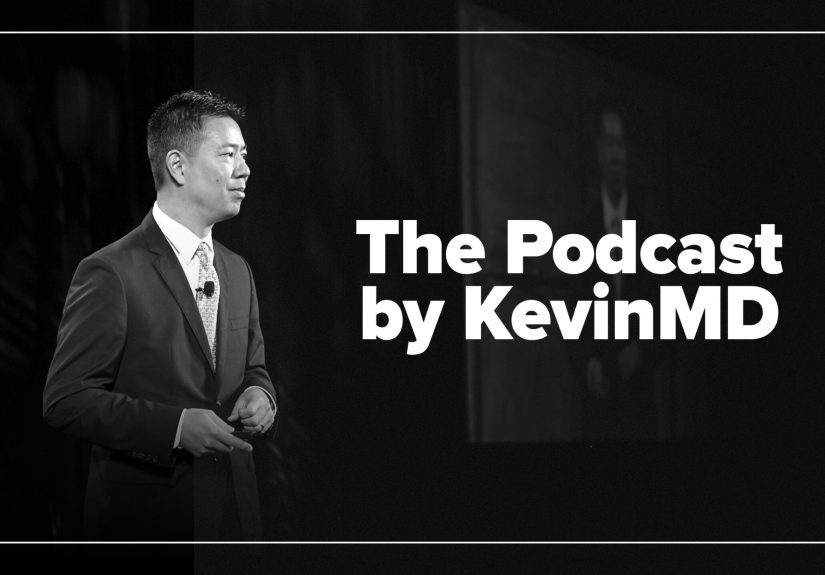
episode titled “Match Day 2025: Safeguarding the future of medical students amid crisis”, infectious disease physician Janet A. Jokela
(also a leader with the American College of Physicians) makes a point that feels obvious once you hear it:
celebrating new doctors is not enough. We also have to protect the conditions that let them practice medicine safely, ethically, and with the best science.
This article breaks down what Match Day 2025 looked like, why the “crisis” label isn’t just drama for downloads, and what “safeguarding the future”
can mean in real lifefrom classrooms and clinics to research labs and public health agencies. We’ll keep it practical, a little funny (because we all
cope somehow), and rooted in what’s actually happening on the ground.
What Match Day really is (and why it makes grown doctors cry)
The National Resident Matching Program (NRMP) coordinates the Main Residency Match, pairing medical students (and other eligible applicants) with
residency programs based on ranked preferences. It’s not a “winner takes all” talent showit’s a structured process designed to create stable,
mutually preferred matches at scale.
Match Week typically starts earlier in the week, when applicants learn whether they matched. Then comes the big momentMatch Daywhen they learn
where they’re headed. Medical schools often hold ceremonies so students open envelopes together, turning a private career milestone
into a shared community ritual. It’s basically the Olympics of delayed gratification, but with more stethoscopes and fewer endorsement deals.
Match Day 2025 by the numbers: big, busy, and still a little terrifying
Match Day 2025 wasn’t just emotionalit was historic. The 2025 Main Residency Match was the largest ever in NRMP history, with
43,237 total positions offered, an increase over the prior year. Growth matters because the U.S. can’t turn medical graduates into
practicing physicians without residency training slots. You can graduate a whole stadium of students, but without enough residency seats, you’ve built
a pipeline that stops right before the finish line.
The “largest ever” headline is encouraging, but it’s not the whole story. Demand for physicians continues to rise as the population ages, and workforce
projections still point to major shortages in coming years. Bigger Match numbers helpbut they don’t automatically translate into long-term stability
for students, hospitals, or patients.
The podcast episode that asked an uncomfortable question
In the KevinMD podcast episode, Janet A. Jokela discusses her related piece on protecting students’ futures and raises a concern that cuts through
the usual Match Day narrative. Yes, students are launching into residency. But what kind of system are they launching into?
Not just “Will I survive intern year?” (a classic question), but “Will the infrastructure of public health, biomedical research, and scientific integrity
still be sturdy enough to support good medicine?”
Her framing is less doom-and-gloom and more “adult supervision required.” She emphasizes that physicians, educators, and professional societies have
responsibilities that extend beyond mentoring students on personal statements and rank lists. Safeguarding the future means protecting the conditions
that make evidence-based care possible.
The “crisis” part: when medicine meets turbulence
1) Measles is backand it’s not coming alone
In 2025, the U.S. experienced a major rise in measles activity, with outbreaks reported across the country. This isn’t just a “public health people”
problem. Residents in pediatrics, family medicine, emergency medicine, and internal medicine may be the first clinicians to evaluate a patient with
fever and rashand the first to manage isolation protocols, contact tracing conversations, and anxious families.
For new trainees, this becomes a crash course in the real-world consequences of declining vaccination coverage. It also underscores a bigger point:
modern residency training isn’t only about mastering diagnoses and procedures. It’s about navigating the messy interface between medicine and society
misinformation, trust, access, and prevention.
2) When science communication gets squeezed
The episode references concerns about interference and disruption in federal public health and scientific workissues that can cascade into clinical care.
When research dissemination slows, when language becomes politicized, or when scientists face pressure over what can be published, it creates friction
in the evidence pipeline that clinicians rely on. Students and residents may not feel it immediately, but the ripple effects show up later:
slower guidance updates, gaps in data, fewer clear answers when the next outbreak hits.
Think of it like trying to practice medicine while your medical library is intermittently closed for “renovations.” You can still workbut it’s harder,
slower, and more error-prone. And in health care, “error-prone” is not a fun personality trait.
3) Research whiplash: funding instability and the physician-scientist pipeline
Medical students don’t just train to treat patients; many also train to improve medicine through research. That pathway depends on stable support:
grants, mentors, lab staff, institutional resources, and time. When research funding is disruptedor when universities face sudden changes to how grant
overhead costs are reimbursedit can lead to hiring freezes, lab closures, or reduced training opportunities.
For students considering academic medicine, this matters. A shaky research ecosystem doesn’t simply slow discovery; it changes career decisions.
It nudges people away from research-heavy careers, shrinks mentorship capacity, and narrows the pipeline at the exact moment the system needs more innovation.
If we want the next generation to develop new diagnostics, vaccines, and treatments, we can’t treat research stability as optional décor.
Safeguarding students: what “protecting futures” looks like in real life
Mentorship that doesn’t disappear after the confetti
On Match Day, schools celebrate the match. The safeguarding work begins on Match Day plus one. That’s when students start dealing with the practical
and emotional logistics: moving, licensing paperwork, housing, family decisions, and the sudden reality of being responsible for real patients.
Schools and departments can protect students by providing structured transition supportchecklists, mentorship handoffs, and “here’s what July actually feels like”
realism without panic.
Career security: normalize SOAP support, not shame
Not everyone matches through the initial algorithm. The NRMP’s Supplemental Offer and Acceptance Program (SOAP) exists specifically to connect eligible
unmatched or partially matched applicants with unfilled positions through a structured set of offer rounds during Match Week. “Unmatched” is not a character flaw.
It’s a mismatch in a competitive system.
Safeguarding students means building a culture where SOAP is treated like what it is: a process with rules, time pressure, and real optionsworthy of support,
planning, and empathy. Programs and schools that provide coaching, rapid advising, and mental health support during SOAP aren’t coddling students;
they’re protecting the future physician workforce.
Well-being as infrastructure, not a poster
Resident well-being is no longer a “nice-to-have.” Accreditation standards and modern training expectations increasingly recognize that exhausted trainees make
more mistakes and learn less effectively. Safeguarding the future means committing to working and learning environments that respect human limits:
reasonable support systems, access to rest and food, responsive reporting pathways, and leadership that takes concerns seriously.
And yesthis includes basics. If your wellness strategy doesn’t include a functioning place to sleep on an overnight shift, you don’t have a wellness strategy.
You have a motivational quote.
Financial reality check: debt shapes choices
Medical training is expensive, and debt can quietly steer career decisions. Many graduates carry substantial educational debt, which can influence specialty choice,
practice location, and willingness to pursue research or additional training. In a workforce that needs primary care and underserved-area clinicians, financial pressure
isn’t just personalit’s systemic.
Safeguarding students includes financial counseling that is actually useful (not “have you tried budgeting?” said to someone buying a $12 salad between call shifts).
It also includes policy awareness: loan repayment options, public service pathways, and the downstream impact of funding decisions on who can afford to become a doctor.
Protecting IMGs means protecting patients
International medical graduates (IMGs) are a vital part of U.S. health care, filling roles in many communities and specialties. The Match isn’t just a student story;
it’s also a workforce story. If immigration barriers, visa delays, or shifting policies prevent matched IMGs from starting on time, hospitals feel it immediately
and so do patients.
Safeguarding the future means treating IMG pathways as essential infrastructure, not as an afterthought. “Welcome to the team” should come with real operational support:
legal guidance, clear timelines, and institutional advocacy when bureaucracy threatens patient care.
For medical schools and hospitals: a practical “Match Day Safety Plan”
- Transition coaching: Provide structured onboarding guidance for licensing, relocation, and early residency expectations.
- SOAP readiness: Have a real-time support team in place during Match Week (advising, ERAS logistics, mental health support).
- Outbreak literacy: Ensure graduating students and incoming interns can recognize, isolate, and manage key infectious threats (including measles).
- Research continuity: Protect student research roles and mentorship networks when funding uncertainty disrupts projects.
- Well-being operations: Make rest, food access, and psychological safety tangiblenot aspirational.
- IMG support infrastructure: Provide visa and onboarding resources early, and coordinate with programs to reduce start-date disruptions.
- Advocacy education: Teach students how health policy and research policy affect patient careand how physicians can engage responsibly.
For students: practical moves that don’t require a cape
If you’re a student or soon-to-be resident, “safeguarding the future” can sound like something only a dean, senator, or superhero can do. But there are
grounded steps that matter:
- Build your “July team” now: Identify one mentor, one peer, and one non-medical support person you can call when things get real.
- Know your public health basics: Outbreaks aren’t abstract. Learn the practical playbook for common high-consequence infections.
- Keep your research story resilient: If a project collapses, keep a record of skills gained and consider alternate pathways (quality improvement, clinical research, education).
- Plan financially with realism: Learn repayment options and plan a moving budget early. Future You will be grateful.
- Protect your mind like you protect your patients: Use counseling, peer support, and wellness resources before you’re in crisis mode.
- Stay connected to the science: Curate reliable sources, and remember that “being prepared” is a professional skill.
For the rest of us: celebrating is easy; stewardship is the job
The podcast’s core message is simple: Match Day is a celebration, but it’s also a handoff. We’re sending students into residency training at a time when
public health threats, research instability, and trust challenges are very real. If we want them to thrive, we have to defend the pillars that support good medicine:
reliable public health infrastructure, strong research ecosystems, and professional cultures that prioritize integrity.
In other words, we can’t just clap for the next generation as they walk onstage. We have to make sure the stage doesn’t collapse.
Experiences from Match Day 2025: what it felt like on the ground (extra field notes)
Match Day 2025 had a familiar rhythm: the countdown, the envelope, the gasp, the scream, the “I can’t feel my legs” moment. But the background noise
was louder than usualgroup chats buzzing about outbreaks, funding news, and whether a partner’s visa paperwork would clear in time. If you were standing
in a gymnasium watching students celebrate, you could feel two emotions at once: the electric joy of becoming a doctor, and the quiet awareness that the system
around medicine has been shifting.
One common experience for students was a strange kind of split-screen reality. On one side: “I matched!” On the other: “What am I walking into?”
Students headed into pediatrics and family medicine talked about wanting to be strong communicators with vaccine-hesitant families. Some admitted that they
hadn’t thought deeply about measles since pre-clinical lecturesuntil suddenly it wasn’t a board-style question, but a real-world problem with real-world consequences.
It’s one thing to memorize a rash; it’s another to manage exposure concerns in a crowded waiting room while reassuring a scared parent who is also scrolling
misinformation at lightning speed.
Faculty and advisors often described Match Day 2025 as a moment of pride mixed with protective instinct. Many have always seen Match Day as the “launch,”
but this year, the launch came with weather warnings. Advisors found themselves adding new topics to their usual “residency transition talk”not just housing,
licensing, and professionalism, but also how to keep up with changes in public health guidance, how to talk about science clearly when trust is fragile,
and how to cope with uncertainty without becoming numb.
For students who didn’t match right away, the experience was both brutal and clarifying. SOAP is a structured process, but it’s still emotionally intense:
fast timelines, limited offers, and the pressure of making high-stakes decisions quickly. In 2025, more schools seemed openly prepared to support SOAP
participantsadvisors on standby, peers checking in, debrief spaces that were private and respectful. The best support wasn’t dramatic; it was practical.
Someone brought food. Someone helped rewrite a personal statement without judgment. Someone reminded the student that their worth isn’t a single email at 10 a.m.
Incoming residents who had already lived through a few months of “medicine in the real world” offered a different kind of experience: perspective.
They talked about how quickly training becomes less about perfect answers and more about steady thinking under stress. They also highlighted something
students don’t always hear: hospitals run on teams, and teams run on trust. If scientific communication is disrupted or research pipelines wobble, it doesn’t
stay in the abstract policy worldit becomes friction at the bedside, where clinicians need clarity, not chaos.
IMGs and their families experienced Match Day 2025 with an extra layer of logistical suspense. Matching is joyful, but it can be followed immediately by
paperwork anxiety. “Am I allowed to start on time?” becomes a real question. Programs that communicated early and clearlyabout onboarding timelines,
visa documentation, and contingency plansmade a measurable difference. The experience of being welcomed wasn’t just emotional; it was operational.
A hospital that treats IMG onboarding as essential workforce planning sends a powerful message: you’re not a temporary solution; you’re a colleague.
Across all these experiences, one theme stood out: people wanted steadiness. Students didn’t need adults to pretend everything was fine; they needed
mentors who could say, “Yes, things are shiftingand yes, you can still be a great doctor. Let’s prepare together.” Match Day 2025 wasn’t just a finish line.
It was a reminder that medicine is a long relay race, and the handoff includes not only skills and responsibilities, but also a duty to protect the ecosystem
that makes good care possible.