Table of Contents >> Show >> Hide
- What Were the “Poop Balloons,” Exactly?
- Why North Korea Did It: A Tit-for-Tat Propaganda Cycle
- What Happened on the Ground: Alerts, Cleanup, and Public Safety Worries
- South Korea’s Response: From Warnings to Loudspeakers
- How the U.S. and the World Reacted
- Why This Raises Tensions: The Escalation Math of “Low-End” Provocations
- Specific Moments That Symbolized the Stakes
- What It Means for Inter-Korean Relations Going Forward
- Conclusion: Absurd Tactics, Real Consequences
- On-the-Ground Experiences: What People Actually Dealt With (Reported, Not Theoretical)
If you’ve ever wondered whether international security could be threatened by a trash bag tied to a balloon…
congratulations, you’re now caught up on one of the Korean Peninsula’s strangest modern flare-ups.
In a series of launches that South Korean officials said began in late May 2024, North Korea sent balloons drifting south
with bags of refusesometimes described as including manure or fecesscattered across towns, roads, rooftops, and fields.
The stunt was gross, yes. But it was also calculated: a low-cost, high-attention form of psychological warfare that pulled civilians
into the middle of a political fight and pushed both governments toward louder (sometimes literally louder) retaliation.
This article breaks down what happened, why it happened, how South Korea responded, and what it says about the current state of inter-Korean relations.
And because this is 2024–2025 geopolitics, we’ll also talk about GPS jamming, “Voice of Freedom” loudspeakers,
and the awkward truth that sometimes a balloon filled with garbage can raise real escalation risks.
What Were the “Poop Balloons,” Exactly?
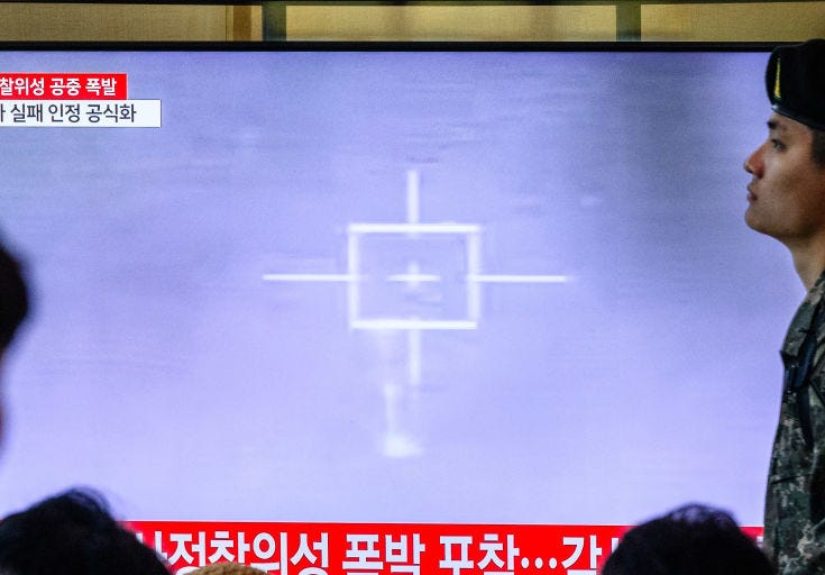
South Korea’s military and media described multiple waves of balloons launched from North Korea carrying bags of trash.
Reported contents included everyday waste like paper, plastic, scraps of cloth, cigarette butts, and batteriesalong with material described as manure,
and in some accounts, feces. The point wasn’t subtle: North Korea framed the launches as payback, essentially saying,
“You send us propaganda; we’ll send you something you can’t ignore.”
Operationally, it’s a simple tactic. Balloons are cheap, anonymous once airborne, and weather-dependent in a way that allows plausible deniability.
But they’re also unpredictable. A drifting balloon doesn’t care about jurisdiction, traffic patterns, school schedules, or airport approach paths.
That unpredictability is part of the pressure: it forces South Korea to spend time, manpower, and attention respondingwhile North Korea gets headlines.
Why North Korea Did It: A Tit-for-Tat Propaganda Cycle
North Korea said its balloon campaign was retaliation for leaflets and “psychological warfare” materials sent north by South Korean activist groups,
including defectors and human-rights organizations. For years, some activists in the South have launched balloons carrying anti-regime leaflets,
sometimes along with USB drives, cash, or media content like South Korean music and dramas.
North Korea routinely denounces these efforts as hostile acts, and it has threatened consequences if launches continue.
In other words, the poop balloons didn’t appear out of nowherethey arrived in a long-running propaganda duel where civilians on both sides
become unwilling participants. The difference is that North Korea’s choice of payload (garbage and fecal matter) was designed to be
viscerally offensive and domestically legible: no translation needed.
Why This Particular Tactic Now?
Timing matters. In 2024, inter-Korean relations were already tense amid missile tests, military posturing, and hardened rhetoric.
Balloons offered North Korea a way to respond to activism without immediately firing missiles or artilleryactions that carry higher military and diplomatic costs.
It’s asymmetric signaling: annoying enough to provoke, messy enough to embarrass, but (usually) below the threshold of kinetic conflict.
The tactic also creates a dilemma for South Korea: crack down on activists to reduce retaliation and you spark domestic political backlash,
or let leaflets fly and you risk more cross-border escalation. Either way, someone is angryoften people living closest to the border.
What Happened on the Ground: Alerts, Cleanup, and Public Safety Worries
South Korean authorities warned residents not to touch the balloon debris and to report it to officials.
That advice isn’t just bureaucratic anxiety. Unknown airborne objects can carry hazardous materials, sharp components, or improvised devices.
Even when nothing is “weaponized,” the uncertainty forces a cautious response that can involve specialized teams.
Over time, reporting described balloon landings across wide areas, not just near the border.
Some waves were counted in the hundreds. North Korean statements also claimed large tonnage of waste sent.
South Korea’s government and military repeatedly emphasized that the launches were “low-class” and dangerous, not merely disgusting.
Parasites, Not Just Politics
One reason these incidents hit a nerve: South Korean authorities reported that analysis of some balloon contents found parasites
associated with fecal contamination (such as roundworms). Even if the public health risk was limited, the “ick factor” became a national-security headline:
biohazard anxiety travels fast.
When Balloons Meet Modern Infrastructure
Balloons don’t stop at the DMZ fence. Reports described disruptions and safety concerns when balloon debris drifted into sensitive areas.
In at least one case reported by South Korean officials, airport operations were briefly suspended after a trash-carrying balloon was found near a terminal gate area,
illustrating the broader point: a crude method can still create complicated consequences.
South Korea’s Response: From Warnings to Loudspeakers
South Korea’s initial posture emphasized safe recovery, documentation, and warnings of “unbearable” countermeasures if launches continued.
But as balloon waves persisted, the response shifted from cleanup to deterrenceespecially through psychological operations.
Border Loudspeakers and the “Voice of Freedom”
One of the most notable steps was South Korea’s decision to resume loudspeaker broadcasts along parts of the border
a practice that had been paused for years amid earlier diplomatic thaw.
These broadcasts have historically included news, commentary critical of the North Korean regime, and even South Korean pop music.
They’re meant to pierce information controls and irritate Pyongyang’s leadership (and sometimes its border troops) with the sound of the outside world.
In the logic of deterrence, it’s symmetrical messaging: “You send junk into our neighborhoods, we send information into yours.”
In practice, it’s also an escalation tool. North Korea has long treated loudspeakers as a serious provocation.
Past loudspeaker flare-ups have triggered threats and military responses, which is why their return signaled a meaningful ratcheting up.
Suspending Military Confidence Measures
The balloon dispute also intersected with bigger security decisions. South Korea moved to suspend aspects of a 2018 inter-Korean military agreement
aimed at reducing frontline tensions. That matters because once guardrails come off, the room for miscalculation growsespecially when both sides
are testing boundaries with “nontraditional” provocations.
How the U.S. and the World Reacted
International reactions ranged from diplomatic concern to open disgust.
U.S. officials publicly criticized the tactic, with commentary that highlighted how unusual (and, frankly, repulsive) it was.
But behind the blunt messaging is a serious policy reality: allies care less about the “gross” headline and more about the escalation ladder.
If balloons lead to loudspeakers, and loudspeakers lead to gunfire or artillery threats, an absurd tactic can create a very non-absurd crisis.
Why This Raises Tensions: The Escalation Math of “Low-End” Provocations
On paper, a balloon full of trash shouldn’t move the geopolitical needle.
In real life, it canbecause it changes incentives, pressures leaders, and forces public displays of resolve.
Here’s why these incidents can be destabilizing:
- Civilian exposure: When debris falls in cities and towns, it’s not just soldiers reacting; it’s voters, commuters, parents, and business owners.
- Ambiguity: Officials must treat unknown payloads as potentially dangerous until testedconsuming resources and raising anxiety.
- Reciprocal escalation: Each side looks for a response that “hurts” without triggering full conflictoften by expanding psychological operations.
- Accident risk: Balloons can tangle in power lines, drift near airports, or spark fires if they carry flammable materials.
In short, the balloon campaign is part of a broader pattern: both Koreas probe and punish in ways that are politically loud but militarily ambiguous.
That ambiguity is what makes it dangerous. If an incident causes injury or a major infrastructure disruption, pressure for retaliation spikesand leaders have fewer
easy exits.
Specific Moments That Symbolized the Stakes
Debris Near High-Security Sites
In July 2024, South Korean authorities reported that balloon debris landed inside the compound of South Korea’s presidential office,
an incident that drew outsized attention because it pierced a heavily protected space. Separate reporting also described balloon debris landing on or near a U.S. military base.
Even without casualties, the symbolism is powerful: it suggests vulnerability and invites domestic criticism if the government appears unable to protect key sites.
The “Parasite” Headlines
Findings of parasites associated with fecal matter turned a propaganda stunt into a public health story.
That shift matters for tension dynamics: people can shrug off leaflets, but they don’t shrug off “possible contamination” in their neighborhoods.
What It Means for Inter-Korean Relations Going Forward
The balloon campaign reflected an era of hardened postures. North Korea’s leadership has increasingly framed South Korea as a hostile counterpart rather than a partner for reunification,
while South Korea has leaned more openly on deterrence and alliance coordination.
In that environment, symbolic provocations become more frequent because both sides believe restraint will be read as weakness.
That said, the story didn’t freeze in 2024. By mid-2025, reporting indicated South Korea suspended its loudspeaker broadcasts as part of a de-escalatory shift under new leadership,
explicitly framing the move as an attempt to reduce border tensions and improve the atmosphere for dialogue.
Whether North Korea reciprocates consistently is another questionbut it’s a reminder that even loud escalations can be walked back when politics change.
Conclusion: Absurd Tactics, Real Consequences
North Korea’s poop balloons might sound like a gross prank, but they sit inside a serious strategic logic:
punish your rival, embarrass their government, strain their public patience, and do it all at low cost.
South Korea’s responseswarnings, cleanup, alliance messaging, and revived loudspeaker broadcastsshow that Seoul treated the launches as more than a joke.
Because on a peninsula where misunderstandings have historically turned into armed clashes, even “trash diplomacy” can become the spark nobody wanted.
The bigger takeaway is uncomfortable but useful: modern tensions aren’t only about missiles and tanks.
They’re also about psychological pressure, information control, civilian fear, and the political theater of who looks “in control.”
Sometimes the headline is poop. The underlying story is deterrence.
On-the-Ground Experiences: What People Actually Dealt With (Reported, Not Theoretical)
If you lived far from the DMZ, you might assume this was “border drama.” Many South Koreans learned the hard way that wind doesn’t respect geography.
Reports described balloons landing well beyond frontier counties, which meant ordinary residentspeople walking dogs, opening shops, driving to workcould stumble on debris.
The most common experience sounded less like a thriller and more like an unpleasant surprise: you look up, see a sagging balloon or tangled string,
and then notice a bag attached to it that you absolutely do not want to investigate with your hands.
A recurring theme in coverage was the public guidance: don’t touch it, don’t poke it, don’t bring it inside for a closer look like it’s a weird free sample.
People described calling local authorities or alerting building managers, then waiting while responders handled collection.
That waiting is its own experienceespecially in an apartment complex or on a crowded streetbecause it turns a random object into a mini-event:
neighbors gather, phones come out, and everyone debates whether it’s “just trash” or something worse.
For residents closer to the border, experiences were often framed as a cycle of retaliation they didn’t choose.
Some border-area communities have long complained that leaflet launches by activists can invite North Korean responseswhether balloons, threats, or loudspeaker noise.
Those residents can feel caught between principles (free speech, human rights messaging) and practical reality (their kids’ sleep, local safety, daily calm).
When South Korea restarted loudspeaker broadcasts, some nearby residents reported frustration with the constant noise, even if they supported the broader security message.
That tensionsupporting deterrence but resenting the disruptionis common in frontline communities everywhere, and the Korean border is no exception.
Cleanup and municipal disruption also became part of the lived experience. Imagine a balloon collapses on a road median, or debris scatters on a sidewalk after a bag breaks.
It’s not a natural disaster, but it forces coordination: someone closes off a small area, someone documents it, someone collects it safely,
and then regular life resumes with an extra layer of annoyance. People who manage facilitiesschools, offices, warehousesreportedly treated the sightings
as security incidents, especially when they couldn’t immediately verify what was inside the attached bags.
The airport-related disruption was a different kind of experience: less “gross surprise,” more “how is this affecting travel?”
Even short operational pauses can ripple through early-morning schedules, staffing, and passenger anxiety.
For travelers, the story became another modern frustration: you’re already bargaining with delays, and now you’re bargaining with a balloon from a geopolitical dispute.
If you want a concise summary of how psychological tactics work, that’s it: the payload doesn’t need to cause mass damage to create mass inconvenience.
Finally, there’s the emotional experience, which coverage hinted at even when it wasn’t the main focus: a mix of anger, disbelief, and dark humor.
Some people react with disgust, others with sarcasm (“Is this what deterrence looks like now?”), and plenty with both at once.
That dark humor isn’t trivialit’s a coping mechanism in a society that has lived for decades with the reality of a hostile neighbor.
But underneath the jokes is a serious sentiment: people don’t want their streets turned into a message board for authoritarian theatrics.
The balloons made that feeling tangibleand in doing so, they raised political pressure on leaders to respond in a way that looked firm, not flustered.