Table of Contents >> Show >> Hide
- What Is a Peace Rose?
- Peace Rose at a Glance
- Best Growing Conditions for Peace Rose
- How to Plant a Peace Rose
- Peace Rose Care Through the Season
- How to Prune a Peace Rose
- Common Peace Rose Problems
- Can You Grow Peace Rose in a Container?
- How to Use Peace Rose in the Garden
- Real-World Growing Experiences With Peace Rose
- Conclusion
- SEO Tags
If roses had a red carpet, the Peace rose would absolutely show up early, look flawless, and somehow still act humble about it. This famous hybrid tea rose has been charming gardeners for decades with its large buttery-yellow blooms brushed with pink, its elegant form, and a backstory that sounds like it escaped from a historical novel. But fame alone does not keep a rose blooming. Good care does.
If you want a rose that feels classic, romantic, and just a little dramatic in the best possible way, Peace is a strong contender. It is known for vigorous growth, repeat blooming, and those big, high-centered flowers that make neighbors slow down on their evening walk. The trick is giving it the conditions hybrid tea roses love: plenty of sun, good air circulation, well-drained soil, deep watering, regular feeding, and pruning that is confident rather than timid.
This guide covers everything you need to know about Peace rose care, from choosing the right spot to dealing with black spot, powdery mildew, and the occasional rose diva moment. Whether you are planting your first rose or adding another beauty to a cutting garden, this guide will help you grow Peace rose with more confidence and fewer gardening sighs.
What Is a Peace Rose?
The Peace rose, originally introduced under the name Madame A. Meilland, is one of the most famous hybrid tea roses ever grown. It was bred by Francis Meilland and introduced in the United States in 1945. The rose became widely known as “Peace,” and the name stuck for good reason. It arrived with perfect timing, memorable beauty, and a reputation that helped define the modern hybrid tea rose.
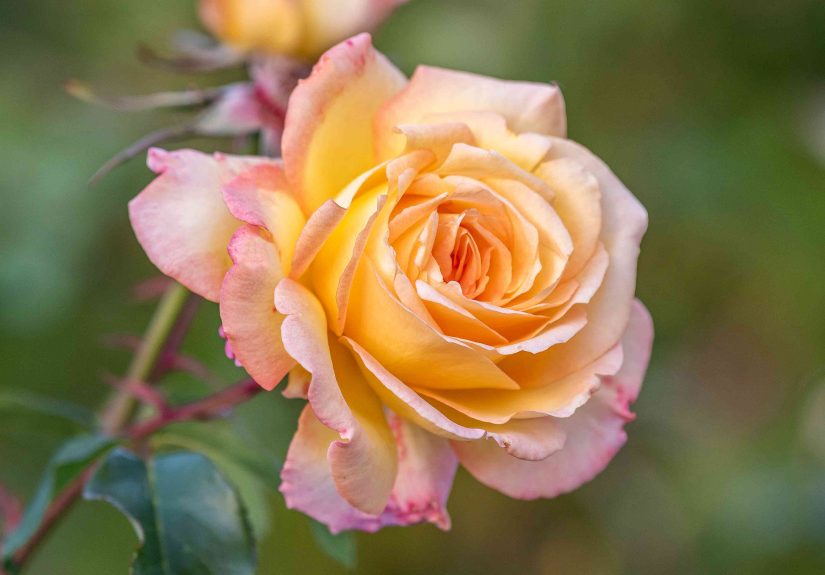
In the garden, Peace is best known for its large double blooms, usually around 6 inches across, in soft shades of pale gold to creamy yellow with rosy-pink petal edges. The flowers are mildly sweet to noticeably fragrant depending on conditions, and they bloom in flushes through the season. The shrub itself is typically vigorous and bushy, usually reaching around 3 to 4 feet tall with rich green foliage.
That combination of big florist-style flowers, repeat bloom, and sturdy garden performance is exactly why Peace rose is still planted today. It is not trendy in a blink-and-you-miss-it way. It is classic. The gardening equivalent of a white button-down shirt, a great trench coat, and a recipe card from grandma that actually works.
Peace Rose at a Glance
- Botanical name: Rosa ‘Peace’
- Rose type: Hybrid tea rose
- Mature size: Usually about 3 to 4 feet tall and wide enough to make an elegant, upright shrub
- Flower color: Pale yellow to creamy gold with pink-edged petals
- Fragrance: Mild to moderate, sweet and classic
- Sun needs: Full sun
- Soil needs: Well-drained, organically rich soil, ideally slightly acidic to neutral
- Water needs: Deep, regular watering
- Main appeal: Large blooms, repeat flowering, cutting-garden value, and timeless beauty
Best Growing Conditions for Peace Rose
Give It Real Sun, Not “Kinda Bright” Sun
Peace rose performs best in full sun, which means at least 6 to 8 hours of direct light each day. Morning sun is especially helpful because it dries dew from the leaves and lowers the odds of fungal trouble. A rose planted in too much shade may survive, but it will not become the lush, bloom-packed showpiece you were promised in your gardening dreams.
Think of sunlight as the rose’s fuel bill. Underpay, and the plant starts cutting services: fewer blooms, weaker stems, and more disease pressure. That is not the kind of peace anyone wants.
Airflow Matters More Than Many Gardeners Think
Good air circulation is one of the simplest ways to reduce disease issues on roses. Peace rose should not be wedged into a crowded corner between a fence, a hedge, and three overenthusiastic shrubs. Give it breathing room. Better airflow helps leaves dry faster after rain or watering and makes black spot and powdery mildew less likely to spread.
Use Rich, Well-Drained Soil
Roses want fertile, loose, well-drained soil with plenty of organic matter. If your soil is heavy clay, sandy and tired, or basically one step above construction rubble, improve it before planting. Mix in compost or other well-rotted organic matter to help balance drainage and moisture retention.
Peace rose appreciates soil that holds enough moisture to support steady growth but never stays soggy. Wet feet and roses do not become friends. Ever.
How to Plant a Peace Rose
Choose Bare-Root or Container-Grown Plants
You can grow Peace rose from a bare-root plant or a container-grown nursery plant. Bare-root roses are often planted while dormant, from late fall through early spring depending on climate. Container-grown plants offer a little more flexibility and are often easier for beginners because you can see the foliage and form before planting.
Prepare the Planting Hole the Right Way
Dig a hole wide enough for the roots to spread without bending or crowding. The goal is not to cram the rose in like luggage on a budget airline. Loosen the surrounding soil and blend in compost so the plant has an easier start. If the roots seem dry on a bare-root rose, soak them before planting.
Plant at the Proper Depth
If your Peace rose is grafted, position the graft union according to your local climate and regional rose advice. In many areas, gardeners place it near or slightly above soil level, while colder climates may benefit from a bit more protection. Container-grown roses should generally be planted at the same depth they were growing in the pot.
Water Thoroughly After Planting
Once planted, water deeply so the soil settles around the roots. Then mulch the area to conserve moisture, moderate soil temperature, and reduce weeds. Keep mulch a few inches away from the canes to avoid trapping excess moisture at the base.
Peace Rose Care Through the Season
Water Deeply, Not Constantly
One of the most important Peace rose care tips is to water deeply rather than frequently sprinkling the surface. Roses prefer moisture to reach the root zone. In dry weather, that often means a thorough soaking about once a week, though the schedule may be more frequent in hot climates and less frequent in cool or rainy periods.
The best time to water is early in the day. Morning watering lets the plant take up moisture before afternoon heat and gives foliage time to dry. Avoid overhead watering whenever possible because wet leaves encourage fungal disease. Drip irrigation or a slow soak at soil level is far better than blasting the whole shrub like you are trying to power-wash it into bloom.
Feed It Regularly
Peace rose is not a wildly fussy eater, but it does appreciate regular fertilizing during the growing season. Start feeding in spring around bud break with a balanced fertilizer. Many rose growers continue feeding every 4 to 6 weeks through the active growing season, then stop in late summer so the plant can begin slowing down before dormancy.
If you have not done a soil test, it is worth considering one. Roses are long-term garden residents, and it helps to know what your soil already has before you throw nutrients at it like confetti. Compost, organic matter, and a sensible fertilizing routine usually go a long way.
Mulch Like You Mean It
A good mulch layer helps keep roots cooler, slows moisture loss, and suppresses weeds that compete for water and nutrients. Organic mulches such as shredded bark, pine straw, leaf mulch, or composted materials all work well. Mulch also keeps the planting area looking tidy, which is nice, because roses have enough personality already without needing a messy stage.
Deadhead for More Blooms
Removing spent flowers encourages rebloom and keeps the plant looking fresh. Snip off faded flowers above a strong outward-facing leaf. This simple habit helps direct energy into new growth and more buds instead of seed production. Toward the end of the season, some gardeners stop deadheading to let the plant ease into dormancy.
How to Prune a Peace Rose
Hybrid tea roses like Peace benefit from yearly pruning. The main goals are simple: remove dead or winter-damaged wood, improve shape, increase airflow, and encourage strong new canes that will produce high-quality flowers.
Late winter to early spring is the usual major pruning window, depending on your climate. Start by removing anything dead, damaged, or crossing through the center of the plant. Then shorten the remaining canes enough to control size and encourage vigorous growth. In windy areas, light fall pruning may also help prevent winter damage by reducing tall canes.
Do not panic if pruning feels intimidating. Roses are surprisingly forgiving. The bigger mistake is often doing nothing at all. Peace rose is elegant, yes, but it still wants a gardener with decent pruners and a little backbone.
Common Peace Rose Problems
Black Spot
Black spot is one of the most common rose diseases. It causes dark spots on leaves, often followed by yellowing and leaf drop. It thrives when leaves stay wet and airflow is poor. The best prevention includes full sun, spacing, good sanitation, and watering at the soil line. Remove fallen infected leaves and avoid crowding the plant.
Powdery Mildew
Powdery mildew looks like a white dusty coating on leaves, stems, and buds. Young growth can twist or distort. Again, the best defense starts with site selection and airflow. Do not overfeed with nitrogen, do not crowd the plant, and do not treat the rose like it enjoys wearing a damp sweater all summer.
Rust and Other Fungal Issues
Rust can appear as orange raised spots, usually on the undersides of leaves. Other leaf and cane problems may also pop up in wet or humid conditions. Good sanitation, careful watering, and prompt cleanup matter a lot. In very humid regions, some gardeners use preventative disease-control products, especially if fungal issues are a recurring annual headache.
Aphids, Thrips, and Spider Mites
Peace rose may also attract the same usual suspects that visit many roses: aphids, thrips, spider mites, and other sap-feeding pests. Check buds, leaf undersides, and tender new growth. A strong spray of water, insecticidal soap, or regionally appropriate management methods can help, depending on the pest and the severity.
Rose Rosette Disease
Rose rosette disease is a serious issue in many areas and is not something to shrug off. Watch for abnormal red growth, extreme thorniness, distorted shoots, and generally bizarre growth that looks more sci-fi than horticulture. If you suspect it, confirm the diagnosis through a trusted local extension office or rose society resource and act quickly.
Can You Grow Peace Rose in a Container?
Yes, Peace rose can be grown in a container if the pot is large, sturdy, and placed in a sunny spot. Container growing works especially well on patios, courtyards, or smaller spaces where garden beds are limited. The trade-off is that container roses dry out faster and need more attentive watering and feeding than those in the ground.
Use a quality potting mix, make sure the container drains well, and keep an eye on moisture during hot weather. A potted Peace rose can be stunning, but it is definitely a “check on me regularly” plant rather than a “see you in three weeks” plant.
How to Use Peace Rose in the Garden
Peace rose earns its keep in several ways. It works beautifully as a specimen plant, in a formal rose bed, in a mixed border with enough sun and airflow, or in a cutting garden where long stems are a bonus. Its blooms pair nicely with lavender, catmint, salvia, and other companions that do not crowd the crown.
Because the flowers are large and refined, Peace often looks best where it can be seen up close. Plant it where you actually walk by, not in some remote corner where only the mosquitoes will admire it.
Real-World Growing Experiences With Peace Rose
Growing Peace rose is one of those gardening experiences that tends to become strangely emotional. People do not just grow it because it is a rose. They grow it because it feels like the rose. It has history. It has presence. And when it opens one of those big yellow-and-pink blooms, even gardeners who claim to be “more into foliage” suddenly become very quiet and very interested.
In real gardens, one of the first things people notice is that Peace rose rewards patience. It may not always explode into perfection the moment it goes into the ground, especially if it is busy settling in, adapting to your climate, or recovering from transplant stress. But once it gets established, it begins to show why it has remained famous for so long. New growth strengthens, the foliage fills out, and the blooms become more consistent and better formed.
Another common experience is learning that Peace likes balance. Gardeners who place it in generous sun with decent soil and regular moisture often describe it as vigorous and reliable. Gardeners who tuck it into a cramped, shady bed “because there was a little room there” often end up with a plant that seems underwhelming. Peace is beautiful, but it is not a magician. It still needs the basics.
Many rose growers also appreciate how satisfying Peace is as a cut flower. The long stems and large blooms make it feel like you brought a florist arrangement indoors without handing over florist money. A single stem in a simple vase can do a lot of decorative heavy lifting. Several stems can make a kitchen table look suspiciously elegant, as if someone in the house suddenly started folding napkins into swans.
Weather teaches its own lessons too. In regions with humid summers, gardeners quickly learn that Peace rose needs preventive habits, not rescue missions. Good spacing, morning watering, mulching, pruning, and regular cleanup make an enormous difference. In drier climates, the challenge may be more about keeping moisture steady and preventing heat stress. Either way, Peace rose is a plant that teaches you to observe rather than guess.
There is also the emotional side. Peace rose is often planted for meaningful reasons: in memory of a loved one, as a gift, to mark a new home, or simply because the name carries optimism. That makes the gardening experience a little richer. Every new bud can feel like a small event. Every successful flush can feel like proof that your care is working. Even the maintenance becomes part of the ritual. Pruning, feeding, deadheading, and checking leaves stop feeling like chores and start feeling like participation.
Perhaps the most useful real-world lesson is this: Peace rose is not difficult so much as it is honest. If the plant is happy, it shows you. If something is off, it also shows you. Yellowing leaves, poor bloom production, or disease issues are usually signals about light, airflow, watering, or sanitation. Once you learn to read those signals, the plant becomes much easier to manage.
That is why so many gardeners stick with it. Peace rose offers beauty, history, and a slightly ceremonial kind of gardening satisfaction. It asks for sunlight, thoughtful care, and occasional pruning bravery. In return, it gives you blooms that look like they were painted by someone showing off. Honestly, that is a pretty good deal.
Conclusion
If you want a rose with timeless style and a garden reputation that is genuinely earned, Peace rose is worth planting. Give it full sun, rich well-drained soil, deep morning watering, steady feeding, and proper pruning. Stay ahead of disease with airflow and sanitation, and it will reward you with elegant blooms that look almost too perfect to be real. Almost.
Peace rose is not just a famous hybrid tea rose. It is a reminder that classic plants become classics for a reason. When grown well, it brings beauty, structure, fragrance, and a little quiet drama to the garden from spring through the growing season. Not bad for a plant named Peace.