Table of Contents >> Show >> Hide
There are few internet genres more honest than the “I have way too much of this” confession thread. No filters, no fake minimalism, no “capsule wardrobe” nonsense whispered over a beige reel. Just regular people logging on to admit that, yes, they own 14 water bottles, 27 notebooks, and enough tote bags to open a suspiciously cheerful fabric cave. It is funny because it is true. It is also a little too true.
The reason these threads hit so hard is simple: most people do not wake up one morning and decide to become the proud curator of 46 lip balms and a drawer devoted entirely to mystery chargers. Stuff accumulates quietly. One sale here, one backup purchase there, one “this would be useful someday” decision every weekend, and suddenly the house is less of a home and more of a museum dedicated to duplicate scissors.
That is what makes this topic more than just a laugh about clutter. Owning too much stuff is tied up with convenience, identity, boredom, stress, shopping habits, and the deeply human belief that the future version of us will finally become the person who uses all those planners, candle holders, and craft supplies. Spoiler: future us is tired.
Why This “Too Much Stuff” Thread Feels So Familiar
Modern life makes accumulation ridiculously easy. Cheap goods are everywhere. Online shopping removes friction. Social feeds convince us that every tiny inconvenience can be solved by buying one more gadget, one more organizer, one more “must-have” item that absolutely will not join the other must-haves in a bin under the bed. Then there is the emotional side of it: some people buy for comfort, some keep things because they feel guilty getting rid of them, and some hold onto objects because those objects represent good intentions. Not current behavior, mind you. Intentions. The treadmill in the corner understands.
And yet, this is not always a story about laziness or irresponsibility. Sometimes people simply live in smaller spaces. Sometimes two households merge into one. Sometimes kids, work, caregiving, or life transitions turn ordinary possessions into visual chaos. Sometimes clutter is just what happens when busy people try to live real lives in homes that are expected to look like staged listings. In other words, the pile of reusable containers may not mean you are failing. It may simply mean you are human and occasionally buy lunch.
Still, confession threads reveal patterns. People do not usually end up with absurd amounts of random things. They end up with absurd amounts of specific things: comfort items, aspirational items, bargain items, tiny items that hide in drawers, and objects that seem useful enough to justify keeping “just in case.” The result is a strangely universal inventory of abundance.
Here Are 55 Things People Seem To Own In Ridiculous Quantities
Closet, Beauty, and Personal-Stash Chaos
- Socks. Not pairs, exactly. More like sock fragments participating in an unsolved domestic mystery.
- Black T-shirts. Each one is “different,” according to the owner and nobody else.
- Hoodies. Soft, oversized proof that comfort always wins the budget debate.
- Leggings. Some are for workouts, some are for lounging, and some are for pretending a workout might happen.
- Jeans. The archive includes current jeans, old jeans, goal jeans, and “why did I buy low-rise again?” jeans.
- Jackets. A person living in a warm climate can still somehow own outerwear for six fictional winters.
- Sneakers. Gym pair, errands pair, travel pair, white pair, backup white pair, and “I barely wear these” pair.
- Pajamas. Because apparently every emotional season deserves its own sleep set.
- Tote bags. The anti-plastic solution that accidentally became its own storage problem.
- Scarves. Bought for fashion, kept for sentiment, worn approximately twice a year.
- Hair ties. They vanish constantly, which encourages people to buy them in industrial quantities.
- Lip balm. Purse balm, desk balm, bedside balm, car balm, emergency balm, mystery balm.
Kitchen, Pantry, and “Why Do We Have So Many of These?” Territory
- Water bottles. The modern badge of hydration, identity, and accidental duplication.
- Mugs. Offices, birthdays, vacations, and gift exchanges have all conspired against cabinet space.
- Food containers. Every leftovers strategy begins nobly and ends in an avalanche of plastic.
- Mismatched lids. A support group for circular objects with nowhere to go.
- Dish towels. They reproduce like rabbits, except less organized.
- Spices. Most people own three cinnamons and a paprika from an era when they thought they were becoming adventurous cooks.
- Tea boxes. A peaceful collection of good intentions and rarely finished flavors.
- Takeout sauce packets. Tiny, sticky evidence that humans fear running out of soy sauce in a fully functioning civilization.
- Glass jars. Kept for crafts, storage, decor, or a future that seems deeply committed to rustic organization.
- Cookbooks. Purchased for inspiration, displayed for personality, consulted mainly for one pasta recipe.
Desk Drawers, Junk Drawers, and Tech-Tangle Kingdoms
- Notebooks. Beautiful blank optimism in paper form.
- Pens. Half do not work, which somehow inspires people to buy more instead of testing the ones they have.
- Sticky notes. Proof that productivity and stationery attraction are not the same thing.
- Chargers. Everyone has many. Nobody has the right one at the right moment.
- USB cables. A drawer full of technological noodles from relationships with devices long gone.
- Headphones and earbuds. Tangled, misplaced, upgraded, and somehow never fully retired.
- Batteries. Either too many or none of the size you need. There is no middle ground.
- Extension cords. An emergency stash that makes every closet look like a small electrical jungle.
- Scissors. Supposedly everywhere, emotionally nowhere.
- Tape. Gift wrap tape, packing tape, craft tape, decorative tape, mystery tape with no beginning.
- Gift bags. Reused with pride until they form a crinkly mountain behind the vacuum.
Hobby Traps and Personality Collections
- Books. Some are read, some are next in line, and some are there to make a person look exactly as intellectual as they feel inside.
- Craft supplies. Bought for a hobby phase that ended before the glue fully dried.
- Yarn. A soft and colorful monument to future projects.
- Fabric scraps. Too valuable to throw away, too small to actually use, too emotionally charged to discuss.
- Houseplants. One cute succulent becomes a botanical custody battle with every windowsill.
- Board games. Each one promises a fun night, and then everyone watches a show instead.
- Dice. Especially among tabletop players, where “too many” is considered a hostile opinion.
- Pet toys. Pets often ignore the expensive ones and adore one old sock, but owners keep buying anyway.
- Unused planners. The annual belief that this will be the year of color-coded excellence.
- Art supplies. Markers, brushes, sketchbooks, and enough possibility to make guilt feel strangely beautiful.
Household Overflow, Backup Logic, and Just-in-Case Living
- Storage bins. The solution to too much stuff that sometimes becomes more stuff.
- Random screws and nails. Kept in old tins because surely one of them belongs to something important.
- Tools. Especially duplicates of the exact screwdriver nobody can locate when needed.
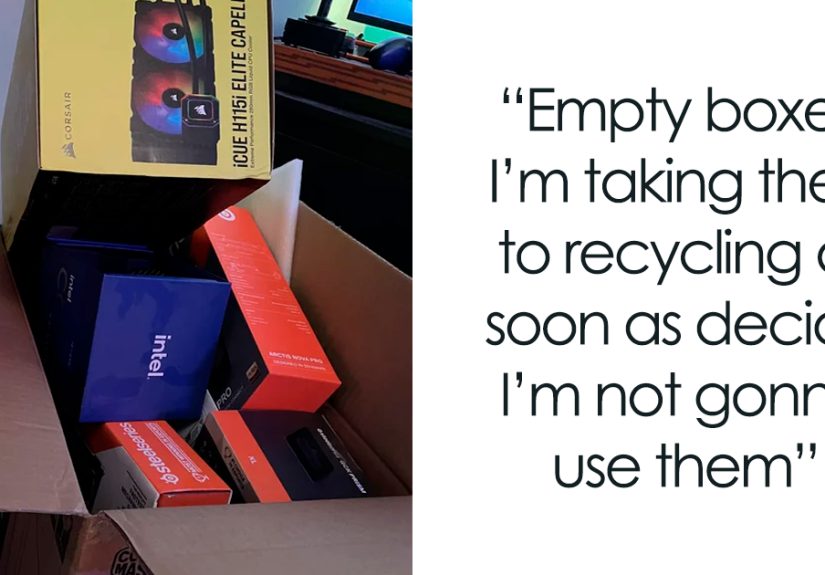
- Cardboard boxes. Saved for moving, shipping, organizing, or a cardboard-based future economy.
- Holiday decorations. Every year the collection expands like it is auditioning for a theme park contract.
- Throw blankets. Cozy, photogenic, and apparently impossible to stop buying.
- Throw pillows. Decorative ambition with a mild side effect of nowhere to sit.
- Travel-size toiletries. Tiny shampoo armies waiting for trips that may never happen.
- Skincare products. Half-used serums from a dozen phases of “new routine, new me.”
- Phone cases. Because one phone apparently requires a seasonal wardrobe.
- Candles. Purchased for calm, stacked like evidence of a scented coping mechanism.
- Shopping bags from stores. Folded with good intentions, then stuffed into a larger bag that becomes The Bag Bag.
What This List Really Says About Us
Funny as it is, the list is not random. Most over-owned items fall into a few predictable categories. First, there are utility items: chargers, pens, containers, scissors, cords. These are the things people lose track of, then buy again. Second, there are identity items: books, sneakers, plants, art supplies, cookbooks, planners. These signal the person we are, or the person we mean to become. Third, there are comfort items: hoodies, blankets, candles, pajamas. When life gets loud, people buy softness. That part makes perfect sense.
Then there is the power of the “just in case” mindset. A jar might be useful. A box might come in handy. Those extra screws might belong to something. This is how homes become warehouses for hypothetical emergencies. Add bargain psychology to the mix, and the collection grows fast. Sale pricing makes people feel like they are saving money, even when they are paying to store objects they do not use.
The bigger issue is not simply volume. It is decision fatigue. Every item in a home asks for something: a place, a category, maintenance, attention, guilt, or eventual disposal. Enough of those tiny asks, and clutter starts to feel like a low-grade argument happening in every room.
When “Too Much Stuff” Stops Being a Joke
Most people who laugh at clutter threads are dealing with ordinary excess, not a mental health disorder. That distinction matters. Owning too many mugs is annoying. Hoarding disorder is something else entirely: persistent difficulty discarding possessions, distress around letting things go, and clutter severe enough to interfere with daily life and the intended use of rooms. Treating every messy closet like pathology is unhelpful. Treating serious impairment like a quirky personality trait is also unhelpful.
A good rule of thumb is to look at impact. Can you use the space as intended? Can you find what you need? Are your finances, relationships, or stress levels taking a hit? Does the stuff create shame, conflict, or safety issues? If the answer is yes, the pile is no longer just visual noise. It is affecting quality of life.
Experiences Behind the Pile-Up: What Owning Too Much Stuff Actually Feels Like
Across public confession threads, decluttering discussions, and household surveys, the experience of owning too much stuff sounds remarkably similar. It usually does not begin with one giant shopping spree or one dramatic loss of control. It begins with convenience. Someone buys a backup charger because the original is missing. Then they find the original. Someone grabs another notebook because the last one is “somewhere.” Someone keeps the nice gift bag because it feels wasteful to toss it. Someone saves the box because moving might happen someday. None of these choices feel absurd on their own. Together, though, they build a life surrounded by postponed decisions.
People also describe the strange emotional weather that clutter creates. A cabinet full of mugs does not sound serious until you open the door and a ceramic souvenir nearly ends your morning. A basket of clean laundry is normal until it becomes a rotating landmark in the bedroom. A stash of skincare products feels harmless until half of them are expired and the other half are there because each one represented a hopeful reset. The experience is rarely just “I own too much.” It is more like, “Every room contains evidence of a version of me I have not had time to become.” That is a much harder thing to drop off at a donation center.
There is also the embarrassment factor. People hide clutter before guests arrive. They shove bags into closets, relocate piles to bedrooms, and close doors like stage managers trying to save opening night. The funny part is that almost everyone thinks they are uniquely bad at adulthood while millions of other people are doing the exact same pre-visitor panic sprint. That shared shame is one reason online threads about “absurd amounts” are so popular. They turn private disorder into public recognition. Suddenly, the owner of 19 water bottles is not a failed minimalist. They are part of a very crowded club.
Another common experience is buying duplicates because clutter makes existing belongings harder to see. People lose items in their own homes, then replace them, then rediscover the originals while cleaning. This is how households end up with five tape dispensers, seven pairs of scissors, or enough batteries to survive a small electrical apocalypse. In that sense, excess stuff does not just take up space. It actively creates more stuff.
And yet, many people who describe decluttering also talk about relief that is almost immediate. Not perfection. Not a magazine-worthy home. Just relief. Clear counters feel calmer. Organized drawers reduce friction. Rooms become usable again. The point is not to become a person who owns twelve tasteful objects and a single wooden spoon. The point is to make space for daily life to happen without every cupboard behaving like a jump scare. For most people, that is the real dream: not minimalism, but easier living.
Final Thoughts
The funniest thing about owning too much stuff is that the objects themselves are usually ordinary. There is no villain here, just a thousand tiny purchases, saved items, and “maybe later” decisions stacking up over time. That is why this kind of online thread feels both hilarious and weirdly profound. Beneath the jokes about mugs, cords, candles, and tote bags is a simple truth: people are trying to buy convenience, comfort, preparedness, possibility, and sometimes a whole new identity. The trouble starts when all of that possibility needs shelf space.
So yes, laugh at the 14 planners, the 37 jars, and the mountain of throw blankets. But maybe also open the drawer of duplicate chargers and ask a respectful question: is this a collection, a coping mechanism, or just the long shadow of free two-day shipping? The drawer may not answer, mostly because it is jammed shut, but the question is still worth asking.
SEO Metadata
Note: This article is original editorial content inspired by public online discussions and grounded in current U.S. reporting and research on clutter, consumer habits, and decluttering. It has been cleaned of placeholder citation tags and other unnecessary publishing artifacts.